


 PLATFORM UPDATE:


Breathable, biocompatible, long-term stability Ti3C2Tx bioelectrodes for real-time monitoring of electrophysiological signals
 *ab
*ab
Abstract
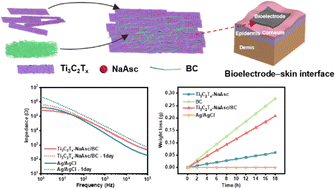
Electrophysiological signals, generated from the directional transport of ions across cellular membranes, encode vital physiological information relevant to human health status. Electrophysiological signal monitoring serves as a critical approach for deciphering fundamental physiological processes and enabling precise disease diagnostics. Bioelectrodes are indispensable components for the acquisition of high-fidelity electrophysiological signals. However, sweat inevitably accumulates at the skin–electrode interface during continuous monitoring, which may irritate the skin or cause the electrodes to detach from the skin, affecting the acquisition of high-quality electrophysiological signals. A key challenge in ensuring the long-term utility of bioelectrodes lies in enhancing their breathability without impeding electrophysiological signal transmission. Therefore, we realized Ti3C2Tx edge passivation by NaAsc and the preservation time at room temperature was increased to 30 days. On this basis, an antioxidant Ti3C2Tx bioelectrode with high air permeability and biocompatibility was proposed. The bioelectrode has an excellent gas permeability of 1408.89 g m−2 d−1 and a low skin–electrode interface impedance of 1.83 × 10⁵ Ω at 10 Hz. Moreover, the signal-to-noise ratio of the electromyography signal is 19.4 dB and the T/R wave intensity ratio of the electrocardiography signal is 0.4079, which is superior to that of the Ag/AgCl gel electrode. The bioelectrode with these optimized attributes enables stable, long-term monitoring of multiple electrophysiological modalities and excellent skin biocompatibility, providing a new approach for constructing a health monitoring and smart medical system.
 Please wait while we load your content...


