


 PLATFORM UPDATE:


Acacetin-incorporated lipid nanoparticles for inhaled mRNA vaccines
 c
Jinghong
Li
*cdfg
and
c
Jinghong
Li
*cdfg
and
Abstract
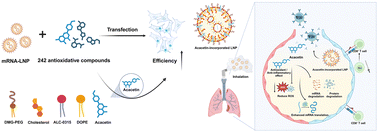
Inhaled mRNA vaccines have shown great promise for the prevention of respiratory diseases. However, their broad application is still restricted by lipid nanoparticle (LNP)-induced oxidative stress, rapid clearance of LNPs from the lung, and limited mRNA expression. Here, we show that incorporating a natural compound, acacetin, into the LNP formulation can overcome these delivery barriers and greatly improve inhaled vaccine effectiveness. A natural compound library containing 242 compounds was used in an in vitro screening experiment, and acacetin was identified as the lead compound that substantially increased LNP-mediated mRNA expression in A549 cells. We then incorporated acacetin in LNPs as a fifth component. After optimizing the formulation of LNPs in in vitro transfection assays and in vivo pulmonary delivery assays, we find acacetin-incorporated LNPs increased lung transfection by 10.82-fold. A mechanistic study showed that acacetin reshaped the intracellular environment of lung cells by activating antioxidant stress pathways and suppressing pro-inflammatory signaling, thereby maintaining high levels of mRNA translation. Inhaled administration of acacetin-incorporated LNPs, delivering mRNA encoding the SARS-CoV-2 spike protein, induced higher antigen-specific IgG (14.95-fold) and IgA (2.38-fold) levels than a conventional LNP formulation, without inducing toxicity. We demonstrate that acacetin-incorporated LNPs offer a simple and scalable strategy to improve the efficacy of inhaled mRNA vaccines.
 Please wait while we load your content...


