Chaoran Liu†
,
Di Sun†,
Ruisi Fan
,
Chengyi Liu,
Honglin Qiu,
Qijun Lu,
Zengqi Xie
and
Linlin Liu
*
State Key Laboratory of Luminescent Materials and Devices, Institute of Polymer Optoelectronic Materials and Devices, Guangdong Provincial Key Laboratory of Luminescence from Molecular Aggregates, South China University of Technology, Guangzhou, 510640, P. R. China. E-mail: msliull@scut.edu.cn
First published on 7th February 2026
The design of charge-trapping sites is the basic and critical factor to explore organic photomultiplier phototransistors and synaptic transistors. There are few examples of charge trapping achieved directly by constructing dielectric materials, as the traditional view holds that their wide band gaps make charge trapping and release difficult. This work employs the liquid phase epitaxy method to construct a two-dimensional confined dielectric MOF-199 island-like film with a 20 nm diameter as the dielectric layer of bulk heterojunction-based photo/synaptic transistors. Diverse energy level structures of metal complex nanostructures integrated intrinsic charge-trapping sites with multi-channel electron and energy exchange to the active layer. The multi-channel exchange combines the response advantages of machines and the human brain, while the intrinsic charge trapping avoids interface charge quenching. It demonstrates simultaneous high photocurrent and good long-term plasticity, a high phototransistor performance of photo-responsivity R = 650.1 A W−1/specific detectivity
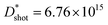
Jones, and efficient photonic synaptic transistors with maximum paired-pulse facilitation index of 142% and single-pulse remaining ratio of 65%. All these results point to the organic phototransistors for emulating the functions of biological synapses, which indicate their potential as the building blocks of bionic electronic circuit systems.
New conceptsCharge/energy transfer pathways between semiconductors and insulators.Insulators serve as excellent media for charge storage; however, due to their wide bandgap, establishing charge/energy transfer pathways between insulators and semiconductors proves challenging, limiting their widespread application as charge trapping materials. Metal–organic frameworks (MOFs), with their diverse energy level structures, offer viable pathways for charge energy storage, thereby enabling the construction of high-performance photo/synaptic transistors. In the case study of MOF199 presented in this paper, the conjugated structure of the ligand facilitates charge exchange with the semiconductor, while metal ion d–d transitions associated with the energy exchange, providing a stable and controllable charge trapping pathway. |
The design of charge-trapping sites is the basic and critical factor to explore photomultiplier phototransistors and synaptic transistors, for the photocurrent (Iph) is proportional to the threshold voltage shift and the total number of trapped charges.11–13 Charge-trapping engineering normally includes charge separation interface, charge-trapping type, energy level matching and transition, etc. Charge trapping typically occurs near interfaces such as electrode interfaces, donor/acceptor interfaces in active layers, and dielectric layer interfaces.6,14,15 Besides the introduction of acceptors into the active layer to supply effective charge trapping, additional charge trapping in dielectric layers has been reported as an effective method for realizing a high ratio of charge storage.16,17 For synaptic transistors, charge-trapping sites with different charge storage stability are very important for the control of short-term plasticity (STP) and long-term plasticity (LTP).18,19 For the charge-trapping sites (floating gates) in the dielectric layer, semiconductor or metal nanoparticles are mainly selected, but they do not work well in organic active layer systems.6,20,21 There are few examples of charge trapping achieved directly by constructing dielectric materials, because the traditional view is that the band gap of dielectric materials is very wide for difficulty of the trap and release of charge.
A metal–organic framework (MOF) is an organic–inorganic hybrid material composed of metal ions (or clusters) and organic ligands. Due to high crystallinity, stability, and functional diversity, MOFs have had many applications in the field of optoelectronic devices in recent years.22–26 Some classic MOF systems have good insulation and a low dielectric constant, which can provide transport channels with a less polarizable environment that reduces energetic disorder.27–30 In particular, the MOF structure, combined with ionic states, may provide a fixed charge-trapping site and diverse energy level structures, which are very suitable for the regulation of charge trapping.31–33 It has been reported that MOF-based nanostructures can play a role as charge-trapping sites for photo/synaptic transistors and memory.34,35 However, there are few reports on insulated MOF-based charge-trapping dielectrics for organic transistor performance enhancement.
In this paper, MOF-199 has been chosen to prepare dielectric thin films with MOF nanoparticles (MOF-NPs) by the liquid phase epitaxy (LPE) layer-by-layer approach as dielectric modification layers for OPTs and organic synaptic transistors (OSTs) (Fig. 1). The effect of the charge trapping action on the performance has been investigated. Compared with control devices with SiO2 and PMMA dielectric layers, the role of MOF-NPs has been well explored, and appropriate cycles of MOF-NPs can induce stable charge trapping, leading to significant photocurrent enhancement and LTP. All these results point to the OPTs as emulating the functions of biological synapses, which indicate their potential as building blocks of bionic electronic circuit systems.
PDPPBTT and PC61BM heterojunctions were chosen as the active layers (Fig. 1c). PDPPBTT is widely used in photovoltaic devices due to its high hole mobility.4 Phenyl-C61-butyric acid methyl ester (PC61BM) is a classic electron acceptor material with good stability.6,7,36 Previous studies have shown that high-performance near-infrared photodetectors can be obtained when the donor/acceptor ratio is optimized to 5
:
1.6,7 Here, we simultaneously introduce PC61BM and MOF-NPs layer with different charge-trapping effects into the device, realizing photo/synaptic transistors with two different device operation modes.
By varying the number of LPE cycles, we prepared MOF-NP films with different thicknesses on Si/SiO2 substrates. The interaction of H3BTC with Cu2+, depending on the concentration of Cu2+ adsorbed on the substrate, may be via two different modes: when the Cu2+ concentration is large for type I mode, and when the Cu2+ concentration is small for type II mode. In the classical MOF structure, these two structures grow alternately and form a porous structure due to the variation in copper ion concentration. In the case of multilayer films grown by LPE, we believe that types I and II coexist in the growth mode. A very important phenomenon that supports this view is that there is no obvious difference in performance between odd and even cycles. As 3 cycles give the optimal performance, in this study, we mainly compare the changes of 1-, 3-, and 5-cycle performance. In addition, we spin-coated a PMMA film on the surface of the MOF-NPs film to further modify the surface defects of the MOF-NPs film.
The morphology of the MOF-NPs film was characterized by atomic force microscopy (AFM), X-ray diffraction (XRD) and scanning electron microscopy (SEM). Through a uniform multi-point nucleation process, a nano-island structure of MOF with a maximum diameter of 20 ± 2.7 (0.52) nm is formed on the Si/SiO2 wafer (Fig. 2a and b and Fig. S2–S4), and the average size of the particles increases slightly with the increase of the number of cycles. It can be observed that the average sizes of the particles are 18.6 nm, 19.1 nm and 21.3 nm for 1, 3 and 5 cycles, respectively. Although the average size of the particles increases slightly with the increase of the number of cycles, the overall range of the change of the particle size is very limited, which is only 2.7 nm. The obtained MOF-NPs are much smaller in size than in previous reports37,38 and are uniformly distributed, which is conducive to the reversible penetration of electrons. This phenomenon can be attributed to the two-dimensional self-limiting domain effect. Under 2D self-limiting domain conditions, the growth of nanoparticles is constrained by the interface and substrate, resulting in the particles only expanding in specific planes during the growth process. This restriction effectively inhibits the excessive growth and aggregation of particles.38–41 The surface of the film is very uniform and flat, with a slight increase in surface roughness as the number of LPE cycles increases (Fig. S2). After loading the polymer PMMA on its surface, the surface roughness is further reduced. Nevertheless, single-layer molecular adsorption, even chemical adsorption, is rather challenging. LPE needs to involve in situ chemical reactions and cyclic growth on the interface. Considering the reduction of activation energy at the interface and the reversibility of coordination reactions, the formation of two-dimensional confined nanostructures would be a reasonable outcome. It has been reported that semiconducting MOF structures can form 2D nanosheets for charge trapping,34,35 while this work relies on utilizing smaller conjugated structures to coordinate with copper ions.
This modification transforms the originally formed nanosheet structure at the interface into a nanoparticle structure. Additionally, the MOF structure undergoes a transition from a semiconductor to a dielectric structure, which is more conducive to the stable storage and regulation of charges.
The MOF film was characterized by XRD measurements as shown in Fig. 2a. The XRD data of the MOF film showed a weak peak corresponding to (222), which was identical to the highest peak in XRD of powder.42,43 The 2θ value of (222) is 11.8°, and the value of d is 0.74 nm calculated by Bragg's equation, which is basically consistent with the thickness of one ideal cycle. However, we believe that in the case of a relatively small number of LPE cycles, this does not represent the formation of a good layered structure, but is mainly caused by the formation of MOF nanoparticles, i.e., a certain degree of non-two-dimensional domain-limited growth has occurred.
We further analyzed the chemical structure of MOF by Raman scattering spectroscopy, as shown in Fig. 2c. The peaks at 1007 cm−1 correspond to the C
C stretching vibration of the benzene ring, and the peaks at 827 cm−1 and 745 cm−1 correspond to the O–C–O bending and coupling vibrations. All peaks appearing below 600 cm−1 are mainly related to interactions between inorganic cores. The peaks located at 173 cm−1 and 273 cm−1 are attributed to Cu–Cu stretching and O–Cu–O bending vibrations, respectively. It is worth noting that the O–Cu–O band position for Cu(OAC)2 shifted from 322 cm−1 to 273 cm−1, indicating that the Cu ion and BTC are coordinated to form a MOF structure.44,45 In addition, the double peaks at 1613 cm−1 and 1543 cm−1 can be referred to the absorption peaks of C
O in the residual COOH in the partially coordinated BTC. With the coordination of COO− with Cu2+, the bond energy of C
O decreases. In addition, when the domain-limiting effect increases, the red-shift intensity of the absorption peak becomes weaker. The band at 1613 cm−1 corresponds to monocarboxylate coordination (C
O I), and that at 1543 cm−1 corresponds to bicarboxylate coordination (C
O II), where the remaining two carboxylic acids form intramolecular hydrogen bonds. In the Raman spectra for different LPE cycles, the relative intensities of the two peaks are different, which can provide more detailed information about the film growth and chemical doping. In 1-cycle MOF, the peak of C
O II was relatively strong, indicating that the coordination with Cu2+ on the substrate mainly occurred via type II mode, which was due to the small density of Cu2+ adsorbed on the substrate. In the subsequent 3- and 5-cycle MOFs, the relative strength of the C
O II peaks decreased significantly and then stabilized, indicating that both type I and type II growth modes occurred during further growth, with their ratio remaining essentially constant. In addition, a new characteristic peak at 229 cm−1 appeared after the combination of MOF and PMMA, which was due to the formation of a Cu–O bond between COOCH3 in PMMA and Cu2+ in MOF. For samples obtained using different numbers of cycles, this peak was observed to exist to varying degrees. This may result not only from the direct interface modification with PMMA but also from ligand exchange with BTC.
The dielectric layer has a crucial influence on the field-effect performance of the device. The primary function of the dielectric parameters for a −60 V drain voltage layer is to provide electrical isolation between the gate and the organic semiconductor layer while allowing the gate voltage to modulate the carrier concentration in the semiconductor layer through electric field effects, thereby controlling the conductive state of the device. We analyzed the effect of the MOF film on the field-effect performance of the device. The transfer characteristic curves of different devices are shown in Fig. 3e and f, and the related parameters are summarized in Table 1.
| Dielectric layer | K | µ (×10−2 cm2 V−1 s−1) (forward) | µ (×10−2 cm2 V−1 s−1) (reverse) | Von (V) (forward) | Von (V) (reverse) | Ioff (A) |
|---|---|---|---|---|---|---|
| SiO2 | 1.29 × 10⁻⁵ | 0.12 | 0.91 | 28.5 | 29 | 6.59 × 10⁻¹⁰ |
| PMMA | 5.07 × 10⁻⁵ | 1.94 | 1.82 | 0.5 | 0 | 1.36 × 10⁻¹¹ |
| 1-cycle MOF | 4.56 × 10⁻⁵ | 1.54 | 2.20 | 18 | 3.5 | 2.78 × 10⁻¹² |
| 3-cycle MOF | 5.36 × 10⁻⁵ | 2.16 | 3.35 | 6.5 | −3 | 8.68 × 10⁻¹² |
| 5-cycle MOF | 6.17 × 10⁻⁵ | 2.95 | 4.50 | 20 | 11.5 | 1.61 × 10⁻¹¹ |
| 1-cycle MOF/PMMA | 5.43 × 10⁻⁵ | 2.17 | 2.06 | 2 | 0 | 1.17 × 10⁻¹¹ |
| 3-cycle MOF/PMMA | 5.17 × 10⁻⁵ | 2.26 | 1.99 | 5.5 | 3 | 1.28 × 10⁻¹¹ |
| 5-cycle MOF/PMMA | 4.81 × 10⁻⁵ | 2.11 | 2.45 | 15.5 | 7.5 | 1.89 × 10⁻¹¹ |
Due to the ultrathin and discontinuous nature of the MOF-NPs layer, the thickness for 1, 3 and 5 cycles being 3 nm, 10 nm and 17 nm, respectively, from UV-visible absorption spectroscopy (Fig. S5) calibrated with a profilometer, it plays a very small role in total capacitance with the underlying 300 nm SiO2. However, the most pronounced changes were observed in transconductance, subthreshold swing, and threshold voltage, effectively reducing polarization and enabling intrinsic charge storage.
As the MOF thickness increases, the value of K gradually increases, and µ correspondingly increases. After the addition of the PMMA layer, the mobility of the PMMA control device is significantly increased, but the difference between different MOF cycles is not significant.
A risk for dielectrics made with ions is that there can sometimes be free ions that contribute to an ionic mechanism for dielectric polarization that artificially inflates the measured mobility values. The forward and reverse transfer curves of all devices, as shown in Fig. S6, and the corresponding mobilities and Von were calculated and are summarized in Table 1. The Von shift and the hysteresis between forward/reverse transfer curves are not as large as on bare SiO2 after the modification of MOF or MOF/PMMA, where the mobilities extracted from the reverse transfer curves were consistently higher. For devices after 1 and 3 LPE cycles, Von remains close to zero, whereas devices after 5 LPE cycles exhibit a significant shift. This indicates that some charge trapping has already occurred in the 5-cycle devices under dark conditions, while the 1- and 3-cycle devices remain essentially charge-neutral. The observed variations thus mainly originate from the reversible coordination behavior. Cu+ and Cu2+ share similar coordination environments. Such structural similarity during electron exchange ensures high stability of the framework, making it a favorable site for charge trapping.
The turn-on voltage characterizes the charge-trapping sites of the whole device. The overall charge-trapping number Nt has a strong relationship with Von (Fig. 3h), reflecting the total number of charge-trapping sites in the system.48–50 As the device structure differences used in the experiment are all from the dielectric layer, we assume that the difference in experimental parameters is caused by the differences in the dielectric layer. When unmodified bare SiO2 is used as the dielectric layer, the device has a large turn-on voltage Von (28.5 V), which is mainly due to an increase in the high density of defects in the SiO2 dielectric layer.34,51 At 1 cycle, the MOF layer partially passivates SiO2 surface defects, resulting in a reduced (from 28.5 V to 18 V) but still positive Von; at 3 cycles, optimal passivation is achieved while introducing a moderate density of intrinsic trapping sites, yielding the minimum Von of 6.5 V; at 5 cycles, additional defects within the thicker MOF layer increase overall charge trapping, leading to a positive Von shift. The 3-cycle structure consistently delivers the best performance, as evident from both the morphological (Fig. S3) and electrical characterizations as well as the overall device performance. We attribute this behavior to the incomplete passivation of the SiO2 surface defects in the single-cycle case, whereas three cycles achieve optimal passivation. As the number of cycles further increases, the MOF thickness grows accordingly, which introduces more internal defects within the MOF itself, leading to the observed performance trend. Furthermore, in Fig. 4, the best performance of the phototransistor was also observed at 3 cycles, for both the MOF and MOF/PMMA devices.
The density of interface states (Dit) is the number of defects per unit area in the unit energy range, which can directly measure the quality of the dielectric/active layer interface. The SiO2 control device has high Dit (7.34 × 10¹² eV−1 cm−2), indicating a high defect density at the dielectric/active layer interface. After loading the MOF film, the Dit values decreased significantly with the increase of the number of cycles, and the Dit value of the 5-cycle MOF film was 5.81 × 10¹¹ eV−1 cm−2, which was 12.6 times lower than that of the SiO2 control device. Dit gradually decreases with increasing cycles, which indicates that the introduction of the MOF ultrathin film can effectively reduce the defect density of the conductive channel. Thus, the overall increase in Von and Nt values for the 5-cycle MOF film would come from the defects inside the dielectric layer. The effective separation between the charge-trapping site and the conduction channel can reduce the quenching effect of current, which is beneficial to obtain high photocurrent.
The layer of PMMA film on the surface of the MOF-NPs film is spin-coated to modify the dielectric MOF-NPs. For all experimental conditions, Von decreased after adding PMMA (Table 1), which proved that PMMA had a certain modification effect on the surface defects of MOF. Interestingly, the modifying effect was obvious when the number of MOF cycles was small, but became weaker when the number increased. Therefore, unlike the MOF series devices, Von of the MOF/PMMA series devices increases with the number of MOF cycles, which is because PMMA only modifies the surface defects of the MOF and does not affect the charge-trapping sites within the MOF layer.
In addition, the absolute value of Dit is overall smaller after adding PMMA (Fig. 3g). The above results are also illustrated by the decrease in the subthreshold swing (Fig. S6). In the 3- and 5-cycle MOF devices, the modifying effect of PMMA on defects, especially on the defects in the channel, is relatively weak. The spatial separation effect plays a dominant role. Moreover, the analytical results of Dit have a good correspondence with µ, which proves that both MOF and PMMA have a better modification effect on the conductive channel and reduce the density of channel defects.
The evolution of Idark and I1/f in MOF devices and MOF/PMMA devices is essentially the same. Except for the Si control device, all devices maintained relatively low Idark and I1/f, which increased slightly with the increase of MOF cycles (Table 1 and Fig. S7). Because the variation of Idark and I1/f is much smaller than that of Von and ΔVon, the final optimal performance of the photodetector is mainly determined by Von and ΔVon.
as a function of MOF cycles are very similar between MOF series and MOF/PMMA series devices, where the 3-cycle ones have the best comprehensive performance. In the 3-cycle MOF device, when Vg = 6.5 V, ΔVon and Ilight/Idark value are at their highest, R and
are 417 A W−1 and 5.01 × 10¹⁵ Jones, respectively, which are increased by 1.8 times and 2.3 times compared with PMMA devices. Under irradiation, ΔVon of the MOF/PMMA device is further increased compared to that of the MOF device. Ilight/Idark, R and
values of the 1-cycle and 3-cycle MOF/PMMA devices are significantly higher than those of the PMMA devices. Among them, the 3-cycle MOF/PMMA device has the best performance. When Vg = 5.5 V, R and
are 650.1 A W−1 and 6.76 × 10¹⁵ Jones, respectively. Compared with PMMA devices, R and
are increased by 2.9 times and 3.1 times, respectively. Besides, the surface roughness of the active layer increases with the number of MOF layers (Fig. S2), where the 5-layer MOF exhibits greater roughness for a poorer morphology of the surface-loaded active layer (Fig. S10). This might be one of the reasons for the poor performance of the 5-cycle devices.
| Dielectric layer | R (A W−1) | tr/tf (ms) | Maximum PPF index (%) | Maximum EPSC (A) | Remaining ratio (%) | |
|---|---|---|---|---|---|---|
| Concrete parameters of device under 810 nm illumination. | ||||||
| SiO2 | 2.1 | 0.23 | 1450/45 | — | — | — |
| PMMA | 226.6 | 21.7 | 25/37 | — | — | — |
| 3-cycle MOF | 417 | 50.1 | 47/60 | 142 | 5.88 × 10⁻⁷ | 87 |
| 3-cycle MOF/PMMA | 650.1 | 67.6 | 28/31 | 133 | 5.01 × 10⁻⁷ | 83 |
To our surprise, ΔVon does not undergo significant growth after the addition of MOF, which is completely different from what we have previously observed in Ag NPs and ZnO NPs systems. When the initial Von in the dark is large and the Von shift becomes relatively small, the photocurrent, Ilight/Idark, and G still improve significantly after the addition of the MOF layer (Table S1). For example, ΔVon of the 3-cycle MOF device is only 20 V, which is smaller than the 21.5 V of the PMMA control device, but its optical gain is 1.8 times that of the PMMA control device. ΔVon of the 3-cycle MOF/PMMA device is 24.5 V, which is only 3 V (14%) larger than that of the PMMA control device, but its gain value is nearly three times that of the PMMA control device. This phenomenon is also mainly caused by the use of a dielectric charge-trapping layer. Theoretically, increasing Von is not the sole route to enhance the photocurrent. In photodetectors, the photocurrent magnitude is governed by both the transconductance (K) and ΔVon, as expressed in the relationship Iph = KΔVon. The incorporation of the MOF effectively enhances transconductance, which is another critical way of improving photocurrent.
Charge trap sites in dielectric materials exhibit spatial localization, with their energy distribution decoupled from the semiconductor band structure, thereby conferring quenching resistance, which can help to obtain a stable photomultiplication effect and LTP. Nevertheless, if the gate voltage is applied while turning off the light, the charge trapping by the MOF can be effectively quenched, which makes the charge-trapping process reversible (Fig. 4e–h and Fig. S11 and S12).
The photocurrent of the 1-cycle MOF device increases with illumination time. After the illumination is turned off, the dark current is driven to be stable near 30% of the photocurrent and no longer decreases further. In addition, as the number of MOF cycles increases, the rise time (tr) value gradually increases, and the fall time (tf) value cannot even be measured for 3-cycle MOF and 5-cycle MOF, indicating that the MOF can trap charges, and the trapped charges are not easily released. The response speed of the MOF/PMMA devices was significantly faster than that of the MOF devices, indicating that the load of PMMA weakened the charge-trapping effect of MOF. Meanwhile, dielectric charge trapping improves the photocurrent and LTP.
It is more interesting that in the second charge-trap site system of the dielectric, the trapped charge can be erased by introducing a gate voltage, which can achieve fast light detection response and memory erasure. In our previous work, we used an optoelectronic dual control method in semiconductor- and conductor-based charge-trap sites,52 which is still applicable to dielectric trapping sites. Adding a synchronous gate voltage at light on and light off can effectively increase charge trapping and release. The photocurrent quickly saturates and stabilizes after illumination, and returns to a lower dark current after the end of illumination. For the 3-cycle MOF/PMMA device, tr and tf are as quick as 28/31 ms.
A pulsed-gate voltage measurement was conducted to investigate the charge-trapping behavior of the device. As in Fig. 4i–l, three consecutive testing stages were defined, while the MOF and MOF/PMMA device series were compared in the dark and under light. In stage I, the device was biased at a gate voltage of 0 V for 10 s under the initial condition. Subsequently, in stage II, the gate voltage was switched to +30 V for 10 s to enable electron trapping. Finally, in stage III, the gate voltage was reset to 0 V and maintained for 40 s. The drain current was recorded and compared across the three stages. During stage I, the device exhibited a very small operating current, as only a few electrons could be trapped in the MOF under a 0 V gate bias. The weak electric field in the channel limited hole accumulation, resulting in a low hole current. In stage II, although a positive gate voltage of +30 V was applied, the current remained low. This is because the strong gate field formed in this state is opposite in direction to the hole accumulation in the channel, thus suppressing the hole current. Meanwhile, the positive gate bias led to electron trapping in the MOF, generating an internal electric field that partially compensated the external gate field; however, this compensation was insufficient to induce significant hole accumulation. In contrast, stage III displayed a pronounced increase in current under 0 V gate bias. Unlike stage I, the removal of the external gate field allowed the trapped electrons within the MOF to produce an internal field that facilitated hole accumulation in the channel, leading to a large current.
This distinct behavior strongly confirms the charge-trapping capability of the MOF layer, and the differences in trapping ability across different devices and conditions can help determine whether charges are transferred from the active layer to the MOF or if the MOF itself exhibits some photoactivity. The coexistence and rationality of these two processes would be mainly supported by the energy-level analysis and optical absorption spectra discussed in this work. With respect to the different charge-trapping processes in MOFs, two aspects are particularly noteworthy. First, by comparing the MOF and MOF/PMMA series devices under dark conditions, it can be observed that the current significantly decreases after the addition of the PMMA layer. This demonstrates the presence of a short-range charge-trapping effect between the MOF and the active layer; more importantly, under illumination, the current in stage III exhibits a notable increase compared with that in the dark. Although this could potentially be attributed to the overall current enhancement induced by illumination, the fact that the charge-trapping capabilities of samples with varying thicknesses remain identical in MOF-based devices suggests that the actual charge trapping is far less than the charge-holding capacity of the MOF, indicating the generation of new photoactive trapping sites after illumination.
Biological synapses are essential components for the transmission and regulation of information within the brain, acting as junctions where synaptic neurons are functionally linked.53 We utilized 810 nm light pulses as presynaptic stimuli, the active layer as the pre-synapse, and the MOF-NPs layer as post-synapse. Moreover, the EPSC under different conditions was measured by varying the pulse excitation time (pulse width) and interval time (Fig. 5a). Fig. 5b depicts the typical EPSC response triggered by 810 nm light pulses (68 mW cm−2, 20 s). Upon application of the light pulse stimulus, the current rises rapidly. After the light pulse is removed, the current gradually decreases. This behavior closely resembles that of a biological synapse.
PPF is a distinctive characteristic of STP that is crucial for the recognition and interpretation of visual, auditory, and other signals within the biological nervous system.54 This phenomenon occurs when two consecutive stimuli of the same intensity are presented, resulting in the EPSC induced by the second stimulus being stronger than that generated by the first45 as shown in Fig. 5c, we applied two successive light pulses to the device (68 mW cm−2, 810 nm, 2 s), with a 3 s interval between them. The findings indicate that the EPSC for the second pulse was significantly higher than for the first. This enhancement occurs because the photogenerated holes from the initial light pulse had not completely recombined by the time the second pulse was delivered within a short duration. When the second light pulse was applied, the newly generated photogenerated holes combined with those from the first pulse that had not yet recombined, leading to a larger EPSC during the second pulse and demonstrating typical PPF behavior.
The PPF index was further used to investigate synaptic behavior, and it can be defined by the following equation:
![]() | (1) |
Fig. 5d illustrates the relationship between the pulse interval (3 s to 60 s) and the PPF index. As the interval increased, the PPF exhibited an exponential decay. This decay occurs because with a longer interval between the two light pulses, most of the photogenerated holes recombine before the arrival of the second pulse, resulting in a decrease in current. Consequently, the PPF index diminishes as the intervals between light stimulations increase. This decay trend is able to be accurately modeled by the following double-exponential function, similar to the behavior observed in biological synapses:
![]() | (2) |
Memory can be categorized into short-term memory (STM) and long-term memory (LTM) based on the duration of information retention. The memory capacity of the human brain is related to the intensity of learning, and the transition from STP to LTP at biological synapses can be achieved through repeated learning and consolidation. To further emulate the synaptic plasticity observed in biological synapses, we adjusted the light pulse width and intensity to facilitate the transition from STP to LTP. As illustrated in Fig. 5e, the EPSC significantly increased with longer pulse widths, suggesting that the enhancement in memory level takes more time to return to its initial state. This reflects a transition from STP to LTP, closely resembling the memory processes in the human brain. Additionally, the intensity of light pulses exhibited similar effects on the transition from STP to LTP at biological synapses to those of the pulse width (Fig. 5f). Thus, by manipulating the duration and intensity of light pulses, we can effectively regulate synaptic memory levels, demonstrating the potential of our device to mimic the learning and memory capabilities of the human brain.
In addition, we compared the Max-EPSC and remaining ratio of 3-cycle MOF and 3-cycle MOF/PMMA under different pulse intensities and pulse widths. As shown in Fig. 5g and h, with an increase of pulse intensity and pulse width, the Max-EPSC of different devices is gradually enhanced, indicating that the stronger the optical stimulation, then the larger the EPSC value, which is similar to the response behavior of biological synapses. Moreover, the Max-EPSC and remaining ratio of the 3-cycle MOF are higher than those of the 3-cycle MOF/PMMA (Fig. S13), indicating that the MOF-NPs have higher memory performance, and the addition of PMMA leads to a decrease in the performance. This is also mainly due to the fact that the addition of PMMA attenuates the charge-trapping effect of the MOF.
Moreover, the repeatable plasticity of biological synapses allows the human brain to engage in a learn-forget-relearn cycle when acquiring new knowledge. The relearning process requires less time to recall and to replicate this “learning experience” behavior, we applied 51 continuous light pulses to stimulate the device (Fig. S14a). The EPSC continued to rise during the ongoing light pulse stimulation. Following this stimulation, the EPSC began to decrease, reflecting the forgetting that occurs during the learning process (Fig. S14b). To recover the forgotten information, light pulses were reintroduced to the device. Remarkably, only 35 light pulses were necessary to restore the previous learning level, significantly fewer than what was required during the initial learning phase (Fig. S14c).
Based on the application of harnessing the complementary strengths of both human brain processing and machine operation, we consider the following parameters as the core parameters of the research system: the device's perception capability (D*), response time, bionic characteristics (PPF), and energy efficiency (power). These parameters are not independent of each other; instead, they have a mutually restrictive relationship. For example, to meet the detectivity requirement, the photocurrent needs to be as large as possible, which will result in relatively high power consumption.
For devices with near-infrared response, the trade-off between D* and response time has been relatively well addressed.7 The device D* reported in this article is relatively high among those found in organic photodetectors (Table S2). From the perspective of trade-off between D* and power consumption, MOF devices are more suitable for the research of photoelectric neural synapses compared to MOF/PMMA devices. According to the calculation in Fig. 5c, for a 3-layer MOF device, with V set to −0.1 V, I set to 0.55µA, and Δt set to 2 s, the value obtained by Espike calculation is 0.1 µJ. Compared with previous reports, although the EPSC is relatively large, the power consumption has reached the requirements of the synaptic device (Tables S3 and S4).
000) were purchased from Aldrich. PC61BM was purchased from 1-Material. PDPPBTT was purchased from Luminescence Technology Corp. All of these commercially available chemicals were used without further purification.
:
3) at 80 °C for 30 min to achieve surface hydroxylation modification. The hydroxy-functionalized substrate was a good candidate for the preparation of MOF thin film. There were three containers for different solutions (1.5 mM Cu(OAc)2, 1 mM H3BTC and pure ethanol) as shown in Fig. S1. The functionalized SiO2/Si substrate was immersed in each container in turn and cleaned with ethanol. By changing the number of cycles, MOF ultrathin films with different thicknesses can be prepared.
:
PC61BM (D/A ratio 5
:
1, 7 mg mL−1 of PDPPBTT in chloroform) was used to prepare devices. In order to completely dissolve the polymer, the active layer solution was heated and stirred on a hot plate at 30 °C for 24 hours. Then, the semiconducting polymers PDPPBTT and PC61BM were deposited on the bare SiO2/Si and MOF/SiO2/Si substrates by spin-coating the polymer solution at 2500 rpm for 40 s. Moreover, we used PMMA as a dielectric layer to spin-coat the SiO2/Si substrate and MOF/SiO2/Si substrate to prepare devices. The PMMA (15 mg mL−1, 2000 rpm) in butyl acetate was spin-coated on silicon wafers and crosslinked at 220 °C for 30 min. Then, Ag film (100 nm) was deposited for use as electrodes under vacuum.
![]() | (3) |
The performance of a photodetector can be characterized by three important parameters: the responsivity (R), the gain (G), and the specific detectivity
, and R, G, and
are calculated according to the following equations:
![]() | (4) |
![]() | (5) |
![]() | (6) |
The formulas for calculating the density of interfacial defects and overall charge-trapping number Nt are as follows:
![]() | (7) |
![]() | (8) |
Footnote |
| † Chaoran Liu and Di Sun contributed equally to this work. |
| This journal is © The Royal Society of Chemistry 2026 |