Microenvironments between cathode active materials and solid electrolytes for all-solid-state batteries

Ju-Hyeon Lee a, Eun Seo Kang a, Ji Young Kim b, Ki Yoon Bae *b and Ji Hoon Lee *a
aSchool of Materials Science and Engineering, KNU Advanced Material Research Institute, Kyungpook National University, Daegu, 41566, Republic of Korea. E-mail: jihoonlee@knu.ac.kr
bAdvanced Battery Development Team 3, Hyundai Motor Group, 37 Cheoldobangmulgwan-ro, Uiwang-si, Gyeonggi-do 16082, Republic of Korea. E-mail: ky@hyundai.com

Received 22nd October 2025 , Accepted 16th December 2025

First published on 17th December 2025


Abstract

All-solid-state batteries (ASSBs) are promising next-generation energy storage systems; however, their performance is often constrained by poorly understood interfacial phenomena within composite cathode (CC) layers. In this study, we systematically elucidate how the microenvironment of CC layers, controlled by the mixing sequence of cathode active material (CAM), solid electrolyte (SE), and conductive carbon, determines the electrochemical performance of ASSBs. By preparing three representative CC configurations, we demonstrate that uniform CAM|SE interfaces promote well-developed lithium-ion transport pathways, leading to enhanced rate capability and long-term cycling stability. In contrast, poor CAM|SE contact increases charge-transfer resistance and results in premature cell failure within tens of cycles. Multiscale synchrotron-based characterizations reveal the mechanistic origin of this performance disparity. Interfacial inhomogeneity induces particle-level state-of-charge heterogeneity, which leads to localized CAM overcharging and subsequent SE decomposition. The significance of uniform CAM|SE interfaces becomes even more pronounced under practical conditions. At 30 °C, where ionic transport is intrinsically limited, ASSB cells with uniform CAM|SE interfaces maintain stable cycling performance, whereas those with less-uniform interfaces fail at an early stage. Finally, pouch-type anodeless ASSB cells operated under low stack pressure reproduce the same performance trends, further underscoring the critical role of CC microstructure control. Overall, this work establishes a direct correlation between CAM|SE interfacial uniformity, SE stability, and ASSB performance, providing practical guidelines for engineering reproducible, high-performance CC layers that bridge laboratory-scale demonstrations with real-world applications.


New concepts

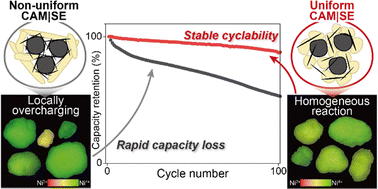
Here, we report that the microenvironmental uniformity of composite cathode (CC) layers is a decisive factor governing the electrochemical performance of all-solid-state batteries (ASSBs). Uniform cathode active material (CAM)|solid electrolyte (SE) interfacial contact is essential for stable ASSB operation; in its absence, particle-level state-of-charge (SoC) heterogeneity emerges, leading to localized CAM overcharging, accelerated SE decomposition, and ultimately premature cell failure. In contrast to previous studies that primarily focus on performance optimization, our work establishes a multiscale mechanistic linkage, from individual CAM particles to CAM|SE interfaces and up to the CC layer, demonstrating how interfacial uniformity directly influences overall ASSB performance. Synchrotron-based characterizations, including X-ray absorption spectroscopy and transmission X-ray microscopy, consistently show that homogeneous CAM|SE interfaces suppress oxidative SE decomposition by maintaining uniform SoC distributions, thereby enabling both high rate capability and long-term cyclability in ASSB operations. This conceptual advance redefines the design principles of CC layers and offers critical guidelines for the scalable development of practically viable, high-performance ASSBs.

1. Introduction

All-solid-state batteries (ASSBs) are considered some of the most promising next-generation rechargeable battery systems, with the potential to replace conventional lithium-ion batteries (LIBs).1,2 By substituting flammable organic liquid electrolytes with solid electrolytes (SEs) and replacing graphite anodes with metallic lithium, ASSBs offer enhanced energy density and intrinsic safety.3 Among various SE materials, such as oxides, polymers, and sulfides, the argyrodite-type Li6PS5Cl (LPSCl) has emerged as one of the most extensively studied and practically implemented materials.4,5 This prominence originates from its high ionic conductivity (1–10 mS cm−1 at room temperatures6–8) and the formation of relatively stable decomposition products—such as P, Li2S, and LiCl upon reduction and P2S5, S, and LiCl upon oxidation—despite its narrow electrochemical window (1.71–2.01 V vs. Li+/Li, hereafter denoted as VLi).9–11 Additionally, its exceptional room-temperature ductility facilitates the fabrication of dense composite cathode (CC) layers, comprising cathode active materials (CAMs), LPSCl, and conductive carbon (typically vapor-grown carbon fiber, VGCF), with excellent interfacial contact and mechanical integrity.

Interestingly, despite the widespread adoption of similar CAM–SE combinations, the electrochemical performance of CC-based ASSBs has been reported to vary significantly, even in studies conducted by the same research group.12–20 This variability raises fundamental concerns about the reproducibility and interfacial reliability of CC fabrication protocols. A primary contributor to this inconsistency appears to be the quality of physical contact between CAM and SE. In contrast to conventional LIBs, where liquid electrolytes readily infiltrate electrode voids and establish continuous ionic conduction pathways, SEs cannot permeate the CC microstructure.21–23 As a result, insufficient initial contact and poor interfacial coverage between individual CAM and SE particles lead to elevated interfacial resistance, thereby limiting lithium-ion transport.24–28 Furthermore, interfacial degradation can be exacerbated during cycling due to the inherent volume changes of CAMs (e.g., 5.1–7.1% for LiNi0.8Co0.1Mn0.1O2 (NCM)),29–33 which induce contact loss with SEs, deteriorating Coulombic efficiency, rate capability, and long-term cycling stability.34–38 While increasing the SE content in CC layers may mitigate these issues by improving physical contact between CAM and SE, it significantly reduces the overall energy density and increases material cost.39 This trade-off underscores the urgent need for more effective and reproducible CC fabrication strategies that ensure a consistent structure–performance relationship in ASSB systems.

To address the limited understanding of how interfacial contact in CC layers governs the electrochemical performance of ASSBs, this study systematically investigates how the microstructure and interfacial architecture of CC layers, controlled by the mixing sequence of CAM, SE, and VGCF, influence ASSB performance. We demonstrate that CC configurations featuring well-developed SE coverage on CAM surfaces exhibit superior lithium-ion transport kinetics and enhanced electrochemical stability, achieving high-rate capability (78.6%, 177.5 mA h g−1 at C/5 → 139.5 mA h g−1 at 2C) and stable cycling performance (capacity retention of 60.4% after 200 cycles). In contrast, CC configurations lacking sufficient SE coverage on CAM—such as those emphasizing CAM–VGCF or SE–VGCF contact—exhibit limited ionic transport, resulting in inferior rate performance (68.1% and 73.2% under the same C-rate increase) and poor cycling stability, including short-circuiting at an early stage. These findings clearly indicate that establishing robust ionic pathways via uniform SE coverage over CAM particles is more critical than optimizing electronic percolation networks in CC-based ASSBs. Furthermore, combined synchrotron-based X-ray characterizations, including transmission X-ray microscopy (TXM) and X-ray absorption spectroscopy (XAS) at the Ni and S K-edges, consistently reveal that uniform SE coverage leads to more homogeneous state-of-charge (SoC) distributions across CAM particles and suppresses SE decomposition during cycling. In contrast, non-uniform SE coverage induces heterogeneous SoC distributions, causing localized SE decomposition near overcharged CAM particles. Additionally, pouch-type anodeless ASSB cells (≈40 mA h) operated under low stack pressure (≈5.5 MPa) reproduced the same performance trends, further confirming that homogeneous CAM|SE interfaces are essential for reliable operation under practically relevant conditions. Overall, this work highlights that the CC microenvironment must be carefully understood not merely as an interfacial optimization problem,2,24,36,40–42 but as a multi-scale causality chain in which CAM|SE interfacial uniformity controls particle-level SoC homogeneity, SE stability, and ultimately ASSB performance. This conceptual insight provides practical guidelines for designing reproducible, interface-engineered CC layers that can reliably bridge laboratory demonstrations with practical ASSB operation.

2. Results and discussion

2.1. Morphological and microstructural analysis of CC layers

The microstructure of CC layers, particularly the interfacial architecture among CAMs, SEs, and carbon conducting agents, plays a critical role in determining lithium-ion transport properties and overall electrochemical performance in ASSBs. To investigate how the mixing sequence of NCM, LPSCl, and VGCF influences the CC microenvironment, three CC configurations were fabricated using distinct two-step mixing protocols, as schematically illustrated in Fig. 1(a). These configurations are denoted hereafter as NCM-A ([NCM + SE]first[thin space (1/6-em)]mixing + VGCF), NCM-B ([NCM + VGCF]first[thin space (1/6-em)]mixing + SE), and NCM-C ([SE + VGCF]first[thin space (1/6-em)]mixing + NCM). For reference, to avoid complications originating from undesired SE decomposition19,35,43,44 and ionic blocking effects45–48 typically observed when using high surface area carbon blacks such as Super-P, VGCF was intentionally selected as the conductive carbon agent in this study. As well-documented in recent literature19,35,43–48 and further supported by our own control experiments (Fig. S1 and S2), Super-P tends to densely coat CAM and SE particles, thereby blocking Li-ion transport pathways at the CAM|SE interface and aggravating SE decomposition. In contrast, the 1D fibrous morphology and low surface area of VGCF provide a stable long-range electronic percolation network without compromising the ionic pathways across CAM|SE interfaces, which is why VGCF is widely adopted as a conductive agent in argyrodite-based ASSB cells.
image file: d5mh02003d-f1.tif
Fig. 1 (a) Schematic illustration of the fabrication procedures for the three CC formulations. (b)–(g) Cross-sectional SEM images and corresponding EDS elemental maps of C, Ni, and S, along with overlay maps, for (b), (c) NCM-A, (d), (e) NCM-B, and (f), (g) NCM-C.

The individual components of the CC layers were first characterized by scanning electron microscopy (SEM) equipped with energy-dispersive X-ray spectroscopy (EDS), as shown in Fig. S3. The NCM particles, coated with 1 wt% lithium niobate (LiNbO3), exhibited a uniform elemental distribution of Nb, Ni, Co, and Mn in EDS mapping. LPSCl powders consisted of irregular secondary agglomerates (∼65 µm) composed of ∼3 µm primary particles, with homogeneous distributions of S, P, and Cl, indicating good compositional uniformity. VGCF showed a well-developed fibrous carbon network. Synchrotron-based X-ray diffraction (XRD, λ = 1.5460 Å) further confirmed the α-NaFeO2 type layered structure (space group: R[3 with combining macron]m) for NCM and the argyrodite-type structure (space group: F[4 with combining macron]3m) for LPSCl, with no detectable impurities (Fig. S4).

In the NCM-A configuration, the initial mixing of NCM and LPSCl facilitated uniform SE coating around the CAM particles. The subsequent incorporation of VGCF preserved this uniformity while establishing effective electronic pathways. SEM and EDS mapping analyses confirmed the homogeneous distribution of S signals surrounding the NCM particles, indicative of well-developed CAM|SE interfaces (Fig. 1(b)–(c)). In contrast, the NCM-B configuration, in which NCM was pre-mixed with VGCF, led to the premature formation of electronic pathways on the CAM surfaces. When LPSCl was added in the second step, the SE failed to uniformly coat the NCM particles, as evidenced by agglomerated Ni signals and the appearance of rod-like LPSCl aggregates (Fig. 1(d) and (e)). These features are attributed to insufficient milling of LPSCl, further supported by control experiments (Fig. S5), where a short milling time (5 min) produced similar rod-shaped LPSCl agglomerates. This “rod-like” morphology originates from the intrinsic ductility of LPSCl under mechanical milling, during which the SE particles undergo plastic deformation and flattening (so-called “cold-welding”) before reaching the pulverization regime.49,50 Because the milling duration of LPSCl in NCM-B was intentionally limited, the ductile LPSCl particles entered only the early deformation stage, producing elongated morphologies with high aspect-ratio, rather than fragmenting into smaller equiaxed particles. As a result, the characteristic rod-shaped LPSCl aggregates appear in NCM-B. Despite the presence of continuous carbon networks, the deficient CAM|SE interfacial contact in NCM-B likely impedes lithium-ion transport across the CC layer, contributing to the degraded electrochemical performance of this configuration, as discussed in the following section. For the NCM-C configuration, the initial pre-mixing of VGCF and LPSCl produced agglomerated VGCF–SE clusters (∼25 µm), into which NCM was subsequently introduced. This mixing sequence led to partial embedding of NCM particles within the VGCF|SE matrix. SEM and EDS mapping images showed relatively separated S and Ni signals, suggesting a microstructure that may offer intermediate levels of ionic and electronic connectivity compared to NCM-A and NCM-B (Fig. 1(f) and (g)). The magnified overlay maps (Fig. S6) further indicate the distinct microstructures for NCM-A (well-defined CAM|SE), NCM-B (agglomerated CAM|VGCF clusters), and NCM-C (agglomerated SE|VGCF clusters).

2.2. Electrochemical evaluation of CC layers in ASSB cells

To elucidate how microstructural differences among the three CC configurations affect electrochemical performance, galvanostatic charge/discharge tests were conducted at 60 °C on ASSBs assembled with lithium metal foil (30 µm), an LPSCl layer, and each CC layer serving as the anode, separator, and cathode, respectively.

Fig. 2(a) presents the rate capability of the three cells at increasing C-rates (C/5, C/3, 1C, and 2C for three cycles each), followed by recovery cycles at C/5 (1C = 200 mA gNCM−1). The corresponding galvanostatic charge/discharge profiles are shown in Fig. S7 Among the three configurations, NCM-A consistently delivered the highest discharge capacities across all C-rates, achieving an outstanding rate capability of 78.6% (177.5 mA h g−1 at C/5 → 139.5 mA h g−1 at 2C). In contrast, NCM-B exhibited the lowest capacity retention over the same C-rate increase (68.1%, 170.0 mA h g−1 at C/5 → 119.7 mA h g−1 at 2C), while NCM-C showed intermediate performance (73.2%, 174.6 mA h g−1 at C/5 → 127.7 mA h g−1 at 2C). These differences strongly correlate with the extent of SE coverage on the CAM surfaces. In NCM-A, homogeneous SE coatings establish continuous lithium-ion pathways across CAM|SE interfaces, facilitating efficient ionic transport even at high current densities. In contrast, NCM-B, in which VGCF was introduced prior to SE mixing, likely suffers from blocked CAM surfaces, impeding uniform SE distribution and consequently reducing ionic conductivity. These results clearly indicate that the formation of sufficient ionic pathways, enabled by robust CAM|SE interfacial contact, is more critical than merely establishing electronic percolation networks, particularly for achieving high rate capability in ASSBs.


image file: d5mh02003d-f2.tif
Fig. 2 Electrochemical evaluation at 60 °C. (a) Rate capability of ASSB cells measured at various C-rates ranging from C/5 to 2C. (b) Nyquist plots from EIS analyses conducted at the OCV state and after the 1st, 5th, and 10th cycles. Spectra are vertically offset by 400 Ω (OCV) and 50 Ω (post-cycling) for visual clarity. (c) Long-term cycling performance at a constant current rate of C/3.

To further investigate the effect of CAM|SE interfacial properties on ASSB performance, electrochemical impedance spectroscopy (EIS) analyses were conducted under open-circuit voltage (OCV) conditions and after the 1st, 5th, and 10th cycles (Fig. 2(b) and Fig. S8). All cells exhibited similar bulk resistance (Rbulk), as indicated by the x-axis intercept, confirming uniform ionic conductivity of the LPSCl separator layer. Likewise, negligible variations in cathode–electrolyte interface (CEI) resistance (RCEI) across all CC configurations suggest comparable CEI compositions, irrespective of CC microstructure. In contrast, pronounced differences were observed in the low-frequency region, where charge transfer resistance (RCT) dominates. While NCM-A and NCM-C maintained nearly stable EIS profiles over 10 cycles, NCM-B showed a progressive increase in RCT, which will be further addressed in the XAS analysis section. Moreover, compared with NCM-A and NCM-C, the depressed Nyquist tail slope of NCM-B indicates inefficient charge transfer, indicating increasing interfacial degradation with cycling. These EIS results are consistent with the microstructural differences discussed in Fig. 1 and reinforce that uniform SE coverage is essential for suppressing the evolution of interfacial charge transfer resistance during ASSB operation. To obtain a more quantitative interpretation of the impedance behavior, we additionally performed a distribution of relaxation times (DRT) analysis for the EIS spectra at 60 °C (Fig. S8d–i). The reconstructed DRT profiles reveal six characteristic relaxation processes: P1 (bulk/grain-boundary and interparticle electronic resistance, 10−6–10−5 s), P2 (CEI-related charge transfer resistance, 10−5–10−3 s), P3–P5 (CAM|SE interfacial charge transfer resistance, 10−3–101 s), and P6 (solid-state lithium-diffusion resistance within CAM particles, 101–106 s). The DRT results confirm again that NCM-A maintains stable relaxation processes across P1–P6 over cycling, whereas NCM-B and NCM-C exhibit progressive growth of the P2–P5 peaks (i.e., increasing charge transfer resistance) and a shift of the P6 toward larger τ values. Furthermore, NCM-B exhibits larger resistance across P1–P6 than NCM-A and NCM-C. These features are fully consistent with the degradation behavior discussed above and further validate poor rate capability of NCM-B due to insufficient CAM|SE interfacial contact.

Cycling performance at a constant rate of C/3 further highlights the importance of robust CAM|SE interfacial contact (Fig. 2(c)). NCM-A exhibited the most stable capacity retention, maintaining approximately 87.2% and 60.4% of its initial capacity after 100 and 200 cycles, respectively, along with nearly 100% Coulombic efficiency (Fig. S9a). NCM-C demonstrated moderate performance, retaining ∼70.3% after 100 cycles and ∼42.0% after 200 cycles. In contrast, NCM-B degraded more rapidly, retaining only 53.3% after 100 cycles and experiencing a short circuit at the 134th cycle (Fig. S9b–c). The progressive increase in RCT and the fluctuating coulombic efficiency (95.0–99.4%) observed in NCM-B support the hypothesis of gradual CAM|SE interfacial failure, attributed to insufficient SE coverage resulting from the initial VGCF coating on the CAM surfaces.51,52 These EIS results clearly indicate that a robust interfacial microstructure, particularly featuring a uniform SE coverage on CAM particles, is critical for maintaining efficient lithium-ion transport and mitigating interfacial degradation during long-term ASSB cycling.

Interestingly, a control ASSB cell fabricated without conducting carbon (i.e., containing only CAM and SE) also exhibited stable electrochemical performance at 60 °C (Fig. S10). This result further emphasizes the dominant role of well-established CAM|SE interfaces in ASSB operation. While electronic conductivity remains necessary, its influence may be secondary in operating ASSB cells as long as CAM|SE interfaces are well preserved, particularly at elevated temperatures, where the intrinsic electronic and ionic conductivities of CAM and SE are enhanced.

2.3. XAS analysis of CC layers in ASSB cells

To elucidate the origin of the differences in electrochemical performance (i.e., rate capability and cyclability) across the three CC layers, we systematically investigated how the uniformity of CAM|SE interfaces influences the redox activity of the primary redox center (i.e., Ni ion) in the CAM and the interfacial stability of the SE. To this end, a series of multi-scale characterizations were performed, including X-ray absorption fine structure (XAFS) at the Ni K-edge to probe CC-level redox activity, TXM-based X-ray absorption near edge structure (XANES) mapping to visualize particle-level SoC distribution, and soft X-ray absorption spectroscopy (s-XAS) at the S K-edge to examine interfacial degradation of the SE.

Ex situ XAFS analyses at the Ni K-edge were conducted on pristine, charged (4.2 VLi), and discharged (2.5 VLi) states of the three CC layers after the 10th cycle (Fig. 3(a)–(c), Fig. S11–S16 and Tables S1–S11). All samples exhibited a similar oxidation state near Ni3+ in their pristine-state XANES profiles, indicating that the different CC fabrication protocols did not induce undesired redox reactions at the CAM–SE–VGCF interface. Upon charging to 4.2 VLi, NCM-A and NCM-C reached the Ni4+ state, whereas NCM-B remained at an intermediate oxidation state between Ni3+ and Ni4+, as further evidenced by the overlaid first-derivative XANES spectra (Fig. S11), accounting for its lower capacity relative to NCM-A and NCM-C (Fig. 2(c)). This incomplete delithiation behavior in NCM-B is attributed to limited CAM|SE interfacial contact, which hinders full electrochemical utilization of the CAM particles. All three CC configurations returned to their pristine XANES spectra upon discharging to 2.5 VLi, and no significant changes in the Ni–O and Ni–Ni/Co/Mn paths were observed in the extended X-ray absorption fine structure (EXAFS) profiles (Fig. S12–S16 and Tables S1–S11), suggesting the absence of notable structural degradation at the electrode scale.


image file: d5mh02003d-f3.tif
Fig. 3 (a)–(c) Ex situ XAFS analyses at the Ni K-edge for NCM-A, NCM-B, and NCM-C CC layers at different charging states: pristine, charged to 4.2 VLi, and discharged to 2.5 VLi. (d)–(f) TXM images and corresponding XANES-based chemical state mapping at the Ni K-edge for CAM particles in (d) NCM-A, (e) NCM-B, and (f) NCM-C at the charged state after the 10th cycle. The average edge energy (Eaverage) and edge energies of individual NCM particles are indicated.

To further verify how different CAM microenvironments influence the chemical properties of the CC layers at the CAM particle scale, TXM imaging combined with Ni K-edge XANES mapping was conducted on the pristine, charged, and discharged states of the same three CC layers used in the XAFS analyses (Fig. 3(d)–(f) and Fig. S17). Energy calibration was referenced to NiO (Ni2+, 8353.01 eV) and a fully delithiated NCM standard (Ni4+, 8358.0 eV) (Fig. S18). The pristine NCM sample was also measured (8355.10 eV). See details in the Experimental Section, SI. In the pristine state, the CAM particles exhibited Ni3+ oxidation states across all three CC layers,53–56 with nearly identical average edge energies: 8355.15 ± 0.04 eV for NCM-A, 8355.07 ± 0.09 eV for NCM-B, and 8355.21 ± 0.03 eV for NCM-C (Fig. S17a–c). These results are consistent with the ex situ XANES data (Fig. 3(a)–(c)), confirming that the fabrication process did not alter the intrinsic chemical properties of the CAM.

After charging, however, notable differences in Ni oxidation states emerged (Fig. 3(d)–(f)). NCM-A displayed a uniform edge energy of 8356.3 ± 0.3 eV across individual CAM particles (Fig. 3(d)). In contrast, NCM-B exhibited a similar average edge energy (8356.7 eV) but with a broader standard deviation (±0.7 eV) (Fig. 3(e)). Notably, particles 2, 3, and 4 were overcharged (>8357.0 eV), while particles 1 and 5 remained at lower oxidation states. This imbalance suggests that, in NCM-B, the poorly contacted CAM particles (e.g., 1 and 5) remain electrochemically isolated and underutilized due to insufficient CAM|SE interfaces, forcing the well-contacted CAM particles (e.g., 2, 3, and 4) to accommodate a disproportionately larger fraction of the overall electrode SoC requirement. This finding does not imply that well-contacted CAM particles are intrinsically more susceptible to overcharging; rather, it clarifies why overcharging occurs only in a subset of CAM particles despite identical nominal charging conditions. A similarly broad edge energy distribution (8355.3–8356.9 eV, Eavg = 8356.2 ± 0.6 eV) was observed for NCM-C, albeit with less severe overcharging than NCM-B (Fig. 3(f)). Upon discharge, CAM particles in all samples exhibited a reversible shift in edge energy back to their pristine states (Fig. S17g–i), consistent with the ex situ XANES results (Fig. 3(a)–(c)). These findings indicate that uniform CAM|SE interfacial contact, exemplified by NCM-A, is critical for achieving homogeneous SoC distribution among CAM particles during ASSB operation. Moreover, the absence of irreversible structural collapse in the CAM, despite localized overcharging, as evidenced by the reversible changes in both ex situ XANES and TXM-XANES data, suggests that variations in CAM|SE interfacial degradation, particularly on the SE side, are the likely origin of the distinct cycling performances observed among the three CC configurations.

Given that the overcharged CAM particles in NCM-B are in direct contact with the SE, their locally elevated electrochemical potentials are expected to accelerate oxidative SE decomposition. To validate this, s-XAS at the S K-edge was performed on pristine CC layers and those after 10 cycles (Fig. 4(a) and Fig. S19). Elemental sulfur (S) and phosphorus pentasulfide (P2S5) were characterized as reference chemical states. In the s-XAS spectra at the S K-edge, four main peaks were identified, each corresponding to distinct chemical environments—peak 1 (∼2472 eV): attributed to the transition from the S 1s orbital to the σ* orbital formed by hybridization of P sp3 and S 3p orbitals in the (PS4)3− tetrahedron of the argyrodite structure,57,58 peak 2 (∼2473 eV): involves the characteristic features for the P–Sx–P linkages in SE decomposition products such as Li3PS4, Li4P2S7, and P2S5,9,59–61 peak 3 (∼2477 eV): corresponds to multiple scattering effects from various local S environments,58 and peak 4 (∼2483 eV): assigned to the formation of sulfate species (SO4)2− due to side reactions with CAM.60 Upon CC fabrication, peak 1 exhibited increased intensity and a slight shift to higher energy compared with pristine LPSCl, suggesting that even physical contact with CAM and VGCF modifies the local SE structure, leading to slight oxidation of the S anion and increased density of unoccupied states (Fig. S19). The background of peak 2 grew progressively from pristine LPSCl to pristine CC and further after cycling (Fig. 4(a) and Fig. S19b). Notably, NCM-B showed the most significant increase in the peak 2 background after cycling (inset Fig. 4(a)), indicating the most extensive SE decomposition as a result of the side reactions involving the P–Sx–P bond, likely driven by the overcharged CAM particles at the CAM|SE interface. This finding suggests that overcharging in NCM-B promotes oxidative SE decomposition, accounting for its inferior electrochemical performance. Additionally, the broadened and intensified features of peak 3 in the CC layers compared to pristine LPSCl may reflect enhanced multiple scattering around S atoms, likely due to interactions with oxidative byproducts. As shown in the background-extracted region for peak 4 (Fig. 4(b)), the peak area increased after cycling for NCM-B and NCM-C, but decreased for NCM-A (Fig. 4(c)). This result implies that unstable lattice oxygen in overcharged CAMs promotes reactions with the SE to form (SO4)2− species. This is consistent with increased formation of oxidative byproducts at heterogeneous CAM|SE interfaces, which ultimately elevate charge transfer resistance and degrade the electrochemical performance of the CC layers (Fig. 2).


image file: d5mh02003d-f4.tif
Fig. 4 (a) s-XAS at the S K-edge for pristine (as-prepared) and cycled CC layers, highlighting spectral changes in peaks 1–4. The inset provides a magnified view of peak 2. (b) Background-subtracted spectra focusing on peak 4, and (c) quantitative comparison of peak 4 areas between pristine and cycled samples.

Overall, the synchrotron-based characterizations establish a direct correlation between CAM|SE interfacial uniformity, particle-level SoC homogeneity, SE stability, and the resulting electrochemical performance of the three CC layers. In NCM-B, poor CAM|SE contact induces SoC heterogeneity, resulting in localized overcharging of certain CAM particles. This, in turn, accelerates SE decomposition and generates oxidative byproducts, which increase charge transfer resistance and degrade cycling stability. In contrast, the well-developed CAM|SE interfaces in NCM-A suppress SE decomposition and maintain both favorable rate capability and long-term stability by promoting uniform SoC distribution among CAM particles.

2.4. Practical implications of CAM|SE interfacial uniformity

To extend the aforementioned correlation between CAM|SE interfacial uniformity and ASSB performance to more practical operating conditions, we further evaluated the three CC layers at 30 °C. At this lower temperature, the reduced ionic conductivity of argyrodite-based electrolytes creates a harsher operating environment compared with 60 °C, thereby amplifying the influence of CC microenvironments on lithium-ion transport properties and providing a practical perspective on the importance of interfacial uniformity (Fig. 5 and Fig. S20–S21). Fig. 5(a)–(f) show the galvanostatic charge/discharge profiles and rate performance of NCM-A, NCM-B, and NCM-C at various C-rates from C/8 to C/3. As expected, the overall rate capability of all ASSB cells decreased relative to performance at 60 °C (Fig. 2(a)), primarily due to the decreased ionic conductivity of LPSCl. Nevertheless, NCM-A retained the highest capacities across all C-rates (i.e., 89.8%, 176.0 mA h g−1 at C/8 → 158.1 mA h g−1 at C/3), indicating that well-defined ionic pathways are crucial for capacity retention under low-temperature operation. In contrast, NCM-B exhibited the lowest initial capacity (157.4 mA h g−1 at C/8) and the most significant capacity drop with increasing C-rate (i.e., 79.2%, 157.4 mA h g−1 at C/8 → 124.7 mA h g−1 at C/3). This early degradation further emphasizes that inhomogeneous CAM|SE contacts, as previously identified by SEM/EDS mapping (Fig. 1) and TXM-XANES mapping (Fig. 3), critically hinder ionic transport under kinetically limited conditions, thereby deteriorating overall ASSB performance. NCM-C, characterized by a CAM microenvironment with relatively balanced electronic and ionic conductivity, demonstrated intermediate rate performance (i.e., 86.0%, 169.5 mA h g−1 at C/8 → 145.7 mA h g−1 at C/3).
image file: d5mh02003d-f5.tif
Fig. 5 Electrochemical performance of ASSB cells evaluated at 30 °C. Galvanostatic charge–discharge profiles and rate capabilities of (a), (b) NCM-A, (c), (d) NCM-B, and (e), (f) NCM-C, measured at C-rates ranging from C/8 to C/3. (g) Long-term cycling performance of each configuration at C/5.

EIS analysis further corroborated the rate capability results (Fig. S20). Compared to the EIS measurements at 60 °C (Fig. 2(b)), the Nyquist plots at 30 °C displayed larger semicircles, indicating an increased RCT, primarily due to the reduced intrinsic ionic conductivity of LPSCl. Consistent with the results at 60 °C (Fig. 2(b) and Fig. S8), NCM-A and NCM-C maintained their RCT values upon cycling, whereas NCM-B exhibited a progressive increase in RCT. This increase is attributed to localized oxidative decomposition of the SE, initiated by CAM|SE interfacial degradation (Fig. 4(a)–(c)). To further quantify these impedance changes, we performed DRT analysis of the impedance spectra at 30 °C (Fig. S20e–j). Similar to the results at 60 °C (Fig. S8d–i), multiple relaxation processes associated with bulk/grain-boundary transport (P1), charge transfer processes (P2–P5), and solid-state lithium-diffusion resistance (P6) were observed. As expected under the more ionically limited conditions at 30 °C, the overall evolution of the DRT profiles was smaller than that at 60 °C. Nevertheless, NCM-B exhibited a progressive growth of the P2–P5 peaks together with a clear shift of P6 toward larger τ values, indicating that NCM-B suffers from increasing charge transfer resistance and lithium-diffusion limitations. Throughout cycling, NCM-B also showed consistently higher peak intensities than NCM-A and NCM-C, reflecting the severe impedance rise associated with heterogeneous CAM|SE contact. In contrast, NCM-A and NCM-C displayed only minimal spectral evolution, demonstrating that uniform CAM|SE interfaces effectively suppress interfacial degradation and maintain stable lithium-ion transport pathways at 30 °C.

The influence of CC microenvironments on ASSB performance at 30 °C became more evident during long-term cycling tests (Fig. 5(g) and Fig. S21). NCM-A exhibited stable capacity retention of 75.7% after 200 cycles with nearly 100% Coulombic efficiency, and NCM-C also showed respectable capacity retention over 200 cycles (56.0%). In contrast, NCM-B experienced rapid capacity fading (∼1 mA h g−1 per cycle) and underwent short-circuiting at the 52nd cycle, an earlier failure compared to its performance at 60 °C. These results clearly demonstrate that, under low-temperature conditions where ionic transport is intrinsically limited, the uniformity of CAM|SE interfaces becomes an even more dominant factor for achieving stable ASSB operation.

Recognizing that the fabrication protocols for the aforementioned three CC layers are relatively complex, we also explored a more practical CC fabrication approach, denoted as NCM-D-X (where X refers to the ball-milling duration). In this method, CAM, SE, and VGCF were simultaneously mixed using different ball-milling times (15 min and 25 min; see details in the Experimental Section, SI), enabling variation in the CAM|SE interfacial homogeneity. By varying only the milling duration, this series allows us to examine whether the microenvironment causality chain–linking CAM|SE interfacial uniformity to SoC homogeneity, SE stability, and overall electrochemical performance–remains valid even when the mixing strategy is simplified to a more scalable one-step fabrication process. As shown in Fig. S22a, NCM-D-25 exhibited significantly improved cycling stability, with 62.9% capacity retention after 100 cycles, compared to 36.1% for NCM-D-15. However, cross-sectional SEM analysis revealed that, even with same milling duration (25 min), NCM-D-25 (Fig. S23c and d) still exhibits less uniform CAM|SE dispersion than NCM-A (Fig. 1(b) and (c)) and NCM-C (Fig. 1(f) and (g)), indicating that the one-step mixing protocol cannot fully achieve the CAM|SE interfacial homogeneity. This morphological limitation explains why NCM-D-25, despite showing improvement over NCM-D-15, still delivers inferior electrochemical performance compared with NCM-A and NCM-C (Fig. S23). This result demonstrates that extended milling promotes more homogeneous CAM|SE interfaces. Galvanostatic charge/discharge profiles further support this conclusion: NCM-D-25 showed stable charge/discharge behavior, whereas NCM-D-15 exhibited rapidly increasing polarization (Fig. S22b and c), reinforcing that intimate CAM–SE interfaces is a decisive factor in determining ASSB performance.

2.5. Pouch-type anodeless ASSB cell evaluation

To further evaluate whether the influence of CC microstructure on electrochemical performance translates to more practical cell configurations, we extended our study to pouch-type anodeless all-solid-state battery (ALASSB) cells, tested at 30 °C under a relatively low stack pressure of 5.5 MPa, a condition representative of practical operation. As shown in Fig. 6(a), the cathode electrodes were fabricated by doctor-blade casting a CC slurry, identical in composition to the dry-mixed CC layers but with an additional 2 wt% binder, onto aluminum foil (see details in the Experimental Section, SI). The anode consisted of a composite layer of silver (Ag) and Super P (C), denoted as Ag/C, coated onto nickel foil. Ag/C was selected as the anode interlayer due to its well-established function as a protective component, providing a nucleation site for lithium plating via a series of electrochemical alloying reaction [i.e., x(Li+ + e) + Ag → LixAg]. This reaction collectively inhibit the growth of metallic lithium dendrites, reduce overpotentials during cycling, and enhance the cyclability of ALASSBs.14,62–64 The reaction mechanisms of the Ag/C interlayer are further elucidated through XAFS analyses at the Ag K-edge in Fig. S24.
image file: d5mh02003d-f6.tif
Fig. 6 (a) Cross-sectional schematic illustration of the pouch-type ALASSB cell (Ag/C|SE|NCM) during operation. (b) Cycling performance of ALASSB cells employing different CC configurations, tested at 30 °C. The insets show a magnified view of cycling performance and a digital image of the assembled ALASSB cell.

The cycling performance at 30 °C (Fig. 6(b) and Fig. S25) further confirmed the critical role of CC microenvironments in determining ALASSB performance. When tested at C/5, NCM-A retained 84.4% of its initial capacity (163.5 mA h g−1) after 100 cycles with nearly 100% Coulombic efficiency, demonstrating robust long-term stability in the ALASSB configuration. NCM-C also exhibited decent capacity retention of 78.7% (162.3 mA h g−1 → 127.7 mA h g−1). In contrast, NCM-B showed the lowest capacity retention of 77.9% (158.3 mA h g−1 → 123.3 mA h g−1).

These ALASSB testing results clearly demonstrate that microstructural engineering of CC layers, particularly the formation of uniform CAM|SE interfaces, is indispensable for practical pouch-type ASSBs. Under conditions of room-temperature operation and reduced stack pressure, the performance limitations arising from interfacial inhomogeneity are further exacerbated. By suppressing particle-level overcharging and the resulting SE decomposition, a homogeneous CAM|SE configuration (e.g., NCM-A) ensures long-term cycling stability even in practical pouch cell platform. This finding highlights the necessity for precise control over electrode fabrication strategies to advance ASSBs from laboratory-scale demonstrations toward real-world implementation.

3. Conclusions

In this study, we systematically elucidated the critical role of CC microenvironments in governing the electrochemical performance of ASSBs. By rationally designing three representative CC configurations (NCM-A, NCM-B, and NCM-C), we demonstrated that the sequence of mixing CAM, SE, and VGCF critically determines the uniformity of CAM|SE interfaces, which in turn influences lithium-ion transport within the CC layer. Electrochemical evaluations revealed that uniform CAM|SE coverage (e.g., NCM-A) enabled superior rate capability and long-term cycling stability compared to CC layers with relatively poor interfacial coverage (e.g., NCM-B and NCM-C). Multiscale synchrotron-based characterizations further uncovered the mechanistic origin of the observed performance differences. In particular, we found that CAM|SE interfacial uniformity directly affects the SoC distribution of individual CAM particles; when CAM-SE contact is heterogeneous, poorly contacted CAM particles remain underutilized during charging, forcing well-contacted particles into localized overcharging, which in turn accelerates SE decomposition and increases overall overpotentials. These results establish a direct link between interfacial uniformity, particle-level SoC homogeneity, SE stability, and overall electrochemical performance. Such a microenvironment causality chain remains robust even under simplified one-step fabrication conditions (e.g., NCM-D-25), reinforcing its relevance to scalable CC manufacturing. We further verified that the impact of interfacial uniformity becomes more pronounced under practically relevant conditions. At 30 °C, where SE ionic conductivity is intrinsically limited, NCM-A retained superior performance, while NCM-B failed within the initial tens of cycles due to accelerated interfacial degradation. Finally, pouch-type ALASSBs operated under low stack pressure reproduced similar performance trends observed in pressurized half-cell configurations, validating that microstructural control of CC layers is indispensable for the practical implementation of ASSBs.

Overall, this work highlights that engineering the CC microenvironment, particularly to promote homogeneous CAM|SE interfaces, is essential not only for enhancing ionic transport and suppressing SE decomposition but also for enabling reliable ASSB operation under practical, on-site conditions. Our findings offer both fundamental insights and actionable guidelines for the scalable design of high performance ASSB cathodes, bridging the gap between laboratory-scale research and real-world applications.

Author contributions

Ju-Hyeon Lee: methodology, conceptualization, investigation, data curation, visualization, formal analysis, validation, writing the original draft, Eun Seo Kang: investigation, data curation, Ji Young Kim: methodology, Ki Yoon Bae: methodology, resources, writing – review and editing, Ji Hoon Lee: conceptualization, supervision, writing the original draft, writing – review and editing, funding acquisition.

Conflicts of interest

There are no conflicts to declare.

Data availability

The data supporting this article have been included as part of the SI. And data are available from the authors upon reasonable request. Supplementary information: SEM/EDS images, electrochemical data, XRD patterns, XAS spectra, EXAFS fitting results, TXM images. See DOI: https://doi.org/10.1039/d5mh02003d.

Acknowledgements

This study was supported by the National Research Foundation of Korea (NRF) under grants RS-2025-23523672 and RS-2024-00412959. The authors also acknowledge technical support with 1C (XAS), 7C (XNI), 7D (XAFS), 9B (HRPD), and 10C (Wide XAFS) beamlines of the Pohang Light Source-II in the Pohang Accelerating Laboratory.

References

  1. D. H. S. Tan, A. Banerjee, Z. Chen and Y. S. Meng, Nat. Nanotechnol., 2020, 15, 170–180 CrossRef CAS.
  2. J. Janek and W. G. Zeier, Nat. Energy, 2023, 8, 230–240 CrossRef.
  3. Y. Zhang, T. Cheng, S. Gao, H. Ding, Z. Li, L. Li, D. Yang, H. Yang and P.-F. Cao, Mater. Horiz., 2025, 12, 1189–1199 RSC.
  4. J. Zhang, C. Zheng, L. Li, Y. Xia, H. Huang, Y. Gan, C. Liang, X. He, X. Tao and W. Zhang, Adv. Energy Mater., 2020, 10, 1903311 CrossRef CAS.
  5. X. Bai, Y. Duan, W. Zhuang, R. Yang and J. Wang, J. Mater. Chem. A, 2020, 8, 25663–25686 RSC.
  6. H.-J. Deiseroth, S.-T. Kong, H. Eckert, J. Vannahme, C. Reiner, T. Zaiß and M. Schlosser, Angew. Chem., Int. Ed., 2008, 47, 755–758 CrossRef CAS PubMed.
  7. C. Yu, L. van Eijck, S. Ganapathy and M. Wagemaker, Electrochim. Acta, 2016, 215, 93–99 CrossRef CAS.
  8. S. Wang, Y. Zhang, X. Zhang, T. Liu, Y.-H. Lin, Y. Shen, L. Li and C.-W. Nan, ACS Appl. Mater. Interfaces, 2018, 10, 42279–42285 CrossRef CAS.
  9. Y. Zhu, X. He and Y. Mo, ACS Appl. Mater. Interfaces, 2015, 7, 23685–23693 CrossRef CAS.
  10. D. H. S. Tan, E. A. Wu, H. Nguyen, Z. Chen, M. A. T. Marple, J.-M. Doux, X. Wang, H. Yang, A. Banerjee and Y. S. Meng, ACS Energy Lett., 2019, 4, 2418–2427 CrossRef.
  11. Y. Xiao, Y. Wang, S.-H. Bo, J. C. Kim, L. J. Miara and G. Ceder, Nat. Rev. Mater., 2020, 5, 105–126 CrossRef.
  12. N. Lee, J. Lee, T. Lee, J. Oh, I. Hwang, G. Seo, H. Kim and J. W. Choi, ACS Appl. Mater. Interfaces, 2023, 15, 34931–34940 CrossRef PubMed.
  13. J. Oh, D. Kwon, S. H. Choi, N. Lee, Y. Sohn, T. Lee, T. Lee, J. Y. Kim, K. Y. Bae and J. W. Choi, Adv. Energy Mater., 2025, 15, 2404817 CrossRef.
  14. Y. Sohn, J. Oh, J. Lee, H. Kim, I. Hwang, G. Noh, T. Lee, J. Y. Kim, K. Y. Bae, T. Lee, N. Lee, W. J. Chung and J. W. Choi, Adv. Mater., 2024, 36, 2407443 CrossRef PubMed.
  15. S.-J. Choi, S.-H. Choi, A. D. Bui, Y.-J. Lee, S.-M. Lee, H.-C. Shin and Y.-C. Ha, ACS Appl. Mater. Interfaces, 2018, 10, 31404–31412 CrossRef PubMed.
  16. M. Ali, S. C. Han, H. Park, Y.-J. Lee, B. G. Kim, J.-W. Park, J. Park, J.-H. Choi and Y.-C. Ha, J. Mater. Chem. A, 2022, 10, 25471–25480 RSC.
  17. S. C. Han, M. Ali, Y. J. Kim, J.-H. Park, Y.-J. Lee, J.-W. Park, H. Park, G. Park, E. Lee, B. G. Kim and Y.-C. Ha, J. Mater. Chem. A, 2024, 12, 24896–24905 RSC.
  18. S. W. Park, H. J. Choi, Y. Yoo, H.-D. Lim, J.-W. Park, Y.-J. Lee, Y.-C. Ha, S.-M. Lee and B. G. Kim, Adv. Funct. Mater., 2022, 32, 2108203 CrossRef.
  19. S. W. Park, G. Oh, J.-W. Park, Y.-C. Ha, S.-M. Lee, S. Y. Yoon and B. G. Kim, Small, 2019, 15, 1900235 CrossRef PubMed.
  20. H. J. Choi, D. W. Kang, J.-W. Park, J.-H. Park, Y.-J. Lee, Y.-C. Ha, S.-M. Lee, S. Y. Yoon and B. G. Kim, Adv. Sci., 2022, 9, 2103826 CrossRef PubMed.
  21. A. Banerjee, X. Wang, C. Fang, E. A. Wu and Y. S. Meng, Chem. Rev., 2020, 120, 6878–6933 CrossRef PubMed.
  22. T. Shi, Q. Tu, Y. Tian, Y. Xiao, L. J. Miara, O. Kononova and G. Ceder, Adv. Energy Mater., 2020, 10, 1902881 CrossRef.
  23. X. Gao, B. Liu, B. Hu, Z. Ning, D. S. Jolly, S. Zhang, J. Perera, J. Bu, J. Liu, C. Doerrer, E. Darnbrough, D. Armstrong, P. S. Grant and P. G. Bruce, Joule, 2022, 6, 636–646 CrossRef.
  24. D. Lee, Y. Shim, Y. Kim, G. Kwon, S. H. Choi, K. Kim and D.-J. Yoo, Nat. Commun., 2024, 15, 4763 CrossRef PubMed.
  25. J. Kim, W. Lee, J. Seok, E. Lee, W. Choi, H. Park, S. Yun, M. Kim, J. Lim and W.-S. Yoon, J. Energy Chem., 2022, 66, 226–236 CrossRef.
  26. A. Bielefeld, D. A. Weber, R. Rueß, V. Glavas and J. Janek, J. Electrochem. Soc., 2022, 169, 020539 Search PubMed.
  27. Q. Zhou, M. Chen, J. Lu, B. Sheng, J. Chen, Q. Zhang and X. Han, Mater. Horiz., 2025, 12, 3201–3233 Search PubMed.
  28. C. Park, J. Choi, S. Park, H.-J. Kim, Y. Kim, G. Lim, J. Lee, E. Lee, S. Jo, J. Kim, J. Kim, J. Lim, T. Kim, J. Hong, D. Kim and S.-K. Jung, Nat. Commun., 2025, 16, 8838 CrossRef PubMed.
  29. A. O. Kondrakov, A. Schmidt, J. Xu, H. Geßwein, R. Mönig, P. Hartmann, H. Sommer, T. Brezesinski and J. Janek, J. Phys. Chem. C, 2017, 121, 3286–3294 CrossRef CAS.
  30. A. O. Kondrakov, H. Geßwein, K. Galdina, L. de Biasi, V. Meded, E. O. Filatova, G. Schumacher, W. Wenzel, P. Hartmann, T. Brezesinski and J. Janek, J. Phys. Chem. C, 2017, 121, 24381–24388 CrossRef CAS.
  31. F. Friedrich, B. Strehle, A. T. S. Freiberg, K. Kleiner, S. J. Day, C. Erk, M. Piana and H. A. Gasteiger, J. Electrochem. Soc., 2019, 166, A3760 CrossRef CAS.
  32. L. Wang, T. Liu, T. Wu and J. Lu, Nature, 2022, 611, 61–67 CrossRef CAS PubMed.
  33. Z. Dai, Z. Li, R. Chen, F. Wu and L. Li, Nat. Commun., 2023, 14, 8087 CrossRef CAS PubMed.
  34. J. Gu, X. Chen, R. Ma, Z. He, Z. Liang, H. Zhong, Y. Su, J. Shi and Y. Yang, Energy Storage Mater., 2023, 63, 103052 CrossRef.
  35. Y. J. Kim, T. D. Hoang, S. C. Han, J. A. Bang, H. W. Kang, J. Kim, H. Park, J.-H. Park, J.-W. Park, G. Park, Y.-J. Lee, D. Kim, S.-W. Eom, J.-H. Choi, S.-K. Lee, J. Moon, Y.-C. Ha and B. G. Kim, Energy Storage Mater., 2024, 71, 103607 CrossRef.
  36. K. G. Naik, M. K. Jangid, B. S. Vishnugopi, N. P. Dasgupta and P. P. Mukherjee, Adv. Energy Mater., 2025, 15, 2403360 CrossRef CAS.
  37. B. Liu, S. D. Pu, C. Doerrer, D. Spencer Jolly, R. A. House, D. L. R. Melvin, P. Adamson, P. S. Grant, X. Gao and P. G. Bruce, SusMat, 2023, 3, 721–728 CrossRef CAS.
  38. Y. Li, Y. Cho, J. Cai, C. Kim, X. Zheng, W. Wu, A. L. Musgrove, Y. Su, R. L. Sacci, Z. Chen, J. Nanda and G. Yang, Mater. Horiz., 2025, 12, 119–130 RSC.
  39. W. Lee, J. Lee, T. Yu, H.-J. Kim, M. K. Kim, S. Jang, J. Kim, Y.-J. Han, S. Choi, S. Choi, T.-H. Kim, S.-H. Park, W. Jin, G. Song, D.-H. Seo, S.-K. Jung and J. Kim, Nat. Commun., 2024, 15, 5860 CrossRef CAS.
  40. D. Lee, Y. Shim, E. Choi, K. Kim, J.-S. Yu, S. H. Choi, W. Cho and D.-J. Yoo, Joule, 2025, 9, 102046 CrossRef CAS.
  41. P. Minnmann, J. Schubert, S. Kremer, R. Rekers, S. Burkhardt, R. Ruess, A. Bielefeld, F. H. Richter and J. Janek, J. Electrochem. Soc., 2024, 171, 060514 CrossRef CAS.
  42. K. G. Naik, B. S. Vishnugopi and P. P. Mukherjee, Energy Storage Mater., 2023, 55, 312–321 CrossRef.
  43. H. J. Lee, X. Liu, Y. Chart, P. Tang, J.-G. Bae, S. Narayanan, J. H. Lee, R. J. Potter, Y. Sun and M. Pasta, Nano Lett., 2022, 22, 7477–7483 CrossRef CAS PubMed.
  44. H.-s Kim, S. Park, S. Kang, J. Y. Jung, K. Kim, J.-S. Yu, D.-W. Kim, J.-W. Lee, Y.-K. Sun and W. Cho, Adv. Funct. Mater., 2024, 34, 2409318 CrossRef CAS.
  45. J. H. Choi, S. Choi, T. J. Embleton, K. Ko, K. S. Saqib, J. Ali, M. Jo, J. Hwang, S. Park, M. Kim, M. Hwang, H. Lim and P. Oh, Nanomaterials, 2023, 13, 3065 CrossRef CAS PubMed.
  46. D. Kim, J. Lee, S. Choi, M. Song, H. Lee and Y. M. Lee, Battery Energy, 2025, 4, e70044 CrossRef CAS.
  47. S. Randau, F. Walther, A. Neumann, Y. Schneider, R. S. Negi, B. Mogwitz, J. Sann, K. Becker-Steinberger, T. Danner, S. Hein, A. Latz, F. H. Richter and J. Janek, Chem. Mater., 2021, 33, 1380–1393 CrossRef CAS.
  48. F. Mizuno, A. Hayashi, K. Tadanaga and M. Tatsumisago, J. Electrochem. Soc., 2005, 152, A1499 CrossRef CAS.
  49. C. Suryanarayana, Prog. Mater. Sci., 2001, 46, 1–184 CrossRef CAS.
  50. J. S. Benjamin, Sci. Am., 1976, 234, 40–49 CrossRef CAS.
  51. T. Shi, Y.-Q. Zhang, Q. Tu, Y. Wang, M. C. Scott and G. Ceder, J. Mater. Chem. A, 2020, 8, 17399–17404 RSC.
  52. J. Kang, H. R. Shin, J. Yun, S. Kim, B. Kim, K. Lee, Y. Lim and J.-W. Lee, Energy Storage Mater., 2023, 63, 103049 CrossRef.
  53. C. Liang, F. Kong, R. C. Longo, S. Kc, J.-S. Kim, S. Jeon, S. Choi and K. Cho, J. Phys. Chem. C, 2016, 120, 6383–6393 CrossRef CAS.
  54. K. Märker, P. J. Reeves, C. Xu, K. J. Griffith and C. P. Grey, Chem. Mater., 2019, 31, 2545–2554 CrossRef.
  55. K.-W. Nam, S.-M. Bak, E. Hu, X. Yu, Y. Zhou, X. Wang, L. Wu, Y. Zhu, K.-Y. Chung and X.-Q. Yang, Adv. Funct. Mater., 2013, 23, 1047–1063 CrossRef CAS.
  56. M. Dixit, B. Markovsky, F. Schipper, D. Aurbach and D. T. Major, J. Phys. Chem. C, 2017, 121, 22628–22636 CrossRef CAS.
  57. M. E. Fleet, Can. Mineral., 2005, 43, 1811–1838 CrossRef CAS.
  58. C. Dietrich, R. Koerver, M. W. Gaultois, G. Kieslich, G. Cibin, J. Janek and W. G. Zeier, Phys. Chem. Chem. Phys., 2018, 20, 20088–20095 RSC.
  59. T. K. Schwietert, V. A. Arszelewska, C. Wang, C. Yu, A. Vasileiadis, N. J. J. de Klerk, J. Hageman, T. Hupfer, I. Kerkamm, Y. Xu, E. van der Maas, E. M. Kelder, S. Ganapathy and M. Wagemaker, Nat. Mater., 2020, 19, 428–435 CrossRef CAS.
  60. B. Lelotte, C. A. F. Vaz, L. Xu, C. N. Borca, T. Huthwelker, V. Pelé, C. Jordy, L. Gubler and M. El Kazzi, ACS Appl. Mater. Interfaces, 2025, 17, 14645–14659 CrossRef CAS.
  61. C. Cao, M. R. Carbone, C. Komurcuoglu, J. S. Shekhawat, K. Sun, H. Guo, S. Liu, K. Chen, S.-M. Bak, Y. Du, C. Weiland, X. Tong, D. A. Steingart, S. Yoo, N. Artrith, A. Urban, D. Lu and F. Wang, Cell Rep. Phys. Sci., 2024, 5, 101909 CrossRef CAS.
  62. D. Jun, J. E. Jung, H. Yim, H. Kim, S. G. Lee, K. S. Kim, S. Shim, T. E. Kim and Y. J. Lee, Adv. Energy Mater., 2025, e02956,  DOI:10.1002/aenm.202502956.
  63. S. H. Park, D. Jun, G. H. Lee, S. G. Lee, J. E. Jung, K. Y. Bae, S. Son and Y. J. Lee, Adv. Sci., 2022, 9, 2203130 CrossRef CAS.
  64. J.-H. Lee, J. Y. Heo, J. Y. Kim, K. Y. Bae, S. Son and J. H. Lee, Chem. Commun., 2024, 60, 8268–8271 RSC.

This journal is © The Royal Society of Chemistry 2026
Click here to see how this site uses Cookies. View our privacy policy here.