High-entropy layered double hydroxides enabled wide-bandwidth near-infrared photodetection with viable environmental resistance

Kent-Tien Liang a, Li-Mei Cheng a, Kai-Lin Hsiao b, Po-Hsuan Hsiao bc, Yi-Ting Li b and Chia-Yun Chen *ab
aProgram on Semiconductor Packaging and Testing, National Cheng Kung University, Tainan 70101, Taiwan. E-mail: timcychen@mail.ncku.edu.tw
bDepartment of Materials Science and Engineering, National Cheng Kung University, Tainan 70101, Taiwan
cDepartment of Materials Engineering, Ming Chi University of Technology, New Taipei, Taiwan

Received 3rd October 2025 , Accepted 17th November 2025

First published on 19th November 2025


Abstract

Emerging high environmental resistance of near-infrared (NIR) photodetectors requires the merits of mechanical and thermal robustness with a wide operation bandwidth. Here, FeCoNiCuZnAl-based high-entropy layered double hydroxides (LDHs), directly deposited on a Si nanowire/Si substrate via a solution synthesis process, are presented, which illustrates an outperforming NIR detectivity of 2.73 × 10¹¹ Jones, and a rise/fall response time of 11/34 µs under 940-nm light illumination, with an adaptive frequency bandwidth of up to 3 × 10⁴ Hz and a suppressed flicker noise of 3.1 × 10⁻¹³ A Hz−1/2. The remarkable mechanical, chemical and thermal resistances of such designs were further validated, originating from the effects of entropy-driven stabilization that mitigated site-specific perturbations and maintained the structural integrity of LDH frameworks. The results merited the top-performing designs, which dictated the technological implementation of NIR photodetectors.


New concepts

Near-infrared (NIR) photodetection has been regarded as one of the key technologies paving the way for intelligent biomedical monitoring, yet the achievable detectivity is severely limited by noise fluctuations. This work uncovers a new avenue in the materials aspect of NIR photodetectors, where the high-entropy layered double hydroxides (HE-LDHs), stabilized via configurational entropy and enriched by multimetallic synergy, are exploited and can be seamlessly integrated with silicon chips. HE-LDHs stand for the layered architectures that offer tailored characteristics such as light trapping and effective mobile carrier transport, combined with electronic modulation via a six-component configuration for suppressing the thermal perturbations of carriers. This unique combination of features provides engineering applicability for an ultrafast photoresponse with exceptional environmental resistance and noise suppression. This is an important step toward the practicality and functionality of next-generation NIR optoelectronics.

Introduction

Near-infrared (NIR) photodetectors have been widely regarded as a cornerstone underpinning the advancement of next-generation optoelectronic technologies, with applications spanning high-speed optical communication,1–3 intelligent biomedical monitoring,4–6 and environmental surveillance.7–9 The decisive determinants of device performance extended far beyond the mere efficacy of optical absorption, being intricately governed instead by the interdependent trade-off among noise suppression, detectivity, and temporal responsiveness. Among these, noise constituted the most formidable bottleneck: its origins could be categorized into frequency-independent contributions, including Johnson–Nyquist noise arising from stochastic thermal perturbations of carriers and shot noise originating from discrete carrier injection events. In addition, their frequency-dependent counterparts comprise flicker noise induced by trap states and interfacial defects, and generation–recombination noise driven by stochastic carrier capture/release dynamics. Once the noise amplitude surpassed the threshold of ≈10−10 A Hz−1/2, parasitic artifacts, spurious spikes, and communication errors inevitably emerged, thereby constraining the signal-to-noise ratio (SNR) and severely undermining the sensitivity to weak optical stimuli (particularly detrimental in pulse monitoring and environmental imaging scenarios). Consequently, the simultaneous realization of ultralow dark current,10–12 high specific detectivity (D* > 1011 Jones),13–17 and ultrafast response times (<100 µs)18,19 constituted the critical benchmark dictating the technological viability of NIR photodetectors.

Halide perovskite semiconductors have garnered immense attention as mainstream candidates for NIR photodetection, owing to their tunable bandgap energies, high absorption coefficients, and compatibility with cost-effective solution processing. For instance, Xu et al. reported MA0.5FA0.5Pb0.5Sn0.5I3 devices with a detection window of 800–970 nm in wavelength, yielding a responsivity of 0.3 A W−1 and detectivity of around 1012 Jones;2 Zhang et al. demonstrated CH3NH3PbI3/PbS–SCN hybrids extending up to 1550 nm, though their responsivity (1.58 A W−1) and detectivity (3.0 × 10¹¹ Jones) remained suboptimal;20 Kim et al. achieved 530–940 nm photodetection with FA0.5MA0.5Pb0.4Sn0.6I3/PCBM/MAPbI3, delivering a responsivity of 0.087 A W−1 and a detectivity of 1.27 × 10¹¹ Jones;21 while Moeini et al. reported BCP/C60/MA0.3FA0.7Pb0.5Sn0.5I3/PEDOT:PSS photodetectors spanning 780–1100 nm, yet the device performance was inevitably constrained by the detectivity of 4.2 × 10¹⁰ Jones.3 Notwithstanding these advances, intrinsic material liabilities, including pronounced sensitivity to the ambient environment, suffered from abundant moisture/oxygen contents, insufficient thermomechanical robustness, and interfacial instabilities that engender trap-state accumulation and inhomogeneous contacts, which continued to thwart their practical deployment. Such deficiencies thus underscore the imperative of identifying alternative materials that concomitantly guarantee structural stability and practical optoelectronic functionality. In addition, PbS quantum dots (sQD) have been reported to feature promising NIR photodetection characteristics, which displayed a detectivity of 1.0–6.8 × 10⁻¹⁰ covering the detection wavelengths of 1550–2200 nm.22,23 However, the light-absorption behaviors of PbS QDs were strictly dependent on the size control of synthesized QDs, limiting the practicality for mass production.

High-entropy layered double hydroxides (HE-LDHs), stabilized via configurational entropy and enriched by multimetallic synergy, have recently emerged as promising candidates to transcend the limitations of conventional semiconductors. Their structural resilience and tunable electronic configurations enable broadband optical absorption and enhanced carrier mobility. For instance, Chen et al. reported (FeNiCoMnMgCu)Ox photodetectors with a responsivity of up to 3.5 A W−1 and a detectivity of 4.6 × 10¹³ Jones;4 Wang et al. achieved a responsivity of 0.62 A W−1 using CuMgNiZnMn oxides;5 and Jia et al. reported broadband detection (520–1550 nm) with ReaWbMocIndSxSeγ.6 Despite these advances, noise sources such as Johnson–Nyquist and flicker noise remain omnipresent in HE-LDH-based architectures, and systematic efforts addressing noise abatement and the ultrafast temporal response remain exceedingly scarce.24–27 Beyond thermodynamic stabilization, configurational entropy also exerted a profound influence on the electronic landscape of high-entropy systems. In multi-component LDHs, the coexistence of cations with distinct ionic radii and valence states statistically averaged the local crystal field,28 producing an energetically homogenized potential landscape.29 This entropic averaging mitigated the local strain and charge imbalance, thereby suppressing the formation of deep trap states that typically acted as carrier-capture centers.30 Consequently, high-entropy frameworks manifested the effective suppression of noise influences by reducing the stochastic carrier trappings,31 providing reliable photodetection characteristics.

To overcome these bottlenecks, we propose a triadic strategy: (i) harnessing the geometrical advantages of high-entropy LDHs to promote light-trapping characteristics via reducing the direct scattering loss of incident photons;7 (ii) integrating LDHs with Si nanowires (SiNWs)/Si substrates to suppress substrate-induced current leakage and concurrently establish efficient heterostructured carrier-separation channels;8 and (iii) implementing post-annealing to modulate the interlayer spacing of LDHs for facilitating carrier conduction.9 Collectively, these processes culminate in suppressed noise interferences, accelerated photoresponses, and enhanced detectivity, thereby highlighting the transformative potential of entropy-engineered LDH/SiNW hybrid design for paving a feasible way for the implementation of NIR photodetection.

Results and discussion

Characterization of HE-LDHs

HR-TEM investigation of the synthesized FeCoNiCuZnAl LDH (FCNCZA-LDH), as depicted in Fig. 1(a), unveiled the atomically resolved lattice fringes with periodicities of 0.25 nm and 0.15 nm, respectively. These interplanar spacings could be rigorously indexed to the (012) and (113) reflections of the LDH crystallographic phase, respectively, thereby substantiating the LDH (layered brucite-derived) framework. Complementarily, the SAED pattern, displayed in the inset, disclosed discrete diffraction spots associated with the (012) and (113) planes. Such reciprocal-lattice signatures were emblematic of the R3m trigonal symmetry, in which the intrinsic threefold rotational axis implicated a prototypical sixfold symmetric diffraction geometry.32 In addition, the crystallographic patterns of the hydrothermally derived layered double hydroxide (LDH) structures were indexed via XRD investigation, as depicted in Fig. S1(a). The four synthesized LDH structures exhibited the consistent diffraction features of hydrotalcite. The correlated functional features and interlayer species of the LDH framework, FTIR analyses were also conducted and are illustrated in Fig. S1.9,33,34 In addition, the frequency-dependent Mott–Schottky characteristics of various LDH compositions [Fig. S1(c) and (d)] revealed the distinct interfacial and defect-related behaviours associated with the configurational-entropy effect.
image file: d5mh01889g-f1.tif
Fig. 1 (a) Representative HRTEM image of FCNCZA–LDH, with the inset displaying the corresponding selected area electron diffraction pattern. (b)–(i) Elemental EDS mappings, (j) GIWAXS profile and (k) GISAXS analysis of FCNCZA–LDH, respectively.

To probe the elemental homogeneity of the obtained LDH samples, the EDS elemental mappings on examining six constituents were performed across the nanosheet domains, as illustrated in Fig. 1(b)–(i), respectively. The six constituent elements (Fe, Co, Ni, Cu, Zn, and Al) were visualized to be uniformly dispersed throughout the nanosheet-based framework, with no discernible phase segregation. This homogeneous spatial distribution could be implicated in the urea-mediated complexation process during hydrothermal synthesis, wherein abundant coordination ligands stabilized multivalent metal–ligand complexes, which effectively suppressed the premature phase separation and stabilized the LDH frameworks. Such a synthetic pathway uncovered a self-regulated nucleation process, effectively mitigating the structural disorder at the incubation level that ensured a near-equilibrium incorporation of metal cations with less defect generation. Consequently, the elemental uniformity disclosed by EDS mapping not only revealed the compositional robustness of HE-LDHs but also illustrated the entropy-driven stabilization mechanism that underpins their structural integrity on both local and mesoscale regimes. Notably, this phenomenon could be consistently observed in FeCoNiZnAl (FCNZA-LDH), FeNiCuZnAl (FNCZA-LDH), and FeNiZnAl (FNZA-LDH), as evidenced in Fig. S2–S4, respectively.

Quantitatively compositional interrogation of the various LDH structures was conducted via complementary spectroscopic routes, wherein EDS spectroscopy and ICP-MS were employed to visualize the atomic-level constitution of the multicationic framework, respectively, as presented in Fig. S5 and Table S1. On the basis of examining the ICP-MS-derived compositions, the configurational entropy (ΔS) was quantitatively evaluated according to Boltzmann formalism.28 We found that the FCNCZA-LDH exhibited a ΔS value of 1.70R, unequivocally satisfying the thermodynamic criterion for classification as a high-entropy material (HEM). In contrast, the analogous calculations unveiled progressively reduced entropy of 1.57R for FCNZA-LDH and FNCZA-LDH, and 1.38R for FNZA-LDH, as displayed in Table S1. This entropy gradient revealed a systematic diminution in configurational disorder with decreasing elemental diversity, which in turn implicated a reduced entropy-driven stabilization effect. The implications of such entropy stabilization were multifold. First, the elevated ΔS disclosed for FCNCZA-LDH was anticipated to suppress phase segregation under thermal or electrochemical perturbations, thereby reinforcing structural robustness. Second, the coexistence of multiple cationic species with diverse electronic configurations and ionic radii was expected to modulate the electronic band manifold, revealing the potential for broadened optical absorption profiles and facilitating multi-channel charge transport pathways. Finally, the entropic contribution to stabilization illustrated an intrinsic design principle for tailoring LDH-based frameworks toward synergistically enhanced optoelectronic functionality and long-term operational stability.

To visualize the near-surface crystallographic arrangement of the LDH films, grazing-incidence wide-angle X-ray scattering (GIWAXS) was employed at a shallow incident angle of 0.15°, corresponding to a penetration depth of 10 nm,35 as illustrated in Fig. 1(j) and Fig. S6. The FCNCZA-LDH films disclosed the well-resolved Debye–Scherrer rings assignable to the (003), (006), and (009) reflections, which implicated the persistence of a substantial fraction of randomly oriented crystallites within the probed region. Such features revealed the inherently disordered nucleation–growth dynamics in the absence of thermal or post-synthetic modulation. To further elucidate the orientation distribution, azimuthal intensity profiles were extracted along the (003) diffraction ring (q = 7.5–8.5 nm−1), as displayed in Fig. S6. Above all, the azimuthal narrowing and the intensification of vertical orientation illustrated that the applied synthetic parameters effectively biased the LDH domains toward alignment normal to the substrate planes. Such alignment might facilitate minimizing the boundary scattering of carriers,24,36 and further the more coherent charge transport pathways perpendicular to the LDH/substrate interfaces.

To uncover the spatial heterogeneity of interlayer channels and to elucidate the mechanistic origin of their enhanced regularity within the membrane architecture, grazing-incidence small-angle X-ray scattering (GISAXS) was employed, as illustrated in Fig. 1(k) and Fig. S7. When the LDH films consisted of parallel-oriented nanodomains with finite lateral extension that were marginally misaligned with respect to each other, a conspicuous broadening of the Bragg reflections along the z-axis could be visualized,25 as illustrated in Fig. S7. The resulting two-dimensional scattering patterns revealed nearly elliptical diffraction rings symmetric with respect to the z-axis. This reciprocal-space anisotropy implicated a directional dependence of the scattered intensity within the lateral plane of the film, directly illustrating the presence of parallel-aligned nanostructural domains of finite size. Such anisotropic scattering signatures revealed the partial orientational coherence extending across neighboring domains.

To elucidate the electronic environment and oxidation states of the constituent cations in the LDH framework, survey XPS analyses were systematically carried out, as illustrated in Fig. S8.26,27,37 The XPS results revealed that all transition-metal species predominantly stabilize in their expected oxidation states (Fe2+/Fe3+, Co2+, Ni2+/Ni3+, Cu2+, Zn2+, and Al3+). Importantly, the binding energies across FeCoNiCuZnAl-LDH showed the trivial deviations relative to the other tested LDH structures, implying that the multicomponent hydroxide framework enforces an energetically equilibrated bonding landscape. This near-equilibrium environment could be ascribed to the configurational entropy and heteroatomic coordination effects intrinsic to high-entropy compositions, which homogenized the electronic potential and mitigated site-specific perturbations in core-level spectra.4,38 In addition, the surface morphologies of the representative FeCoNiCuZnAl-LDH samples were systematically examined by SEM observations, as displayed in Fig. S9, where the statistical evaluation of size distributions reaching 121 ± 3 nm was performed across multiple SEM micrographs collected from distinct regions, and the average layer thickness of 16 nm was displayed in the inset figure. All tested samples, including FeCoNiCuZnAl, FeCoNiZnAl, FeNiCuZnAl, and FeNiZnAl, exhibit the prototypical nanosheet-like morphology characteristic of layered double hydroxides.

Analytic UPS spectra of the LDH films were presented in Fig. S10. From examining the onset at the low binding energy side, the valence band maximum (VBM) relative to the Fermi level was disclosed to be 0.48 eV for FCNCZA-LDH. Meanwhile, the secondary-electron cutoff was uncovered at 17.14 eV. On the basis of these parameters, the work function (Φ) and valence band position (EVBM) could be calculated using the following relations:

 
Φ = hvEcut[thin space (1/6-em)]off(1)
 
Ev = hv − (Ecut[thin space (1/6-em)]offEVBM)(2)
where hv = 21.2 eV corresponds to the He I radiation source. The measured work function for FCNCZA-LDH was 4.08 eV. Likewise, the correlated parameters were determined from various LDH structures: FCNZA-LDH (EVBM = 0.48 eV, Ecutoff = 17.14 eV), FNCZA-LDH (EVBM = 0.43 eV, Ecutoff = 17.99 eV), and FNZA-LDH (EVBM = 0.45 eV, Ecutoff = 17.59 eV). The notable variations in EVBM positions and cutoff energies could be rationalized by the coexistence of multiple cations with distinct electronic configurations, which drove complex orbital hybridization in the vicinity of the valence-band edge, which introduced the evolution of multiple localized sub-band edges and thereby modulated the effective VBM relative to the Fermi level. In particular, incorporation of Cu2+ or Co2+ with their relatively deeper 3d states as constituents for LDH formation paved the way for effectively lowering the valence band edge, which could explain the relatively low VBM of 0.43 eV observed in FNCZA-LDH.39,40 Besides, the absence of Cu in FCNZA-LDH preserved a higher VBM of 0.48 eV, underscoring the stabilizing role of Co without additional band-edge perturbations. Taking the bandgap energy (Eg) of FCNCZA-LDH, measured from the associated UV/Vis absorption spectrum (Eg = 1.38 eV), the overall band diagrams of FCNCZA-LDH/SiNW heterojunctions could be visualized, as depicted in Fig. S10.

Photodetection performances of HE-LDH/SiNWs

IV Characteristics of various LDH structures on SiNW/Si substrates under dark conditions were visualized, as presented in Fig. 2(a). A pronounced saturation trend was disclosed from all tested LDH/SiNW structures when the applied bias exceeded +3 V, as illustrated in the inset of Fig. 2(a). Time-resolved dark current (I–t) curves measured at +3 V were displayed [Fig. 2(a)], which revealed the alleviated dynamic dark characteristics in the case of FCNCZA-LDH/SiNW-based photodetectors. Fig. 2(b) shows the dynamic photocurrent (I–t) traces at +3 V bias under chopped 940-nm light irradiation (4 mW cm−2, 1 Hz). Quantitative analysis disclosed photocurrents of 482, 188, 283, and 133 µA from FCNCZA-LDH/SiNW, FCNZA-LDH/SiNW, FNCZA-LDH/SiNW and FNZA-LDH/SiNW-based devices, respectively. To address the optoelectronic responses, the photoresponsivity (R) was extracted according to the following expression,41
 
R = Iph/(Pin·A)(3)
where Iph is the excited photocurrents, Pin is the incident optical power density, and A is the effective device area (0.015 cm2 in this study). Accordingly, the estimated R were found to be 8.04 ± 0.18, 3.13 ± 0.08, 4.72 ± 0.19, and 2.21 ± 0.13 A W−1 from FCNCZA-LDH/SiNW, FCNZA-LDH/SiNW, FNCZA-LDH/SiNW, and FNZA-LDH/SiNW-based photodetectors, respectively. Another photodetection indicator, noise-related light detectivity (DN), representing the capability for the detection of weak light inputs, was governed by the following equation,42
 
image file: d5mh01889g-t1.tif(4)
where R is the photodetection responsivity, Ad the light-irradiated area of the photodetector, Δf the operational bandwidth, and In the actual noise currents, which was the sum of shot noise, thermal noise, 1/f noise and G–R noise. Accordingly, FCNCZA-LDH/SiNW, FCNZA-LDH/SiNW, FNCZA-LDH/SiNW, and FNZA-LDH/SiNW-based photodetectors revealed DN of 2.87 ± 0.06 × 10⁹, 1.01 ± 0.05 × 10⁹, 1.49 ± 0.13 × 10⁹, and 6.55 ± 0.10 × 10⁸ Jones, respectively. The markedly superior performance of the FeCoNiCuZnAl-based device uncovered the crucial role of entropy-stabilized lattice configurations in mitigating extrinsic Cu2+-induced noise channels while simultaneously enhancing photon-to-electron conversion efficiency.

image file: d5mh01889g-f2.tif
Fig. 2 (a) Dynamic dark current of LDH/Si NWs heterostructures at +3 V. The correlated IV results at dark were presented in the inset figure. (b) Chopped photocurrent responses of LDH/SiNW under 940 nm excitation at +3 V. The inset figure displayed schematic device structures. (c) Flat-band potential extracted from Mott–Schottky plots. (d) Examinations of IV correlation under vertical Ag/LDH/SiNW/Si configuration. The scale bar in the inset figure was 2 mm.

It should be noted that the dynamic photoresponses were significantly improved from the incorporation of LDH structures with SiNW/Si substrates compared with sole bulk Si substrates, where the detailed investigations are visualized in Fig. S11–S14. The enhancement could have originated from two dominant reasons. First, SiNWs as the surface textures on Si substrates provided abundant surface areas with improved wetting hydrophilicity, which facilitated the uniform spreading of aqueous LDH nucleus and deposition, allowing the heterojunction formation that mitigated the spurious leakage channels. Next, the involvement of SiNWs boosted the light-trapping characteristics via the effects of multiple internal scattering, thereby extending the optical path length within the hybrid LDH/SiNW counterparts.8,43–48

Mott–Schottky analysis was employed to extract the flat-band potentials (Efb) of the LDH films, as indicated in Fig. 2(c). The extracted values were determined as follows: FeCoNiCuZnAl-LDH (0.41 V), FeCoNiZnAl-LDH (0.33 V), FeNiCuZnAl-LDH (0.37 V), and FeNiZnAl-LDH (0.31 V). These variations in Efb implicated the distinct relative Fermi-level positions among the four various HE-LDHs, thereby reflecting the compositional dependence of electronic band alignment. To further probe the interfacial barrier of LDH/SiNW heterojunctions, vertical device measurements were conducted to estimate the Schottky barrier height (φb) [Fig. 2(d)], determined from the modified Richardson equation:49,50

 
I0 = AA*T2exp((−b0)/kT)(5)
where I0 is the reverse saturation current, A is the effective junction area, q is the elementary charge, k is Boltzmann's constant, T is the absolute temperature, and A* is the Richardson constant (120 A cm−2 K−2 at room temperature). A summary of the extracted results is presented in Fig. 2(d), revealing that FCNCZA-LDH exhibited the largest φb value (0.775 eV) among the four tested samples. These features originate from the relatively steep band bending at LDH/SiNW interfaces that facilitated the charge separation by retarding recombination near junction sites, as evidenced from the examination of band diagrams [Fig. S10].

Post-annealing and origin of performance improvement

The implementation of post-annealing treatment of LDH/SiNW hybrid photodetector was revealed for driving the effective leap on device performances,51 as detailed in the experimental section. The degrees of lattice crystallinity in the FCNCZA-LDH films via annealing treatments with four various annealing temperatures were examined by the one-dimensional GIWAXS spectra, as demonstrated in Fig. 3(a). Among them, the obtained samples annealed at 100 °C exhibited a markedly sharper and more intense (003) diffraction peak in the bulk region, signifying an overall enhancement in crystallization.52 Strikingly, the leap of (003) peak intensity, observed from the quantitative evaluation of d-spacing and its annealing-induced variations [inset of Fig. 3(a)], approaches 1.6-fold higher than other cases. These features allowed for the effective minimization of the disparity between surface and interior crystallization, thereby disclosing a pronounced improvement in structural homogeneity. In addition, a distinct redshift in the q-spacing was uncovered upon annealing treatments, which could be attributed to the rupture of hydroxyl bonds accompanied by the formation of terminal M[double bond, length as m-dash]O and bridging M–O–M linkages, as shown in the inset of Fig. 3(a). In addition, the complementary evidence was uncovered by FTIR results, as indicated in Fig. 3(b), in which the progressive attenuation of the hydroxyl stretching signal revealed the depletion of hydroxyl groups. This observation suggested the possible generation of M[double bond, length as m-dash]O or M–O–M motifs, which was further corroborated through a high-resolution XPS analysis [Fig. 3(d)]. To monitor the chemical structures at FCNCZA-LDH surfaces after undergoing post-annealing, the correlated XPS spectra featuring Cu 2p and O 1s signatures after vacuum annealing are presented in Fig. 3(c) and (d), respectively, and detailed information is presented in Fig. S18. It could be found that the explicit red shift of Cu 2p signatures (∼0.2 eV) was accompanied by annealing treatment, suggesting the induced local depletion of valence electrons from the removal of OH ligands, as shown in Fig. 3(c). The collective electronic reorganization was also corroborated by monitoring the modulation of the O 1s spectra [Fig. 3(d)], where the relative fraction of adsorbed oxygen (Oads) rose substantially from 11% in the pristine state to 36% after undergoing the annealing process. These spectral evolutions unequivocally disclosed that involvement of post-annealing not only activated the removal of hydroxyl groups, but also promoted the coordination of M[double bond, length as m-dash]O/M–O–M formation, thereby reshaping the interlayer configuration with relatively strong layer coupling within FCNCZA-LDH features.
image file: d5mh01889g-f3.tif
Fig. 3 (a) I–Q profile of GIWAXS patterns upon experiencing post annealing at 100 °C, with inset illustrating the variation in d-spacing. (b) FTIR spectra and the plots for examining the attenuation of O–H vibrational features [inset figure]. (c) Analytic XPS deconvolution of Cu signatures. (d) O 1s XPS spectra revealing diminished M–OH contributions. (e) Electrochemical Mott–Schottky analyses. (f) Schematic illustration highlighting the suppression of hydroxyl-induced physisorbed H2O/O2 concomitants with interlayer contraction after post-annealing.

Electrochemical Mott–Schottky characteristics were employed to access the carrier concentration and flat band potential after undergoing annealing treatment at 100 °C, expressed by the relation:

 
C−2 = −2/(εε0eNA)(VVfbkT/e)(6)

The results shown in Fig. 3(d) explicitly delineate that the slope of the C−2V plot was inversely proportional to the carrier concentration (NA) within the identical material framework. The slope was reduced from 3.4 × 10⁹ prior to annealing to 2.5 × 10⁹ after annealing, thereby revealing that the annealing treatment, via the elimination of surface hydroxyl groups and the subsequent formation of dangling bonds, M[double bond, length as m-dash]O, and M–O–M linkages, engendered a 36% increase in carrier concentration.

Moreover, the flat-band potential (Vfb) shifted from 0.41 V to 0.69 V after annealing. This positive displacement could be implicated as a direct outcome of the diminished adsorption of water molecules and the concurrent generation of dangling configurations at LDH surfaces. Such effects unveiled the elevation of the interfacial energy barrier between the LDH layer and Si NWs, thereby facilitating carrier separation across the junction. Fig. 3(f) schematically shows that the originally existing hydroxyl-terminated surfaces in the pristine state of LDH films (stretching vibration mode at 3458 cm−1 in FTIR spectra) caused the environmental instability of device operation due to strong interference from ambient H2O and O2 species that tended to absorb at OH terminated surfaces. Upon conducting annealing treatment, the effective passivation mitigated such interference and improved the environmental resistance. More importantly, this structural densification disclosed a compact configuration, effectively suppressing parasitic interactions from thermal fluctuations, and thereby enhancing the operation robustness with the reduced noise influences.

The outperforming photodetection characteristics of anneal-treated devices were systematically revealed, as presented in Fig. 4. First, the dark-current dynamic characteristics of FCNCZA-LDH/SiNW photodetectors disclosed a progressive suppression of dark currents, with measured values of 260 nA, 160 nA, and 130 nA, at annealing temperatures of 85 °C, 100 °C and 115 °C, respectively, which all performed relatively reduced dark-current features than that of the untreated case (310 nA). In addition, the further IV measurements at dark demonstrated the consistent behaviors corresponding to dynamic I–t results, as evidenced in Fig. S19. Next, the photocurrent responses under 940-nm light illumination are shown in Fig. 4(b) and the detailed IV results are displayed in Fig. S19. Under a fixed bias of +3 V and a constant incident power density of 4 mW cm−2, the photocurrents progressively increased from 485 µA (untreated case), 635 µA (annealing at 85 °C), to 825 µA (annealing at 100 °C) and then reduced to 341 µA at 110 °C due to the involvement of slight surface cracks at LDH surfaces. The overall photoresponse enhancement was ascribed to the narrowing of interlayer spacing within LDH sheets, which in turn facilitated more efficient charge delocalization across adjacent layers and the augmentation of photoresponses. The overview of R is illustrated in Fig. S19, yielding 8.02 ± 0.23 A W−1 (pristine case), 10.58 ± 0.38 A W−1 (annealing at 85 °C), 13.74 ± 0.46 A W−1 (annealing at 100 °C), and 5.66 ± 0.48 A W−1 (annealing at 115 °C). Correspondingly, the DN values presented were 2.87 ± 0.08 × 10⁹, 4.21 ± 0.15 × 10¹⁰, 2.73 ± 0.09 × 10¹¹, and 1.47 ± 0.13 × 10¹¹ Jones, respectively. These results underscore the positive effect of post-annealing that induced a nontrivial modulation of both dark-current suppression and photocurrent enhancement.


image file: d5mh01889g-f4.tif
Fig. 4 (a) Dynamic dark current characteristics of annealed LDH/SiNW at +3 V. (b) Temporal photocurrent response of annealed FCNCZA–LDH/SiNW at 940 nm under +3 V bias. (c) Examinations of frequency-dependent noise patterns. (d) Temporal photoresponse and recovery dynamics. (e) −3 dB frequency bandwidth measurement, with the inset showing the power law. (f) Benchmarking the detectivity and response time against state-of-the-art photodetectors.

More importantly, the noise spectral density (NSD) profiles of the hybrid photodetectors were analyzed, where the characteristic signatures of both frequency-independent and frequency-dependent noise components were discerned for the practical implementation of the NIR photodetector, as plotted in Fig. 4(c). The displayed spectra were predominantly governed by the flicker noise at low frequency range, arising from trap- and interface-mediated carrier fluctuations in the form of frequency-dependent phenomena,53 and the broadband Johnson–Nyquist thermal noise across the full frequency NIR regime. Quantitatively, the flicker noise amplitude is markedly reduced by two orders of magnitude, from 3.1 × 10⁻¹¹ A Hz−1/2 (pristine case) to 4.1 × 10⁻¹³ A Hz−1/2 (anneal at 100 °C). This suppression was attributed to defect reconstruction due to the alleviation of interface traps that previously served as localized capture–release sites. The mitigation of these thermally activated trap-assisted fluctuations directly reduced the defect-mediated noise contribution. This interpretation was further supported by the Mott–Schottky analyses of the post-annealed samples, in which the low-bias capacitance dispersion was largely suppressed, evidencing a pronounced reduction in interfacial trap density, as evidenced in Fig. S19(g) and (h).

On the other hand, the Johnson–Nyquist thermal noise, inherently manifested in NSD measurements as broadband carrier fluctuations, was also suppressed upon anneal treatment of LDH materials. Such attenuation stemmed from the removal of interlayer M–OH termination and the concomitant formation of bridging M[double bond, length as m-dash]O/M–O–M motifs, which enhanced the interlayer carrier coupling and lowered the interlayer thermal impedance, thereby weakening the parasitic noise component for NIR photodetection.

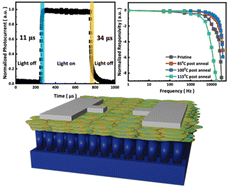
The temporal photoresponse characteristics of the pristine FCNCZA-LDH/SiNW photodetector disclosed the remarkable rapid dynamics, with a rising time (τr) of 11 µs and a fall time (τf) of 34 µs, which displayed substantial reduction of τr and τf reaching 64% and 53% of response dynamics compared with the untreated case, respectively, as evidenced in Fig. S20. Such improvement could be rationalized by the following considerations. First, the effects of post-annealing allowed for effective elimination of the absorbed water molecules confined within the interlayer galleries, thereby reducing the dielectric screening and suppressing extrinsic trap-mediated carrier scattering. Next, the structural replacement of M–OH groups with bridging M–O–M/M[double bond, length as m-dash]O terminated surfaces enhanced the interlayer orbital overlap due to a reduction of interlayer spacing, promoting more efficient charge percolation across the layered framework. These combined effects reduced the carrier hopping barriers, which implied a decrease in carrier transit delay, directly improving both rise and fall dynamics. The further indicator of response dynamics could be accessed with the measurement of −3 dB cutoff frequency (f−3dB), which could be derived from the following relation:54

 
f−3dB−2 = fRC−2 + ftr−2(7)
where fRC is the cutoff frequency governed by the device resistance–capacitance (RC) time constant, and ftr is the cutoff frequency determined by carrier drift or diffusion transit time across the electrode spacing. Accordingly, the obtained f−3dB was found to be 17.5 KHz (pristine case), and 29.7 KHz (100 °C as optimal anneal treatment). To further validate the operation bandwidth of FCNCZA-LDH based photodetectors, we considered the correlated detection dynamics fitting to the first-order low-pass RC filter, expressed as below:55
 
f−3dB = 0.35/τr(8)
where τr is the rise time of the photoresponse excitation, which is experimentally shown in Fig. 4(d). This reciprocal relation unequivocally implied that faster response dynamics translated into broader detection bandwidth, featuring the rational fit with the first-order low-pass RC filter, and the theoretically extracted f−3dB was 30 kHz, approximately corresponding to the measurement results [Fig. 4(e)], which positioned the top-level operation bandwidth of NIR photodetectors. The findings confirmed a pronounced enhancement in −3 dB bandwidth, underscoring its potential for high-speed optoelectronic applications. In addition, the correlation between photocurrent (Iph) and incident optical power density (P) could be quantitatively described by a power-law dependence:
 
IphCPθ(9)
where C is the wavelength-dependent proportionality constant, and θ is the retrieval parameter that characterizes the degree of linearity between the incident photon flux and the generated photocurrent.56–59 The measured result of FCNCZA-LDH devices is provided in the inset of Fig. 4(e), and other comparative data are displayed in Fig. S21, showing that the extracted θ reached 0.94. It has been reported that a θ value approaching unity signified that nearly every absorbed photon contributed to carrier generation and extraction, consistent with a defect-suppressed transport pathway, whereas sub-unity θ values revealed the presence of trap-assisted recombination or carrier immobilization phenomena. This implication uncovered the effectiveness of post-annealing, which facilitated the reliable light-power-dependent photoresponses via the reduced density of recombination centers at heterojunction interfaces.

A comparative assessment of state-of-the-art NIR photodetectors fabricated with HE-metal oxides is illustrated in Fig. 4(f),4,57,60–66 and the correlated photodetection performances are presented in Table S2.4,57,60–67 These results further underscore the superior response time and detectivity achieved in the present work. Although perovskite-based devices were regarded as the dominant materials in the current landscape of NIR photodetectors, the intrinsic drawbacks that constrained their ultimate performance. First, the response time of these perovskite photodetectors was generally prolonged, arising from the delayed release of carriers trapped in deep defect states, the intrinsic persistence of photoconductive gain mechanisms, the necessity of long-range carrier transport imposed by unfavorable device geometries, and mobility bottlenecks originating from interfacial or bulk transport limitations. Next, the mechanical robustness and environmental resistance should be further tailored for the practical feasibility of photodetection applications under harsh conditions. Examination of the crucial issues of the present FCNCZA-LDH/SiNW hybrid photodetectors is shown in Fig. 5.


image file: d5mh01889g-f5.tif
Fig. 5 Reliability examination of designed photodetectors under 940-nm light illumination. (a) On–off switching cycling tests of an FCNCZA–LDH/SiNW device under ambient conditions and after soaking in PBS solutions, respectively. (b) Device detectivity under various environmental pH conditions, (c) environmental temperatures and (d) mechanical abrasions. For comparison, similar tests on evaluating the detectivity stability from the reference by incorporating PbS quantum dots with Si were also performed. The error bars represented 5 independently measured cycles per time point, with relative standard deviations of ±5.1%.

In Fig. 5(a), the cycling photoresponses of FCNCZA-LDH/SiNW device were examined over 1000 on/off switches at 1 Hz as a transient interval. The performance decay under ambient conditions (1 atm, 25.2 ± 2.4 °C, and 45.5 ± 3.3% of relative humidity) across the repeated switching cycles is less than 0.5%, which unequivocally reveals its exceptional operational reliability and structural integrity under dynamic excitation conditions. Remarkably, analogous persistence of stable switching behavior was also discernible even after immersing the photodetector in phosphate-buffered saline (PBS) aqueous solutions for 30 min, thereby substantiating its environmental robustness and biocompatible endurance against aqueous perturbations. Environmental pH resistance of the FCNCZA-LDH/SiNW photodetector was explored with a wide pH range from 4 to 10, as illustrated in Fig. 5(b). It demonstrated the highly stable and robust characteristics, with a slight deviation of detectivity of less than 1% at pH = 10 and 6% at pH = 4. This moderate reduction can be rationalized by the protonation of M–OH moieties, leading to the formation of H2O and partial structural decomposition. Conversely, the PbS/Si reference underwent catastrophic failure, with detectivity deteriorating over 38% at pH = 4 and 33% at pH = 10. Tests of temperature endurance are presented in Fig. 5(c). The tested devices were subjected to 1-h thermal treatment under elevated temperatures from 25 °C to 175 °C in the air. The resulting detectivity was essentially retained, showing a marginal 1% reduction after undergoing 175 °C of thermal aging. Under the abrasion tests with the various weight loadings ranging from 0 to 120 g employed on device planes, the tested FCNCZA-LDH/SiNW photodetector exhibited a negligible reduction (<2%) in detectivity even at the highest normal stress (120 g). These results revealed the unparalleled mechanical, chemical, and thermal robustness of the presented FCNCZA-LDH/SiNW photodetector, markedly outperforming the conventional PbS/Si-based NIR photodetectors.

Conclusions

In conclusion, FCNCZA-LDH/SiNW hybrid photodetectors, prepared by a facile solution synthesis process, displayed improved NIR photodetection characteristics, showing the responsivity, detectivity, and rise/fall time of 13.74 A W−1, 2.73 × 10¹¹ Jones, and 11/34 µs, respectively. Moreover, given the outperforming operation bandwidth reaching 3 × 10⁴ Hz and suppressed flicker noise of 3.1 × 10⁻¹³ A Hz−1/2, the results manifested the top-performing NIR-responsive sensors reported to date. The remarkable environmental resistances of photodetectors were further validated, and such designed LDH features with the accessible seamless integration capabilities were anticipated for paving the way for practical NIR sensing/communication, feasible biomedical monitoring and other functional assessments.

Materials and methods

Synthesis of HE-LDH and annealing conditions

The synthesis of LDH powders was carried out via a homogeneous precipitation route. Specifically, metal precursors including Fe(NO3)3·9H2O, Co(NO3)2·6H2O, Ni(NO3)2·6H2O, Cu(NO3)2·3H2O, Zn(NO3)2·6H2O, and Al(NO3)3·9H2O were employed in conjunction with urea solutions as the complexing agent. The molar ratio between the total metal nitrates and urea was fixed at 1[thin space (1/6-em)]:[thin space (1/6-em)]6. These as-prepared precursors were subsequently dissolved in 40 mL of deionized water under continuous stirring until a homogeneous solution was obtained. The resulting solution was then transferred into a muffle furnace, where it was heated at a ramping rate of 5 °C min−1 to 120 °C and maintained at 120 °C for 24 h. Upon completion of the procedures, the mixtures were naturally cooled to the ambient temperature. The precipitates were collected using a vacuum filtration assembly and thoroughly rinsed with both ethanol and deionized water to remove residual ions and unreacted species. Finally, the product was dried overnight at 80 °C in an oven, yielding the as-prepared LDH powders. The obtained samples were placed in a chamber evacuated to 9 × 10⁻⁵ torr of a vacuum level and subsequently annealed at controlled heating rates of 2 °C min−1 to target temperatures of 85, 100, and 115 °C, respectively. Each annealing process was maintained for 2 h, followed by a controlled cooling stage at a rate of 3 °C min−1 down to ambient temperature.

Device fabrication

Deposition of LDH thin films was performed using 10 mg of the as-obtained LDH powders dispersed in 10 mL of ethanol. The suspension was subjected to ultrasonic agitation for 30 min to ensure complete exfoliation and homogeneous dispersion, yielding a stable colloidal LDH solution. Subsequently, 50 µL of the dispersions was carefully drop-cast onto SiNW/Si or Si substrates using a pipette, where the SiNWs were fabricated by a standard metal-assisted chemical etching.68–70 The coated substrates were then placed on a hot plate maintained at 50 °C to slowly induce the solvent evaporation and promote the formation of uniform LDH films with well-regulated thickness and surface coverage.

Characterization

Crystallographic characterization was performed using a Bruker AXS D2 Phaser diffractometer, enabling phase identification and lattice parameter refinements to assess the crystallinity evolution induced by compositional complexity and thermal modulation. Functional group vibrations were probed with a JASCO FT/IR-4600 Fourier-transform infrared spectrometer. To capture nanoscale ordering and crystallographic insights, the simultaneous grazing-incidence small-angle X-ray scattering (GISAXS) and grazing-incidence wide-angle X-ray scattering (GIWAXS) were performed at the National Synchrotron Radiation Research Center, Taiwan. Specifically, an incidence angle of 0.15° was employed to probe surface-sensitive scattering, enabling the extraction of lateral correlation lengths, stacking periodicities, and preferential crystal orientations in the LDH thin films. The surface morphology and film thickness were examined using a field-emission scanning electron microscope (FE-SEM, Hitachi SU-8000), which resolved the morphologies of nanosheet-like architectures. Complementary TEM investigations were conducted using a JEOL-2100F instrument operated at 200 kV, which allows the visualization of the lattice fringes and staggered features. Quantitative elemental compositions were determined via ICP-MS (Thermo ELEMENT XR). Ultraviolet photoelectron spectroscopy (UPS, Kratos Ultra Axis DLD, He I excitation at 21.2 eV) was employed to probe the electronic structures of the obtained samples, where the secondary-electron cut-off and valence band maximum (VBM) were examined. High-resolution X-ray photoelectron spectroscopy (XPS, PHI VersaProbe 4) further provided insights into the chemical configurations at sample surfaces.

Electrochemical Mott–Schottky analyses were performed using a ZIVE SP1 workstation in a 1 M KOH aqueous electrolyte to extract carrier concentrations and flat-band potentials, thereby elucidating the interfacial energetics and charge transfer kinetics. Optical absorption spectra were acquired using a Hitachi U-4100 UV-vis spectrophotometer, from which the optical bandgap energies were determined by Tauc plot extrapolation. Finally, the electrical and optoelectronic properties of the photodetectors were characterized using a Keysight B1500A semiconductor parameter analyzer. The incident optical power was accurately calibrated using a Newport 1919-R optical power meter to ensure quantitative evaluation of the photoresponsivity. The acquired frequency-resolved data were analysed using a PD-RS-SW computational routine, allowing deconvolution of Johnson–Nyquist thermal fluctuations, shot noise, flicker noise, and generation–recombination noise components.

Statistical analysis

For each electric and optoelectronic measurement, 5 sets of devices were fabricated and examined. The resulting parameters were calculated as the simple arithmetic mean across the 5 selected devices, while the error range was expressed as mean ± standard deviation (SD), or in some cases, the disparity between the maximum and minimum values. No data transformation or outlier removal was performed during preprocessing. A two-sided testing level with an alpha value of 0.05 was used throughout, and P < 0.05 was considered statistically significant. All statistical analyses and curve fittings were performed using OriginPro 2023 (OriginLab Corp.). Retention characteristics under the dependence of photocurrent on incident light power (Fig. S11–S14 and S19) were analysed based on measurements from 5 independently prepared devices. For environmental and long-term electrical stability assessments [Fig. 5], each test condition was carefully controlled prior to measurements, and we repeated across 3 different samples to ensure reproducibility under independent sample conditions.

Author contributions

Conceptualization: KTL, LMC and CYC. Data curation: KTL and LMC. Methodology: KTL, KLH and PHH. Investigation: KTL, KLH and PHH. Visualization: KTL, YTL and LMC. Supervision: CYC. Writing – original draft: KTL, PHH, YTL and CYC. Writing – review & editing: KTL, PHH, YTL and CYC.

Conflicts of interest

There are no conflicts to declare.

Data availability

The data supporting this article have been included as part of the Experimental section and supplementary information (SI). Supplementary information is available. See DOI: https://doi.org/10.1039/d5mh01889g.

Acknowledgements

This work was supported by the National Science and Technology Council (NSTC 113-2628-E-006-016-MY4). The authors greatly thank the Instrument Center and Center for Micro/Nano Science and Technology, National Cheng Kung University, for the facilities provided for conducting material characterization.

Notes and references

  1. F. Koppens, T. Mueller, P. Avouris, A. Ferrari, M. S. Vitiello and M. Polini, Nat. Nanotechnol., 2014, 9, 780–793 CrossRef CAS PubMed .
  2. X. Xu, C. C. Chueh, P. Jing, Z. Yang, X. Shi, T. Zhao, L. Y. Lin and A. K. Y. Jen, Adv. Funct. Mater., 2017, 27, 1701053 CrossRef .
  3. A. Moeini, L. Martínez-Sarti, K. P. Zanoni, M. Sessolo, D. Tordera and H. J. Bolink, J. Mater. Chem. C, 2022, 10, 13878–13885 RSC .
  4. C.-Y. Chen, J.-Y. Li, K.-Y. Kuo, T. X. Nguyen, P.-H. Hsiao and J.-M. Ting, ACS Appl. Mater. Interfaces, 2023, 15, 52716–52723 CAS .
  5. T.-H. Wang, C.-T. Kuo, P.-H. Chung, C.-I. Liu, Y.-Y. Lu, Y.-T. Lee and T.-R. Yew, J. Mater. Chem. C, 2021, 9, 4961–4970 RSC .
  6. L. Jia, R. Luo, X. Zheng, X. Zhang, P. Wang, L. Lv, L. Fu, W. Dong, C. Zhao and D. Li, Adv. Funct. Mater., 2025, 2418423 CrossRef CAS .
  7. T.-Y. Wu, K.-H. Lin, J.-Y. Li, C.-N. Kuo, C.-S. Lue and C.-Y. Chen, ACS Appl. Mater. Interfaces, 2023, 15, 54643–54654 CrossRef CAS PubMed .
  8. J. Y. Li, T. C. Wei, P. H. Hsiao, T. Y. Wu and C. Y. Chen, Adv. Mater. Interfaces, 2023, 10, 2201983 CrossRef CAS .
  9. A. M. Thomas, C. Yoon, S. Ippili, V. Jella, T.-Y. Yang, G. Yoon and S.-G. Yoon, ACS Appl. Mater. Interfaces, 2021, 13, 61434–61446 CrossRef CAS PubMed .
  10. Z. Wang, Y. Chen, P. Wu, J. Ye, M. Peng, Y. Yan, F. Zhong, T. He, Y. Wang and M. Xu, Infrared Phys. Technol., 2020, 106, 103272 CrossRef CAS .
  11. S. Zhang, H. Jiao, X. Wang, Y. Chen, H. Wang, L. Zhu, W. Jiang, J. Liu, L. Sun and T. Lin, Adv. Funct. Mater., 2020, 30, 2006156 CrossRef CAS .
  12. D. Tang, Z. Du, Y. Xie, F. Zhao, X. Yang, C. Gu and X. Shen, Adv. Mater. Interfaces, 2024, 11, 2301065 CrossRef CAS .
  13. J. Huang, J. Lee, J. Vollbrecht, V. V. Brus, A. L. Dixon, D. X. Cao, Z. Zhu, Z. Du, H. Wang and K. Cho, Adv. Mater., 2020, 32, 1906027 CrossRef CAS PubMed .
  14. H. H. Cho, J. Yang, J. K. Kim, M. H. Kim and H. K. Yu, J. Alloys Compd., 2025, 1010, 176969 CrossRef CAS .
  15. W. Seo, W. Park, H. Y. Seo, S. Oh, O. Kwon, S. H. Jeong, D. H. Kim, M. J. Kim, S. K. Lee and B. H. Lee, Appl. Surf. Sci., 2022, 604, 154485 CrossRef CAS .
  16. S. Maity, K. Sarkar and P. Kumar, Nanoscale, 2023, 15, 16068–16079 RSC .
  17. L. Song, L. Tang, Q. Hao, C. Yang, K. S. Teng, H. Wang, B. Yue, J. Li and H. Wei, Opt. Express, 2022, 30, 14828–14838 CrossRef CAS PubMed .
  18. P. Lv, X. Zhang, X. Zhang, W. Deng and J. Jie, IEEE Electron Device Lett., 2013, 34, 1337–1339 CAS .
  19. C. Jia, S. Wu, J. Fan, C. Luo, M. Fan, M. Li, L. He, Y. Yang and H. Zhang, ACS Nano, 2023, 17, 6534–6544 CrossRef CAS PubMed .
  20. J.-Y. Zhang, J.-L. Xu, T. Chen, X. Gao and S.-D. Wang, ACS Appl. Mater. Interfaces, 2019, 11, 44430–44437 CrossRef CAS PubMed .
  21. W. Kim, H. Kim, T. J. Yoo, J. Y. Lee, J. Y. Jo, B. H. Lee, A. A. Sasikala, G. Y. Jung and Y. Pak, Nat. Commun., 2022, 13, 720 CrossRef CAS PubMed .
  22. H. Wu, Z. Liu, B. Wang, L. Zheng, S. Lian, J. Zhang, S. Zhang, G. Zhang, Z. Xue, S. Yang, X. Cheng, G. Ding, Z. Liu, C. Ye and G. Wang, ACS Photonics, 2024, 11(3), 1342–1351 CrossRef CAS .
  23. W. Zhou, L. Zheng, X. Cheng, W. Zhou, X. Xiao, K. Xu, W. Xin, P. Ye and Y. Yu, J. Mater. Sci.: Mater. Electron., 2020, 31, 5900–5906 CrossRef CAS .
  24. A. A. Khan, M. Tahir and N. Khan, J. Energy Chem., 2023, 84, 242–276 CrossRef .
  25. P. Müller-Buschbaum, Eur. Polym. J., 2016, 81, 470–493 CrossRef .
  26. C. Pitchai and C.-M. Chen, Sustainable Energy Fuels, 2025, 9, 1829–1838 RSC .
  27. S. Chen, Q. Yang, J. Shi, Y. Ying and Y. Liu, Colloids Surf., A, 2022, 635, 128078 CrossRef CAS .
  28. S. S. Aamlid, M. Oudah, J. Rottler and A. M. Hallas, J. Am. Chem. Soc., 2023, 145, 5991–6006 CrossRef CAS PubMed .
  29. C. M. Rost, E. Sachet, T. Borman, A. Moballegh, E. C. Dickey, D. Hou, J. L. Jones, S. Curtarolo and J.-P. Maria, Nat. Commun., 2015, 6, 8485 CrossRef CAS PubMed .
  30. L.-Y. Li, J.-X. Bai, Z. Ma, M. Jiang, Q. Cao and M.-S. Cao, Adv. Funct. Mater., 2025, e19905 CrossRef .
  31. M. Kamada, W. Zeng, A. Laitinen, J. Sarkar, S.-S. Yeh, K. Tappura, H. Seppä and P. Hakonen, Commun. Phys., 2023, 6, 207 CrossRef .
  32. C. Hobbs, S. Jaskaniec, E. K. McCarthy, C. Downing, K. Opelt, K. Güth, A. Shmeliov, M. C. Mourad, K. Mandel and V. Nicolosi, npj 2D Mater. Appl., 2018, 2, 4 CrossRef .
  33. B. S. Yadav and S. Dasgupta, Inorg. Chem. Commun., 2022, 137, 109203 CrossRef CAS .
  34. Z.-R. Chen, Y.-Q. Zhu, S.-M. Xu, Y. Zhao, Q. Peng and H. Yan, J. Mater. Chem. A, 2021, 9, 20466–20482 RSC .
  35. S.-L. Wang and P.-C. Wang, Colloids Surf., A, 2007, 292, 131–138 CrossRef CAS .
  36. H. Min, D. Y. Lee, J. Kim, G. Kim, K. S. Lee, J. Kim, M. J. Paik, Y. K. Kim, K. S. Kim and M. G. Kim, Nature, 2021, 598, 444–450 CrossRef CAS PubMed .
  37. Y. Zhai, X. Ren, T. Gan, L. She, Q. Guo, N. Yang, B. Wang, Y. Yao and S. Liu, Adv. Energy Mater., 2025, 2502065 CrossRef CAS .
  38. N. J. Usharani, P. Arivazhagan, T. Thomas and S. Bhattacharya, Mater. Sci. Eng., B, 2022, 283, 115847 CrossRef CAS .
  39. H. Boumeriame, E. S. Da Silva, A. S. Cherevan, T. Chafik, J. L. Faria and D. Eder, J. Energy Chem., 2022, 64, 406–431 CrossRef CAS .
  40. X. Chu, F. Meng, H. Yang, W. Zhang, T. Qin, Z. Wang, S. Molin, P. Jasinski and W. Zheng, ACS Appl. Energy Mater., 2022, 5, 2192–2201 CrossRef CAS .
  41. J. Huang, C. You, B. Wu, Y. Wang, Z. Zhang, X. Zhang, C. Liu, N. Huang, Z. Zheng and T. Wu, Light: Sci. Appl., 2024, 13, 153 CrossRef CAS PubMed .
  42. P.-H. Hsiao, H. Li, J. Lessage, J. C. Juan, K.-L. Hsiao, T.-Y. Huang and C.-Y. Chen, Surf. Interfaces, 2025, 107189 CrossRef CAS .
  43. M. Kumar, M. Patel, H.-S. Kim, J. Kim and J. Yi, ACS Appl. Mater. Interfaces, 2017, 9, 38824–38831 CrossRef CAS PubMed .
  44. S. Chhajed, M. F. Schubert, J. K. Kim and E. F. Schubert, Appl. Phys. Lett., 2008, 93 Search PubMed .
  45. S. E. Han and G. Chen, Nano Lett., 2010, 10, 4692–4696 CrossRef CAS PubMed .
  46. W. Luk, K. Yeung, K. Tam, K. Ng, K. Kwok, C. Kwong, A. Ng and A. Djurišić, Org. Electron., 2011, 12, 557–561 CrossRef CAS .
  47. J.-Y. Chen, W.-L. Chang, C.-K. Huang and K. W. Sun, Opt. Express, 2011, 19, 14411–14419 CrossRef CAS PubMed .
  48. J.-Y. Jung, H.-D. Um, S.-W. Jee, K.-T. Park, J. H. Bang and J.-H. Lee, Sol. Energy Mater. Sol. Cells, 2013, 112, 84–90 CrossRef CAS .
  49. R. T. Tung, Appl. Phys. Rev., 2014, 1, 011304 Search PubMed .
  50. Ş. Aydoğan, Ö. Güllü and A. Türüt, Phys. Scr., 2009, 79, 035802 CrossRef .
  51. Z. H. Liu, P. H. Hsiao, P. C. Liao, Y. H. Su, L. V. P. Thuan, Y. T. Li and C. Y. Chen, Small, 2025, 2502244 CrossRef CAS PubMed .
  52. C. Wang, B. He, W. Hui, Z. Su, L. Chen, W. Du, L. Zhang, J. Zhang, M. Fu and H. Wang, Adv. Funct. Mater., 2024, 34, 2403690 CrossRef CAS .
  53. P.-H. Hsiao, K.-H. Lin, C. Hsieh, L. V. P. Thuan, M.-F. Lin and C.-Y. Chen, J. Mater. Chem. C, 2024, 12, 19049–19057 RSC .
  54. M. Biele, C. Montenegro Benavides, J. Hürdler, S. F. Tedde, C. J. Brabec and O. Schmidt, Adv. Mater. Technol., 2019, 4, 1800158 CrossRef .
  55. C. Schedel, F. Strauß and M. Scheele, J. Phys. Chem. C, 2022, 126, 14011–14016 CrossRef CAS .
  56. X. Xu, Y. Wang, Y. Ji, Z. Chen, C. Lu, X. Xu and D. Hua, Small, 2024, 20, 2308590 CrossRef CAS PubMed .
  57. D.-S. Tsai, K.-K. Liu, D.-H. Lien, M.-L. Tsai, C.-F. Kang, C.-A. Lin, L.-J. Li and J.-H. He, ACS Nano, 2013, 7, 3905–3911 CrossRef CAS PubMed .
  58. A. K. Rana, J. T. Park, J. Kim and C.-P. Wong, Nano Energy, 2019, 64, 103952 CrossRef CAS .
  59. D. Wang, Y. Xu, H. Zhang and Y. Zhang, Small Methods, 2024, 8, 2300888 CrossRef CAS PubMed .
  60. R. Dong, C. Bi, Q. Dong, F. Guo, Y. Yuan, Y. Fang, Z. Xiao and J. Huang, Adv. Opt. Mater., 2014, 2, 549–554 CrossRef CAS .
  61. B. Sun, A. M. Najarian, L. K. Sagar, M. Biondi, M. J. Choi, X. Li, L. Levina, S. W. Baek, C. Zheng and S. Lee, Adv. Mater., 2022, 34, 2203039 CrossRef CAS PubMed .
  62. P. Rong, S. Gao, S. Ren, H. Lu, J. Yan, L. Li, M. Zhang, Y. Han, S. Jiao and J. Wang, Adv. Funct. Mater., 2023, 33, 2300159 CrossRef CAS .
  63. N. E. Silva, A. R. Jayakrishnan, A. Kaim, K. Gwozdz, L. Domingues, J. Kim, M. C. Istrate, C. Ghica, M. Pereira and L. Marques, Adv. Funct. Mater., 2025, 35, 2416979 CrossRef CAS .
  64. S. Ren, S. Gao, P. Rong, L. Li, M. Zhang, H. Lu, J. Yan, D. Ling, S. Jiao and J. Wang, Chem. Eng. J., 2023, 468, 143626 CrossRef CAS .
  65. M. Dai, Q. Wu, C. Wang, X. Liu, X. Zhang, Z. Cai, L. Lin, X. Gu, K. Ostrikov and H. Nan, Adv. Opt. Mater., 2024, 12, 2301900 CrossRef CAS .
  66. H. Roshan, F. Ravanan, M. H. Sheikhi and A. Mirzaei, J. Alloys Compd., 2021, 852, 156948 CrossRef CAS .
  67. D. Shin, H. Jeong, J. Kim, E. Jang, Y. Park and S. Jeong, Adv. Opt. Mater., 2025, 13, 2401931 CrossRef CAS .
  68. T. C. Wei, S. H. Chen, K. H. Lin, T. Y. Wu, P. H. Hsiao and C. Y. Chen, Adv. Mater. Technol., 2024, 9, 2301966 CrossRef CAS .
  69. F.-Y. Chiang, P.-H. Hsiao, T.-Y. Wu, V. K. Dien, M.-F. Lin and C.-Y. Chen, Sens. Actuators, B, 2023, 390, 133996 CrossRef CAS .
  70. R. P. Srivastava and D. Y. Khang, Adv. Mater., 2021, 33, 2005932 CrossRef CAS PubMed .

This journal is © The Royal Society of Chemistry 2026
Click here to see how this site uses Cookies. View our privacy policy here.