


 PLATFORM UPDATE:


Mechanically robust polyurethane elastomers enabled by soft-segment-regulated hydrogen bonds and microphase separation for ultrasound imaging medical catheters

Abstract
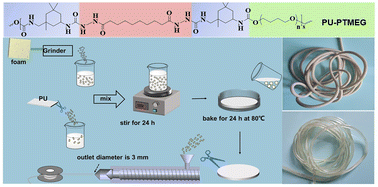
Conventional strategies for enhancing the mechanical robustness of thermoplastic polyurethane elastomers (TPUs) rely on hard-segment engineering, such as introducing dynamic covalent/noncovalent bonds or optimizing chain extenders, yet overlook the critical role of soft segments in governing microphase separation. Here, we present a soft-segment-regulated design that leverages crystallizable polyols to synergize hierarchical hydrogen bonding, tunable microphase separation, and strain-induced crystallization (SIC), achieving excellent mechanical performance. Among them, PU–PTMEG exhibits exceptional mechanical properties, including a tensile strength of 75.6 MPa, a toughness of 337.4 MJ m−3, and a fracture energy of 131.6 kJ mol−1—values that surpass those of many metals and alloys. Furthermore, its true fracture stress reaches 1.03 GPa, comparable to that of spider silk, while its toughness is approximately 2.3 times higher, demonstrating a remarkable combination of strength and toughness. The dynamic yet dense hydrogen bond network, strategically balanced in both strength and reversibility, enables efficient energy dissipation during deformation, while the SIC activated by aligned soft segments facilitates elastomer self-reinforcement. Finally, by combining the antibacterial properties endowed by intrinsic acylhydrazine groups (bacterial survival rate <20%) and the introduction of rigid polyurethane foam as an acoustic impedance modifier, high-contrast ultrasound imaging of TPU wires has been successfully achieved.
 Please wait while we load your content...


