


Design, synthesis, and biological evaluation of X19: a matrine pyrazole derivatives therapeutic candidate
 *a
*a
Abstract
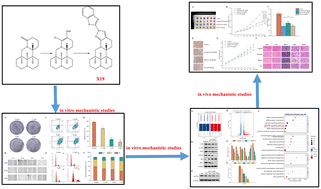
A series of novel matrine-pyrazole derivatives were designed and synthesized through structural modification of the natural alkaloid matrine to enhance its antitumor efficacy. Among these derivatives, compound X19 was identified as the most potent candidate through comprehensive in vitro screening, demonstrating superior anti-proliferative activity against human hepatocellular carcinoma Huh-7 cells with an IC50 value of 5.92 μM. Mechanistic investigations revealed that X19 suppresses tumor growth through induction of apoptosis, G0/G1 phase cell cycle arrest, and dose-dependent inhibition of the JAK/STAT signaling pathway. In a Huh-7 xenograft mouse model, X19 exhibited significant antitumor efficacy comparable to sorafenib, achieving a tumor growth inhibition rate of 55.35%. Importantly, histopathological evaluation revealed that X19 displays an improved safety profile, particularly demonstrating superior renal protection compared to sorafenib-induced nephrotoxicity, while maintaining manageable toxicity in other major organs. These findings establish X19 as a promising lead compound for hepatocellular carcinoma treatment, representing a significant advancement in the development of matrine-based therapeutics with an optimized therapeutic index.
 Please wait while we load your content...


