


 PLATFORM UPDATE:


From lab to environment: forecasting pharmaceutical impact using in silico and analytical tools

Abstract
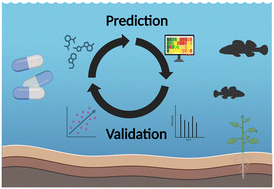
Pharmaceuticals are increasingly detected in the environment, raising concerns about their ecological impact. Global monitoring efforts have revealed widespread contamination, with many sites exceeding safety thresholds for aquatic health. Traditional post-hoc monitoring approaches are reactive, identifying contamination only after environmental exposure has occurred. This highlights the need for predictive tools that assess environmental fate earlier in the drug development process. This review examines current and emerging strategies for early screening of pharmaceutical persistence, toxicity, and bioaccumulation, emphasising in silico approaches such as quantitative structure-activity relationship (QSAR) modelling, machine learning, and molecular docking, alongside complementary analytical techniques, including high-performance liquid chromatography (HPLC), nuclear magnetic resonance (NMR), liquid chromatography/gas chromatography-mass spectrometry (LC/GC-MS), and ion mobility spectrometry (IMS) for validating predictions and characterising complex environmental samples. Together, these tools offer a proactive framework for integrating environmental risk considerations into the pharmaceutical design and development pipeline.
- This article is part of the themed collection: Sustainable Medicinal Chemistry
 Please wait while we load your content...


