


 PLATFORM UPDATE:


Novel Pt@BSA nanoparticles improve radiotherapeutic outcomes in breast cancer
 †*a
†*a
Abstract
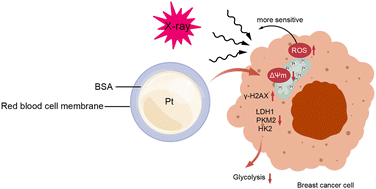
Radiotherapy is a standard treatment for breast cancer, but its therapeutic efficacy is often limited by tumor radioresistance and systemic toxicity. Hence, the development of effective radiosensitizers with favorable biocompatibility is urgently needed. We designed and synthesized a biomimetic nanoparticle system, Pt@BSA-RM, by encapsulating platinum nanoparticles within bovine serum albumin (BSA) and cloaking them with a red blood cell membrane (RM). Subsequently, the physicochemical properties, drug loading, stability, and release profiles of Pt@BSA-RM were comprehensively characterized. Next, we assessed the radiosensitizing effect of Pt@BSA-RM in 4T1 BC cells by EdU incorporation, CCK-8, and apoptosis assays, explored the mechanism by ROS generation and γ-H2AX staining, and assessed the effect of Pt@BSA-RM on energy metabolism by GFAAS and JC-1 staining and metabolic flux analysis (OCR/ECAR). A subcutaneous 4T1 tumor model in BALB/c mice was established to assess the in vivo antitumor efficacy and biosafety of Pt@BSA-RM combined with radiotherapy. We found that Pt@BSA-RM nanoparticles possess excellent physical and chemical properties. In vitro studies showed that Pt@BSA-RM significantly enhanced radiation-induced cytotoxicity, inhibited cell proliferation, promoted apoptosis and DNA damage, disrupted mitochondrial membrane potential, and altered glycolytic and oxidative metabolisms. In vivo studies indicated that Pt@BSA-RM combined with X-ray irradiation markedly suppressed tumor growth compared with monotherapy, with reduced systemic toxicity. These results indicated that the red blood cell membrane-coated Pt@BSA nanoparticles effectively improve radiotherapeutic outcomes in breast cancer by enhancing the cellular radiosensitivity and minimizing the adverse effects. This biomimetic nanoplatform holds promise for further translational research in cancer radiotherapy.
 Please wait while we load your content...


