

 Open Access Article
 This Open Access Article is licensed under a
 Creative Commons Attribution 3.0 Unported Licence
Perspective: ion transport mechanisms and the significance of glass transition temperature in PEO-based polymer blend electrolytes for next-generation Li-batteries
Marissa Gallmeyer†
 ,
Thorfinnur A. H. Baldvinsson† and
Whitney S. Loo*
,
Thorfinnur A. H. Baldvinsson† and
Whitney S. Loo*
University of Wisconsin-Madison Department of Chemical and Biological Engineering, Madison, WI 53706, USA. E-mail: wloo@wisc.edu
First published on 28th May 2026
Abstract
Polymer blend electrolytes have become a promising avenue to enable solid electrolytes for use in lithium metal batteries. Much of the current literature has explored the effect of glass transition temperature (Tg) on the ionic conductivity of various ion-containing polymer blends. The Vogel–Tamman–Fulcher (VTF) equation is often used to describe the temperature-dependence of the ionic conductivity of these systems, as it considers the segmental dynamics of the blend and accounts for the Tg. The reduced conductivity can be calculated using the VTF parameters and describes the ionic conductivity at a set value away from Tg. Therefore, the reduced conductivity can interpret observed differences in ionic conductivity by removing the effects of segmental motion. In this work, we fit previously reported ionic conductivity data for 15 unique systems based on polymer blends to the VTF equation, allowing us to deconvolute the effects of Tg and ion solvation environment on the ionic conductivity. We divide the blends into three distinct groups, (1) poly(ethylene oxide) (PEO)-based blends with lithium perchlorate (LiClO4), (2) PEO-based blends with lithium bis(trifluoromethanesulfonyl)imide (LiTFSI), and (3) PEO-based blends with single-ion containing polymers. We find that the relative balance between ion solvation environment and segmental dynamics is highly dependent on salt chemistry, where ion transport in blends doped with LiClO4 is highly dependent on segmental dynamics while ion solvation environment plays a larger role in those doped with LiTFSI. For blends with ion-containing polymers, a complex balance between the number of charge carriers and segmental motion exists. Overall, while segmental dynamics strongly influence ion transport, our findings reveal that the incorporation of multiple polymers into an electrolyte can enable engineering of the ion solvation environment to improve ion transport.
Introduction
As the world faces an ever-growing energy demand and a desire to shift away from fossil fuels to move towards renewable energy technologies, the need for improved energy storage has also increased. Rechargeable batteries are a critical part not only of consumer goods, including personal devices and electric vehicles, but also for the grid-scale transition to renewable energy, which requires innovative energy storage solutions.1,2 While lithium-ion batteries (LIBs) are the current system of choice due to their moderate energy density and good cycleability,3 they are unable to meet long-term energy demands.4–7 Lithium metal batteries (LMBs) are one promising technology that can offer increased energy density by replacing the conventional graphitic anode with a lithium metal anode.6,8,9 However, there are many engineering challenges to overcome before widespread adoption of LMBs. The electrolytes currently used in commercial LIBs consist of mixtures of carbonate-based solvents and a lithium salt.10 While these liquid electrolytes exhibit high ionic conductivities, up to 10−2 S cm−1 at room temperature, they are highly flammable with their flash points at only ∼30 °C and are not compatible with lithium metal anodes.11 Additionally, their weak mechanical properties can lead to dendrite formation, resulting from nonplanar Li deposition and stripping, which can hinder battery performance. If the dendrites extend the length of the electrolyte, they can cause short-circuiting and additional safety hazards.12–15 Therefore, developing alternative electrolytes that address the shortcomings of conventional liquid electrolytes is required for adoption of next-generation batteries.6,12–14,16Solid-state electrolytes (SSEs) would allow for the implementation of the more energy-dense LMBs due to their increased safety including being nonflammable, enhanced stability and the potential to inhibit dendrite formation.12,17–19 An ideal SSE requires high ionic conductivity at ambient temperatures, sufficient electrochemical and chemical stability, high mechanical strength, and low cost.20–22 In general, polymer electrolytes meet many of these requirements, and they are also stable against lithium metal.23,24 Despite these favorable characteristics, polymer electrolytes have limited ionic conductivity at room temperature, which impedes their adoption.25,26 In 1973, Wright et al. first reported poly(ethylene oxide)'s (PEO) ability to solvate and conduct potassium and sodium salts,27 and in 1983, Armand et al. demonstrated PEO's ability to conduct solvated lithium ions.23 Based on these initial studies, a wide variety of polymer structures have been explored as SSEs including polycarbonates, polyethers, polyesters, perfluoropolyethers, and polysiloxanes.26,28–31
PEO doped with various lithium salts has been the primary system of study, with lithium bis(trifluoromethanesulfonyl)imide (LiTFSI) and lithium perchlorate (LiClO4) being the most commonly used salts (Fig. 1).21,25 PEO/LiTFSI is considered the benchmark system due to its high ionic conductivity on the order of 10−3 S cm−1 at 90 °C.32–34 However, the ionic conductivity of PEO/LiTFSI at room temperature is significantly lower, typically around 10−4 to 10−8 S cm−1, due to its semi-crystalline nature.26,35 To address this limitation and improve the performance of PEO-based electrolytes, many studies have focused on modifying the polymer matrix through polymer blends, copolymerization, or by incorporating additives such as plasticizers and inorganic nanofillers.36,37 Polymer blend electrolytes (PBEs), where two polymers are blended together, have emerged as promising electrolyte candidates due to the ease and simplicity of preparation and their allowance of good control of physical properties through adjusting blend composition. While PBEs typically consist of miscible blends of two polymers with an added salt, recent studies have focused on blends of neutral and ion-containing polymers, termed single-ion conducting polymer blends (SICPBs).26,38 These studies have shown that PBEs are capable of improved ion transport, allowing for enhanced ionic conductivity and enabling higher cation transference numbers by immobilizing the anion through SICPBs.26,38 However, the ion transport mechanism in a multicomponent polymer system as well as the thermodynamics governing miscibility in ion-containing polymer blends require further investigation.25,26,31
 | ||
| Fig. 1 Molecular structures of poly(ethylene oxide) (PEO) and lithium perchlorate (LiClO4), and lithium bis(trifluoromethanesulfonyl)imide (LiTFSI), two of the most commonly used salts in the solid polymer electrolyte space. | ||
Background
Ion transport mechanism in polymer electrolytes
Li+ ion transport in PEO-based electrolytes occurs through Li+ ion solvation by the ethylene oxide (EO) groups along the polymer chains. The EO groups are polar groups as a result of the electronegativity difference between the carbons and oxygens, and typically, solvation of a single Li+ ion requires coordination with five to six EOs.34,39–42 As a result of segmental motion of the polymer, Li+ ions migrate from one solvation site to another in the presence of an electric field.43 Therefore, ion transport occurs primarily in the amorphous phase, above the melting temperature (Tm). In the semicrystalline state, the restricted movement of the polymer segments significantly hinders ion transport, and therefore, at temperatures below Tm, the ionic conductivity drops several orders of magnitude due to the reduced amorphous polymer available for ion transport.36,44–46Above the glass transition temperature, Tg, where the polymer subunits undergo segmental motion, ion transport occurs via two mechanisms, vehicular and continuous motion. Vehicular motion is commonly observed in liquid electrolytes and occurs when the coordinating molecules move with the solvated ions. Therefore, in polymer electrolytes, vehicular motion is primarily enabled in low-molecular-weight polymers (i.e., below the entanglement molecular weight, Me) where single-chain diffusion is possible. At higher molecular weights above Me, ion transport through continuous motion, either interchain or intrachain, is dominant.35 Intrachain motion is where an ion moves between solvation sites along the same chain, whereas interchain motion is where an ion moves between solvation sites on different chains. In homopolymer electrolytes with Tg below room temperature, the primary Li+ ion transport mechanism is continuous motion initiated via the segmental motion of the polymer matrix.35,43,47 Fast segmental dynamics are enabled above Tg and Tm, while at temperatures below Tg, the motion of the polymer chain is minimal, leading to greatly reduced ion transport. In this scheme, the temperature-dependence of the ionic conductivity, σ, follows the Vogel–Tamman–Fulcher (VTF) equation, an altered Arrhenius equation using Tg as a reference, according to:26,43,44
 | (1) |
 | (2) |
 | ||
| Fig. 2 Ion transport mechanisms in systems where ion motion is coupled with segmental motion and those where it is decoupled from the segmental motion. | ||
Here, Ea refers to an activation energy of ion motion that is not tied to the polymer segmental dynamics, and the other variables (A, R, T), have consistent definitions with eqn (1). The linear relationship between the logarithm of ionic conductivity and the inverse of temperature suggests the ion transport is decoupled from the segmental dynamics (see Fig. 2, right side).34,50–52 There is increased interest in developing polymer electrolytes that exhibit decoupled ion transport across a wide temperature window especially above the electrolyte's Tg where coupled ion transport is typically observed. This would unlock new material engineering strategies to increase the rates of ion transport that do not involve tuning the segmental motion, which is the current strategy for increasing the ionic conductivity of polymer electrolytes. Walden plot analysis can be used to help quantify the degree of decoupling where high-performing materials would exhibit superionic behavior.43,53–60
Several parameters influence the ionic conductivity of polymer electrolytes beyond segmental motion, including ion solvation environment and salt dissociation. The effects of segmental motion on ionic conductivity can be directly determined by calculating a reduced conductivity, σr, using parameters from VTF fits (eqn (1)) and is given by:
 | (3) |
 | ||
| Fig. 3 Example of analysis of ion transport mechanism for three polymer electrolytes, Sample A (purple diamond), Sample B (red square), and Sample C (blue circle), where (a) shows the Tg, (b) shows the temperature dependent conductivity and (c) shows the reduced conductivity of the three systems. The x-axis on (a) and (c) is left blank to indicate comparison with respect to any electrolyte property. | ||
Miscibility and ion transport in polymer blends
Polymers are large macromolecules, making mixing entropically unfavorable.65 The thermodynamics of binary polymer blends can be described by the Flory–Huggins equation according to:
 | (4) |
PBEs are ternary systems comprised of two polymers and a salt. In order to maximize ion transport, PBEs must be miscible, as phase separation can result in lower ionic conductivity due to disruptions in ion solvation site connectivity.73 The introduction of salt impacts the interactions in the system, and typically is accounted for through an effective interaction parameter, χeff which describes the enthalpic interactions between the polymer components in the presence of salt.70,74,75 Previous work has shown that the miscibility window of two polymers in the presence of salt is typically different from that of the salt-free blends.70,76,77 The observed changes in blend thermodynamics upon salt addition are highly dependent on the preference for the salt to be solvated by one or more of the polymer components. In the simplest case, only one polymer component is capable of ion solvation, such as PEO/PMMA/LiTFSI where all the ions are solvated by PEO. In these cases, the ion transport mechanism mimics that of PEO homopolymer electrolytes and the presence of PMMA only alters the solvation site connectivity and segmental dynamics of the PEO subunits as described by the Lodge–McLeish model.78,79 However, both polymers can also participate in ion solvation as is the case with PEO/poly(1,3,6-trioxocane) (P(2EO-MO))/LiTFSI studied by Gao et al. and PEO/poly(oligo ethylene oxide methacrylate) (POEM)/LiTFSI studied by Gallmeyer et al.70,80 The ion transport mechanism in these systems is more complicated as there are two distinct rates of ion motion tied to the unique segmental motions of each polymer species.
Single-ion conducting polymer blends
In dual ion conductors, where both the cation and the anion are capable of moving, a major fraction of the overall ionic current can be carried by the anions, resulting in a low electrolyte efficiency quantified by the Li+ transference number (tLi+).38,81 In the presence of an electric field, the anions move in the opposite direction of the Li+ ions. Since there are no reversible electrochemical reactions for the anions at the electrode, the anions accumulate on the electrode–electrolyte interface leading to the formation of concentration gradients, which can cause dendrite growth, reduce the electrochemical stability, and lower the limiting current density.82–85 Limiting the movement of the anion to generate a single-ion conductor where only the cation can move is one way to increase electrolyte performance. A promising class of SSEs is single-ion conducting polymer electrolytes (SICPEs), introduced by Bannister et al. in 1984, where the anion is covalently bonded to the polymer resulting in high tLi+ values (close to unity).81,86,87 Compared to PEO-based electrolytes, SICPEs have high Tg's which results in reduced segmental motion, negatively affecting Li+ ion transport. Furthermore, the strong electrostatic interactions between the free cation and bound anion reduce the concentration of free charge carriers, resulting in lower ionic conductivity.38,58,88,89To overcome the inherent trade-off between tLi+ and ionic conductivity, researchers have studied blends of ion-containing polymers (polyanions) and ion-conducting polymers (typically PEO-based), to generate single-ion conducting polymer blends (SICPBs).90 They demonstrate improved electrochemical performance over single-ion conducting polymer electrolytes, such as superionic transport, as well as increased miscibility.55,58,60,90 It is worth noting that the blend thermodynamics in these systems are more complicated than that of the PBEs previously described as only one ion, i.e., the cation, is mobile. The presence of a tethered anion can lead to asymmetric phase diagrams, and modified theories have been developed to define an effective interaction parameter, χeff, that captures the additional interactions present within SICPB systems such as the polymer backbone miscibility, electrostatic interactions, and counterion solvation.65,91 However, the addition of a rigid, high Tg component, such as a polyanion, reduces the segmental motion and ion transport capabilities of the lower Tg ion-conducting polymer.72,78 In SICPB systems, the temperature-dependent ionic conductivity often exhibits VTF- or Arrhenius-like behavior. VTF-like behavior is typically observed above the Tg of the system, where the ion motion relies on the free volume generated by segmental relaxations.43,51 In this case, the mobility of the Li+ ions is governed by the mobility of the PEO chains. Arrhenius-like behavior is typically observed below the Tg of the system, when the blend is in the glassy state.92 The mobility of the Li+ ions is independent of the mobility of the PEO chains.55,90
In this perspective, our goal is to determine the effect of segmental motion on the ionic conductivity of various PEO-based PBEs. We have extracted data from 15 distinct PBEs and analyzed their segmental dynamics and ion transport properties. The PBEs are classified into three groups: (1) PEO-based blends with LiClO4, (2) PEO-based blends with LiTFSI, and (3) PEO-based SICPBs. In each section, we evaluate the interactions between the polymer components by fitting available Tg data to known models and calculate σr for the PBEs to enable direct comparison of ion transport properties between distinct polymer chemistries. Overall, we find that although polymer segmental motion is a factor across all three groups, the relative balance between ion solvation environment and segmental dynamics is highly dependent on salt chemistry and unique behaviors emerge between the three groups studied. While segmental dynamics strongly influence ion transport in both PBEs and SICPBs, our findings reveal that tunability of polymer blends introduces a pathway to engineer a more-connected ion solvation environment through polymer architecture, anion selection, salt concentration, and blend composition to improve ion transport without the need for increasing segmental dynamics.
Results and Discussion
Part 1: PEO/P2/LiClO4
First, we will evaluate PEO-based blends with LiClO4, and Table 1 contains a comprehensive list of the systems analyzed and corresponding blend properties including PEO weight fraction, wPEO, and the molar salt ratio, r, which quantifies salt concentration in these systems. Here we use polymer 2, P2, to denote the second polymer in the blend that has a distinct chemical structure from PEO. We will begin by discussing the segmental dynamics of the blends, as Tg,blend can provide insights into the enthalpic interactions between the polymer components and salt. All blends exhibit one Tg and are therefore macroscopically miscible. In order to accurately describe the trends of the Tg's for the PBEs considered in this study, we apply the Kwei equation given by93
 | (5) |
| Polymer 2 (P2) | Mn,PEO (kDa) | Mn,P2 (kDa) | wPEO | r | Tg,blend (°C) | k | q | References |
|---|---|---|---|---|---|---|---|---|
| a All Tg values were reported from DSC measurements.b Indicates that both polymers participate in ion solvation and are included in the r calculations.c Ionic conductivity was reported for both molecular weights, but only one set of thermal analysis was provided and so it is assumed that Tg is independent of molecular weight and applied to both VTF fits. | ||||||||
 |
5 × 10³ | 1 | 0 | 0.1b | −31.9 | 1.00 | −2.83 | Kim et al.98 |
| 0.2 | −30.8 | |||||||
| 0.4 | −30.3 | |||||||
| 0.6 | −28.4 | |||||||
| 0.8 | −26.1 | |||||||
| 1 | −24.9 | |||||||
| 0.4 | 0.01b | −48.7 | — | — | ||||
| 0.4 | 0.02b | −47 | ||||||
| 0.4 | 0.05b | −41.4 | ||||||
| 0.4 | 0.2b | −23.9 | ||||||
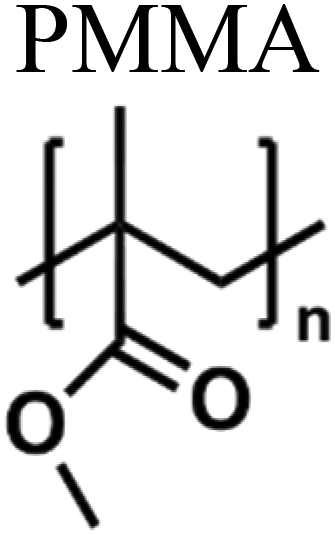 |
100 | 120 | 0.5 | 0.1 | −41 | 0.122 | −126.6 | Ghelichi et al.99 |
 |
70 & 103![[thin space (1/6-em)]](https://www.rsc.org/images/entities/char_2009.gif) c c |
87 | 0.8 | 0.1b | −37.5 | 1.780 | −128.36 | Tanaka et al.100 |
| 0.07b | −30.1 | — | — | |||||
| 0.14b | −40.7 | — | — | |||||
| 0.25b | −41.7 | — | — | |||||
 |
600 | 50 | 0.75 | 0.1 | −23 | 4.767 | −558.3 | Li & Khan101 |
| 0.125 | −17 | — | — | |||||
| 0.167 | −29 | — | — | |||||
| 0.25 | −23 | — | — | |||||
 |
600 | 200 | 0.85 | 0.1 | −27 | 6.478 | −555.7 | Li & Khan101 |
| 0.04 | −41 | — | — | |||||
| 0.05 | −39 | — | — | |||||
| 0.07 | −39 | — | — | |||||
| 0.2 | 4 | — | — | |||||
The Kwei fit was applied to the polymers such that Tg,1 was that of PEO at the given salt concentration and Tg,2 was dependent on the system under consideration. In blends where the second polymer is believed to participate in ion solvation and is included in the r value of the blends, Tg,2 is the Tg of the second polymer at the given salt concentration. This can be described by
 | (6) |
A comprehensive study of the PEO/PES/LiClO4 was conducted by Kim and coworkers and can serve as a case study on the effect of blend properties on the ion transport mechanism.98 The repeating structure of PES contains a series of EOs separated by esters, as seen in Table 1. Therefore, both PEO and PES contribute to the ion solvation, and r is the ratio of Li to total EO's in both polymers. Fig. 4a shows the temperature-dependent ionic conductivity of PEO/PES/LiClO4 blends with consistent r = 0.1 and varying blend compositions, and VTF fits are shown in solid lines. It is clear that at higher temperatures and at higher PES fractions the VTF equation better represents the ion transport behavior. This is due to the semicrystalline behavior of PEO/LiClO4.98 At r = 0.1, PEO/LiClO4 exhibits a precipitous drop in ionic conductivity corresponding to its Tm at 52.1 °C. In this system, the ionic conductivity increases with increasing PES content, with the blend with the highest PES content having the highest ionic conductivity. However, this also corresponds to the blend with fastest segmental dynamics, i.e., the lowest Tg,blend. Therefore, we calculated σr according to eqn (3) in order to determine if this increase in ion transport is solely due to the difference in segmental motion. Fig. 4b shows the reduced conductivity, σr, of the PEO/PES/LiClO4 blends at r = 0.1 as a function of EO mole fraction. As previously described, if the segmental motion was the only determining factor that results in differences in ionic conductivity, we would expect this line to be horizontal at a constant value of σr. Instead, we find that the two blends with the lowest EO mole fractions are quantitatively similar, but once we exceed an EO mole fraction of 0.95, there is a steep decrease in σr. Therefore, at EO mole fractions below 0.95, the differences in blend segmental dynamics lead to differences in ionic conductivity, while at EO mole fractions above 0.95, the differences in ionic conductivity are due to changes in the ion solvation structure. This indicates that the inclusion of the ester and carbon linkage in PES helps in creating a more favorable ion solvation environment for ion hopping that is unique from that of pure PEO, which increases the rate of ion transport.
 | ||
| Fig. 4 The (a) temperature-dependent ionic conductivity where solid lines represent VTF fits and (b) reduced conductivity as a function of EO mole fraction of PEO/PES blends at r = 0.1 as studied by Kim et al.98 σr was evaluated at T = Tg + 100 for all blends. | ||
It is also important to consider how salt concentration impacts ion transport. Fig. 5a shows the temperature-dependent conductivity of PEO/PES/LiClO4 at various r values at a constant blend composition of wPEO = 0.4. At the highest temperature tested, the ionic conductivity increases with increasing salt content. However, as the temperature decreases, different trends emerge. The blend with the highest salt concentration, r = 0.2, undergoes a sharp decrease in ionic conductivity at ∼40 °C, while a decrease in ionic conductivity of similar magnitude is observed at ∼20 °C for the r = 0.1 blend. This decrease in ionic conductivity with decreasing temperature is not observed for the blends with the lowest salt concentrations, r = 0.01 and 0.02. Over the salt concentration window studied, the Tg,blend spans 25 °C, indicating that the blends have very different rates of segmental motion. To deconvolute the effects of segmental dynamics and salt concentration, we calculated σr from the VTF fitting parameters and plot σr as a function of r in Fig. 5b. All temperatures considered for σr fall in the range where the ionic conductivity data can be described by the VTF equation. Here, we see a monotonic increase in σr with increasing r, indicating that the difference in ion solvation structure between the blends is the main contributor to the differences in ionic conductivity. As salt concentration increases, the segmental motion of the polymer components decreases due to interactions between the polymer backbone and solvated ions. However, in the PEO/PES/LiClO4 system, the blends with higher salt concentrations are transporting ions faster than what would be indicated by their decreased Tg,blend values. These results show that by blending distinct polymers together, one can improve the connectivity of the ion solvation environment at various salt concentrations and enable faster ion transport than what could be achieved by homopolymers alone.
 | ||
| Fig. 5 The (a) temperature dependent ionic conductivity where solid lines represent VTF fits and (b) reduced conductivity as a function of r of PEO/PES Blends at wPEO = 0.4 as studied by Kim et al.98 σr was evaluated at T = Tg + 100 for all blends. | ||
A similar analysis was performed on all the blends described in Table 1. Fig. 6a shows the temperature dependence of the ionic conductivity for all the blends in Table 1 with VTF fits shown in solid lines. For the current and following analysis, the VTF equation was only fitted to the data in the amorphous state of the blends (i.e., at temperatures above reported Tm or crystallization temperature (Tc)); these fits are then extrapolated across the entire temperature range for visualization. The VTF fit applies to all the blends above the melting temperature of PEO, indicating that the blends rely on the segmental motion of the polymers and undergo coupled ion transport. Most of the blends perform poorly at room temperature with ionic conductivities of 10−5 S cm−1 or less as the PEO is semicrystalline under these conditions. As the temperature is increased, the blends show improved ion transport, with the best performers reaching ionic conductivities on the order of 10−3 S cm−1. The PEO/PEI/LiClO4 blend with an Mn,PEO of 70 kDa studied by Tanaka et al. yielded the highest ion conductivities at all temperatures provided. However, it also had a low Tg,blend value of −37.5 °C. The PEO/P2VP/LiClO4 blend studied by Li & Kahn, which displayed similar ionic conductivities at high temperatures, had a relatively high Tg,blend value of −27 °C. Conversely, the PEO/P4VP/LiClO4 blend in the same study produced some of the lowest ionic conductivities observed in this dataset but had a similar Tg,blend of −23 °C. The other blends shown generally fall between or near the PEO/PEI/LiClO4 and PEO/P4VP/LiClO4 blends in both ionic conductivity and Tg,blend.
 | ||
| Fig. 6 The (a) temperature-dependent ionic conductivity where solid lines represent VTF fits and (b) reduced conductivity as a function of EO mole fraction for PEO/P2/LiClO4 blends where r = 0.1. σr was evaluated at T = Tg + 100 for all blends. | ||
Fig. 6b shows σr as a function of EO mole fraction for the PEO/P2/LiClO4 blends at r = 0.1. The reduced conductivity was calculated at T > Tm for all blends. Overall, the PBEs provided in Table 1 follow the same general trend as the PEO/PES/LiClO4 system. There is a plateau starting at approximately 0.8 EO mole fraction and a sharp decrease at 0.95 EO mole fraction, again indicating that the presence of some non-EO units improves the ion solvation site environment. Additionally, we see that the molecular weight of PEI plays a large role in the ion transport mechanism where the lower molecular weight system, shown in purple triangles, has a lower value of σr despite having a higher ionic conductivity than the higher molecular weight system, shown in yellow diamonds. This indicates that changing PEI molecular weight alters the solvation site structure within the PBEs and a higher PEI molecular weight can improve the connectivity between solvation sites. Additionally, the PEO/P4VP/LiClO4 system has the lowest value of σr indicating that the P4VP negatively impacts the ion solvation structure within the blend, reducing its efficacy as an electrolyte. In general, it is evident that below 0.95 EO mole fraction, the differences in ionic conductivity are primarily due to differences in segmental motion and not variances in the ion solvation environment, meaning that altering the Tg,blend is the most effective way to improve the ion transport within a PBE system doped with LiClO4 at a given salt concentration.
Part II: PEO/P2/LiTFSI
Recent work on polymer electrolytes has focused on systems containing LiTFSI, as it has been shown to yield the highest ionic conductivities due to its ability to easily dissociate within PEO.103–105 Table 2 provides the full catalogue of PEO/P2/LiTFSI blends considered in this study. We applied the same framework as that in Part I, beginning with an analysis of the changes in Tg,blend. Similar to the blends in Part I, we were unable to predict the Tg,blend of the blends with the Fox equation or the Gordon-Taylor equation but found that the Kwei equation provided an accurate representation. The full Kwei fits for the blends are provided in the SI. The q values for the PEO/P2/LiTFSI blends were negative but much smaller in magnitude than those in Part I. While this may be due to the variation in molecular structure of the blends, the comparison of the q for PEO/PMMA/LiClO4 and PEO/PMMA/LiTFSI blends makes it clear that the molecular structure and electrostatics of the salt affect the enthalpic interactions of the ternary system. Given that q = 0 describes a system with ideal interactions, the less negative values in the LiTFSI-containing blends indicate weaker interactions than the LiClO4-containing blends, likely from the weaker bond and easier dissociation of the Li+ ion.94,105a, and Kwei fitting parameters, k and q
| Polymer 2 (P2) | Mn,PEO (kDa) | Mn,P2 (kDa) | wPEO | r | Tg (°C) | k | q | References |
|---|---|---|---|---|---|---|---|---|
| a All Tg values were reported from DSC measurements.b Indicates that both polymers participate in ion solvation and are included in the r calculations. | ||||||||
 |
10 | 11 | 0.5 | 0.05 | −40 | 0.095 | −75.42 | Sharon et al.78 |
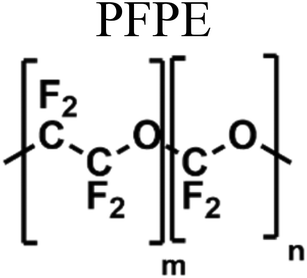 |
0.4 | 1 | 0.2 | 0.026b | −84.0 | 0.601 | −0.0203 | Wong et al.29 |
| 0.4 | 1 | 0.2 | 0.015b | −84.9 | 0.724 | −1.69 | ||
| 0.4 | 1 | 0.2 | 0 | −85.9 | 0.350 | 0.0277 | ||
 |
30 | 5.8 | 0.44 | 0.1b | −39.8 | 0.0767 | −8.671 | Gallmeyer et al.80 |
| 30 | 7.3 | 0.40 | 0.1b | −35.4 | 0.406 | −20.168 | ||
| 30 | 8.2 | 0.31 | 0.1b | −26.51 | 0.2849 | −7.7 | ||
 |
5 | 6.5 | 0.5 | 0.06 | 21 | 0.4926 | −0.004 | Jo et al.106 |
The ionic conductivities for the various PEO/P2/LiTFSI blends were extracted and fit to the VTF equation. Fig. 7a shows the ionic conductivity as a function of inverse temperature for the PEO/P2/LiTFSI systems, with the VTF fits shown in solid lines. As in the previous section, the ability of all blends to be described by the VTF fit indicates that the Li+ ion motion is coupled to the polymer segmental motion. This is expected as all of the blends contain PEO and have Tg,blend values at or below ambient conditions. Using the parameters from the VTF fits, we were able to calculate σr, shown in Fig. 7b as a function of EO mole fraction. Interestingly, while the PEO/perfluoropolyether (PFPE)/LiTFSI, PEO/poly(dithiooxamide) (PDTOA)/LiTFSI, PEO/POEM5/LiTFSI and PEO/POEM9/LiTFSI blends all have quantitatively similar ionic conductivities, their resulting values of σr span over one order of magnitude indicating that the differences in ion solvation environment between the blends lead to the observed differences in ionic conductivity.
 | ||
| Fig. 7 The (a) temperature-dependent ionic conductivity where solid lines represent VTF fits and (b) reduced conductivity as a function of EO mole fraction for PEO/P2/LiTFSI blends. σr was evaluated at T = Tg + 100 for all blends. | ||
Given the varying salt concentrations in the PEO/P2/LiTFSI blends, it is more difficult to draw direct conclusions than in Part I. First, let us address the PEO/PFPE/LiTFSI system shown in blue circles. While this system has a similar ionic conductivity to many of the other LiTFSI containing electrolytes, its salt concentration and polymer molecular weight are low and, therefore, its Tg,blend is over 40 °C lower than any of the other systems. It is not surprising that its σr value is lower than most of the other blends shown in Fig. 7b as much of its high ionic conductivity is due to the increased segmental motion. The PEO/PMMA/LiTFSI blend, shown in yellow diamonds, has the lowest value of σr and ionic conductivity as PMMA does not participate in ion transport and will negatively impact the solvation environment.78 This is further supported by the three POEM variants, where the PEO/POEM2/LiTFSI system, shown in purple triangles, has a lower ionic conductivity compared to the POEM variants with longer side chains, i.e., POEM5 and POEM9. POEM2 is very similar in structure to PMMA, but with two additional EO units on the side chain. Previous work has shown POEM2 minimally participates in ion solvation and transport in blends with PEO/POEM2/LiTFSI blends.80 The quality of the solvation environment is complex and cannot be solely correlated with increasing EO fraction or salt concentration. This is made clear by the high value of σr of the PEO/PDTOA/LiTFSI system, which has a lower salt concentration than the PEO/POEMX/LiTFSI blends, but has a noticeably higher σr at similar EO mole fractions. So, while reducing Tg is a consistent way to improve the ionic conductivity, the variance in σr calculated for the PEO/P2/LiTFSI systems demonstrates that there may be additional ways to improve the solvation environment to increase ion transport that are independent of Tg. However, due to the limited body of work in this area, more research is necessary to understand the extent to which this is possible.
Part III: Single-ion conducting polymer blend electrolytes
The third class of PBEs analyzed in this study are binary systems consisting of a PEO-based ion-conducting polymer and an ion-containing polymer. The characteristics of the SICPBs considered here can be found in Table 3. It's important to emphasize that r is intrinsically linked to blend composition in SICPBs where an increase in r corresponds to an increase in charged polymer concentration. Similarly to the dual ion containing blends, we were able to describe the changes in the Tg,blend through the Kwei Equation. The majority of the blends have a k value below 1 with the exception of the PEO/lithium poly[(4-styrenesulfonyl)(trifluoromethyl(S-trifluoromethylsulfonylimino)sulfonyl)imide] (LiPSsTFSI) blend, which was 1.20. Unlike the dual-ion systems, the q values of the SICPBs span both positive and negative values. This does not agree with Kwei's assertion that a positive q value would lead to a Tg that is higher than the weighted average of the two polymers. Nearly all of the blends display Tg's that are lower than the weighted average, thus indicating that while the Kwei equation can empirically describe equation, the interactions due to the ionic polymers are too complex to be consistently described by the two fitting parameters within the Kwei equation. This likely reflects the physical differences in the interactions between a free and bound salt molecule. It is interesting that the PEO/LiPSsTFSI blend showed q ≈ 0 and therefore behaves as though there are not any significant interactions and could just as easily be described by the Gordon-Taylor equation. In contrast, the PEO/phenylsulfonyl (trifluoromethylsulfonyl)imide-lithium (P5PhTFSI-Li) blend exhibits the most negative q value, indicating strong nonideal interactions within the system similar to discussed in PEO/P2/LiClO4 systems. While both LiPSsTSFI and P5PhTFSI-Li are based on styrenic monomers, these large differences in q indicate that small changes in polymer backbone or anion chemistry largely influence the non-ideal interactions introduced upon mixing.a, and Kwei fitting parameters, k and q
| Polymer 2 | EO Polymer | Mn,1 (kDa) | Mn,2 (kDa) | wP1 | r | Tg (°C) | k | q | References |
|---|---|---|---|---|---|---|---|---|---|
| a All Tg values were reported from DSC measurements. | |||||||||
 |
POEM | 5.9 | 25 | 0.44 | 0.2 | 7.23 | 0.73 | −3.13 | Yang & Epps90 |
| 0.62 | 0.1 | −18.5 | |||||||
| 0.76 | 0.05 | −38.7 | |||||||
| 0.83 | 0.03 | −47.2 | |||||||
| 52 | 0.44 | 0.2 | 19.83 | 0.55 | 15.81 | ||||
| 0.62 | 0.1 | −10.9 | |||||||
| 0.76 | 0.05 | −32.6 | |||||||
| 0.83 | 0.03 | −42.7 | |||||||
| 7 | 0.44 | 0.2 | −23.0 | 0.37 | 5.0 | ||||
| 0.62 | 0.1 | −39.7 | |||||||
| 0.76 | 0.05 | −52.3 | |||||||
| 0.83 | 0.03 | −53.3 | |||||||
 |
PEO | 100 | 5 | 0.30 | 0.298 | −6.5 | 0.19 | −1.3 | Olmedo Martinez et al.88 |
| 0.50 | 0.128 | −30.1 | |||||||
| 0.70 | 0.055 | −41.3 | |||||||
| 0.85 | 0.022 | −45.6 | |||||||
| 0.95 | 0.006 | −50.8 | |||||||
| 50 | 0.30 | 0.298 | 8.0 | 0.28 | 18.6 | ||||
| 0.50 | 0.128 | −15.5 | |||||||
| 0.70 | 0.055 | −33.0 | |||||||
| 0.85 | 0.022 | −43.1 | |||||||
| 0.95 | 0.006 | −48.9 | |||||||
| >2000 | 0.30 | 0.298 | 20.9 | 0.35 | 31.9 | ||||
| 0.50 | 0.128 | −7.9 | |||||||
| 0.70 | 0.055 | −25.1 | |||||||
| 0.85 | 0.022 | −39.3 | |||||||
| 0.95 | 0.006 | −46.7 | |||||||
 |
PEO | 20 | 32 | 0.3 | 0.29 | 54.8 | 0.46 | −105.0 | Nguyen et al.107 |
| 0.5 | 0.13 | 2.0 | |||||||
| 0.58 | 0.087 | −17.8 | |||||||
| 0.7 | 0.051 | −35.8 | |||||||
| 0.9 | 0.013 | −42.9 | |||||||
 |
PEO | — | 20 | 0.66 | 0.05 | −15.1 | 1.20 | 0.0 | Ma et al.108 |
The temperature-dependent ionic conductivity was extracted for all SICPB systems and fit to the VTF equation as well as the Arrhenius equation depending on the nature of the temperature dependence. Fig. 8a shows the ionic conductivity as a function of inverse temperature at a fixed salt concentration of r ≈ 0.05, where the VTF fits are indicated by solid lines and Arrhenius fits are indicated by dashed lines. As before, the VTF equation is employed only in the amorphous state (T > Tm) but were not extrapolated to the entire temperature range. The onset of Arrhenius behavior in the POEM/poly[lithium sulfonyl (trifluoromethane sulfonyl)imidemethacrylate] (PLiMTFSI) blends aligns with an increase in molecular weight and concentration of PLiMTFSI, while the other systems exhibit VTF behavior. Notably, the POEM/PLiMTFSI-52 blend, which exhibits Arrhenius behavior above Tg, shows the highest ionic conductivity at elevated temperatures, highlighting the potential performance improvements when ion transport is decoupled from segmental motion across a wide temperature range. Overall, the ionic conductivities of the SICPBs are quantitatively similar and only span one order of magnitude at constant temperature. In these systems, the PEO-based polymer is the main contributor to ion solvation and transport, indicating that the chemical structure of the polyanion does not strongly affect ionic conductivity. Therefore, it is likely that blend composition will have a stronger effect on ionic conductivity. Fig. 8b plots the ionic conductivity at 90 °C as a function of blend composition, r, which is directly correlated to polyanion concentration in SICPBs. For most systems, the maximum ionic conductivity is reached at an intermediate concentration of polyanion, after which the ionic conductivity decreases. While an increase in r correlates to an increase in charge carriers, it also leads to a decrease in blend segmental dynamics as the concentration of high Tg polymer increases. Therefore, this non-monotonic behavior indicates that there is a careful balance between the number of charge carriers, ion solvation structure, and segmental motion that leads to fast ion transport in SICPBs. Interestingly, the only blend with decoupled ion transport at all salt concentrations, POEM/PLiMTFSI-52, exhibits a less significant decrease in ionic conductivity when r increases compared to the blends with coupled ion transport. This indicates that the ion transport properties are less sensitive to blend composition in systems that exhibit decoupled transport.
 | ||
| Fig. 8 (a) Ionic conductivity as a function of inverse temperature at a fixed salt concentration around r = 0.5. VTF fits are shown by solid lines, and Arrhenius fits are shown by dashed lines. (b) Ionic conductivity as a function of r taken at 90 °C for the SICBs. VTF fits are shown by solid symbols, and Arrhenius fits are shown by white filled symbols. Dashed lines are used to connect the data points to guide the eye. | ||
To separate the effects of salt concentration and segmental dynamics, σr was calculated as a function of r and is shown in Fig. 9. It should be noted that the blends that exhibit Arrhenius behavior are not included in this analysis as their ionic conductivity cannot be described by the VTF equation, which is required to calculate σr. When σr is considered, it becomes clear that segmental motion is not the only contributor to ionic conductivity as the quantitative values of σr span several orders of magnitude. In general, the trends with respect to r are similar to those observed in Fig. 8 and a maximum value of σr is present at an intermediate value of r that is blend dependent. For example, the PEO/P5PhTFSI-Li yields the highest σr at r = 0.13 while the peak value for POEM/PLiMTFSI-7 is at r = 0.05. The highest value of the PEO/PLiMTFSI-5 blends is at r = 0.3, however due to the lack of data it is unclear if the σr reaches a maximum there or continues to increase with increasing PLiMTFSI content. The presence of these maxima indicates that the distribution and solvation of the ions is more important than the number of charge carriers present in the system suggesting that an optimal balance between the number of charge carriers, ion solvation structure, and other factors is met at a specific concentration of charged polymer for each species. This is further supported if we consider just the POEM/PLiMTFSI-7 and the PEO/PLiMTFSI-5 blends where these systems exhibit maximums in σr at similar values of r, due to the chemical similarities. However, the PEO-based system has a significantly higher value of σr compared to the POEM-based system at all compositions. This is likely due to the differences in the ion solvation structure of the EO-containing polymers, as it is known that the EO's closest to the backbone in POEM do not readily participate in ion transport.109 Therefore, the lower value of σr for the POEM-based systems indicates that the differences in ionic conductivity observed are due to a less-coordinated ion solvation environment within POEM versus PEO. Similar to the PEO/P2/LiX blends, the solvation site quality can be tuned, but the addition of the charge carriers decreases the segmental motion. Unlike the ternary systems, the blend composition of the SICPBs is directly tied to the quantity of lithium ions, making the optimization of these systems, i.e., the balance between segmental motion and ion solvation structure, challenging.
 | ||
| Fig. 9 Reduced conductivity, σr, as a function of salt concentration, r, for the single-ion conducting polymer blends. σr was evaluated at T = Tg + 100 for all blends. | ||
Conclusions and outlook
In this work, we deconvolute the primary factors affecting observed differences in ionic conductivity in PEO-based PBEs to guide the design of electrolytes with improved performance. Our analysis utilizes reduced conductivity as a metric to isolate the effect of polymer segmental motion on ion transport from other contributing factors, such as the ion solvation environment. We found that for PEO blends doped with LiClO4, segmental motion is the primary driver behind the difference in ionic conductivity, particularly below a 0.95 EO mole fraction. This indicates that tuning Tg,blend is the main lever to enhance ion transport in these systems at specific salt concentrations. In contrast, blends prepared with LiTFSI show a broader range of σr values, indicating that the ion solvation environment plays a bigger role in the ionic conductivity than in LiClO4 systems. While Tg remains important, these findings imply that Tg-independent factors can be leveraged to engineer the ion solvation environment to improve ion transport in LiTFSI-based PBEs. SICPB systems are more complex, as the blend composition is intrinsically linked to the Li+ ion concentration. We observe that maximum ionic conductivity occurs at intermediate salt concentrations, reflecting a complex balance between the number of charge carriers and segmental motion. Notably, some SICPB systems exhibited decoupled ion transport, where ion transport properties were less affected by changes in blend composition. Ultimately, our analysis shows that ion solvation and distribution have a larger impact on performance than the number of charge carriers alone in SICPBs. To summarize our findings, while polymer segmental motion appears to be a universal factor, the relative importance of other factors, such as the ion solvation environment, changes between LiClO4, LiTFSI, and SICPB systems. Deconvoluting these complex interconnected factors is essential to gaining a deeper understanding of the behavior in these systems and for guiding the rational design of next-generation polymer electrolytes.Based on these findings, we recommend that other researchers studying PBEs consider including a range of temperature dependent ionic conductivity data as well as all thermal transitions of each sample when reporting their findings. Though ion transport and segmental motion are often correlated, the true relationship cannot be fully understood without both datasets, as we have demonstrated here. Additionally, providing this data would enable direct comparisons within the literature in order to provide a deeper understanding into how ion transport can be tuned by segmental dynamics and ion solvation environment. However, metrics such as reduced conductivity have limits in their usefulness as it cannot describe the individual effect of electrolyte properties, such as polymer structure, ion dissociation, and solvation site connecteness, on ion transport. Gaining a deeper understanding into the impact of each individual property is critical to designing an electrolyte with high ionic conductivity and desirable mechanical properties for applications in next-generation LMBs. While PBEs tend to achieve higher ionic conductivities, the tie to segmental motion often results in liquid-like behavior, which can limit their maximum rate of ion transport. While SICPBs often display more robust mechanical properties and electrochemical performance, the ionic conductivity is often limited due to reduced segmental motion. Therefore, the primary route of improvement is the decoupling of ion transport from segmental motion such that the mechanical properties and ion motion can be tuned independently to generate electrolytes with optimized performance.
Author contributions
Marissa Gallmeyer: conceptualization, data curation, formal analysis, investigation, methodology, validation, visualization, writing—original draft. Thorfinnur A. H. Baldvinsson: conceptualization, data curation, formal analysis, investigation, methodology, validation, visualization, writing—original draft. Whitney S Loo: conceptualization, funding acquisition, methodology, project administration, resources, supervision, writing—review & editing.Conflicts of interest
There are no conflicts to declare.Abbreviations
Nomenclature
| A | Pre-exponential factor |
| DSC | Differential scanning calorimetry |
| Ea | Pseudo activation energy (kJ mol−1) |
| EO | Ethylene oxide |
| k | Kwei fitting parameter 1 |
| kB | Boltzmann constant (J K−1) |
| LIB | Lithium-ion battery |
| LiClO4 | Lithium perchlorate |
| LiPSsTFSI | Poly[(4-styrenesulfonyl)(trifluoromethyl(S-trifluoromethylsulfonylimino)sulfonyl)imide] |
| LiTFSI | Lithium bis(trifluoromethanesulfonyl)imide |
| LMB | Lithium metal batteries |
| Me | Entanglement molecular weight (kDa) |
| Mn,P2 | Molecular weight of polymer 2 (kDa) |
| Mn,PEO | Molecular weight of PEO (kDa) |
| Ni | Characterizes chain length of polymer i |
| P(2EO-MO) | poly(1,3,6-trioxocane) |
| P2VP | Poly(2-vinylpyridine) |
| P4VP | Poly(4-vinylpyridine) |
| P5PhTFSI-Li | Phenylsulfonyl (trifluoromethylsulfonyl)imide-lithium |
| PBE | Polymer blend electrolyte |
| PDTOA | Poly(dithiooxamide) |
| PEI | Polyethylenimine |
| PEO | Poly(ethylene oxide) |
| PES | Poly(oligo[oxyethylene]oxysebacoyl) |
| PFPE | Perfluoropolyether |
| PLiMTFSI | Poly[lithium sulfonyl (trifluoromethane sulfonyl)imidemethacrylate] |
| PMMA | Poly(methyl methacrylate) |
| POEM | Poly(oligo ethylene oxide methacrylate) |
| q | Kwei fitting parameter 2 |
| r | [Li+]/[EO] |
| R | Universal gas constant (J mol−1 K−1) |
| SICPB | Single-ion conducting polymer blend |
| SICPE | Single-ion conducting polymer electrolyte |
| SSE | Solid state electrolyte |
| T | Temperature (K) |
| T0 | Vogel temperature (K) |
| Tg | Glass transition temperature (°C) |
| Tg,blend | Glass transition temperature of the polymer blend |
| tLi+ | Li+ transference number |
| Tm | Melting temperature (°C) |
| VTF | Vogel–Fulcher-Tamman |
| wi | Weight fraction of component i |
| wPEO | PEO weight fraction |
| ΔGmix | Gibbs free energy of mixing (J) |
| σ | Ionic conductivity (S cm−1) |
| σr | Reduced conductivity (S cm−1) |
| ϕi | Volume fraction of component i |
| χ | Flory–Huggins interaction parameter |
| χeff | Effective interaction parameter |
Data availability
All glass transition temperature data and corresponding fits and results from fitting ionic conductivity data are available in the supplementary information (SI). Supplementary information is available. See DOI: https://doi.org/10.1039/d6lp00078a.Acknowledgements
This research was primarily supported by NSF through the University of Wisconsin Materials Research Science and Engineering Center (DMR-2309000).References
- J. P. Barton and D. G. Infield, Energy Storage and Its Use with Intermittent Renewable Energy, IEEE Trans. Energy Conver., 2004, 19(2), 441–448, DOI:10.1109/TEC.2003.822305.
- P. Denholm, E. Ela, B. Kirby and M. Milligan, The Role of Energy Storage with Renewable Electricity Generation, 2010. DOI:10.2172/972169.
- J. B. Goodenough and K.-S. Park, The Li-Ion Rechargeable Battery: A Perspective, J. Am. Chem. Soc., 2013, 135(4), 1167–1176, DOI:10.1021/ja3091438.
- J. W. Choi and D. Aurbach, Promise and Reality of Post-Lithium-Ion Batteries with High Energy Densities, Nat. Rev. Mater., 2016, 1(4), 16013, DOI:10.1038/natrevmats.2016.13.
- M. M. Thackeray, C. Wolverton and E. D. Isaacs, Electrical Energy Storage for Transportation—Approaching the Limits of, and Going beyond, Lithium-Ion Batteries, Energy Environ. Sci., 2012, 5(7), 7854–7863, 10.1039/C2EE21892E.
- J.-M. Tarascon and M. Armand, Issues and Challenges Facing Rechargeable Lithium Batteries, Nature, 2001, 414(6861), 359–367, DOI:10.1038/35104644.
- E. Boyer, The Lithium-Ion (EV) Battery Market and Supply Chain.
- J. Qian, W. A. Henderson, W. Xu, P. Bhattacharya, M. Engelhard, O. Borodin and J.-G. Zhang, High Rate and Stable Cycling of Lithium Metal Anode, Nat. Commun., 2015, 6(1), 6362, DOI:10.1038/ncomms7362.
- W. Xu, J. Wang, F. Ding, X. Chen, E. Nasybulin, Y. Zhang and J.-G. Zhang, Lithium Metal Anodes for Rechargeable Batteries, Energy Environ. Sci., 2014, 7(2), 513–537, 10.1039/C3EE40795K.
- J. B. Goodenough and Y. Kim, Challenges for Rechargeable Li Batteries, Chem. Mater., 2010, 22(3), 587–603, DOI:10.1021/cm901452z.
- L. Vogdanis, B. Martens, H. Uchtmann, F. Hensel and W. Heitz, Synthetic and Thermodynamic Investigations in the Polymerization of Ethylene Carbonate, Die Makromol. Chem., 1990, 191(3), 465–472, DOI:10.1002/macp.1990.021910301.
- D. Lin, Y. Liu and Y. Cui, Reviving the Lithium Metal Anode for High-Energy Batteries, Nat. Nanotechnol., 2017, 12(3), 194–206, DOI:10.1038/nnano.2017.16.
- A. Varzi, K. Thanner, R. Scipioni, D. Di Lecce, J. Hassoun, S. Dörfler, H. Altheus, S. Kaskel, C. Prehal and S. A. Freunberger, Current Status and Future Perspectives of Lithium Metal Batteries, J. Power Sources, 2020, 480, 228803, DOI:10.1016/j.jpowsour.2020.228803.
- J. Wang, B. Ge, H. Li, M. Yang, J. Wang, D. Liu, C. Fernandez, X. Chen and Q. Peng, Challenges and Progresses of Lithium-Metal Batteries, Chem. Eng. J., 2021, 420, 129739, DOI:10.1016/j.cej.2021.129739.
- Y. S. Cohen, Y. Cohen and D. Aurbach, Micromorphological Studies of Lithium Electrodes in Alkyl Carbonate Solutions Using in Situ Atomic Force Microscopy, J. Phys. Chem. B, 2000, 104(51), 12282–12291, DOI:10.1021/jp002526b.
- M. Armand and J.-M. Tarascon, Building Better Batteries, Nature, 2008, 451(7179), 652–657, DOI:10.1038/451652a.
- H. Kim, G. Jeong, Y.-U. Kim, J.-H. Kim, C.-M. Park and H.-J. Sohn, Metallic Anodes for next Generation Secondary Batteries, Chem. Soc. Rev., 2013, 42(23), 9011–9034, 10.1039/C3CS60177C.
- C. Yang, K. Fu, Y. Zhang, E. Hitz and L. Hu, Protected Lithium-Metal Anodes in Batteries: From Liquid to Solid, Adv. Mater., 2017, 29(36), 1701169, DOI:10.1002/adma.201701169.
- A. Banerjee, X. Wang, C. Fang, E. A. Wu and Y. S. Meng, Interfaces and Interphases in All-Solid-State Batteries with Inorganic Solid Electrolytes, Chem. Rev., 2020, 120(14), 6878–6933, DOI:10.1021/acs.chemrev.0c00101.
- P. Knauth and H. L. Tuller, Solid-State Ionics: Roots, Status, and Future Prospects, J. Am. Ceram. Soc., 2002, 85(7), 1654–1680, DOI:10.1111/j.1151-2916.2002.tb00334.x.
- E. Quartarone and P. Mustarelli, Electrolytes for Solid-State Lithium Rechargeable Batteries: Recent Advances and Perspectives, Chem. Soc. Rev., 2011, 40(5), 2525–2540, 10.1039/C0CS00081G.
- Y.-S. Hu, Batteries: Getting Solid, Nat. Energy, 2016, 1(4), 16042, DOI:10.1038/nenergy.2016.42.
- M. Armand, Polymer Solid Electrolytes - an Overview, Solid State Ion., 1983, 9–10, 745–754, DOI:10.1016/0167-2738(83)90083-8.
- A. Varzi, R. Raccichini, S. Passerini and B. Scrosati, Challenges and Prospects of the Role of Solid Electrolytes in the Revitalization of Lithium Metal Batteries, J. Mater. Chem. A, 2016, 4(44), 17251–17259, 10.1039/C6TA07384K.
- D. Zhang, L. Li, X. Wu, J. Wang, Q. Li, K. Pan and J. He, Research Progress and Application of PEO-Based Solid State Polymer Composite Electrolytes, Front. Energy Res., 2021, 9, 726738, DOI:10.3389/fenrg.2021.726738.
- Z. Xue, D. He and X. Xie, Poly(Ethylene Oxide)-Based Electrolytes for Lithium-Ion Batteries, J. Mater. Chem. A, 2015, 3(38), 19218–19253, 10.1039/C5TA03471J.
- D. E. Fenton, J. M. Parker and P. V. Wright, Complexes of Alkali Metal Ions with Poly(Ethylene Oxide), Polymer, 1973, 14(11), 589, DOI:10.1016/0032-3861(73)90146-8.
- Y. Tominaga, T. Shimomura and M. Nakamura, Alternating Copolymers of Carbon Dioxide with Glycidyl Ethers for Novel Ion-Conductive Polymer Electrolytes, Polymer, 2010, 51(19), 4295–4298, DOI:10.1016/j.polymer.2010.07.037.
- D. H. C. Wong, J. L. Thelen, Y. Fu, D. Devaux, A. A. Pandya, V. S. Battaglia, N. P. Balsara and J. M. DeSimone, Nonflammable Perfluoropolyether-Based Electrolytes for Lithium Batteries, Proc. Natl. Acad. Sci. U. S. A., 2014, 111(9), 3327–3331, DOI:10.1073/pnas.1314615111.
- P. M. Blonsky, D. F. Shriver, P. Austin and H. R. Allcock, Complex Formation and Ionic Conductivity of Polyphosphazene Solid Electrolytes, Solid State Ion., 1986, 18–19, 258–264, DOI:10.1016/0167-2738(86)90123-2.
- L. Long, S. Wang, M. Xiao and Y. Meng, Polymer Electrolytes for Lithium Polymer Batteries, J. Mater. Chem. A, 2016, 4(26), 10038–10069, 10.1039/C6TA02621D.
- S. Lascaud, M. Perrier, A. Vallee, S. Besner, J. Prud'homme and M. Armand, Phase Diagrams and Conductivity Behavior of Poly(Ethylene Oxide)-Molten Salt Rubbery Electrolytes, Macromolecules, 1994, 27(25), 7469–7477, DOI:10.1021/ma00103a034.
- L. S. Grundy, S. Fu, Z. J. Hoffman and N. P. Balsara, Electrochemical Characterization of PEO/LiTFSI Electrolytes Near the Solubility Limit, Macromolecules, 2022, 55(20), 9030–9038, DOI:10.1021/acs.macromol.2c01655.
- H. Yang and N. Wu, Ionic Conductivity and Ion Transport Mechanisms of Solid-State Lithium-Ion Battery Electrolytes: A Review, Energy Sci. Eng., 2022, 10(5), 1643–1671, DOI:10.1002/ese3.1163.
- D. T. Hallinan and N. P. Balsara, Polymer Electrolytes, Annu. Rev. Mater. Res., 2013, 43(1), 503–525, DOI:10.1146/annurev-matsci-071312-121705.
- A. Mauger, C. M. Julien, A. Paolella, M. Armand and K. Zaghib, Building Better Batteries in the Solid State: A Review, Materials, 2019, 12(23), 3892, DOI:10.3390/ma12233892.
- S. Das and A. Ghosh, Effect of Plasticizers on Ionic Conductivity and Dielectric Relaxation of PEO-LiClO4 Polymer Electrolyte, Electrochim. Acta, 2015, 171, 59–65, DOI:10.1016/j.electacta.2015.04.178.
- N. Meng, Y. Ye, Z. Yang, H. Li and F. Lian, Developing Single-Ion Conductive Polymer Electrolytes for High-Energy-Density Solid State Batteries, Adv. Funct. Mater., 2023, 33(43), 2305072, DOI:10.1002/adfm.202305072.
- W. H. Meyer, Polymer Electrolytes for Lithium-Ion Batteries, Adv. Mater., 1998, 10(6), 439–448, DOI:10.1002/(SICI)1521-4095(199804)10:6%3C439::AID-ADMA439%3E3.0.CO;2-I.
- G. Mao, M.-L. Saboungi, D. L. Price, M. B. Armand and W. S. Howells, Structure of Liquid PEO-LiTFSI Electrolyte, Phys. Rev. Lett., 2000, 84(24), 5536–5539, DOI:10.1103/PhysRevLett.84.5536.
- P. Bennington, C. Deng, D. Sharon, M. A. Webb, J. J. de Pablo, P. F. Nealey and S. N. Patel, Role of Solvation Site Segmental Dynamics on Ion Transport in Ethylene-Oxide Based Side-Chain Polymer Electrolytes, J. Mater. Chem. A, 2021, 9(15), 9937–9951, 10.1039/D1TA00899D.
- O. Borodin and G. D. Smith, Mechanism of Ion Transport in Amorphous Poly(Ethylene Oxide)/LiTFSI from Molecular Dynamics Simulations, Macromolecules, 2006, 39(4), 1620–1629, DOI:10.1021/ma052277v.
- D. Bresser, S. Lyonnard, C. Iojoiu, L. Picard and S. Passerini, Decoupling Segmental Relaxation and Ionic Conductivity for Lithium-Ion Polymer Electrolytes, Mol. Syst. Des. Eng., 2019, 4(4), 779–792, 10.1039/C9ME00038K.
- M. Marzantowicz, F. Krok, J. R. Dygas, Z. Florjańczyk and E. Zygadło-Monikowska, The Influence of Phase Segregation on Properties of Semicrystalline PEO:LiTFSI Electrolytes, Solid State Ion., 2008, 179(27), 1670–1678, DOI:10.1016/j.ssi.2007.11.035.
- S. Cheng, D. M. Smith and C. Y. Li, How Does Nanoscale Crystalline Structure Affect Ion Transport in Solid Polymer Electrolytes?, Macromolecules, 2014, 47(12), 3978–3986, DOI:10.1021/ma500734q.
- M. A. Ratner, P. Johansson and D. F. Shriver, Polymer Electrolytes: Ionic Transport Mechanisms and Relaxation Coupling, MRS Bull., 2000, 25(3), 31–37, DOI:10.1557/mrs2000.16.
- H. Gudla, A. Hockmann, D. Brandell and J. Mindemark, To Hop or Not to Hop: Unveiling Different Modes of Ion Transport in Solid Polymer Electrolytes through Molecular Dynamics Simulations, ACS Appl. Polym. Mater., 2025, 7(8), 4716–4724, DOI:10.1021/acsapm.4c03724.
- S. B. Aziz, T. J. Woo, M. F. Z. Kadir and H. M. Ahmed, A Conceptual Review on Polymer Electrolytes and Ion Transport Models, J. Sci.: Adv. Mater. Devices, 2018, 3(1), 1–17, DOI:10.1016/j.jsamd.2018.01.002.
- M. Ghelichi, N. T. Qazvini, S. H. Jafari, H. A. Khonakdar, Y. Farajollahi and C. Scheffler, Conformational, Thermal, and Ionic Conductivity Behavior of PEO in PEO/PMMA Miscible Blend: Investigating the Effect of Lithium Salt, J. Appl. Polym. Sci., 2013, 129(4), 1868–1874, DOI:10.1002/app.38897.
- C. Zhang, S. Gamble, D. Ainsworth, A. M. Z. Slawin, Y. G. Andreev and P. G. Bruce, Alkali Metal Crystalline Polymer Electrolytes, Nat. Mater., 2009, 8(7), 580–584, DOI:10.1038/nmat2474.
- M. Petrowsky and R. Frech, Temperature Dependence of Ion Transport: The Compensated Arrhenius Equation, J. Phys. Chem. B, 2009, 113(17), 5996–6000, DOI:10.1021/jp810095g.
- S. D. Jones, J. Bamford, G. H. Fredrickson and R. A. Segalman, Decoupling Ion Transport and Matrix Dynamics to Make High Performance Solid Polymer Electrolytes, ACS Polym. Au, 2022, 2(6), 430–448, DOI:10.1021/acspolymersau.2c00024.
- Y. Wang, F. Fan, A. L. Agapov, X. Yu, K. Hong, J. Mays and A. P. Sokolov, Design of Superionic Polymers—New Insights from Walden Plot Analysis, Solid State Ion., 2014, 262, 782–784, DOI:10.1016/j.ssi.2013.09.026.
- Y. Wang, F. Fan, A. L. Agapov, T. Saito, J. Yang, X. Yu, K. Hong, J. Mays and A. P. Sokolov, Examination of the Fundamental Relation between Ionic Transport and Segmental Relaxation in Polymer Electrolytes, Polymer, 2014, 55(16), 4067–4076, DOI:10.1016/j.polymer.2014.06.085.
- B. A. Paren, N. Nguyen, V. Ballance, D. T. Hallinan, J. G. Kennemur and K. I. Winey, Superionic Li-Ion Transport in a Single-Ion Conducting Polymer Blend Electrolyte, Macromolecules, 2022, 55(11), 4692–4702, DOI:10.1021/acs.macromol.2c00459.
- B. C. Wood, J. B. Varley, K. E. Kweon, P. Shea, A. T. Hall, A. Grieder, M. Ward, V. P. Aguirre, D. Rigling, E. Lopez Ventura, C. Stancill and N. Adelstein, Paradigms of Frustration in Superionic Solid Electrolytes, Philos. Trans. A. Math. Phys. Eng. Sci., 2021, 379(2211), 20190467, DOI:10.1098/rsta.2019.0467.
- S. Hull, Superionics: Crystal Structures and Conduction Processes, Rep. Prog. Phys., 2004, 67(7), 1233, DOI:10.1088/0034-4885/67/7/R05.
- G. P. Devkota, C. K. Dauenhauer, J. Jiang and J. L. Schaefer, Structure and Dynamics in Poly(Ethylene Oxide)-Blended Single-Ion Conducting Polymer Electrolytes Based on Side-Chain Ionomers, Polym. Chem., 2025, 16(47), 5106–5115, 10.1039/D5PY00769K.
- S. D. Jones, H. Nguyen, P. M. Richardson, Y.-Q. Chen, K. E. Wyckoff, C. J. Hawker, R. J. Clément, G. H. Fredrickson and R. A. Segalman, Design of Polymeric Zwitterionic Solid Electrolytes with Superionic Lithium Transport, ACS Cent. Sci., 2022, 8(2), 169–175, DOI:10.1021/acscentsci.1c01260.
- M. Yang and T. H. Epps, Superionic Conduction in Solid Polymer Electrolytes – Decoupling Ion Transport from Segmental Relaxation, Polym. Chem., 2026, 17(10), 971–983, 10.1039/D5PY01070E.
- D. M. Pesko, Y. Jung, A. L. Hasan, M. A. Webb, G. W. Coates, T. F. Miller and N. P. Balsara, Effect of Monomer Structure on Ionic Conductivity in a Systematic Set of Polyester Electrolytes, Solid State Ion., 2016, 289, 118–124, DOI:10.1016/j.ssi.2016.02.020.
- D. M. Pesko, M. A. Webb, Y. Jung, Q. Zheng, T. F. I. Miller, G. W. Coates and N. P. Balsara, Universal Relationship between Conductivity and Solvation-Site Connectivity in Ether-Based Polymer Electrolytes, Macromolecules, 2016, 49(14), 5244–5255, DOI:10.1021/acs.macromol.6b00851.
- Q. Zheng, D. M. Pesko, B. M. Savoie, K. Timachova, A. L. Hasan, M. C. Smith, T. F. I. Miller, G. W. Coates and N. P. Balsara, Optimizing Ion Transport in Polyether-Based Electrolytes for Lithium Batteries, Macromolecules, 2018, 51(8), 2847–2858, DOI:10.1021/acs.macromol.7b02706.
- H. Gudla, C. Zhang and D. Brandell, Effects of Solvent Polarity on Li-Ion Diffusion in Polymer Electrolytes: An All-Atom Molecular Dynamics Study with Charge Scaling, J. Phys. Chem. B, 2020, 124(37), 8124–8131, DOI:10.1021/acs.jpcb.0c05108.
- M. P. Blatt and D. T. Hallinan, Polymer Blend Electrolytes for Batteries and Beyond, Ind. Eng. Chem. Res., 2021, 60(48), 17303–17327, DOI:10.1021/acs.iecr.1c02938.
- P. Knychała, K. Timachova, M. Banaszak and N. P. Balsara, 50th Anniversary Perspective: Phase Behavior of Polymer Solutions and Blends, Macromolecules, 2017, 50(8), 3051–3065, DOI:10.1021/acs.macromol.6b02619.
- P. C. Hiemenz and T. P. Lodge, Polymer Chemistry, CRC Press, 2nd edn, 2007 Search PubMed.
- J. H. Kim, B. R. Min and Y. S. Kang, Thermodynamic Model of the Glass Transition Behavior for Miscible Polymer Blends, Macromolecules, 2006, 39(3), 1297–1299, DOI:10.1021/ma052436a.
- T. P. Lodge, E. R. Wood and J. C. Haley, Two Calorimetric Glass Transitions Do Not Necessarily Indicate Immiscibility: The Case of PEO/PMMA, J. Polym. Sci., Part B: Polym. Phys., 2006, 44(4), 756–763, DOI:10.1002/polb.20735.
- K. W. Gao, W. S. Loo, R. L. Snyder, B. A. Abel, Y. Choo, A. Lee, S. C. M. Teixeira, B. A. Garetz, G. W. Coates and N. P. Balsara, Miscible Polyether/Poly(Ether–Acetal), Electrolyte Blends, Macromolecules, 2020, 53(14), 5728–5739, DOI:10.1021/acs.macromol.0c00747.
- Y. He, T. R. Lutz and M. D. Ediger, Segmental and Terminal Dynamics in Miscible Polymer Mixtures: Tests of the Lodge–McLeish Model, J. Chem. Phys., 2003, 119(18), 9956–9965, DOI:10.1063/1.1615963.
- T. P. Lodge and T. C. B. McLeish, Self-Concentrations and Effective Glass Transition Temperatures in Polymer Blends, Macromolecules, 2000, 33(14), 5278–5284, DOI:10.1021/ma9921706.
- C. Zhu, B. J. Pedretti, L. Kuehster, V. Ganesan, G. E. Sanoja and N. A. Lynd, Ionic Conductivity, Salt Partitioning, and, Phase Separation in High-Dielectric Contrast Polyether Blends and Block Polymer Electrolytes, Macromolecules, 2023, 56(3), 1086–1096, DOI:10.1021/acs.macromol.2c02023.
- V. A. Pryamitsyn, H. K. Kwon, J. W. Zwanikken and M. Olvera De La Cruz, Anomalous Phase Behavior of Ionic Polymer Blends and Ionic Copolymers, Macromolecules, 2017, 50(13), 5194–5207, DOI:10.1021/acs.macromol.7b00523.
- C. E. Sing and M. Olvera De La Cruz, Polyelectrolyte Blends and Nontrivial Behavior in Effective Flory–Huggins Parameters, ACS Macro Lett., 2014, 3(8), 698–702, DOI:10.1021/mz500202n.
- R. Bakar, S. Darvishi, T. Li, M. Han, U. Aydemir, S. Nizamoglu, K. Hong and E. Senses, Effect of Polymer Topology on Microstructure, Segmental Dynamics, and Ionic Conductivity in PEO/PMMA-Based Solid Polymer Electrolytes, ACS Appl. Polym. Mater., 2022, 4(1), 179–190, DOI:10.1021/acsapm.1c01178.
- N. J. Shah, M. Shalaby, L. He, X. Wang, D. Deslandes, B. A. Garetz and N. P. Balsara, Chimney-Shaped Phase Diagram in a Polymer Blend Electrolyte, ACS Macro Lett., 2023, 874–879, DOI:10.1021/acsmacrolett.3c00285.
- D. Sharon, C. Deng, P. Bennington, M. A. Webb, S. N. Patel, J. J. de Pablo and P. F. Nealey, Critical Percolation Threshold for Solvation-Site Connectivity in Polymer Electrolyte Mixtures, Macromolecules, 2022, 55(16), 7212–7221, DOI:10.1021/acs.macromol.2c00988.
- N. J. Shah, L. He, K. W. Gao and N. P. Balsara, Thermodynamics and Phase Behavior of Poly(Ethylene Oxide)/Poly(Methyl Methacrylate)/Salt Blend Electrolytes Studied by Small-Angle Neutron Scattering, Macromolecules, 2023, 56(7), 2889–2898, DOI:10.1021/acs.macromol.2c02533.
- M. Gallmeyer, H.-J. Wu, W. Breining, D. M. Lynn and W. S. Loo, Thermal Properties and Ionic Conductivity in Salt-Containing POEM/PEO Polymer Blend Electrolytes, ACS Appl. Polym. Mater, 2025, 7, 8055–8064, DOI:10.1021/acsapm.5c01118.
- H. Zhang, C. Li, M. Piszcz, E. Coya, T. Rojo, L. M. Rodriguez-Martinez, M. Armand and Z. Zhou, Single Lithium-Ion Conducting Solid Polymer Electrolytes: Advances and Perspectives, Chem. Soc. Rev., 2017, 46(3), 797–815, 10.1039/C6CS00491A.
- X.-G. Sun and J. B. Kerr, Synthesis and Characterization of Network Single Ion Conductors Based on Comb-Branched Polyepoxide Ethers and Lithium Bis(Allylmalonato)Borate, Macromolecules, 2006, 39(1), 362–372, DOI:10.1021/ma0507701.
- S. Huo, L. Sheng, W. Xue, L. Wang, H. Xu, H. Zhang and X. He, Challenges of Polymer Electrolyte with Wide Electrochemical Window for High Energy Solid-State Lithium Batteries, InfoMat, 2023, 5(3), e12394, DOI:10.1002/inf2.12394.
- L. Stolz, S. Hochstädt, S. Röser, M. R. Hansen, M. Winter and J. Kasnatscheew, Single-Ion versus Dual-Ion Conducting Electrolytes: The Relevance of Concentration Polarization in Solid-State Batteries, ACS Appl. Mater. Interfaces, 2022, 14(9), 11559–11566, DOI:10.1021/acsami.2c00084.
- Z. J. Hoffman, A. S. Ho, S. Chakraborty and N. P. Balsara, Limiting Current Density in Single-Ion-Conducting and Conventional Block Copolymer Electrolytes, J. Electrochem. Soc., 2022, 169(4), 043502, DOI:10.1149/1945-7111/ac613b.
- D. J. Bannister, G. R. Davies, I. M. Ward and J. E. McIntyre, Ionic Conductivities for Poly(Ethylene Oxide) Complexes with Lithium Salts of Monobasic and Dibasic Acids and Blends of Poly(Ethylene Oxide) with Lithium Salts of Anionic Polymers, Polymer, 1984, 25(9), 1291–1296, DOI:10.1016/0032-3861(84)90378-1.
- K. M. Diederichsen, E. J. McShane and B. D. McCloskey, Promising Routes to a High Li+ Transference Number Electrolyte for Lithium Ion Batteries, ACS Energy Lett., 2017, 2(11), 2563–2575, DOI:10.1021/acsenergylett.7b00792.
- J. L. Olmedo-Martínez, L. Porcarelli, Á. Alegría, D. Mecerreyes and A. J. Müller, High Lithium Conductivity of Miscible Poly(Ethylene Oxide)/Methacrylic Sulfonamide Anionic Polyelectrolyte Polymer Blends, Macromolecules, 2020, 53(11), 4442–4453, DOI:10.1021/acs.macromol.0c00703.
- J. Zhu, Z. Zhang, S. Zhao, A. S. Westover, I. Belharouak and P.-F. Cao, Single-Ion Conducting Polymer Electrolytes for Solid-State Lithium–Metal Batteries: Design, Performance, and Challenges, Adv. Energy Mater., 2021, 11(14), 2003836, DOI:10.1002/aenm.202003836.
- M. Yang and T. H. I. Epps, Solid-State, Single-Ion Conducting, Polymer Blend Electrolytes with Enhanced Li+ Conduction, Electrochemical Stability, and Limiting Current Density, Chem. Mater., 2024, 36(4), 1855–1869, DOI:10.1021/acs.chemmater.3c02389.
- M. P. Blatt and D. T. Hallinan Jr., Polymer Blend Electrolytes for Batteries and Beyond, Ind. Eng. Chem. Res., 2021, 60(48), 17303–17327, DOI:10.1021/acs.iecr.1c02938.
- N. S. Schauser, R. Seshadri and R. A. Segalman, Multivalent Ion Conduction in Solid Polymer Systems, Mol. Syst. Des. Eng., 2019, 4(2), 263–279, 10.1039/C8ME00096D.
- T. K. Kwei, The Effect of Hydrogen Bonding on the Glass Transition Temperatures of Polymer Mixtures, J. Polym. Sci., Polym. Lett. Ed., 1984, 22(6), 307–313, DOI:10.1002/pol.1984.130220603.
- L. A. Anshyang, T. K. Kwei and A. Reiser, On the Physical Meaning of the Kwei Equation for the Glass Transition of Polymer Blends, Macromolecules, 1989, 22(10), 4112–4119, DOI:10.1021/ma00200a052.
- M. Gordon and J. S. Taylor, Ideal Copolymers and the Second-Order Transitions of Synthetic Rubbers. i. Non-Crystalline Copolymers, J. Appl. Chem., 1952, 2(9), 493–500, DOI:10.1002/jctb.5010020901.
- H. A. Schneider, Glass Transition Behaviour of Compatible Polymer Blends, Polymer, 1989, 30(5), 771–779, DOI:10.1016/0032-3861(89)90172-9.
- G. T. Fox, Influence of Diluent and of Copolymer Com- Position on the Glass Temperature of a Polymer System, Bull. Am. Phys. Soc., 1956, 1, 123 Search PubMed.
- D.-W. Kim, J.-K. Park and H.-W. Rhee, Conductivity and Thermal Studies of Solid Polymer Electrolytes Prepared by Blending Poly(Ethylene Oxide), Poly(Oligo[Oxyethylene]Oxysebacoyl) and Lithium Perchlorate, Solid State Ion., 1996, 83(1), 49–56, DOI:10.1016/0167-2738(95)00238-3.
- M. Ghelichi, N. T. Qazvini, S. H. Jafari, H. A. Khonakdar, Y. Farajollahi and C. Scheffler, Conformational, Thermal, and Ionic Conductivity Behavior of PEO in PEO/PMMA Miscible Blend: Investigating the Effect of Lithium Salt, J. Appl. Polym. Sci., 2013, 129(4), 1868–1874, DOI:10.1002/app.38897.
- R. Tanaka, M. Sakurai, H. Sekiguchi, H. Mori, T. Murayama and T. Ooyama, Lithium Ion Conductivity in Polyoxyethylene/Polyethylenimine Blends, Electrochim. Acta, 2001, 46(10), 1709–1715, DOI:10.1016/S0013-4686(00)00775-1.
- J. Li and I. M. Khan, Highly Conductive Solid Polymer Electrolytes Prepared by Blending High Molecular Weight Poly(Ethylene Oxide), Poly(2- or 4-Vinylpyridine), and Lithium Perchlorate, Macromolecules, 1993, 26(17), 4544–4550, DOI:10.1021/ma00069a020.
- J. H. Sim, W. Hong, T. V. Vu, H. Choi, J. Kim, Y. Lee and Y. Kang, Unlocking Hidden Miscibility: Entropy Diluent Strategy for Incompatible Polymer Blends, Macromolecules, 2025, 58(18), 9682–9691, DOI:10.1021/acs.macromol.5c01387.
- J. Gurusiddappa, W. Madhuri, R. Padma Suvarna and K. Priya Dasan, Studies on the Morphology and Conductivity of PEO/LiClO4, Mater. Today. Proc., 2016, 3(6), 1451–1459, DOI:10.1016/j.matpr.2016.04.028.
- S. N. Banitaba, D. Semnani, A. Fakhrali, S. V. Ebadi, E. Heydari-Soureshjani, B. Rezaei and A. A. Ensafi, Electrospun PEO Nanofibrous Membrane Enable by LiCl, LiClO4, and LiTFSI Salts: A Versatile Solvent-Free Electrolyte for Lithium-Ion Battery Application, Ionics, 2020, 26(7), 3249–3260, DOI:10.1007/s11581-019-03414-6.
- J. Zhang, Y. Cui, X. Zhang, Q. Sun, J. Zheng, P. Wang, J. Feng and Y. Zhu, LiTFSI as a Plastic Salt in the Quasi-Solid State Polymer Electrolyte for Dye-Sensitized Solar Cells, C. R. Chim., 2013, 16(2), 195–200, DOI:10.1016/j.crci.2012.10.015.
- G. Jo, H. Jeon and M. J. Park, Synthesis of Polymer Electrolyts Based on Poly(Ethylene Oxide) and an Anion-Stabilizing Hard Polymer for Enhancing Conductivity and Cation Transport, ACS Macro Lett., 2015, 4(2), 225–230, DOI:10.1021/mz500717j.
- N. Nguyen, M. P. Blatt, K. Kim, D. T. Hallinan and J. G. Kennemur, Investigating Miscibility and Lithium Ion Transport in Blends of Poly(Ethylene Oxide) with a Polyanion Containing Precisely-Spaced Delocalized Charges, Polym. Chem., 2022, 13(29), 4309–4323, 10.1039/D2PY00605G.
- Q. Ma, H. Zhang, C. Zhou, L. Zheng, P. Cheng, J. Nie, W. Feng, Y. S. Hu, H. Li, X. Huang, L. Chen, M. Armand and Z. Zhou, Single Lithium-Ion Conducting Polymer Electrolytes Based on a Super-Delocalized Polyanion, Angew. Chem., Int. Ed., 2016, 55(7), 2521–2525, DOI:10.1002/anie.201509299.
- C. Deng, M. A. Webb, P. Bennington, D. Sharon, P. F. Nealey, S. N. Patel and J. J. de Pablo, Role of Molecular Architecture on Ion Transport in Ethylene Oxide-Based Polymer Electrolytes, Macromolecules, 2021, 54(5), 2266–2276, DOI:10.1021/acs.macromol.0c02424.
Footnote |
| † These authors contributed equally. |
| This journal is © The Royal Society of Chemistry 2026 |