


 PLATFORM UPDATE:


Electronic engineering of Ni3S2via Mo/Cl Co-doping for upcycling polyethylene terephthalate into formate with concurrent hydrogen evolution

Abstract
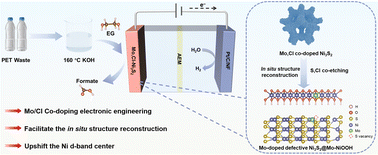
Electrocatalytic conversion of polyethylene terephthalate (PET) plastic waste into formate coupled with hydrogen generation represents a promising route for plastic upcycling. Based on electronic structure engineering, herein a dual-doped nickel sulfide catalyst (Mo,Cl-Ni3S2) is fabricated, which innovatively addresses the insufficient activity and inferior stability of pristine Ni3S2 for the ethylene glycol oxidation reaction (EGOR). Experimental and theoretical studies confirm that Mo/Cl co-doping modulates the electronic structure of Ni3S2, strengthens intermediate adsorption, and promotes in situ structural reconstruction, thereby synergistically enhancing the EGOR activity and stability. The optimized Mo,Cl-Ni3S2 exhibits splendid catalytic performance, achieving a high formate faradaic efficiency (FE) of 94.0% at 1.55 V vs. RHE and retaining 83.3% of its initial activity after 95 hours of continuous operation at 300 mA cm−2. Furthermore, an integrated acidification–precipitation–recrystallization strategy is proposed for efficient and low-cost separation of terephthalic acid (PTA) and potassium formate. This work not only provides an innovative and feasible approach for the upcycling of PET waste into high-value chemicals and green hydrogen, but also offers fundamental theoretical guidance for the rational design of heteroatom co-doped nickel sulfide catalysts.
 Please wait while we load your content...


