


Metabolic, redox, and spatial engineering of Yarrowia lipolytica for high-level zeaxanthin production
 *a
*a
Abstract
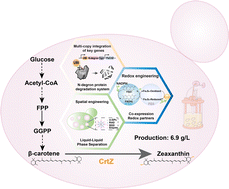
Zeaxanthin, a high-value lipophilic xanthophyll carotenoid, has been extensively used in nutraceuticals, cosmetics and animal feed. Although its industrial demand is rising rapidly, the titer of microbial zeaxanthin production remains relatively low. Here, we systematically engineered the oleaginous yeast Yarrowia lipolytica to achieve the highest zeaxanthin production ever reported. To convert β-carotene into zeaxanthin, different β-carotene hydroxylases (CrtZ) were screened and the metabolic flux of β-carotene was strengthened in a β-carotene-producing strain. We then developed a protein-degron-mediated multi-copy integration strategy to elevate the expression of CrtZ and engineered the ferredoxin/ferredoxin oxidoreductase and redox cofactor regeneration to improve the catalytic efficiency of β-carotene hydroxylase. Liquid–liquid phase separation was then implemented to spatially co-localize the enzymes for mevalonate synthesis, accelerating mevalonate supply and boosting zeaxanthin production in Y. lipolytica. Combined with cultivation optimization, the engineered strain produced 6.9 g L−1 zeaxanthin in fed-batch cultivation, the highest reported titer to date. This study establishes an integrated metabolic engineering strategy that couples metabolic, redox and spatial engineering for high-level zeaxanthin production. The multi-copy integration and phase separated multienzyme condensate approaches developed here can also be used as versatile toolkits for metabolic engineering in Y. lipolytica.
 Please wait while we load your content...


