


 PLATFORM UPDATE:

A bio-inspired environmentally friendly and cost-effective chemo-enzymatic synthesis of (−)-ambrox from trans-nerolidol
 *abcd
and
Jianjun
Qiao
*abcd
*abcd
and
Jianjun
Qiao
*abcd
Abstract
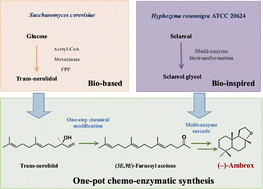
The production of the high-value fragrance (−)-ambrox has traditionally relied on plant-derived precursors and harsh chemical processes. Inspired by the biotransformation of sclareol in fungi, we established an efficient chemo-enzymatic synthetic route of (−)-ambrox, leveraging the inexpensive starting material trans-nerolidol provided by de novo biosynthesis in Saccharomyces cerevisiae at a titre of 26.4 g L−1 in this study. To reconstruct the biosynthesis of (3E,7E)-homofarnesol, the key linear precursor for (−)-ambrox, we identified a group of naturally co-regulated enzymes comprising Baeyer–Villiger monooxygenase (BVMO), esterase and alcohol dehydrogenase through transcriptomic analysis of H. roseonigra. BVMO showed a broad substrate scope, with a preference towards ketones with aromatic and terpenoid substituents. Optimization of the reaction conditions and semi-rational protein engineering of subsequent squalene–hopene cyclase allowed us to obtain (−)-ambrox with 89.9% yield and 98.8% purity in a gram-level scale-up reaction. This work demonstrates an eco-friendly and cost-effective platform for (−)-ambrox biosynthesis, with potential adaptability to various terpenoids.
 Please wait while we load your content...


