Mild hydrolysis of PET and electrochemical energy recovery via multifunctional polyoxometalate catalysts

Hyeonmyeong Oh ab, Ye Chan Lee a, Inhui Lee ab, Yuri Choi ab, Jiyeong Kim ab, Hyeongoo Kim ab, Kwang Min Kim ab, Yoonjeong Jo a, Kwangjin An ac, Tae Hoon Oh *ac and Jungki Ryu *abcd
aSchool of Energy and Chemical Engineering, Ulsan National Institute of Science and Technology (UNIST), Ulsan 44919, Republic of Korea. E-mail: jryu@unist.ac.kr; oh.taehoon@unist.ac.kr
bEmergent Hydrogen Technology R&D Center, Ulsan National Institute of Science and Technology (UNIST), Ulsan 44919, Republic of Korea
cGraduate School of Carbon Neutrality, Ulsan National Institute of Science and Technology (UNIST), Ulsan 44919, Republic of Korea
dCenter for Renewable Carbon, Ulsan National Institute of Science and Technology (UNIST), Ulsan 44919, Republic of Korea

Received 6th September 2025 , Accepted 24th December 2025

First published on 5th January 2026


Abstract

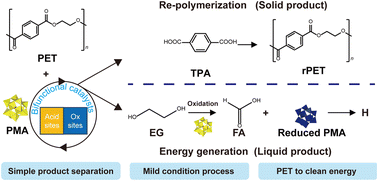
Polyethylene terephthalate (PET) is a primary target for chemical plastic recycling due to its widespread use and relatively weak ester bonds in its structure. However, conventional PET depolymerization methods—such as alkaline hydrolysis, glycolysis, and methanolysis—are energy-intensive and require complex separation steps, which increase both costs and environmental impact. This study introduces a polyoxometalate-based recycling process to address these limitations. Under mild conditions (100 °C and low pressure in aqueous solution), polyoxometalates catalyze the depolymerization of PET via acid hydrolysis, producing high-purity terephthalic acid (TPA) and ethylene glycol (EG) as solid and liquid products, respectively. EG is further oxidized by polyoxometalates to yield valuable compounds such as glycolic acid and formic acid, while simultaneously storing electrons. Under optimized conditions, EG oxidation achieves high selectivity (∼85%) toward formic acid. The stored electrons can be utilized for low-energy hydrogen production (125 mA cm−2 at 1.2 V) or electricity generation (12.5 mW cm−2 at 0.05 V). Crucially, our techno-economic analysis reveals that this approach, which combines revenue from high-purity TPA and valorized co-products, is cost-competitive and has the potential to supply TPA at a price lower than that of the virgin material. This work presents a technically robust and economically viable pathway toward a circular economy for plastic waste.


Green foundation

1. This work advances green chemistry by introducing a mild, energy-efficient PET depolymerization process using multifunctional polyoxometalate catalysts, which avoids harsh conditions and simplifies product separation compared to conventional methods.

2. Our specific achievement is the selective recovery of high-purity terephthalic acid and concurrent valorization of ethylene glycol into formic acid with ∼85% selectivity, while simultaneously extracting electrons for hydrogen production or electricity generation. This integration of chemical recycling and electrochemical energy recovery represents a dual benefit in resource efficiency and sustainability.

3. Future research could make the process greener by further optimizing solvent recovery, scaling catalyst regeneration cycles, and coupling with renewable-powered electrochemical systems, thereby lowering the environmental footprint and enabling broader application to mixed or colored plastic waste.


1. Introduction

Plastic waste has become a critical global challenge, with production and disposal reaching alarming levels. For example, global plastic production was estimated to exceed 367 million metric tons in 2023.1 However, less than 10% of plastic waste is recycled, while the majority is incinerated, landfilled, or released into the environment, resulting in severe pollution and public health concerns.2 Currently, mechanical recycling is the predominant method, but it allows only limited reuse due to the progressive degradation of polymer properties over successive cycles.3 In this context, chemical recycling has recently garnered significant attention because it enables substantially extended recycling loops for plastics without loss of performance, providing a viable pathway toward a circular economy and, in some cases, allowing for upcycling.4

Among various types of plastics, polyethylene terephthalate (PET) has become a primary target for chemical recycling due to its wide-ranging applications and high recyclability. PET is one of the most widely used plastics, following polypropylene and polyethylene, due to its excellent durability and transparency.5 Moreover, PET is more readily depolymerized than polyolefins, as its ester linkages have much lower bond dissociation energies (290 kJ mol−1) compared to the C–C and C–H bonds in polyolefins (372 and 410 kJ mol−1).6 Consequently, several promising depolymerization methods have been investigated, including glycolysis, methanolysis, alkaline hydrolysis, and enzymatic degradation (Fig. S1–S5, SI, and Table 1). However, these methods still present significant challenges for practical implementation. For example, enzymatic depolymerization can be conducted under mild conditions but suffers from slow kinetics and enzyme instability.7 Methanolysis and glycolysis require high temperatures and consume equimolar amounts of additional chemicals, such as methanol and ethylene glycol (EG). While alkaline hydrolysis proceeds rapidly at relatively low temperatures, it requires strong bases. More critically, these approaches often face significant difficulties in product separation, necessitating energy-intensive distillation or acidification steps that increase operational complexity and cost (Table 1).3,8 Therefore, there is a critical need for innovative methods for PET chemical recycling that can operate under mild conditions while minimizing energy-intensive separation processes. To address this challenge, a variety of homogeneous and heterogeneous catalysts—such as metal oxides, solid acids, ionic liquids, and polyoxometalates—have been investigated for catalytic depolymerization via hydrolysis or glycolysis.9,10 While these catalytic systems often outperform non-catalytic routes, many still require elevated temperatures (>150 °C), exhibit limited tolerance to real-world feedstocks, or suffer from catalyst deactivation or leaching.11 These limitations underscore the need for catalytic systems that combine mild reaction conditions, robustness, and facile product separation.

Table 1 Comparison of various PET depolymerization methods
Method Solvent Temperature Conversion rate Resource consumption Products Separation complexity
Abbreviations: TPA, terephthalic acid; EG, ethylene glycol; GA, glycolic acid; FA, formic acid; BHET, bis(hydroxyethyl) terephthalate; DMT, dimethyl terephthalate.
PMA hydrolysis (this study) 1 M H2SO4 in H2O 100 °C 90%, 2 h H2O TPA, EG, GA, FA Simple (solid–liquid separation)
Glycolysis12 EG 180 °C 83–100%, 2–3 h EG BHET Complex (recrystallization of BHET and distillation of excess)
Methanolysis13 Methanol 190 °C 90%, 2.5 h Methanol DMT, EG Complex (DMT extraction by dichloromethane and methanol distillation)
Alkaline hydrolysis14 ∼5 M NaOH 90–100 °C 100%, 1 h NaOH, H2SO4 TPA, EG Complex (acidification for TPA precipitation)
Enzymatic degradation15 H2O 50 °C 50%, 48 h H2O TPA, EG Simple (filtration of solid TPA, no solvent separation)


In this study, we report an efficient method for the depolymerization and utilization of waste PET using phosphomolybdic acid (PMA) as a multifunctional catalyst. Due to its high acidity, PMA enables efficient PET depolymerization via acid hydrolysis under mild conditions (100 °C and low pressure), producing terephthalic acid (TPA) and EG. TPA is readily protonated and precipitated, allowing for high-purity separation through simple filtration. Meanwhile, EG is further oxidized by PMA to produce formic acid (FA) with high selectivity (∼85%) via intermediate glycolic acid (GA). Notably, 15.82 mmol of electrons are extracted and stored in PMA per gram of PET. These stored electrons can readily be released on demand, enabling low-energy hydrogen production (125 mA cm−2 at 1.2 V) via electrolysis and electricity generation (peak power density of 12.5 mW cm−2 at 0.05 V) using redox fuel cells. Because TPA precipitates are easily separated and EG—typically difficult to isolate—is electrochemically utilized, this approach reduces complex separation steps and the need for additional chemicals. Techno-economic analysis shows that this approach can be economically viable by combining revenue from high-purity TPA, hydrogen, and valorized co-products, suggesting the potential to supply TPA at a price lower than that of its virgin counterpart. This study presents a promising strategy for effective PET chemical recycling, integrating electrochemical valorization and offering a sustainable solution aligned with global circular economy and environmental sustainability goals.

2. Results and discussion

We selected PMA as a catalyst for the effective and energy-efficient chemical recycling of PET. PMA offers several advantages as a molecular catalyst for PET depolymerization, including strong acidity, excellent thermal stability, and reversible redox activity accompanied by a distinct color change. Previous studies have demonstrated that PMA can efficiently depolymerize various biomass feedstocks—such as lignin, cellulose, and even lignocellulose—into value-added chemicals, including vanillin from lignin.16–18 Moreover, PMA is capable of extracting electrons during oxidative biomass depolymerization and effectively storing and releasing them for electrochemical energy conversion.16–19 In this context, we hypothesized that PMA could also depolymerize PET while simultaneously extracting electrons. Moreover, due to its strong acidity, TPA—a key product of PET acid hydrolysis—can be readily protonated and precipitated, allowing for its straightforward separation without the need for energy-intensive steps such as acidification or distillation required in conventional depolymerization methods (Scheme 1).
image file: d5gc04677g-s1.tif
Scheme 1 Comparison of various PET depolymerization methods in terms of reaction pathway, products, and separation strategies.

To evaluate this hypothesis, we conducted depolymerization experiments using reagent-grade PET pellets in a 0.5 M PMA solution (dissolved in H2SO4) (Fig. 1a). The PET pellets, with a diameter of 3 mm, were first tested at 200 °C—a typical temperature commonly used in conventional PET depolymerization methods. In the absence of PMA, only ∼20% of PET was decomposed after 3 h. In contrast, 1 g of PET was completely depolymerized within 1 h with PMA, yielding TPA as a solid precipitate and EG as the primary liquid product. Lowering the temperature to 175 and 150 °C increased the reaction time required for complete depolymerization to ∼2.5 and ∼3 h, respectively. No significant depolymerization occurred at 100 °C under the same conditions. From these results, the activation energy for PMA-catalyzed PET depolymerization was determined to be 75.2 kJ mol−1 (Fig. S6, SI), which is considerably lower than the values reported for conventional PET depolymerization methods (approximately 83–125 kJ mol−1), most of which require operation at 200 °C.20,21


image file: d5gc04677g-f1.tif
Fig. 1 PET depolymerization performance using PMA under various conditions. (a) PET depolymerization efficiency at different temperatures, comparing reactions with and without PMA. (b) Depolymerization yield depending on the physical form of PET (pellets, commercial bottles, and powders) and the effect of DMSO as a co-solvent. (c) Enhanced depolymerization performance at 100 °C in the presence of DMSO co-solvent. (d) Visual observation of catalyst color change during the reaction and the formation of TPA precipitates, confirming successful depolymerization and electron transfer.

To further reduce the reaction temperature, we employed a combination of a cryo-milling process and dimethyl sulfoxide (DMSO) as a co-solvent. The extremely low solubility of PET in aqueous solution (e.g., <0.01 wt% in 1 M H2SO4 at 100 °C) limits effective interaction between the catalyst and the polymer substrate. To address this, reagent-grade PET pellets were cryo-milled to reduce their particle size from 3 mm to <425 µm (equivalent to 40 mesh), which significantly enhanced PET depolymerization—from 0.0 to 68.2% after 5 h at 100 °C. To optimize reaction efficiency, we identified DMSO as the most suitable co-solvent after screening several alternatives (e.g., NMP, DMF). While these other solvents yielded poor PET conversion (<20%) due to oxidative degradation by PMA (Fig. S7, SI), DMSO exhibited superior chemical stability under the reaction conditions. The addition of 50 vol% DMSO—an electrochemically stable solvent (Fig. S8, SI) known to promote PET swelling—markedly enhanced mass transfer of PET.22 At 100 °C, approximately 0.1–0.5 wt% of the polymer was observed to dissolve or disperse into the liquid phase (compared with the <0.01 wt% without DMSO), enabling near-complete depolymerization (∼95% after 3 h and ∼100% after 5 h). Partial depolymerization was also achieved even at 50 °C (Fig. 1b and c). Notably, PET depolymerization in a water–DMSO mixture was also feasible without cryo-milling, although at a slower rate (Fig. S9, SI). The activation energy for PET depolymerization in the water–DMSO mixture was calculated to be 70.95–72.90 kJ mol−1 (Fig. S10, SI). Furthermore, experiments using PET powders with different particle-size distributions revealed a strong dependence on particle size: depolymerization efficiency decreased markedly as the particle size increased (Fig. S11, SI). These results confirm that maximizing the available surface area—via fine milling—is essential for achieving efficient hydrolysis under the mild heterogeneous conditions employed in this work. The PMA-based PET depolymerization method was also effective for commercial PET bottles in various forms (Fig. 1b). The consistent performance observed for both reagent-grade pellets and post-consumer bottle waste indicates that the process is robust to feedstock variability, including differences in molecular weight, intrinsic viscosity, additives, and crystallinity. Based on these results, all subsequent experiments were conducted using cryo-milled PET and DMSO as a co-solvent.

Interestingly, a distinct color change from yellow to blue was observed after the reaction, indicating the reduction of PMA (Fig. 1d). This change was accompanied by an off-stoichiometric ratio between depolymerized PET and its products—TPA and EG (e.g., 1.00[thin space (1/6-em)]:[thin space (1/6-em)]0.98[thin space (1/6-em)]:[thin space (1/6-em)]0.43), suggesting further transformation of EG. In addition to EG, GA and FA were detected as liquid-phase products (Fig. S12, SI); the detailed product distribution will be discussed in a later section. These observations indicate that following acid hydrolysis23 of PET into TPA and EG, the EG undergoes oxidation, which is coupled with the reduction of PMA.

To elucidate the depolymerization mechanism, we first investigated the role of PMA in the acid hydrolysis of PET. Quartz crystal microbalance (QCM) analysis revealed that PMA strongly adsorbs onto PET surfaces at room temperature, whereas H2SO4 exhibits negligible adsorption (Fig. 2a). Notably, the adsorption of PMA was further enhanced in acidic environments (e.g., 1 M H2SO4) compared to neutral deionized (DI) water.24 To probe the structural changes of PET under slow reaction conditions, we conducted ex situ Raman spectroscopy on PET samples before and after treatment with PMA at 50 °C for 3 h (Fig. 2b). While treatment with H2SO4 alone resulted in minimal spectral changes, the combination of PMA and H2SO4 led to a marked decrease in the C[double bond, length as m-dash]O stretching peak at 1717 cm−1 and the appearance of an additional peak at 1646 cm−1. The latter is attributed to the hydrogen bonding involving ester linkages in PET.25,26 The absence of this hydrogen bonding signature in PET samples treated only with aqueous H2SO4 solution suggests that the interaction is specific to protonated PMA, which forms hydrogen bonds with the ester linkages in PET.


image file: d5gc04677g-f2.tif
Fig. 2 Mechanistic investigation of PMA-catalyzed PET depolymerization. (a) QCM analysis showing the adsorption of PMA on PET surfaces. (b) Raman spectra illustrating structural changes in PET during PMA-catalyzed degradation. (c) Effect of H2SO4 concentration—reflecting the protonation degree of PMA—on PET degradation efficiency. (d) Reaction of deuterium-labeled PMA with PET, with NMR analysis confirming proton transfer as a key step in the depolymerization mechanism.

Based on these results, we further investigated the effect of PMA's protonation state on PET depolymerization (Fig. 2c). To modulate the protonation level, PMA was dissolved in H2SO4 solutions of varying concentrations. Given the known pKa values of PMA (0.3, 1.6, and 2.2), the fraction of its protonated species—PMo12O403−, HPMo12O402−, H2PMo12O40, and H3PMo12O40—can be readily estimated as a function of H2SO4 concentration.27 As the acid concentration increased, PMA underwent progressive protonation, predominantly forming HPMo12O402− and H2PMo12O40. Notably, when PMA was primarily in the fully deprotonated PMo12O403− form, it exhibited negligible catalytic activity. In contrast, PET depolymerization activity increased significantly with the concentration of the mono-protonated HPMo12O402− species. It is worth noting that H2PMo12O40 and H3PMo12O40 exhibited much lower solubility than HPMo12O402−, potentially limiting their catalytic applicability.

To directly confirm the role of protonated PMA in PET hydrolysis, we conducted depolymerization experiments using deuterium-substituted HPMo12O402− (i.e., DPMo12O402−). As shown in Fig. 2d, 1H NMR analysis of the resulting terephthalic acid revealed deuterium incorporation (DOOC–C6H4–COOD), as evidenced by the absence of proton signals corresponding to the carboxyl acid group. These results confirm that hydrolysis proceeds via direct proton transfer from PMA to the ester linkages of PET.

Taken together, the findings suggest that PMA-catalyzed PET depolymerization proceeds via adsorption of partially protonated PMA onto the PET surface through hydrogen bonding, followed by acid-catalyzed ester bond cleavage. However, the continuous decline in EG concentration and concurrent increase in electron extraction over time indicate that additional reactions between PMA and PET-derived products are also occurring.

To elucidate the secondary reactions responsible for EG oxidation and electron extraction following PET hydrolysis, we monitored the concentration profiles of key reactants and products—depolymerized PET (in terms of monomer equivalents), TPA, EG, GA, FA, and extracted electrons—during depolymerization at 100 °C (Fig. 3a). Depolymerized PET and the produced TPA were quantified gravimetrically, while EG, GA and FA were analyzed via liquid chromatography. The number of extracted electrons was determined spectrophotometrically, based on the colorimetric change of PMA depending on its redox state. Within 1 h, TPA and EG were produced in nearly equimolar amounts relative to depolymerized PET (TPA: 1.30 mmol; EG: 1.26 mmol), whereas GA, FA, and extracted electrons remained negligible. As the reaction progressed, a decline in EG concentration was observed, accompanied by the formation of GA and FA. For instance, after 3 h, GA and FA concentrations reached 0.14 mmol and 2.63 mmol, respectively, with the total extracted electrons reaching 8.34 mmol. Notably, the molar ratio between depolymerized PET and TPA remained nearly constant throughout the reaction, indicating the chemical stability of TPA under these conditions despite the strong oxidizing power of PMA (Fig. S13, SI).


image file: d5gc04677g-f3.tif
Fig. 3 Mechanistic and kinetic analysis of PET depolymerization and electron extraction by PMA. (a) Time-resolved concentration profiles of depolymerized PET, EG, FA, and extracted electrons during PMA-catalyzed depolymerization. (b) Stepwise oxidation of EG by PMA. (c) Oxidation of GA by PMA. (d) Proposed reaction mechanism illustrating electron transfer from EG to PMA during PET depolymerization via sequential oxidation steps. (e) Control of product selectivity and electron extraction efficiency through stoichiometric tuning of PET and PMA.

To further validate this oxidative transformation of EG observed during PET depolymerization, we performed a series of model reactions using individual PET-derived intermediates under identical conditions (0.5 M PMA at 100 °C). EG (5.2 mmol)—corresponding to the theoretical amount derived from 1 g of PET—was initially oxidized to GA (1.58 mmol at 2 h), which was subsequently converted to FA (2.13 mmol) (Fig. 3b), resulting in a total of 12.8 mmol of extracted electrons. To further investigate the GA-to-FA conversion pathway, we examined the oxidation of GA (5.2 mmol) under the same conditions for 2 h. During this period, 4.7 mmol of GA were consumed, yielding 8.4 mmol of FA and 9.5 mmol of extracted electrons (Fig. 3c). In contrast, oxidation of FA alone resulted in minimal electron extraction (0.2 mmol at 2 h; Fig. S14, SI), showing that FA is highly resistant to PMA-mediated oxidation. Although FA can undergo a much slower, non-oxidative, acid-catalyzed decomposition (e.g., by H2SO4) into CO and H2O over extended reaction times, this pathway contributes negligibly to the overall redox conversion.28 Control experiments using reduced PMA (PMAred) confirmed that PET hydrolysis can still proceed in a strongly acidic reaction medium (1 M H2SO4) (Fig. S15a, SI), but the intermediates EG and GA remain unoxidized in the absence of PMAox (Fig. S15b and c, SI). These results demonstrate that Brønsted-acid-catalyzed hydrolysis and PMA-mediated oxidation are mechanistically distinct steps and validate that the oxidative valorization pathway is driven exclusively by the oxidized form of PMA. Furthermore, electrochemical measurements of electrolytes containing only EG, GA, and FA (i.e., without PMA) showed negligible anodic current, validating that these organic products are electrochemically stable and are not oxidized during the PMA regeneration step (Fig. S16, SI).

Based on these results, we propose a reaction pathway for PET depolymerization and subsequent oxidative transformation mediated by PMA (Fig. 3d). Initially, PET undergoes acid hydrolysis catalyzed by PMA, producing TPA and EG. While the TPA remained chemically stable under the reaction conditions, the EG is sequentially oxidized to GA and then to FA. The oxidations of EG to GA and GA to FA involve the transfer of four and two electrons, respectively, resulting in a total of six electrons generated per EG molecule oxidized to FA.29 The oxidation of FA proceeds at a much slower rate compared to that of EG and GA, contributing minimally to electron extraction. Through this stepwise oxidative conversion of PET-derived intermediates, PMA functions as an effective electron acceptor, facilitating simultaneous PET depolymerization and electron extraction. In contrast, reduced PMA exhibits no catalytic activity for the oxidation of EG, GA, and FA, confirming its essential role as a redox-active species in the reaction cycle.

Based on the proposed reaction pathway, we hypothesized that product selectivity—particularly towards FA—could be further enhanced by controlling the stoichiometric ratio between PET and PMA. Since FA is produced through the sequential oxidation of EG and GA, which involves the concurrent reduction (and thus deactivation) of PMA, a limited amount of PET relative to PMA could favor higher FA selectivity. Furthermore, given that FA oxidation is significantly slower than that of EG and GA, selective accumulation of FA is possible under optimized conditions. To test this hypothesis, we systematically varied the initial PET-to-PMA ratio by adjusting the amount of PET from 1 g down to 0.1 g, while keeping the PMA concentration constant. This approach allowed us to modulate the extent of PMA reduction and, consequently, the product distribution. As anticipated, under the optimized conditions of 0.1 g of PET and 5 mmol of PMA, we achieved a high FA selectivity of approximately 85%, thereby validating our hypothesis and demonstrating the tunability of the oxidative product pathway through stoichiometric control.

Building upon the successful PMA-catalyzed depolymerization of PET—which not only produces valuable TPA but also extracts electrons through the oxidation of EG—we next explored the practical applications of harnessing the extracted electrons for energy conversion (Fig. 4). The overall concept, illustrated schematically in Fig. 4a, involves the selective recovery of solid TPA for chemical recycling and repolymerization into PET, while the reduced form of PMA (PMAred) carrying the extracted electrons is utilized in electrochemical systems.30 These systems include electrolyzers for hydrogen production and vanadium redox fuel cells for electricity generation, thereby integrating plastic waste recycling with sustainable energy technologies.


image file: d5gc04677g-f4.tif
Fig. 4 Demonstration of integrated PET chemical recycling and electrochemical energy recovery. (a) Schematic illustration of the overall process, featuring PET depolymerization, TPA recovery for repolymerization, and utilization of reduced PMA in electrochemical systems. (b) 1H NMR spectra of the TPA recovered from transparent PET (t-TPA) and colored PET (c-TPA), compared with commercial-grade TPA, confirming the high purity of the recovered material. (c) FT-IR spectra of BHET and PET re-synthesized from recovered TPA. (d) Chronoamperometry data showing stable current generation during hydrogen production via water electrolysis using reduced PMA. (e) Polarization and power density curves of a vanadium redox fuel cell operated with reduced PMA as the electron donor.

The viability of the chemical recycling loop was first confirmed through the successful recovery and reuse of TPA. High-purity TPA was readily isolated by simple filtration and its chemical identity was verified by comparative 1H NMR spectroscopy (Fig. 4b), which showed excellent agreement between TPA recovered from PET bottles and commercial-grade TPA. Notably, this process was also effective even for colored PET waste, yielding white, high-purity TPA. This result highlights the intrinsic decolorization capability of the PMA-based system—an important advantage over conventional recycling methods that often struggle with pigment contamination.31 The recovered TPA was subsequently re-polymerized into PET via esterification with EG followed by polycondensation. Fourier transform infrared (FT-IR) spectroscopy (Fig. 4c) confirmed the success of this process. The spectra clearly showed the formation of key ester functional groups: C[double bond, length as m-dash]O stretching at ∼1715 cm−1 and C–O stretching at ∼1240 cm−1, closely matching the spectra of a commercial PET reference.32 Furthermore the broad O–H stretching band centered around 3400 cm−1—prominent in the intermediate bis(2-hydroxyethyl) terephthalate (r-BHET)—was significantly diminished in the r-PET spectrum.33 This disappearance of the O–H signal, coupled with the emergence of ester peaks, provides strong evidence for successful polycondensation and confirms the high quality of the re-synthesized PET, demonstrating the full recyclability of the TPA recovered via the PMA-based depolymerization process.

Notably, the reduced overpotential observed during hydrogen production originates from the chemical energy stored in PMAred, which accumulates during the exothermic oxidation of EG and GA. During electrochemical regeneration, this stored chemical energy is released, thereby lowering the external electrical energy required to sustain hydrogen evolution. As a result, the system delivered a stable current density of ∼125 mA cm−2 at 1.2 V, with a consistently high faradaic efficiency exceeding 95% (Fig. 4d). This operating voltage is substantially lower than that required for conventional overall water splitting, which typically exceeds 1.5–1.6 V at 10 mA cm−2, thus demonstrating significant energy savings enabled by coupling of organic oxidation with hydrogen production.34,35 Theoretically, this translates to a reduction in energy consumption from the conventional ∼50 kWh kg−1 H2 benchmark to ∼31.9 kWh kg−1 H2, enhancing the economic feasibility of integrating PET recycling with low-energy hydrogen production.36 This approach yields ∼7.91 mmol of H2 per gram of PET. As an alternative energy conversion route, direct electricity generation was demonstrated using a vanadium redox fuel cell powered by the electrons extracted during PET depolymerization.37 The fuel cell achieved a peak power density of ∼12.5 mW cm−2 at 0.05 V and exhibited stable operation over 3 h, as shown in the polarization and power density curves (Fig. 4e and Fig. S17, SI). Together, these results highlight the dual benefits of the PMA-catalyzed system: enabling closed-loop chemical recycling of PET and harnessing the associated redox chemistry for electrochemical energy recovery.

To evaluate the practical and economic viability of the proposed PMA-catalyzed PET recycling process, we conducted a preliminary techno-economic analysis (TEA) based on an annual PET-waste processing capacity of 35[thin space (1/6-em)]000 metric tons. This scale was chosen to reflect the throughput of commercially operating PET recycling facilities in South Korea,38 thereby providing a realistic and industry-relevant benchmark for evaluating the performance and feasibility of the proposed process. This analysis aimed to calculate the minimum selling price (MSP) of the produced TPA and identify the key economic drivers for the integrated system. The economic viability of the entire process, as outlined in the block flow diagram, was assessed (Fig. S18, SI). All detailed assumptions for this analysis, including material prices, utility costs, and financial parameters, are provided in the SI (Tables S1–S5, SI).

Given a daily treatment of 96 metric tons of PET waste—based on a batch size of 10 tons, processed every 2 h with a capacity factor of 0.8—an analysis of the process economics, detailed in the waterfall plot (Fig. 5a), reveals a robust annual profit projected at $4 million. A key driver of this profitability is the diversified revenue stream; while TPA is the primary product, the valorized co-products—hydrogen and formic acid—contribute nearly half of the total $53.6 million revenue, showcasing the significant financial benefit of this integrated upcycling approach. The analysis reveals that the MSP is exceptionally sensitive to the recovery efficiency of the DMSO co-solvent (Fig. 5b). To further validate the economic robustness, a sensitivity analysis for PMA and H2SO4 recovery is presented (inset of Fig. 5b). The results indicate that even if recovery rates decrease to 95%, the MSP increases only marginally to approximately $0.87 per kg, remaining below the market price of virgin TPA (>$0.92 per kg). Notably, DMSO recovery via distillation (modeled at 180 °C) is a mature and technically feasible industrial operation, enabled by DMSO's high boiling point (189 °C) and excellent thermal stability.39 This highlights that while the core chemical process is effective, its commercial-scale viability is critically dependent on an optimized solvent recovery system. In stark contrast, the cost contribution from the PMA catalyst itself is negligible at just 0.02%, due to its high stability and efficient recovery, which removes a significant financial barrier common in other catalytic systems.


image file: d5gc04677g-f5.tif
Fig. 5 Techno-economic analysis of the integrated PMA-catalyzed PET recycling process. The analysis shows (a) a waterfall plot of the annual profit breakdown by revenue and cost components and (b) the sensitivity of the TPA minimum selling price (MSP) to the recovery efficiency of the DMSO co-solvent. The inset contour plot illustrates the variation in the TPA MSP vs. the recovery efficiency of PMA and H2SO4. (c) Comparison of the TPA MSP with competing technologies (glycolysis, methanolysis, and enzymatic degradation). (d) The impact of the market price of co-produced hydrogen on the TPA MSP.

Based on these economic parameters, the minimum selling price (MSP) for our TPA was estimated to be $0.81 per kg. As shown in Fig. 5c, this value is highly competitive in the current market. It is not only significantly lower than the MSPs reported for other major recycling technologies (e.g., glycolysis,40 methanolysis,40 enzymatic degradation41) but also undercuts the market price of virgin TPA (typically >$0.92 per kg).42 Furthermore, due to European regulations creating a “green premium,” recycled TPA is often traded at an even higher price than virgin TPA.43 Our process, with its low MSP, is therefore positioned to supply TPA at a competitive price point in both conventional and premium recycled-content markets. Finally, the process economics are further enhanced by the co-production of hydrogen, as demonstrated by the relationship between its market price and the MSP of TPA (Fig. 5d). This integrated approach presents a novel strategy for reducing the production cost of green hydrogen, enabling its supply at a competitive price range of $2–4 per kg, contributing to the future hydrogen economy.

3. Conclusions

To address the challenges of energy-intensive plastic recycling, we developed a PMA-catalyzed depolymerization process for PET. This strategy enables efficient PET depolymerization under mild conditions—as low as 50–100 °C when combined with cryo-milling and DMSO co-solvent—significantly reducing energy input compared to conventional methods. PET is selectively depolymerized into high-purity TPA and EG. The solid form of TPA allows for facile and energy-efficient separation via simple filtration, and the recovered TPA was successfully re-polymerized into PET. EG was further oxidized by PMA into value-added chemicals, such as FA, with high selectivity of ∼85%, while simultaneously extracting chemical energy in the form of electrons (15.82 mmol g−1 PET). These harvested electrons were effectively utilized to enable low-voltage hydrogen production (125 mA cm−2 at 1.2 V) and electricity generation (peak power density 12.5 mW cm−2), demonstrating the integration of chemical recycling with electrochemical energy recovery. Crucially, our techno-economic analysis confirms that these technical advantages, particularly the simplified TPA separation and revenue from valorized co-products, translate into a highly cost-competitive process capable of supplying TPA at a price lower than that of both conventional recycling methods and virgin PET production. This strategy provides a technically robust and economically viable solution for PET recycling—combining effective depolymerization, simplified separation, and value-added chemical and energy conversion—representing a significant advancement toward a circular economy for plastic waste. To further enhance the process's green credentials, future work will focus on exploring biomass-derived solvents (e.g., γ-valerolactone and cyrene) that can match DMSO's unique performance under similarly mild conditions.

Author contributions

J. R. and T. H. O. proposed, initiated, and supervised the project. H. O. designed the overall process and performed the experiments on PET depolymerization and electrochemical energy recovery. Y. C. L. conducted and analyzed the techno-economic analysis. Y. J. and K. A. performed the recycling process from TPA to PET. Y. C., J. K., H. K., I. L. and K. M. K. assisted in the PET depolymerization experiments. I. L. assisted in the characterization of the reaction products. All the authors discussed the results and participated in writing the manuscript.

Conflicts of interest

The authors declare no conflicts of interest.

Data availability

The data supporting the findings of this study are available within the article and its supplementary information (SI). Supplementary information is available. See DOI: https://doi.org/10.1039/d5gc04677g.

Acknowledgements

This work was supported by the Basic Science Research Program (2021R1A2C2013684), the Regional Leading Research Center (RLRC) (RS-2023-00217778), and the Engineering Research Center of Excellence Program (2020R1A5A1019631) funded by the National Research Foundation (NRF) of Korea. This study was also supported by the Regional Innovation System & Education (RISE) through the Ulsan RISE Center, funded by the Ministry of Education (MOE) and the Ulsan Metropolitan City, Republic of Korea (2025-RISE-07-001). This work was also supported by the InnoCORE program of hydro*studio at UNIST, funded by the Ministry of Science and ICT (1.250022.01).

References

  1. PlasticsEurope, Plastics – the Facts 2023: An Analysis of European Plastics Production, Demand, and Waste Data, PlasticsEurope, Brussels, 2023 Search PubMed.
  2. R. Geyer, J. R. Jambeck and K. L. Law, Sci. Adv., 2017, 3, e1700782 CrossRef PubMed.
  3. H. Kim, S. Lee, Y. Ahn, J. Lee and W. Won, ACS Sustainable Chem. Eng., 2020, 8, 12419–12429 CrossRef CAS.
  4. F. A. Kucherov, L. V. Romashov, K. I. Galkin and V. P. Ananikov, ACS Sustainable Chem. Eng., 2018, 6, 8064–8092 CrossRef CAS.
  5. T. Zhang, L. Fang, N. Lin, J. Wang, Y. Wang, T. Wu and P. Song, Green Chem., 2019, 21, 5405–5413 RSC.
  6. K. Lee, Y. Jing, Y. Wang and N. Yan, Nat. Rev. Chem., 2022, 6, 635–652 CrossRef PubMed.
  7. V. Tournier, C. M. Topham, A. Gilles, B. David, C. Folgoas, E. Moya-Leclair, E. Kamionka, M. L. Desrousseaux, H. Texier, S. Gavalda, M. Cot, E. Guémard, M. Dalibey, J. Nomme, G. Cioci, S. Barbe, M. Chateau, I. André, S. Duquesne and A. Marty, Nature, 2020, 580, 216–219 CrossRef CAS PubMed.
  8. J. Sun, H. Yang and B. Zhang, Green Chem., 2022, 24, 858–863 RSC.
  9. Z. Guo, J. Wu and J. Wang, RSC Sustainability, 2025, 5, 2111–2133 RSC.
  10. É. Casey, R. Breen, J. S. Gómez, A. P. M. Kentgens, G. Pareras, A. Rimola, J. D. Holmes and G. Collins, ACS Sustainable Chem. Eng., 2023, 11, 15544–15555 CrossRef PubMed.
  11. F. Cao, L. Wang, R. Zheng, L. Guo, Y. Chen and X. Qian, RSC Adv., 2022, 49, 31564–31576 RSC.
  12. S. Shirazimoghaddam, I. Amin, J. A. Faria Albanese and N. R. Shiju, ACS Eng. Au, 2023, 3, 37–44 CrossRef CAS PubMed.
  13. Y. Zhang, J. Gao, C. Jiang, G. Luo, J. Fan, J. H. Clark and S. Zhang, Green Chem., 2024, 26, 6748–6759 RSC.
  14. A. Barredo, A. Asueta, I. Amundarain, J. Leivar, R. Miguel-Fernández, S. Arnaiz, E. Epelde, R. López-Fonseca and J. I. Gutiérrez-Ortiz, J. Environ. Chem. Eng., 2023, 11, 109823 Search PubMed.
  15. Y. Cui, Y. Chen, J. Sun, T. Zhu, H. Pang, C. Li, W.-C. Geng and B. Wu, Nat. Commun., 2024, 15, 1417 Search PubMed.
  16. H. Oh, Y. Choi, C. Shin, T. V. T. Nguyen, Y. Han, H. Kim, Y. H. Kim, J.-W. Lee, J.-W. Jang and J. Ryu, ACS Catal., 2020, 10, 2060–2068 CrossRef CAS.
  17. Y. Choi, R. Mehrotra, S.-H. Lee, T. V. T. Nguyen, I. Lee, J. Kim, H.-Y. Yang, H. Oh, H. Kim, J.-W. Lee, Y. H. Kim, S.-Y. Jang, J.-W. Jang and J. Ryu, Nat. Commun., 2022, 13, 5709 Search PubMed.
  18. S.-J. Yim, H. Oh, Y. Choi, G.-N. Ahn, C.-H. Park, Y. H. Kim, J. Ryu and D.-P. Kim, Adv. Sci., 2022, 9, 2204170 CrossRef CAS PubMed.
  19. L. G. Bloor, R. Solarska, K. Bienkowski, P. J. Kulesza, J. Augustynski, M. D. Symes and L. Cronin, J. Am. Chem. Soc., 2016, 138, 6707–6710 CrossRef CAS PubMed.
  20. H. Wang, X. Wei, W. Zheng, H. Tang, Z. Xi, W. Sun and L. Zhao, Chem. Eng. Sci., 2025, 307, 121341 Search PubMed.
  21. J. J. Rubio Arias and W. Thielemans, Green Chem., 2021, 23, 9945–9956 RSC.
  22. H. Chen and H. Hu, Ind. Eng. Chem. Res., 2023, 62, 12925–12934 CrossRef CAS.
  23. Y. Ma, Y. Zhang, W. Yuan, M. Du, S. Kang and B. Qiu, EES Catal., 2023, 1, 892–920 RSC.
  24. T. Indest, J. Laine, L.-S. Johansson, K. Stana-Kleinschek, S. Strnad, R. Dworczak and V. Ribitsch, Biomacromolecules, 2009, 10, 630–637 CrossRef CAS PubMed.
  25. K. Saito, T. Xu and H. Ishikita, J. Phys. Chem. B, 2022, 126, 4999–5006 CrossRef CAS PubMed.
  26. C. Sammon, J. Yarwood and N. Everall, Polym. Degrad. Stab., 2000, 67, 149–158 CrossRef CAS.
  27. K. M. Reddy, N. Lingaiah, P. S. Sai Prasad and I. Suryanarayana, J. Solution Chem., 2006, 35, 407–423 CrossRef CAS.
  28. K. Shashikala, K. Ashna, J. Aswathi and D. Janardanan, Chem. Phys. Lett., 2022, 806, 140038 CrossRef CAS.
  29. T. Matsumoto, M. Sadakiyo, M. L. Ooi, S. Kitano, T. Yamamoto, S. Matsumura, K. Kato, T. Takeguchi and M. Yamauchi, Sci. Rep., 2014, 4, 5620 CrossRef CAS PubMed.
  30. I. Slobodkin, E. Davydova, M. Sananis, A. Breytus and A. Rothschild, Nat. Mater., 2024, 23, 398–405 CrossRef CAS PubMed.
  31. K. Ragaert, L. Delva and K. Van Geem, Waste Manage., 2017, 69, 24–58 CrossRef CAS PubMed.
  32. A. G. Al Lafi, M. Abboudi and K. Aljoumaa, J. Appl. Polym. Sci., 2017, 134, 44736 CrossRef.
  33. M. J. Chinchillas-Chinchillas, V. M. Orozco-Carmona, C. G. Alvarado-Beltrán, J. L. Almaral-Sánchez, S. Sepulveda-Guzman, L. E. Jasso-Ramos and A. Castro-Beltrán, J. Polym. Environ., 2019, 27, 659–669 Search PubMed.
  34. D. Wu, K. Kusada, S. Yoshioka, T. Yamamoto, T. Toriyama, S. Matsumura, Y. Chen, O. Seo, J. Kim, C. Song, S. Hiroi, O. Sakata, T. Ina, S. Kawaguchi, Y. Kubota, H. Kobayashi and H. Kitagawa, Nat. Commun., 2021, 12, 1145 CrossRef CAS PubMed.
  35. L. Yang, G. Yu, X. Ai, W. Yan, H. Duan, W. Chen, X. Li, T. Wang, C. Zhang, X. Huang, J.-S. Chen and X. Zou, Nat. Commun., 2018, 9, 5236 CrossRef CAS PubMed.
  36. U.S. Department of Energy, Hydrogen and Fuel Cell Technologies Office Multi-Year Research, Development, and Demonstration Plan, Washington, D.C., 2017 Search PubMed.
  37. C. Menictas and M. Skyllas-Kazacos, J. Appl. Electrochem., 2011, 41, 1223–1232 CrossRef CAS.
  38. Korea Environment Corporation (KECO), Waste Plastic Recycling Status and Policy Direction, Incheon, 2021 Search PubMed.
  39. Q. Lu, D. Yan, P. Wu, L. Chen, A. E. A. Yagoub, Q. Ji, X. Yu and C. Zhou, Renewable Energy, 2022, 190, 675–683 CrossRef CAS.
  40. T. Uekert, A. Singh, J. S. DesVeaux, T. Ghosh, A. Bhatt, G. Yadav, S. Afzal, J. Walzberg, K. M. Knauer, S. R. Nicholson, G. T. Beckham and A. C. Carpenter, ACS Sustainable Chem. Eng., 2023, 11, 965–978 CrossRef CAS.
  41. A. Singh, N. A. Rorrer, S. R. Nicholson, E. Erickson, J. S. DesVeaux, A. F. T. Avelino, P. Lamers, A. Bhatt, Y. Zhang, G. Avery, L. Tao, A. R. Pickford, A. C. Carpenter, J. E. McGeehan and G. T. Beckham, Joule, 2021, 5, 2479–2503 CrossRef CAS.
  42. E. Anglou, A. Ganesan, Y. Chang, K. M. Gołąbek, Q. Fu, W. Bradley, C. W. Jones, C. Sievers, S. Nair and F. Boukouvala, Chem. Eng. J., 2024, 481, 148278 CrossRef CAS.
  43. S&P Global Platts, The virgin vs recycled PET disconnect: Plastics Recycling, S&P Global Commodity Insights, London, 2019 Search PubMed.

This journal is © The Royal Society of Chemistry 2026
Click here to see how this site uses Cookies. View our privacy policy here.