


Epoxide isosorbate oleic acid as a sustainable PVC plasticizer: synthesis, performance and cytocompatibility
 *a
Wentao
Liu
a
*a
Wentao
Liu
a
Abstract
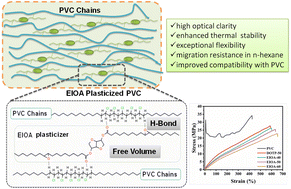
Polyvinyl Chloride (PVC) is widely utilized across various industries due to its outstanding comprehensive properties. However, the current reliance on harmful petroleum-based plasticizers, such as phthalates (PAEs), in PVC film processing poses significant environmental and health concerns, limiting its applications. To address this issue, we developed epoxidized isosorbide oleate (EIOA), a non-cytotoxicity, bio-based plasticizer with excellent plasticizing performance, as a sustainable alternative to conventional petroleum-derived plasticizers. EIOA was synthesized via esterification and epoxidation reactions using bio-derived raw materials, including isosorbide and oleic acid. When compared to the commercially available plasticizer di(2-ethylhexyl) terephthalate (DOTP), EIOA-plasticized PVC demonstrated superior performance, including: high optical clarity (87% light transmittance), enhanced thermal stability (T5% was 100 °C higher than pure PVC), exceptional flexibility (∼636.5% elongation at break), superior migration resistance (only 1.8% migration in n-hexane 24 h), and improved compatibility with PVC. Therefore, EIOA-plasticized PVC is a potential material for medical devices, food packaging, and other applications requiring direct human contact, eliminating safety concerns associated with traditional plasticizers.
 Please wait while we load your content...


