


 PLATFORM UPDATE:


Phyllanthus emblica L. polysaccharides attenuate anxiety disorder-like behavior in high-fat diet-fed mice
 *ab
*ab
Abstract
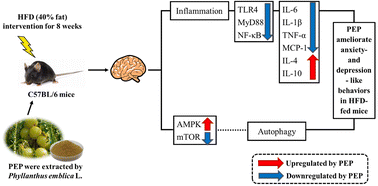
Obesity is largely driven by Western diets and sedentary lifestyles and is linked to a range of metabolic and neuropsychiatric disorders. Accumulating evidence suggests that a high-fat diet (HFD) contributes not only to metabolic dysfunction but also to neuroinflammatory processes and mood disturbances such as anxiety and depression. The mechanisms through which polysaccharides extracted from Phyllanthus emblica L. (PEP), an α-acidic pyran heteropolysaccharide (1.226 × 10³ kDa) rich in galactose and galacturonic acid, exert beneficial effects on behavior have not been fully elucidated. In this study, we investigated the potential of PEP to attenuate HFD-induced anxiety- and depression-like behaviors in mice. Behavioral analyses revealed significant improvements in both exploratory and stress-related behaviors following PEP administration. At the molecular level, PEP significantly reduced the expression of pro-inflammatory cytokines compared with the HFD group (P < 0.05), including TNF-α (16.98 vs. 24.11 pg per mg protein), IL-1β (3.45 vs. 5.22 pg per mg protein), IL-6 (3.06 vs. 7.23 pg per mg protein), and MCP-1 (4.53 vs. 7.36 pg per mg protein). In contrast, PEP significantly increased the levels of anti-inflammatory mediators (P < 0.05), including IL-4 (28.86 vs. 21.45 pg per mg protein) and IL-10 (8.15 vs. 2.10 pg per mg protein). Furthermore, PEP modulated the TLR4/MyD88/NF-κB signaling cascade and exerted bidirectional regulation on the AMPK/mTOR axis, upregulating AMPK while inhibiting mTOR expression, suggesting promotion of autophagic activity. These findings indicate that PEP confers neuroprotective effects by dampening neuroinflammation and improving behavioral outcomes. Collectively, our results support the potential application of PEP as a natural preventive agent for the management of diet-induced mood disorders.
 Please wait while we load your content...


