


 PLATFORM UPDATE:


Aloe-emodin alleviates CUMS-induced depressive-like behavior in male C57BL6 mice via neuroinflammation

Abstract
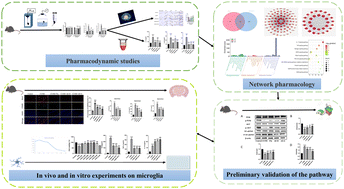
The global incidence of depression continues to rise, with its pathogenesis closely linked to neuroinflammation. Within the central nervous system, microglia—as core effector cells of the immune system—serve as key regulators of neuroinflammation while being intrinsically associated with the pathological progression of depression. Given the significant limitations of existing treatments, developing more effective antidepressants has become an urgent scientific challenge. Research indicates that natural products represent a crucial source for antidepressant drug development. Among these, the natural active compound aloe-emodin, with its well-established anti-inflammatory activity, shows highly promising potential for antidepressant applications. To investigate the antidepressant mechanism of aloe-emodin, this study employed network pharmacology prediction methods, validated through in vitro and in vivo experiments. Results indicate that aloe-emodin significantly ameliorates depressive-like behaviour in CUMS-induced depressed mice, enhances sucrose preference, reduces immobility time, and mitigates neuronal damage. Mechanistic studies have shown that the ameliorative effect of aloe-emodin on depression-like behaviour in CUMS mice is associated with the activation of the PI3K/AKT pathway and the inhibition of the NF-κB signalling pathway. Furthermore, this compound downregulates the CD68/Iba1 ratio in microglia, thereby inhibiting their excessive activation. ELISA assays further confirmed that aloe-emodin significantly reduces the expression levels of inflammatory cytokines in mouse serum and hippocampal tissue, ultimately exerting an anti-neuroinflammatory effect. In summary, aloe-emodin effectively alleviates depression-like behaviour, a phenomenon associated with the regulation of the PI3K/AKT/NF-κB signalling pathway and the inhibition of glial cell-mediated neuroinflammation, thereby laying a scientific foundation for the development of functional foods with aloe-emodin as the key ingredient.
 Please wait while we load your content...


