


 PLATFORM UPDATE:

Cynarin alleviates apical periodontitis by inhibiting macrophage M1 polarization via the PGC1α/ROS signaling axis

Abstract
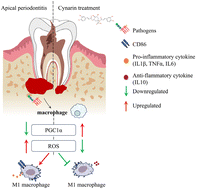
Apical periodontitis (AP) is a chronic inflammatory disease characterized by immune dysregulation and periapical bone destruction. Although targeting macrophage plasticity represents a promising strategy, there are still few effective and safe bioactive interventions available. In this study, we integrated bioinformatics analysis with clinical validation and identified PGC1α as a critical hub gene linking AP pathology to macrophage polarization. Analysis of human clinical samples confirmed a negative correlation between PGC1α expression and pro-inflammatory cytokines (IL-1β) as well as oxidative stress levels (4-HNE). Through virtual screening of the ZINC database, cynarin, a natural polyphenol enriched in artichoke (Cynara scolymus), was identified as a candidate PGC1α-modulating bioactive. In vitro experiments demonstrated that cynarin dose-dependently upregulated PGC1α expression and protected the protein from proteolytic degradation. Mechanistically, cynarin suppressed M1 polarization and pro-inflammatory cytokine expression by upregulating PGC1α and reducing ROS accumulation in a PGC1α-dependent manner. Notably, these protective effects were abrogated following genetic silencing of PGC1α using small interfering RNA (siRNA). Furthermore, in a murine model of experimental AP, cynarin administration significantly attenuated inflammatory bone loss, as evidenced by micro-CT and histological assessment. Collectively, our findings identify a PGC1α/ROS-dependent mechanism by which cynarin regulates macrophage polarization and suggest that artichoke-derived bioactives may represent candidate adjuncts for controlling inflammatory bone loss in AP.
- This article is part of the themed collection: Food & Function HOT Articles 2026
 Please wait while we load your content...


