


 PLATFORM UPDATE:


Bisdemethoxycurcumin extends lifespan and healthspan in Caenorhabditis elegans via modulation of EGFR-linked signaling pathways
 *abc
*abc
Abstract
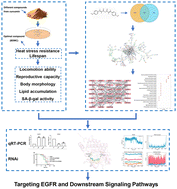
Bisdemethoxycurcumin (BDMC) is a natural curcuminoid with higher solubility and stability than curcumin, yet its potential role in lifespan and healthspan regulation remains largely unexplored. This study aimed to investigate the effects of BDMC on lifespan and healthspan in Caenorhabditis elegans (C. elegans) and elucidate the underlying mechanisms. Among major curcuminoids, BDMC exhibited the most potent lifespan-extending and heat stress-protective effects. Continuous BDMC treatment initiated at the L4 stage significantly extended mean lifespan by 17.7%, with the optimal effect observed at 100 μM, and markedly enhanced heat stress resistance. Notably, mid-life BDMC intervention produced the greatest lifespan extension (24.2%). BDMC also improved healthspan-associated phenotypes, including locomotion and fertility, while reducing senescence-associated β-galactosidase activity and lipid accumulation. Network pharmacology analysis identified epidermal growth factor receptor (EGFR) as a key target, which was further validated by RNA interference, qRT-PCR validation, molecular docking, and molecular dynamics simulations. Collectively, these findings demonstrate that BDMC promotes lifespan and healthspan in C. elegans through modulation of EGFR-related signaling pathways, highlighting its potential as a functional food-derived compound for healthy aging.
 Please wait while we load your content...


