


 PLATFORM UPDATE:


Dietary EPA shows superior efficacy over DHA in chronic sleep deprivation-induced cognitive decline by disrupting the crosstalk between intestinal ferroptosis and gut-derived Aβ production
 *ad
*ad
Abstract
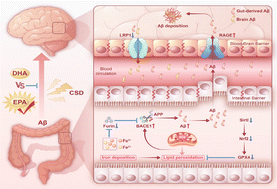
Growing evidence demonstrates that sleep deprivation (SD) contributes to cognitive impairment by increasing cerebral Aβ levels. While gut-derived Aβ has recently emerged as a potential contributor to brain Aβ pools, its role in SD-mediated cognitive decline remains unexplored. Docosahexaenoic acid (DHA) and eicosapentaenoic acid (EPA) are essential n-3 polyunsaturated fatty acids that are widely consumed through diet or supplements; however, their prophylactic efficacy against chronic SD (CSD)-induced cognitive deficits remains unclear. This study employed a CSD mouse model to evaluate the efficacy of dietary DHA and EPA in mitigating cognitive impairment and to elucidate the role of gut-derived Aβ. The findings indicate that both DHA and EPA can prevent cognitive impairment following CSD exposure, with EPA exhibiting comparable or superior effects to DHA. Crucially, EPA exhibited significantly greater efficacy in modulating the gut–brain Aβ axis. It more effectively suppressed gut-derived Aβ production by restoring iron homeostasis and inhibiting lipid peroxidation. Additionally, EPA enhanced the integrity of both the intestinal barrier and the blood–brain barrier, thereby reducing the translocation of Aβ from the gut to the brain. Furthermore, it facilitated Aβ clearance in the brain through the regulation of RAGE and LRP1 expression. Our findings identify gut-derived Aβ as a key contributor to sleep disturbance-related cognitive decline and demonstrate that dietary EPA, more than DHA, effectively mitigates this pathology by targeting the gut–brain Aβ axis, thereby providing novel dietary interventions for addressing cognitive impairments associated with disrupted sleep.
 Please wait while we load your content...


