

 Open Access Article
 This Open Access Article is licensed under a
 Creative Commons Attribution 3.0 Unported Licence
Modified atmosphere packaging of sunflower microgreens (Helianthus annuus) for quality and postharvest shelf-life extension
Elham
Azarpazhooh
 *a,
Parvin
Sharayei
a,
Yeganeh
Sabeghi
bc,
Fatemeh
Zare
d,
Xin
Rui
e and
Hosahalli S.
Ramaswamy
*f
*a,
Parvin
Sharayei
a,
Yeganeh
Sabeghi
bc,
Fatemeh
Zare
d,
Xin
Rui
e and
Hosahalli S.
Ramaswamy
*f
aAgricultural Engineering Research Department, Khorasan Razavi Agricultural and Natural Resources Research and Education Center, AREEO, Mashhad, Iran. E-mail: azarpazhooh@gmail.com
bDepartment of Food Science and Technology, Faculty of Agriculture, Ferdowsi University of Mashhad, Iran
cDepartment of Food Science and Technology, Faculty of Agriculture, Technical and Vocational University (TVU), Iran
dNutrition and Food Science Department, University of Vermont, USA
eCollege of Food Science and Technology, Nanjing Agricultural University, 14 1 Weigang Road, Nanjing 211306, China
fDepartment of Food Science and Agricultural Chemistry, McGill University, Montreal H9X 3V9, Canada. E-mail: hosahalli.ramaswamy@mcgill.ca
First published on 9th December 2025
Abstract
Sunflower microgreens, known for their high nutritional value, attractive colors, and flavors, have a short shelf life at ambient temperatures. In this study, sunflower microgreens were packaged using two types of polymer films—low-density polyethylene (LDPE) and polypropylene (PP)—each tested under two modified atmosphere packaging (MAP) conditions: active and passive. The four packaging treatments were as follows: PE-MP1 (LDPE film with active MAP), PE-MP2 (LDPE film with passive MAP), PP-MP1 (PP film with active MAP), and PP-MP2 (PP film with passive MAP). Control samples were packaged in perforated LDPE bags under ambient air. All samples were stored at 4 °C and 12 °C and evaluated on days 3, 5, and 15 for physical, chemical, and microbial quality. The results showed that sunflower microgreens packaged with PP-MP1 and stored at 4 °C exhibited significantly lower weight loss and higher retention of moisture, chlorophyll, ascorbic acid, phenolic compounds, and antioxidant capacity compared with other treatments (p < 0.05). Moreover, PP-MP1 showed a lower total microbial count and yeast and mold, indicating better preservation of nutritional and microbiological quality. In contrast, PE-MP1 maintained superior visual appearance and reduced odor intensity, suggesting that this packaging provided more favorable sensory characteristics. Taken together, the findings indicate that PP-MP1 provided the best overall physicochemical and microbial stability, whereas PE-MP1 was preferable for maintaining sensory quality during 15 days of refrigerated storage.
Sustainability spotlightThe short shelf-life of microgreens presents challenges for reducing food waste and ensuring consistent access to nutrient-rich produce. This study highlights how modified atmosphere packaging (MAP) using polypropylene films can effectively extend the storage life of sunflower microgreens while preserving their nutritional quality and visual appeal. By reducing microbial spoilage and minimizing nutrient loss, this approach supports more sustainable supply chains and lowers post-harvest losses. These findings contribute to the advancement of eco-friendly packaging and storage practices, aligning with the UN Sustainable Development Goals, particularly Goal 2 (Zero Hunger), Goal 3 (Good Health and Well-Being), and Goal 12 (Responsible Consumption and Production). |
1. Introduction
Microgreens are small, edible greens distinguished from sprouts by their developmental stage having fully expanded cotyledons and the first true leaves. They are known for their high nutritional density, containing significantly greater amounts of vitamins, minerals, and antioxidants compared to their mature counterparts.1,2 Studies have reported elevated levels of essential nutrients such as carotenoids (vitamin A precursors), ascorbic acid (vitamin C), tocopherols (vitamin E), phylloquinone (vitamin K), folate (vitamin B9), chlorophyll, anthocyanins, and glucosinolates in various microgreen species.3–5Microgreens, such as sunflower, peas, beets, spinach, kale, and cilantro, have gained widespread consumer attention due to their high nutritional content. However, microgreens have a short shelf-life.6 The longevity of microgreens depends on various factors such as storage temperature, relative humidity, packaging film type, initial microbial load, package weight, volume, and/or headspace. Improper or inefficient packaging can lead to unpleasant odors, decay, color changes, and softening of the greens.7 Storage temperature and atmospheric composition are crucial factors in extending the post-harvest shelf-life of fresh greens.8 Pengphol and Yenjit9 demonstrated that washing treatments using ozonated water combined with ice precooling at 5 °C significantly reduced microbial contamination, weight loss, and browning after 8 days of storage at 8 °C. These findings confirmed that sunflower microgreens respond favorably to gentle cooling conditions but can experience quality decline if subjected to unsuitable cold storage environments. Additionally, previous studies have also explored approaches such as active modified atmosphere packaging (MAP), ozone washing, or organic acid treatments, to maintain quality, augment nutritional value, and extend shelf life of sunflower microgreens.10,11 For instance, sunflower microgreens were treated with ascorbic acid, citric acid, and their combination and stored at 10 ± 1 °C; the treatments significantly extended shelf-life up to 16 days, reduced microbial load, and maintained chlorophyll, carotenoid, and phenolic contents compared with control samples or ethanol-based treatments.10
One of the globally used solutions to enhance the shelf-life of fresh fruits and vegetables is the use of MAP.12,13 Numerous reports indicated that by using MAP, by increasing carbon dioxide concentration, and decreasing oxygen concentration inside the package, respiration rates of fresh produce can be slowed down, enabling longer term storage.11 Modified atmosphere packaging results in reduced produce respiration rate, decreased ethylene production, slower ripening, reduced microbial decay, decreased nutrient degradation, and preserved cell wall integrity and product appearance and therefore leads to increased product shelf-life.14–16 Active MAP involves direct gas flushing to achieve the desired conditions, while passive MAP relies on the product's respiration to modify the internal atmosphere over time.17
The composition of the modified atmosphere is a crucial factor affecting the post-harvest characteristics of microgreens.11 The recommended concentration of oxygen and carbon dioxide varies with the product. In general, a modified atmosphere containing approximately 2.5% oxygen and 5% carbon dioxide is commonly used, although specific produce may tolerate different gas levels.17 Some exceptions were made for certain produce like strawberry and cucumber. For example, Cunha, et al.,18 recommended 10–12% carbon dioxide for strawberries. Wei, et al.,19 reported that 3% oxygen and 7% carbon dioxide were effective in inhibiting microorganisms and maintaining the quality of stored fresh-cut cucumbers. Cucumber packaging under a modified atmosphere (5% oxygen and 10% carbon dioxide) was reported to increase resistance to chilling injury. Additionally, the levels of fructose, glucose, and organic acids, particularly malic acid, are preserved more compared to the control sample.20,21 Although Dalal and Siddiqui11 investigated the effects of individual GRAS chemicals, their combinations, and packaging methods, including MAP, on the shelf life of sunflower microgreens, they did not report the specific gas compositions used in their study.
Moreover, the choice of an appropriate packaging film also significantly impacts the preservation of quality and extends the shelf-life of products.12,22 Ranjitha, et al.,20 explored the nutritional quality and optimization of passive MAP to extend the shelf life of minimally processed fenugreek microgreens stored at 8 °C. They examined the use of semipermeable plastic films, specifically low-density polyethylene (LDPE) and polypropylene (PP). Among the tested materials, a 40 µm thick polypropylene film proved most effective, creating an in-pack equilibrium atmosphere containing 10–14% oxygen and 5–8% carbon dioxide during storage. Dalal and Siddiqui11 examined the effects of packaging materials—specifically polystyrene and LDPE—on the postharvest quality of sunflower microgreens stored at 10 ± 1 °C over a 16-day period and they showed that microgreen packed in LDPE bags showed a slightly higher TSS than the ones packed in polystyrene trays. Despite growing interest in MAP technologies, research on the use of appropriate packaging films specifically for sunflower microgreens remained scarce.
Despite the growing body of research on MAP and postharvest preservation techniques, limited attention has been given to optimizing packaging film type and gas composition specifically for sunflower microgreens. Existing studies have primarily examined the effects of general MAP conditions or chemical treatments without clearly defining the interplay between packaging material, temperature, and storage duration on the preservation of quality attributes. To bridge this knowledge gap, the present study was designed to systematically investigate the influence of both active and passive MAP systems, employing LDPE and PP films, on the physicochemical and antioxidant properties of sunflower microgreens at different storage temperatures and time intervals. This research not only aimed to identify the most effective packaging strategy for maintaining the postharvest quality of sunflower microgreens but also contributed new insights into the optimization of MAP conditions for highly perishable microgreen crops.
2. Materials and methods
2.1. Materials
The sunflower microgreens (Helianthus annuus L.) used in this study were hydroponically grown by Young Sprout Technology Company, located in the Technology Village at the Research and Education Center for Agriculture and Natural Resources, Khorasan Razavi. The microgreens were harvested eight days after sowing to ensure uniform physiological maturity and optimal nutrient composition. Packaging materials consisted of LDPE and PP films, each with a total thickness of 45 µm, supplied by Apadan Plast Company, Mashhad. All reagents, including Folin–Ciocalteu, ortho-chloroindophenol, DPPH, TPTZ, ascorbic acid, and other analytical-grade chemicals, were sourced from Sigma-Aldrich (St. Louis, MO, USA) and Merck (Darmstadt, Germany).2.2. Methods
Packaging was done using MAP equipment (Henkelman A200Gerhardt, Netherlands) under an active modified atmosphere (5% O2, 5% CO2, and 90% N2) (Fig. 1). Control samples were packaged using vented LDPE films (12 perforations of 6 mm diameter) to allow free gas exchange with ambient air (21% O2, <1% CO2). All samples were coded based on treatment conditions (Table 1), and MAP machine settings were set to deliver the desired concentrations of gasses (Table 2). Packaged microgreens were stored at 4 ± 0.5 °C and 12 ± 0.5 °C under 85–90% relative humidity for 15 days. Physicochemical parameters were assessed at days 3, 5, and 15 days, in triplicate, following recognized national and international analytical standards.
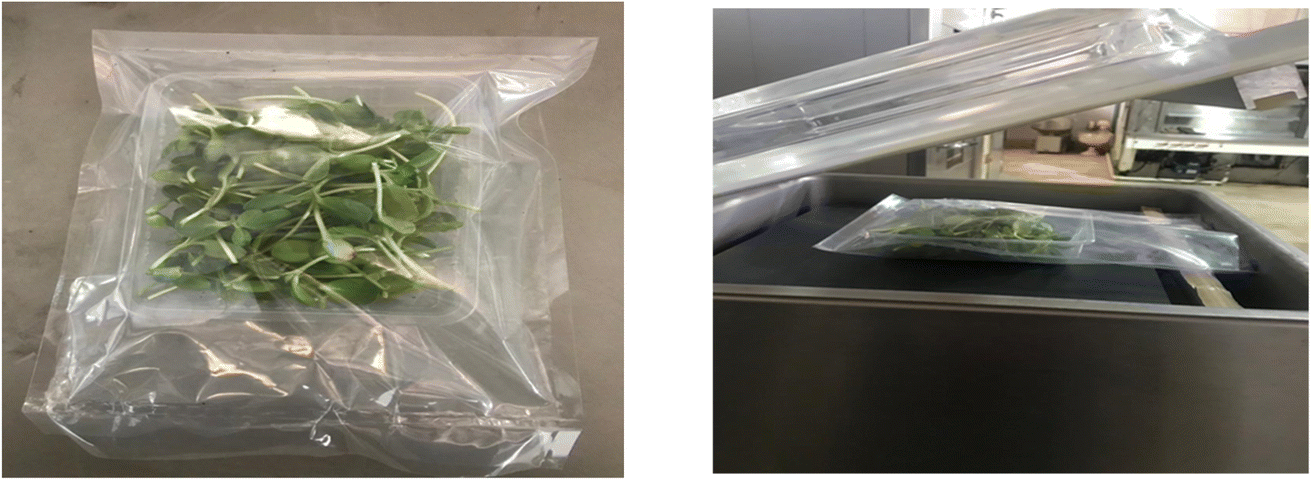 | ||
| Fig. 1 Packaged sunflower microgreen samples using the MAP device | ||
| Code | Treatment |
|---|---|
| PE-MP1 | LDPE film + active MAP (5% O2, 5% CO2, balance N2) |
| PE-MP2 | LDPE film + passive MAP (21% O2, 1.0% CO2, balance N2) |
| PP-MP1 | PP film + active MAP (5% O2, 5% CO2, balance N2) |
| PP-MP2 | PP film + passive MAP (21% O2, 1.0% CO2, balance N2) |
| Control | LDPE film with 12 perforations (6 mm) under ambient air (21% O2, <1.0% CO2) |
| Film type | Vacuum time (s) | Gas flushing time (s) | Sealing time (s) |
|---|---|---|---|
| Polyethylene | 5 | 10 | 0.5 |
| Polypropylene | 8 | 14 | 0.6 |
2.3. Physical and chemical analysis
| WL (%) = (Wf − Wi)/Wi × 100 | (1) |
| Chlorophyll a = 15.65A666 nm − 7.340A653 nm | (2) |
| Chlorophyll b = 27.05A653 nm − 11.21A666 nm | (3) |
| Total chlorophyll = chlorophyll a + chlorophyll b | (4) |
![[thin space (1/6-em)]](https://www.rsc.org/images/entities/char_2009.gif) :10 (w/v), was used. After extraction, the suspension was filtered through Whatman No. 1 filter paper to remove insoluble materials. The resulting filtrate was then mixed with 10 mL of 1% metaphosphoric acid solution and centrifuged at 4000g for 15 min to obtain a clear supernatant for analysis. Then, 1 mL of the supernatant was taken, and 10 mL of 0.0025% indophenol color solution was added. The samples were kept in darkness for 10 min, and their absorption at 515 nm was read. Subsequently, by comparing the absorption with the standard curve, the amount of ascorbic acid in the samples was calculated. To prepare the standard curve, concentrations of 0, 25, 50, 75, and 100 mg of ascorbic acid per liter of 1% metaphosphoric acid solution were prepared, and 1 mL of these solutions was added to 10 mL of indophenol color solution, similar to the samples, and the test was performed.
:10 v/v) was mixed with 6 mL of distilled water, followed by the addition of 500 µL of Folin–Ciocalteu reagent. After 8 min, 5.1 mL of sodium carbonate solution (20% w/v) were added, and the mixture was kept at room temperature for 30 min to complete the reaction. Then, its absorption at 765 nm was read using a spectrophotometer (Shimadzu UV-VIS 1601, Japan). The amount of total phenolic compounds present in the sample was determined from the standard curve (gallic acid in concentrations ranging from 100 mg L−1 to 950 mg L−1) and reported as milligrams of gallic acid per mL of the sample.25
:10 (w/v), was used. After extraction, the suspension was filtered through Whatman No. 1 filter paper to remove insoluble materials. The resulting filtrate was then mixed with 10 mL of 1% metaphosphoric acid solution and centrifuged at 4000g for 15 min to obtain a clear supernatant for analysis. Then, 1 mL of the supernatant was taken, and 10 mL of 0.0025% indophenol color solution was added. The samples were kept in darkness for 10 min, and their absorption at 515 nm was read. Subsequently, by comparing the absorption with the standard curve, the amount of ascorbic acid in the samples was calculated. To prepare the standard curve, concentrations of 0, 25, 50, 75, and 100 mg of ascorbic acid per liter of 1% metaphosphoric acid solution were prepared, and 1 mL of these solutions was added to 10 mL of indophenol color solution, similar to the samples, and the test was performed.
:10 v/v) was mixed with 6 mL of distilled water, followed by the addition of 500 µL of Folin–Ciocalteu reagent. After 8 min, 5.1 mL of sodium carbonate solution (20% w/v) were added, and the mixture was kept at room temperature for 30 min to complete the reaction. Then, its absorption at 765 nm was read using a spectrophotometer (Shimadzu UV-VIS 1601, Japan). The amount of total phenolic compounds present in the sample was determined from the standard curve (gallic acid in concentrations ranging from 100 mg L−1 to 950 mg L−1) and reported as milligrams of gallic acid per mL of the sample.25
 | (5) |
The overall visual quality was defined as a composite measure of color intensity, leaf turgidity, uniformity, wilting, and yellowing, which together reflect the freshness and marketability of sunflower microgreens. Panelists rated overall visual quality on a five-point scale, where 5 indicated excellent (fresh, bright green, and firm leaves), 4 very good, and 3 good and at the usability limit, 2 indicated poor, and 1 indicated extremely poor.
The degree of off-odor was assessed as soon as the packages were opened, and according to Lopez-Galvez et al. (1997),28 there was a five-point scale with 0 denoting no odor, 1 mild odor, 2 moderate odor, 3 strong odor, and 4 extremely strong odor. A score of 3 was deemed unacceptable. These perceptual attributes were assessed on the day of processing and after 3, 5, and 15 days of storage at 4 °C.
2.4. Statistical analysis
The results of measuring physical and chemical characteristics were analyzed using a factorial design with 3 factors, including the treatments in Table 2 at two storage temperatures (4 and 12 °C) and 3 storage times (3, 5, and 15 days) using SPSS software (version 20.0; IBM Corp, Armonk, NY, USA). All tests were conducted in three replicates. The differences between the means were compared using the Duncan test at a significance level of 0.05. The Duncan test was chosen because it provides greater sensitivity for detecting significant differences among means in balanced factorial experiments and is widely used in postharvest and food-quality research.29 All data were reported as mean ± standard deviation (SD). Graphical representations were prepared using Microsoft Excel 2013.3. Results and discussion
3.1. Moisture content
The results of the three-way ANOVA revealed statistically significant main effects, interaction effects between packaging treatment, storage temperature, and storage duration on the moisture content of sunflower microgreens (p < 0.05). As shown in Fig. 2, moisture content decreased gradually with storage time and elevated temperatures across all packaging conditions; however, the magnitude of this decline differed depending on the packaging type. | ||
| Fig. 2 Effect of packaging type, storage temperature (4 °C and 12 °C), and storage duration (3, 5, and 15 days) on the moisture content (%) of sunflower microgreens. Data represent mean ± SD of three replicates. Different letters above bars indicate statistically significant differences (p < 0.05) based on Duncan's multiple range test. | ||
Among all treatments, the PP-MP1 group significantly demonstrated the most effective moisture preservation, maintaining the highest average moisture content (93.1%), throughout storage, particularly at 4 °C with minimal variation over time (p < 0.05). In comparison, PP-MP2, PE-MP2, and PE-MP1 treatments exhibited similar results (91.4–91.6%), while the control group showed the lowest moisture retention (90.2%), especially at 12 °C after 15 days (87.1%) (p < 0.05). Although these differences were statistically meaningful, the absolute variation in moisture content (less than 3%) suggested that the biological relevance remains relatively modest.
The relative effect was more pronounced for storage time than for temperature; the temperature effect resulted in less than a percentage difference, while the storage time effect involved almost a 7% decrease in the moisture content. Moisture content decreased significantly from 95.3% at 3 days to 92.7% at 5 days, and further down to 86.7% at 15 days—a total loss of nearly 8.6%—demonstrating how prolonged storage drastically reduced moisture. Storage temperature also had a significant effect: samples stored at 4 °C retained more moisture (91.9%), whereas samples at 12 °C retained less moisture (91.3%). Although the absolute difference was small (∼0.65%), it was statistically significant, emphasizing the importance of lower temperatures in moisture retention (p < 0.05).
These results demonstrated that both the packaging type and internal atmosphere played vital roles in moisture preservation. Active modified atmosphere packaging (PP-MP1) likely minimized transpiration and respiration rates while reducing moisture transfer through its superior barrier properties. In modified atmosphere systems, equilibrium is reached when gas exchange between the produce and the packaging stabilizes a process that can take days or weeks. By introducing pre-adjusted gas concentrations, active MAP accelerates this equilibrium, establishing optimal internal conditions that delay physiological deterioration and moisture loss.
Consistent with findings by Lin, et al.,30 the enhanced performance of active MAP at low temperature underscores the synergistic effect of the controlled atmosphere and refrigeration in extending the postharvest shelf life of microgreens by effectively minimizing water loss.
3.2. Weight loss
Maintaining the net weight of microgreens during storage and transport is essential for preserving marketability and consumer acceptance. Excessive weight loss not only reduces the commercial quantity but also affects the visual quality, texture, and nutritional value. It has been reported that weight loss exceeding 5% can lead to visible wilting and critical deterioration in taste, which compromises market standards.31As shown in Fig. 3, although the interaction among packaging type, storage temperature, and storage duration had no statistically significant effect on weight loss in sunflower microgreens (p > 0.05), notable differences were evident in the main effects and pairwise comparisons. Across all storage durations, PP-MP1 significantly outperformed other treatments (p < 0.05), particularly at 4 °C, where weight loss remained around 2.95%. In contrast, the control group stored at 12 °C for 15 days experienced the greatest loss (6.31%), more than double that of PP-MP1 at 4 °C for 3 days (2.48%). While PE-MP1, PE-MP2, and PP-MP2 also reduced weight loss moderately (approximately 0.8 times lower than the control), their effects were not statistically significant (p > 0.05). Overall, these findings indicated that combining low-temperature storage with active modified atmosphere packaging using polypropylene (PP-MP1) offered the most effective approach to minimizing weight loss and preserving the quality of sunflower microgreens during storage.
 | ||
| Fig. 3 Changes in weight loss (%) of sunflower microgreens under different packaging conditions during the storage period: (a) at a temperature of 4 °C and (b) at a temperature of 12 °C. Different lowercase letters within storage days (3, 5, and 15 days) and different uppercase letters within each packaging film (control, PE-MP1, PE-MP2, PP-MP1 and PP-MP2) indicate significant differences at the 5% level (Duncan's test, p < 0.05). | ||
At 12 °C, average weight loss was 4.38%, while at 4 °C, it decreased to 4.13%. Although the 0.25% difference was not statistically significant, it represented a 6% increase in weight loss at the higher temperature (p > 0.05). This trend was likely due to reduced transpiration and respiration rates at lower temperatures, as also supported by Derossi, et al.32 Moreover, there was a statistically significant increase in weight loss over time (p < 0.05), with values increasing from 3.65% at day 3 to 5.06% at day 15—an increase of nearly 39%.
These findings were aligned with the moisture content data discussed in Section 3.1, further supporting the conclusion that PP-MP1 is the optimal packaging solution for extending shelf life and preserving postharvest quality.
3.3. Chlorophyll level
Chlorophyll retention is a key indicator of freshness, visual quality, and nutritional value in leafy vegetables like sunflower microgreens. According to Fig. 4, all main factors—packaging film, packaging method, storage temperature, and time—had a statistically significant effect on chlorophyll levels (p < 0.05). The interaction between these four variables was also significant, indicating that chlorophyll degradation depends not only on each factor individually but also on how they interact over time. | ||
| Fig. 4 Effect of packaging type, storage temperature (4 °C and 12 °C), and storage duration (3, 5, and 15 days) on total chlorophyll content (mg g−1) of sunflower microgreens. Data represent mean ± SD of three replicates. Different letters indicate no significant difference between time points or treatments within each group (p > 0.05, Duncan's test). | ||
In terms of packaging, PP-MP1 preserved the highest chlorophyll levels, averaging 0.94 units, significantly outperforming other treatments. Compared to the control group, which had the lowest mean value (0.43 units), PP-MP1 retained more than 2.2 times the chlorophyll content. Treatments like PE-MP1 (0.71 units) and PP-MP2 (0.54 units) maintained intermediate levels, while PE-MP2 (0.46 units) and the control had the weakest chlorophyll preservation.
Temperature had a noticeable but less pronounced effect. The average chlorophyll level at 4 °C was 0.63 units, compared to 0.60 units at 12 °C. The PP-MP1 at 4 °C for 3 days maintained the highest overall chlorophyll level (1.198 units), whereas control samples at 4 °C and 12 °C after 15 days fell to 0.16 and 0.24 units, respectively. Notably, even within the same packaging material, the rate of chlorophyll loss was significantly lower at 4 °C than at 12 °C, confirming that lower temperature slowed down degradation mechanisms like chlorophyll oxidation and senescence. Another comparison shows that PE-MP1 at 3 days (1.015 units) retained 2.4 times the chlorophyll compared to PE-MP2 at 15 days (0.28 units), illustrating how not just the material type but also the active vs. passive packaging strategy plays a role in preserving pigments.
The superior performance of PP-MP1 can be attributed to the favorable gas permeability of polypropylene and the presence of an active modified atmosphere that rapidly achieves internal gas equilibrium, suppressing respiration and enzymatic degradation of chlorophyll. Similar effects were reported in litchi fruits packaged under active MAP conditions, where controlled oxygen and carbon dioxide levels significantly reduced oxidation enzyme activity and maintained pericarp color stability.33 Moreover, studies on endives demonstrated that incorporating an oxygen scavenger in active MAP reduced the transient period by 50%, effectively delaying greening and browning compared to passive MAP, even without altering steady-state gas composition.34 These mechanisms aligned with the current results, suggesting that active MAP accelerates equilibrium establishment and provides a more stable internal atmosphere that protects chlorophyll integrity.
Furthermore, pigment degradation processes in microgreens were closely related to oxidative enzyme activity, particularly polyphenol oxidase (PPO), as reported by Sheikhi, et al.35 Reduced PPO activity under active MAP conditions may thus explain the enhanced pigment retention observed in PP-MP1 treatments.
These findings aligned closely with the moisture and weight loss results, reinforcing that active MAP using the PP film was the optimal approach for extending shelf life and preserving the nutritional and visual quality of microgreens during storage.
3.4. Antioxidant properties
| Treatment | 4 °C | 12 °C | ||||
|---|---|---|---|---|---|---|
| 3 d | 5 d | 15 d | 3 d | 5 d | 15 d | |
| TPC (mg gallic acid/100 g FW) | ||||||
| Control | 57.95 ± 1.12a | 48.12 ± 0.94a | 40.32 ± 1.03a | 56.81 ± 1.05a | 47.66 ± 0.97a | 39.88 ± 0.88a |
| PE-MP1 | 58.22 ± 0.88a | 48.33 ± 0.97a | 39.50 ± 1.07a | 57.33 ± 1.03a | 47.94 ± 0.91a | 39.27 ± 1.02a |
| PE-MP2 | 54.13 ± 1.03a | 45.67 ± 1.10a | 38.83 ± 0.96a | 53.78 ± 1.05a | 45.21 ± 0.99a | 38.59 ± 0.91a |
| PP-MP1 | 61.26 ± 0.85a | 51.11 ± 0.94a | 41.83 ± 0.91a | 60.89 ± 1.08a | 50.64 ± 1.02a | 41.35 ± 0.98a |
| PP-MP2 | 58.53 ± 1.11a | 47.67 ± 0.98a | 38.17 ± 0.92a | 57.84 ± 1.09a | 47.11 ± 1.01a | 37.85 ± 0.96a |
|
||||||
| DPPH (%) | ||||||
| Control | 58.63 ± 1.25a | 60.38 ± 1.03a | 53.68 ± 1.18a | 57.72 ± 0.96a | 59.81 ± 1.11a | 52.94 ± 1.02a |
| PE-MP1 | 39.27 ± 1.02a | 64.20 ± 1.12a | 58.64 ± 0.95a | 55.90 ± 1.24a | 63.11 ± 1.07a | 58.03 ± 0.92a |
| PE-MP2 | 58.71 ± 1.15a | 58.59 ± 1.07a | 56.02 ± 1.09a | 58.03 ± 0.93a | 58.21 ± 0.98a | 55.83 ± 1.05a |
| PP-MP1 | 60.35 ± 1.04a | 58.48 ± 0.99a | 58.69 ± 1.02a | 59.74 ± 0.95a | 58.07 ± 0.93a | 58.13 ± 0.97a |
| PP-MP2 | 60.35 ± 1.04a | 58.48 ± 0.99a | 58.69 ± 1.02a | 59.74 ± 0.95a | 58.07 ± 0.93a | 58.13 ± 0.97a |
Storage time was the significant influential factor. Phenolic content declined sharply from 58.0 mg at day 3 to 39.8 mg at day 15. Notably, PP-MP1 at day 3 recorded the highest individual value (61.3 mg), while PP-MP2 at day 15 dropped to 38.2 mg, representing a 38% reduction. This trend highlights the time-sensitive nature of phenolic stability.
Temperature alone had a limited and insignificance effect, with averages of 48.7 mg at 12 °C and 48.6 mg at 4 °C. However, over time, the retention advantage of 4 °C became more evident. For example, at day 15, samples at 4 °C had slightly more phenolics (∼0.2 mg) than those at 12 °C, indicating better preservation at lower temperatures as storage progressed.
These findings suggested that active MAP using polypropylene (PP-MP1) helped delay oxidative degradation, likely due to lower oxygen permeability, better moisture retention, and a stable internal gas composition that limited enzymatic activity and oxidative stress. This agreed with previous studies,36 which attributed phenolic loss to enzyme-mediated oxidation, acidity changes, and water loss—factors minimized by optimal packaging and temperature control.
In summary, PP-MP1 packaging combined with 4 °C storage preserved the highest levels of phenolic compounds in sunflower microgreens. The treatment resulted in up to 38% higher phenolic retention over 15 days compared to other packaging types and proved consistently superior across all time points. These results, aligned with the patterns observed in chlorophyll, moisture, and weight loss, confirm that PP-MP1 was the most effective solution for maintaining antioxidant quality and extending shelf life during storage.
As seen in Table 3, PP-MP1 demonstrated the highest overall antioxidant activity, averaging 61.9%. This value was 7.5% higher than that of the control group (57.6%) and 4.3% higher than that of PE-MP2 (57.8%), confirming the superior performance of active MAP in preserving antioxidant compounds.
Antioxidant activity decreased from 61.1% at day 3 to 56.8% at day 15, marking a 7% decline. Within this timeframe, PP-MP1 dropped from 63.4% at day 3 to 59.7% at day 15, while the control dropped more steeply, from 58.6% to 53.7%, showing a larger loss of over 8%. Thus, PP-MP1 preserved antioxidant activity more effectively over time.
Temperature comparisons showed that antioxidant activity was 60.0% at 4 °C and 58.4% at 12 °C, reflecting a 2.7% reduction at higher temperature. The highest activity (68.1%) was recorded for PP-MP1 at 4 °C after 3 days, while the lowest (53.7%) was observed in the control group at 15 days, a 27% reduction. Notably, even after 15 days, PP-MP1 retained 63.5% activity at 4 °C, while all other treatments dropped below 59%, reinforcing its protective effect. Similar trends were reported by Lin, et al.,30 who found improved antioxidant stability in mustard microgreens under modified atmosphere packaging and by Xiao, et al.,37 in stored purslane microgreens.
These results suggested that antioxidant capacity in microgreens was highly sensitive to both environmental stress (e.g., temperature and oxygen exposure) and storage duration. The protective function of polypropylene-based MAP likely stemmed from its superior gas barrier properties, which reduced oxidative reactions and moisture loss that typically degrade antioxidants.
These findings aligned with previous results for moisture, chlorophyll, and phenolic content, further establishing PP-MP1 as the most effective packaging strategy for maintaining the nutritional and functional quality of sunflower microgreens during storage.
3.5. Ascorbic acid (vitamin C)
Vitamin C, a crucial antioxidant and enzymatic cofactor, plays a key role in maintaining the nutritional quality of sunflower microgreens. Fig. 5 reveals that all main factors—packaging treatment, and storage time except storage temperature—had a statistically significant effect on the retention of ascorbic acid (p < 0.05), with interaction effects also being significant. | ||
| Fig. 5 Effect of packaging type, storage temperature (4 °C and 12 °C), and storage duration (3, 5, and 15 days) on the ascorbic acid level (mg 100 g−1) of sunflower microgreens. Data represent mean ± SD of three replicates. Different letters indicate no significant difference between time points or treatments within each group (p > 0.05, Duncan's test). | ||
Among the packaging treatments, PP-MP1 preserved the highest vitamin C content, averaging 69.76 mg 100 g−1, which was 23% higher than that of the control treatment (56.66 mg 100 g−1). Other treatments such as PE-MP1, PE-MP2, and PP-MP2 showed intermediate values (63.07–63.40 mg 100 g−1), with PP-MP1 retaining 10% more vitamin C compared to these alternatives.
Vitamin C decreased from 66.35 mg 100 g−1 at day 3 to 59.81 mg 100 g−1 at day 15, a reduction of approximately 9.8%. Notably, PP-MP1 at day 3 reached the highest recorded value (73.17 mg 100 g−1), while the control at day 15 dropped to just 53.44 mg 100 g−1, marking a 27% decline. Even after 15 days, PP-MP1 maintained 66.05 mg 100 g−1, about 24% higher than the control at the same time.
Temperature effects, though not statistically distinct in means across 4 °C and 12 °C, revealed important interaction outcomes. At 3 days, PP-MP1 stored at 4 °C recorded 73.45 mg 100 g−1, while the control at 12 °C and day 15 dropped to 53.25 mg 100 g−1, a 27.5% decrease. Even comparing treatments under identical conditions, PP-MP1 at 15 days and 12 °C (66.34 mg 100 g−1) retained 1.24 times the vitamin C compared to PP-MP2 at the same time and temperature (59.99 mg 100 g−1).
The modified atmosphere provided by PP-MP1 likely contributed to the preservation by minimizing oxidative stress and delaying the enzymatic degradation of ascorbic acid. This was consistent with findings by Mditshwa, et al.,38 who reported that reduced oxygen and increased CO2 environments delay ascorbic acid degradation. Similarly, Chitravathi, et al.,39 noted that MAP systems can maintain higher vitamin C content due to lower metabolic rates under optimal postharvest conditions.
Overall, these results reinforced that the combination of active modified atmosphere packaging (PP-MP1) and low-temperature storage (4 °C) was the most effective strategy for preserving vitamin C in sunflower microgreens over a 15 day shelf life.
3.6. Microbial analysis
| Treatment | 4 °C | 12 °C | ||||
|---|---|---|---|---|---|---|
| 3 d | 5 d | 15 d | 3 d | 5 d | 15 d | |
|
Microbial count (logCFU g−1) |
||||||
| Control | 2.63 ± 0.08a | 3.01 ± 0.09a | 4.07 ± 0.11a | 2.74 ± 0.07a | 3.89 ± 0.10a | 5.39 ± 0.12a |
| PE-MP1 | 2.22 ± 0.07a | 2.68 ± 0.08a | 3.60 ± 0.09a | 2.34 ± 0.07a | 3.53 ± 0.09a | 5.25 ± 0.11a |
| PE-MP2 | 2.54 ± 0.09a | 2.85 ± 0.10a | 3.80 ± 0.09a | 2.34 ± 0.08a | 3.70a ± 0.09a | 5.21 ± 0.10a |
| PP-MP1 | 1.48 ± 0.06a | 1.83 ± 0.07a | 2.55 ± 0.08a | 1.80 ± 0.06a | 2.54 ± 0.08a | 3.94 ± 0.09a |
| PP-MP2 | 2.34 ± 0.08a | 2.74 ± 0.09a | 3.78 ± 0.10a | 2.86 ± 0.08a | 3.41 ± 0.09a | 4.83 ± 0.10a |
|
||||||
|
Yeast and mold (logCFU g−1) |
||||||
| Control | 3.93 ± 0.10abc | 5.50 ± 0.13abc | 5.90 ± 0.12abc | 3.87 ± 0.09abc | 5.29 ± 0.11abc | 6.26 ± 0.12abc |
| PE-MP1 | 3.02 ± 0.09bc | 3.95 ± 0.10abc | 5.83 ± 0.12abc | 3.02 ± 0.08bc | 3.73 ± 0.10abc | 6.63 ± 0.12ab |
| PE-MP2 | 3.34 ± 0.09abc | 4.68 ± 0.11abc | 5.37 ± 0.10abc | 3.32 ± 0.08abc | 4.47 ± 0.09abc | 5.57 ± 0.10abc |
| PP-MP1 | 2.50 ± 0.07c | 3.38 ± 0.08abc | 4.91 ± 0.09abc | 2.48 ± 0.06c | 3.33 ± 0.08abc | 5.61 ± 0.09abc |
| PP-MP2 | 3.02 ± 0.09bc | 4.82 ± 0.11abc | 5.87 ± 0.10abc | 3.08 ± 0.08abc | 4.78 ± 0.10abc | 6.87 ± 0.11a |
The TC increased in all treatments over the 15 day storage period, but the rate of increase varied notably. The control group recorded the highest microbial proliferation, reaching 4.73 logCFU g−1 at day 15, while PP-MP1 exhibited the lowest growth, with microbial levels reaching only 3.25 logCFU g−1, a 31% lower count than the control. This difference illustrates the efficacy of active MAP using the polypropylene film in microbial suppression.
Samples stored at 12 °C averaged 3.58 logCFU g−1, while those at 4 °C averaged 2.81 logCFU g−1, indicating a 21.5% increase in microbial count at higher temperatures. Over time, microbial counts escalated by 82%, from 2.33 logCFU g−1 at day 3 to 4.24 logCFU g−1 at day 15, demonstrating that time was a dominant factor in microbial accumulation.
Yeast and mold growth followed a similar trend. The control group showed the highest increase, rising from 3.90 to 6.08 logCFU g−1, a 56% escalation over 15 days. In contrast, PP-MP1 treatment again demonstrated superior control, ending at 5.26 logCFU g−1, or 14% lower than the control at the same endpoint. Treatments like PE-MP1 and PE-MP2 also limited mold development to some extent but were less effective compared to PP-MP1.
Temperature comparisons revealed that yeast and mold levels were 4.55 logCFU g−1 on average at 12 °C, compared to 4.40 logCFU g−1 at 4 °C, suggesting a 3.4% reduction in fungal proliferation at the lower temperature. However, the difference became more apparent over time: at 15 days, yeast and mold increased by 86%, from 3.15 to 5.88 logCFU g−1, with the steepest increase observed in the control treatment.
The highest mold presence was recorded in PP-MP2 at 12 °C and day 15 (6.87 logCFU g−1), while the lowest value occurred in PP-MP1 at 4 °C and day 3 (2.50 logCFU g−1), reflecting a 2.75-fold difference. This result supported that the polypropylene film with active MAP not only retarded bacterial growth but was also effective in curbing fungal propagation under cold storage.
Overall, the PP-MP1 packaging strategy emerged as the most effective in minimizing both microbial and mold contamination across all storage durations and temperatures. These findings aligned with previous research, indicating that modified atmosphere packaging reduces microbial respiration, limits oxygen availability, and thus inhibits microbial growth.40,41
3.7. Sensory evaluation
Overall visual quality and off-odor are important factors influencing the marketability of a microgreen. In this experiment, storage temperature significantly affected visual quality deterioration and off-odor development (data have not been shown). Throughout the whole 15-day storage period, sunflower microgreens stored at 4 °C were rated highest in overall quality and lowest in the off-odor score.Fig. 6a illustrates the off-odor development of sunflower microgreens over 15 days of storage at 4 °C. Overall, the experiment indicates varying levels of effectiveness in reducing odor intensity among the different treatments, and the control group showed the most significant improvement, achieving a “mild” odor level. Among the experimental treatments, PE-MP1 was the most effective, reducing the odor to a “moderate” level, though it remained noticeable. According to our data, the control group demonstrated the most substantial improvement, reducing the odor from a “strong” level to a “mild” level, making it acceptable over storage. Both PE-MP1 and PE-MP2 showed reductions in odor intensity. PE-MP1 reduced the odor from “extremely strong” to “moderate,” while PE-MP2 brought it down from “extremely strong” to “strong,” which was still unacceptable. PP-MP1 started with no odor but deteriorated significantly to an “extremely strong” odor. PP-MP2 showed a reduction from “extremely strong” to “strong,” which was also unacceptable. Overall, it could be concluded that modified atmosphere packaging preserves sunflower microgreens in terms of visual quality and off-odor vs. non-controlled packaging. Also, PP-MP1 in combination with PE-MP1 scored the best condition for storage at 4 °C over 15 days. Fig. 6b illustrates the overall visual quality of sunflower microgreens over 15 days of storage at 4 °C. Our findings showed that all experimental treatments were effective in improving the overall visual quality of the samples, in contrast to the control group, which showed a severe decline. Among the treatments, PE-MP1 and PE-MP2 were the most effective, with PE-MP1 reaching a level close to “excellent”. PP-MP2 also showed significant improvement, achieving a “good” quality rating, while PP-MP1 exhibited moderate enhancement. These findings suggested that the PE-MP1 treatment could be the most promising approach for maintaining and enhancing visual quality over time.
 | ||
| Fig. 6 Sensory evaluation of sunflower microgreens over 15 days of storage at 4 °C. (a) Off-odor and (b) overall quality. Different lowercase letters within storage days (3, 5, and 15 days) and different uppercase letters within each packaging film (control, PE-MP1, PE-MP2, PP-MP1 and PP-MP2) indicate significant differences at the 5% level (Duncan's test, p < 0.05). | ||
4. Conclusion
This study demonstrated that packaging configuration and atmospheric composition play a decisive role in preserving the postharvest quality of sunflower microgreens. Among the evaluated treatments, the polypropylene-based active modified atmosphere packaging (PP-MP1; 5% O2, 5% CO2, and 90% N2) provided the most effective protection against physicochemical and microbial deterioration during refrigerated storage. PP-MP1 significantly reduced weight loss, maintained the highest moisture content (93.1%), and retained over twice the chlorophyll content of the control samples (p < 0.05). It also exhibited superiority in retention of ascorbic acid, total phenolics, and antioxidant capacity, along with the lowest microbial load, highlighting its efficiency in maintaining freshness and nutritional integrity during 15 days of storage at 4 °C.However, the present study was limited to a 15-day storage period, a single microgreen species, and laboratory-scale conditions. Future studies should include longer storage durations, additional microgreen varieties, and commercial distribution conditions to validate these findings. Economic and environmental assessments are also needed to evaluate the scalability and sustainability of MAP systems for large-scale applications.
In addition, it is recommended that future shelf-life studies include electrolyte leakage analysis as an indicator of membrane integrity and color analysis through digital photography to quantitatively assess visual changes over time.
Overall, the findings highlighted the potential of active MAP, particularly PP-MP1 as a promising approach for extending the shelf life and maintaining the quality of microgreens, while emphasizing the need for broader and more applied future research.
Ethical statement
The protocol for this study was approved by the Human Ethical Committee at the Agricultural Research, Education, and Extension Organization (AREEO) in accordance with Iranian national standards: no. 5272, 9263, 2197, 10899-1 and 3, 1810, 6806–1 and 3, and 2946. Prior to the sensory evaluation, all panel lists were thoroughly informed about the study's purpose, procedures, and objectives. Detailed written informed consent was obtained from each participant, ensuring their voluntary participation and the ability to withdraw at any time without consequences. All data collected were anonymized and kept confidential to protect participants' privacy. Measures were taken to maintain a safe and respectful environment for all participants throughout the study.Conflicts of interest
The authors declare no conflict of interest.Data availability
All data generated or analyzed during this study are included in this published article. Also, more information is available from the corresponding author on request.Acknowledgements
The authors gratefully acknowledge the financial support provided by Javaneh Sabz Technology Development Company for this research (Grant No. 6082/269). This generous contribution was instrumental in facilitating the successful completion of our study.References
- A. Singh, J. Singh, S. Kaur, M. Gunjal, J. Kaur and V. Nanda, et al., Emergence of microgreens as a valuable food, current understanding of their market and consumer perception: A review, Food Chem.: X, 2024, 23, 101527 CAS.
- S. Sharma, B. Shree, D. Sharma, S. Kumar, V. Kumar and R. Sharma, et al., Vegetable microgreens: The gleam of next generation super foods, their genetic enhancement, health benefits and processing approaches, Food Res. Int., 2022, 155, 111038 CrossRef CAS.
- M. C. Kyriacou, C. El-Nakhel, G. Graziani, A. Pannico, G. A. Soteriou and M. Giordano, et al., Functional quality in novel food sources: Genotypic variation in the nutritive and phytochemical composition of thirteen microgreens species, Food Chem., 2019, 277, 107–118 CrossRef CAS PubMed.
- R. Bulgari, A. Baldi, A. Ferrante and A. Lenzi, Yield and quality of basil, Swiss chard, and rocket microgreens grown in a hydroponic system, N. Z. J. Crop Hortic. Sci., 2017, 45(2), 119–129 CrossRef.
- U. Choe, L. L. Yu and T. T. Wang, The science behind microgreens as an exciting new food for the 21st century, J. Agric. Food Chem., 2018, 66(44), 11519–11530 CrossRef CAS.
- G. M. Riggio, Q. Wang, K. E. Kniel and K. E. Gibson, Microgreens—A review of food safety considerations along the farm to fork continuum, Int. J. Food Microbiol., 2019, 290, 76–85 CrossRef.
- M. Bhaswant, D. K. Shanmugam, T. Miyazawa, C. Abe and T. Miyazawa, Microgreens—A comprehensive review of bioactive molecules and health benefits, Molecules, 2023, 28(2), 867 CrossRef CAS PubMed.
- R. F. Bafumo, F. P. Alloggia, D. A. Ramirez, M. A. Maza, A. Fontana and D. A. Moreno, et al., Optimal Brassicaceae family microgreens from a phytochemical and sensory perspective, Food Res. Int., 2024, 193, 114812 CrossRef CAS PubMed.
- S. Pengphol and P. Yenjit, Efficacy of Ozonated Water in Reducing Microbial Contamination and Maintaining Quality of Sunflower Microgreens During Cold Storage, Asia-Pacific J. Sci. Technol., 2024, 30(3), 1–8 Search PubMed.
- N. Dalal, S. Siddiqui and N. Phogat, Post-harvest quality of sunflower microgreens as influenced by organic acids and ethanol treatment, J. Food Process. Preserv., 2020, 44(9), e14678 CAS.
- N. Dalal and S. Siddiqui, Effect of chemical treatment, storage and packaging on physico-chemical properties of sunflower microgreens, Int. J. Chem. Stud., 2019, 7(5), 1046–1050 CAS.
- P. Sharayei, R. Niazmand, M. S. Jamab, Y. Sabeghi, S. Einafshar and E. Azarpazhooh, et al., Bioactive films from saffron corm and corn husk: A transformative solution for antioxidant and antimicrobial pistachio packaging, Lebensm.-Wiss. Technol., 2025, 118097 CrossRef CAS.
- P. Sharayei, E. Azarpazhooh, F. Zare and Y. Sabeghi, Analysis of the preservation of the antioxidant, antimicrobial, and sensory capacity of free and microencapsulated shrimp shell extract applied in chicken lunch meat, Translat. Food Sci., 2025, 1(1), vxaf006 Search PubMed.
- M. R. Komeroski, T. Beninca, K. A. Portal, P. S. Malheiros, T. V. Klug and S. H. Flores, et al., Postharvest quality of arugula (Eruca sativa) microgreens determined by microbiological, physico-chemical, and sensory parameters, Foods, 2024, 13(19), 3020 CrossRef CAS.
- H. J. Choi, Y. S. Bae, J. S. Lee, M. H. Park and J. G. Kim, Effects of carbon dioxide treatment and modified atmosphere packaging on the quality of long distance transporting “Maehyang” strawberry, Agric. Sci., 2016, 7(12), 813 CAS.
- R. A. H. Sheikhloie and A. R. Yousefi, Evaluation of the effect of modified atmosphere packaging (map) and propolis on some properties of spinach cultivar of “varamin 88” during preservation, J. Food Sci. Technol., 2016, 13(61), 1–15 Search PubMed.
- P. Sharayei, R. Niazmand and Y. Sabeghi, Development of Biodegradable Films Based on Natural Extract From the Waste: Corn-Husk Derived Materials and Saffron Corm Starch, Starch/Staerke, 2025, 77(4), e202400211 CrossRef CAS.
- L. C. Cunha, C. M. A. Morgado, A. P. Jacomino, M. J. Trevisan, M. C. M. Parisi and G. d. C. Corrêa, et al., Quality of ‘Oso Grande’strawberries is affected by O2, CO2 and N2O concentrations during controlled atmosphere storage, Bragantia, 2019, 78(2), 274–283 CrossRef CAS.
- S. Wei, J. Mei and J. Xie, Effects of different carbon dioxide-modified atmosphere packaging and low-temperature storage at 13 C on the quality and metabolism in mango (Mangifera indica L.), Agriculture, 2021, 11(7), 636 CrossRef CAS.
- K. Ranjitha, Y. Mhasizotuo, K. Vasudeva, D. S. Rao, K. Shivashankara and T. Roy, Effect of modified atmosphere packaging on quality of minimally processed fenugreek (Trigonella foenum-graecum L.) microgreens, J. Hortic. Sci., 2023, 18(2), 417–423 CAS.
- M. D. Ghoora and N. Srividya, Effect of packaging and coating technique on postharvest quality and shelf life of Raphanus sativus L. and Hibiscus sabdariffa L. microgreens, Foods, 2020, 9(5), 653 CrossRef CAS PubMed.
- S. Einafshar, B. Tajeddin, Y. Sabeghi and D. Gandomzadeh, Optimization of Biodegradable Potato Starch–Nanocellulose Films: Influence of Starch Content, Nanocellulose Concentration, and Plasticizer Type, Starch/Staerke, 2025, e70112 CrossRef CAS.
- L. M. Rodoni, V. Feuring, M. J. Zaro, G. O. Sozzi, A. R. Vicente and M. E. Arena, Ethylene responses and quality of antioxidant-rich stored barberry fruit (Berberis microphylla), Sci. Hortic., 2014, 179, 233–238 CrossRef CAS.
- H. K. Lichtenthaler, [34] Chlorophylls and carotenoids: pigments of photosynthetic biomembranes, Methods Enzymol., 1987, 148, 350–382 CAS.
- E. Azarpazhooh, P. Sharayei and H. S. Ramaswamy, Optimization of ultrasound-assisted osmotic treatment of Aleo vera gel impregnated with grape pomace phenolic compounds using response surface methodology, Agric. Eng. Int. CIGR J., 2020, 22(3), 202–212 Search PubMed.
- S. Einafshar, A. Rohani, Y. Sabeghi, M. H. Tavassoli-kafrani, R. Farhoosh and D. Gandomzadeh, Unveiling the power of bene (Pistacia atlantica) hull scum: Boosting oxidative stability with methanolic extract and ferrous ions, Food Chem., 2024, 142142 Search PubMed.
- M. C. Meilgaard, B. T. Carr and G. V. Civille, Sensory Evaluation Techniques, CRC Press, 1999 Search PubMed.
- G. Lopez-Galvez, P. Galen, N. Xunli and C. Marita, Quality changes in packaged salad products during storage, Z. Lebensm.-Unters. Forsch. A, 1997, 205(1), 64–72 CrossRef CAS.
- C. E. Agbangba, E. S. Aide, H. Honfo and R. G. Kakai, On the use of post-hoc tests in environmental and biological sciences: A critical review, Heliyon, 2024, 10(3), 1–12 CrossRef.
- P. Lin, H. Di, G. Wang, Z. Li, H. Li and F. Zhang, et al., Modified atmosphere packaging maintains the sensory and nutritional qualities of post-harvest baby mustard during low-temperature storage, Front. Nutr., 2021, 8, 730253 CrossRef PubMed.
- B. Sun, P.-X. Lin, H.-M. Di, G.-Y. Wang, Z.-Q. Li and Y.-T. Wang, et al., Modified atmosphere packaging maintains the postharvest quality of baby mustard (Brassica juncea var. gemmifera), Emir. J. Food Agric., 2021, 33(11), 936–948 Search PubMed.
- A. Derossi, T. De Pilli, C. Severini and M. McCarthy, Mass transfer during osmotic dehydration of apples, J. Food Eng., 2008, 86(4), 519–528 CrossRef.
- K. De Reuck, D. Sivakumar and L. Korsten, Effect of passive and active modified atmosphere packaging on quality retention of two cultivars of litchi (Litchi Chinensis Sonn.), J. Food Qual., 2010, 33, 337–351 CrossRef.
- F. Charles, C. Guillaume and N. Gontard, Effect of passive and active modified atmosphere packaging on quality changes of fresh endives, Postharvest Biol. Technol., 2008, 48(1), 22–29 CrossRef CAS.
- A. Sheikhi, S. H. Mirdehghan, H. R. Karimi and L. Ferguson, Effects of passive-and active-modified atmosphere packaging on physio-chemical and quality attributes of fresh in-hull pistachios (Pistacia vera L. cv. Badami), Foods, 2019, 8(11), 564 CrossRef CAS PubMed.
- D. Kumar, M. Ladaniya, M. Gurjar and S. Kumar, Impact of drying methods on natural antioxidants, phenols and flavanones of immature dropped Citrus sinensis L. Osbeck fruits, Sci. Rep., 2022, 12(1), 6684 CrossRef CAS PubMed.
- Z. Xiao, G. E. Lester, Y. Luo, Z. K. Xie, L. L. Yu and Q. Wang, Effect of light exposure on sensorial quality, concentrations of bioactive compounds and antioxidant capacity of radish microgreens during low temperature storage, Food Chem., 2014, 151, 472–479 CrossRef CAS PubMed.
- A. Mditshwa, L. S. Magwaza, S. Z. Tesfay and U. L. Opara, Postharvest factors affecting vitamin C content of citrus fruits: A review, Sci. Hortic., 2017, 218, 95–104 CrossRef CAS.
- K. Chitravathi, O. P. Chauhan and J. Kizhakkedath, Shelf life extension of green chillies (Capsicum annuum L.) using passive modified atmosphere packaging and gamma irradiation, J. Food Process. Preserv., 2020, 44(8), e14622 CAS.
- P. Ragaert, L. Jacxsens, I. Vandekinderen, L. Baert and F. Devlieghere, Microbiological and safety aspects of fresh-cut fruits and vegetables, Advances in Fresh-Cut Fruits and Vegetables Processing, CRC Press, 2010, pp. 54–85 Search PubMed.
- O. J. Caleb, P. V. Mahajan, F. A.-J. Al-Said and U. L. Opara, Modified atmosphere packaging technology of fresh and fresh-cut produce and the microbial consequences—a review, Food Bioprocess Technol., 2013, 6(2), 303–329 CrossRef CAS.
| This journal is © The Royal Society of Chemistry 2026 |