

 Open Access Article
 This Open Access Article is licensed under a
 Creative Commons Attribution 3.0 Unported Licence
From cow to coconut: a literature review of the environmental cost of ice cream
Faustina Sakyiwaah Sekyerea and
Andrea Hicks *b
*b
aNelson Institute for Environmental Studies, University of Wisconsin–Madison, Madison, WI 53706, USA
bDepartment of Civil and Environmental Engineering, University of Wisconsin–Madison, Madison, WI 53706, USA. E-mail: hicks5@wisc.edu
First published on 12th November 2025
Abstract
Ice cream's environmental impacts are often attributed to dairy inputs and energy-intensive refrigeration, yet published life cycle assessments (LCAs) report wide ranges of results due to inconsistent scopes and system boundaries. This review synthesizes LCAs of dairy and plant-based ice cream to identify key hotspots and actionable steps for impact reduction. We screened and synthesized studies by functional unit (1 kg product), aligned system boundaries (cradle-to-gate vs. cradle-to-grave), and offer a practical mitigation roadmap for dairy and plant-based ice cream production. Across dairy formulations, reported carbon footprints span 0.36–0.97 kg CO2e per kg (cradle-to-gate) and 3.36–4.00 kg CO2e per kg (cradle-to-grave). Ingredients dominate about 42–70% of the total impact, driven largely by raw milk supply; farm-gate milk alone averages 1.4–1.8 kg CO2e per kg Fat- and Protein-Corrected Milk (FPCM), explaining much of the ingredient hotspot. The cold chain (freezing, storage, retail) is the second major hotspot, contributing up to 46% of the total impact, followed by packaging at about 8%. In contrast, the only available study on coconut-milk ice cream reported 1.17 kg CO2e per kg cradle-to-gate with coconut waste as the largest greenhouse gas emissions driver, contributing 53.73% of total emissions, which is actually higher than the average dairy impact of 0.36–0.97 kg CO2e per kg cradle to gate, highlighting how scope and boundaries affect results and make it difficult to draw meaningful conclusions. Hence, needed future research includes (i) future studies should explicitly define system boundaries and scopes, (ii) assess multiple impact categories to avoid burden shifting, (iii) reduce emissions from milk production, thus, targeting fertilizer management in feed crops, covered storage and enteric-methane mitigation, and (iv) cold-chain optimization, including raising the freezing point of ice cream form −18 to−12 °C, an intervention linked to about 20–30% energy savings. Also, integrating social LCA would resolve the current gap between community effects, stated preferences and realized sustainability outcomes.
Sustainability spotlightThis work explores the environmental impact of dairy and non-dairy frozen ice cream products, and in particular the tradeoffs which occur when switching out conventional dairy and sugar ingredients. This relates to SDG 12, around responsible consumption and production. In particular, understanding that different formulations of ice cream products will have different environmental impacts and cause different stresses on supply chains when novel ingredients are included. |
1 Introduction
Frozen desserts have evolved into a booming segment of the global food industry, driven by increasing consumer demand for indulgent and innovative products. The market includes ice cream, frozen yoghurt, sherbets, sorbets, and non-dairy alternatives, with each segment experiencing substantial growth.1 As of 2023, the global frozen dessert market was valued at approximately USD 125.9 billion and is projected to grow at a compound annual growth rate (CAGR) of 4.1% between 2024 and 2030.2 This growth is attributed to rising disposable income, urbanization, and a growing preference for premium and healthier frozen dessert options.Among frozen desserts, ice cream stands out as the most iconic and widely consumed product, with the United States (U.S.) maintaining its dominance in both production and consumption. In 2022, Americans consumed approximately 23 pounds of ice cream per capita, with vanilla and chocolate as the most popular flavors.3,4 By 2024, the U.S. output reached 886 million gallons of regular ice cream.5 This high level of consumption and production is reflected in dairy use, as nearly 9% of cow milk produced in the U.S. is directed toward ice cream manufacturing.6 The dominance of the U.S. market is further reinforced by the presence of major multinational corporations such as Unilever, Nestlé, and General Mills, which operate major facilities in the U.S. and drive continued innovation and market growth. While the U.S. remains a dominant force in ice cream production and consumption, market dynamics are rapidly shifting on a global scale. Emerging economies, particularly in the Asia-Pacific region, are experiencing substantial growth driven by rising consumer income and the introduction of culturally tailored frozen dessert options.7 China, for instance, is expected to outpace North America in frozen dessert consumption by 2030, fueled by its expanding middle class and heightened interest in western-style desserts.7,8 This evolving global landscape is reshaping the frozen dessert market, with future growth trends emphasizing health consciousness and sustainability. Consumers are increasingly gravitating towards products with options with reduced sugar, non-dairy ingredients and added functional benefits such as probiotics or high protein content.9 This rise in demand for plant-based frozen desserts highlights a shift driven by consumer preferences for healthier, ethically produced options that align with environmental concerns.
Ice cream carries substantial environmental burdens, driven by its high dependence on dairy inputs and energy-intensive refrigerated supply chain. Previous cradle-to-grave LCAs of dairy-based ice cream reported emissions ranging from 3.36 to 4.00 kg CO2 eq. per kg of product,10–12 whereas cradle-to-gate studies ranged from 0.36 to 0.97 kg CO2e per kg.13,14 The raw materials stage was identified, particularly the raw milk production, as the key hotspot for GHG emission, contributing about 42–63%,10 while the Scottish Government reported a contribution of about 70%.11 At the same time, Garcia-Suarez12 assessed the GHG footprint of Ben & Jerry's ice cream, excluding waste disposal and transport from retailers' cold storage to outlets. They found retail refrigeration was the largest contributor (46%), followed by ingredients (33%), with dairy milk alone contributing about 17% of these emissions due to methane released by livestock and the energy-intensive nature of dairy production. Globally, the dairy sector alone contributes roughly 2.7–4% of global anthropogenic GHGs, with methane being the largest share, which is why ingredient choices and upstream dairy practices matter at scale.15 With global population growth and heightened demand for ice cream, incremental footprint reductions per kg compound quickly.5 Given this context, the clearest intervention points are the ingredient stage and formulation choices that can lower impacts without compromising quality.
A range of studies has explored the environmental impact of various ice cream ingredients,10,14 with several advocating for plant-based milk alternatives such as almond, soy, and oats due to their perceived comparatively lower environmental footprint16,17 and their sensory and texture qualities that mimic those of cow milk.18 However, the only available coconut milk ice cream LCA reports 1.17 kg CO2e per kg![[thin space (1/6-em)]](https://www.rsc.org/images/entities/char_2009.gif) 19 cradle-to-gate, which is even higher than the cradle-to-gate reported for dairy milk, 0.36–0.97 kg CO2e per kg.13,14 This makes it difficult to make a clear distinction between the most sustainable option, even though both are termed cradle-to-gate analysis. This is precisely why a rigorous, like-for-like LCA is essential to credibly determine whether plant-based formulations deliver net reductions relative to dairy formulations.
19 cradle-to-gate, which is even higher than the cradle-to-gate reported for dairy milk, 0.36–0.97 kg CO2e per kg.13,14 This makes it difficult to make a clear distinction between the most sustainable option, even though both are termed cradle-to-gate analysis. This is precisely why a rigorous, like-for-like LCA is essential to credibly determine whether plant-based formulations deliver net reductions relative to dairy formulations.
Beyond ingredient sourcing, other stages of ice cream production also contribute significantly to its environmental footprint. Manufacturing and refrigeration account for approximately 2% and 46% of total emissions, respectively.12 Refrigeration, in particular, is driven by energy consumption and refrigerant leakage, primarily from hydrofluorocarbons (HFCs), which are potent greenhouse gases with a high global warming potential.12,20 Packaging adds another 8% to the overall carbon footprint.12 While plant-based alternatives are gaining popularity as substitutes for dairy ingredients to reduce environmental impacts, there is limited research evaluating their true impact across the entire ice cream production value chain. Specifically, it remains unclear whether switching to plant-based ingredients can significantly reduce emissions during the ingredients manufacturing and refrigeration stages. This gap underscores the need for a comprehensive review to evaluate the current state of knowledge and better understand the potential of plant-based alternatives in reducing the environmental footprint of ice cream.
To address this comprehensively, LCA has emerged as a valuable tool for evaluating the environmental impacts of products and services across their entire life cycle. By analyzing material and energy flows from raw material extraction through production, distribution, consumption, and disposal, LCA helps identify key areas for improvement and sustainability.21 The International Organization for Standardization (ISO) has established a standardized framework for conducting LCAs, which includes four key stages: goal and scope definition, inventory analysis, impact assessment, and result interpretation.21 Although LCA has been extensively applied to assess the environmental impacts of various food products, its application to ice cream, especially in comparing traditional dairy and non-dairy production, has only recently gained increased attention. This paper reviews and synthesizes LCAs of dairy and plant-based ice creams; compares boundaries (cradle-to-gate vs. cradle-to-grave), functional units, and impact indicators. It focuses mainly on the ingredients and manufacturing phase to explore their environmental trade-offs and identify pathways for more sustainable production practices. The study normalizes results across studies, quantifies hotspots, explains why footprints diverge, and distills an actionable mitigation roadmap, thus, lower-emission milk production, targeted reformulation, and cold-chain optimization, including refrigerant management and warmer-storage product designs. This review centers on the environmental LCA of dairy and plant-based ice creams, as there is limited information on the social LCA of ice cream production, a noticeable gap and a priority for future LCA studies. The review is organized into the following Sections: 2 Ice cream production, 3 Environmental impact of ice cream production, 4 Consumer preference and 5.0 Key research gaps.
2 Ice cream production
Fig. 1 summarises the cradle-to-grave process flow for ice-cream production; however, this review focuses on cradle-to-gate largely (as denoted by the dashed lines). The use and end-of-life phases are not the main focus of this study.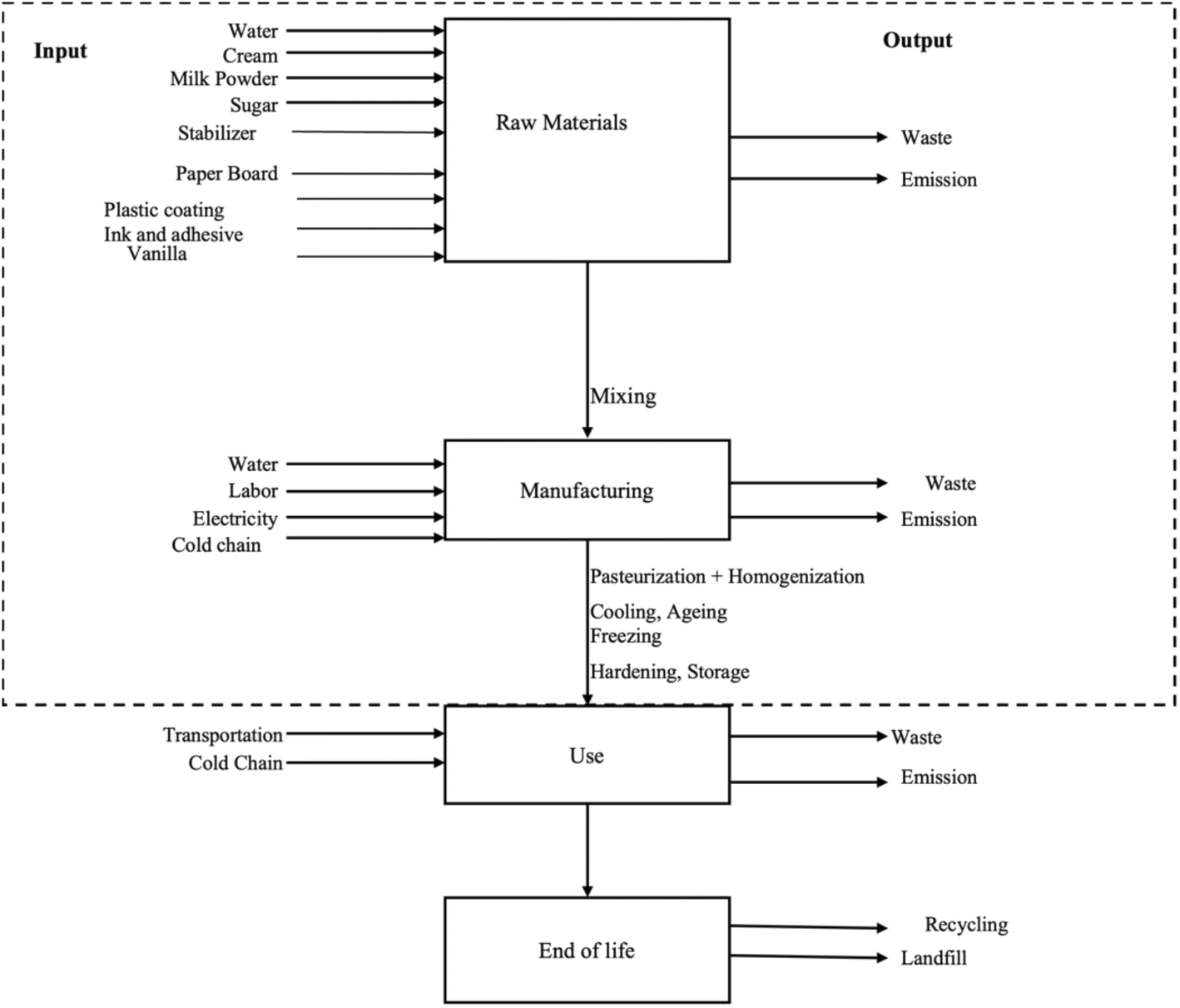 | ||
| Fig. 1 Cradle to grave flow chart of ice cream production. | ||
2.1 Raw material phase
Ice cream production begins with its most essential elements: the ingredients. The quality of the final product depends on how these ingredients interact, influencing its texture and stability.22 Traditional ice cream is primarily made from milk, milk fats, sweeteners, flavors, stabilizers, and emulsifiers.23 Each of these ingredients plays a critical role in shaping the sensory attributes of ice cream, including its sweetness, body, texture, and cold sensation.24 High-quality dairy ingredients, such as milk and cream, form the base of traditional ice cream, providing its creaminess and rich texture. Sugars and sweeteners, including oligofructose, stevia glycosides, and corn syrup, contribute to sweetness and texture,14 while flavorings like vanilla, cocoa, or fruit extracts add distinctive tastes. Stabilizers and emulsifiers improve consistency by controlling ice crystal sizes, creating a smooth mouthfeel.24 These ingredients are often modified to align with changing consumer preferences, including demands for low-calorie, lactose-free, or allergen-friendly options.25 Central to all these ingredients, milk and its derivatives remain the principal ingredient in ice cream, placing it high on the list of dairy-dependent products. Studies suggest that ice cream production uses one and a half times more raw milk than market milk (milk for consumption), highlighting the importance of milk in its manufacturing process.26 Traditionally, this has primarily involved dairy milk, particularly cow milk.10,12,14However, in recent years, plant-based milk has gained significant consumer attention due to growing concerns about the high cholesterol associated with dairy milk, as well as increasing incidences of lactose intolerance and dairy allergies and the perception of low environmental impact.27 This shift has fueled the rise of plant-based ice cream, with manufacturers introducing diverse flavors and leveraging ingredients like coconut, almond, oat, and soy milk to meet the demand for dairy-free, vegan, and healthier frozen desserts.28 Even in regions with historically high dairy consumption, such as the European Union (EU), the world's largest milk producer,29 plant-based alternatives are gaining traction. Between 2014 and 2019, the EU experienced a 3.14% reduction in per capita consumption of cow's milk, with plant-based milk gradually replacing traditional dairy products. These trends highlight a significant shift in consumer habits, emphasizing sustainability and health-conscious choices.
Building on the increasing popularity of plant-based milk, it is also important to recognize the distinct nutritional differences between dairy milk and plant-based alternatives. While their energy content is relatively similar, plant-based milk typically contains less protein (<1%) and fat (<1.5%), while maintaining comparable carbohydrate levels (3–5%).30 Oat drinks stand out with higher carbohydrate levels (7%), while soy drinks provide protein content (3–4%) comparable to dairy milk.31 Grant and Hicks31 further emphasize almond milk's significantly lower protein content compared to both dairy and soy milk. These distinctions underline the unique benefits and limitations of plant-based alternatives. While providing a viable option for health-conscious and lactose-intolerant consumers, plant-based alternatives may require supplementation or fortification to match the nutritional profile of traditional dairy milk.
Complementing these nutritional differences, recent research has increasingly explored the sensory and functional qualities of plant-based ingredients to mimic the qualities of dairy milk while reducing calories and enhancing ice cream textures.14,24,32–34 Leahu et al.34 demonstrated that almond milk-based ice creams fortified with dietary fibers could achieve sensory profiles comparable to those of traditional dairy ice creams. Bekiroglu et al.35 analyzed the physicochemical properties of vegan ice cream made with both fresh and dried walnut milk, while Genovese36 focused on functional ice creams with fat and sugar substitutions, emphasizing health benefits and sensory aspects. Narala et al.37 highlighted the role of inulin as a prebiotic and fat replacer in vegan ice creams, and Pontonio et al.38 emphasized structural and technological innovations in developing plant-based ice creams. This growing trend toward plant-based ice cream not only addresses dietary and health concerns but also provides diverse, innovative alternatives that maintain the sensory appeal of traditional dairy-based products while aligning with evolving consumer preferences.
2.2 Manufacturing phase
Second is the manufacturing phase, ice cream production follows a series of precise steps to achieve its signature creamy texture and smooth consistency. First, all dry and liquid ingredients are blended at room temperature using a powder mixer to form a uniform mix.23 The mix is then pasteurized by heating it to either 65 °C for 30 min or 85 °C for 15 min.14,23 Subsequently, while still hot, the mix is homogenized by forcing it through a narrow opening under high pressure to form a stable fat emulsion, often followed by a lower-pressure second stage.23 In some plants, pasteurization and homogenization are integrated in-line to streamline processing14Post homogenization, the mixture is then cooled to 4 °C ± 1 °C and aged for about 20 h,14 allowing proteins and stabilizers to hydrate, fat globules to partially crystallize, and viscosity to increase. Following ageing, the mix is whipped and frozen to around −5 °C, incorporating air to yield approximately 45–52% air by volume (overrun 80–110%). Flavoring ingredients are then added to the partially frozen mix before primary packaging. Finally, the ice cream is then hardened, packed into secondary packaging and stored in a deep freezer.39 This sequence of unit operations is essentially the same for both dairy and plant-based ice creams.
3 Environmental impact of ice cream production
Beyond nutritional and sensory considerations, the environmental impact of ice cream production remains a critical factor in assessing sustainability. Table 1 summarizes key findings from the reviewed literature, highlighting critical environmental considerations across various studies.| Source | Country | Scope/boundry | Midpoint indicators studied | Ingredients compared | Functional unit | Impacts |
|---|---|---|---|---|---|---|
| Konstantas et al., (2019)12 | UK | Cradle to grave | GWP, ODP, FU, FE, TE, LU, ETP, TA, FRDP | Cow milk | 1 kg of ice cream | 3.66–3.94 kg CO2 eq. per kg |
| Wróbel-Jędrzejewska (2023)11 | Poland | Cadle to gate | GWP | Cow milk, inulin | 1 kg of ice cream | Dairy ice cream 0.36 kg CO2-eq. per kg plant-based 0.385 kg CO2-eq. per kg |
| Scottish government (2011)36 | Scotland | Cradle to grave | GWP | Cow milk | I kg of ice cream | 4.0 kg CO2-eq. per kg of product |
| Garcia-Suarez et al., (2008)9 | USA | Cradle to grave | GWP | Cow milk | 1 kg of ice cream | 3.36 kg CO2-eq. per kg of product |
| Foster et al., (2006)35 | UK | Cradle to gate | GWP | Cow milk | 1 kg of ice cream | 0.97 kg CO2-eq. per kg of product |
| Suksatit et al., (2025)19 | Thailand | Cradle to gate | GWP, FED | Coconut | 1 kg of ice cream | 1.17 kg CO2 eq. per kg |
Table 1 summarizes studies reviewed of the environmental impacts of ice cream production, emphasizing their scope, functional unit, impact category addressed, and key findings. The studies span various geographical locations, with a dominant focus on Europe (e.g., United Kingdom, Poland, Scotland) between 2008 and 2025. The functional unit across all studies was 1 kg of ice cream, ensuring consistency in reporting.
The vast majority of studies prioritized global warming potential (GWP), while a smaller number extended analysis to additional indicators such as water use, eutrophication, land occupation10, and fossil energy demand (FED).19 This narrow focus limits the ability to capture trade-offs across environmental dimensions.
Overall, the literature suggests that ice cream production carries significant environmental impacts, largely driven by raw material extraction, accounting for 33–48% of total emissions.12 Emissions from ice cream production vary widely, depending on the scope and boundary of the study. For instance, Wróbel-Jędrzejewska and Polak14 reported emissions of 0.360–0.385 kg CO2e per kg, while Foster et al.13 reported 0.97 kg CO2e per kg of ice cream cradle to gate, highlighting the limitation of cross-study comparison. To ensure results are comparable and repeatable, future LCAs should adhere to ISO guidelines and explicitly report the scope and system boundaries of their study.
Studies with a broader life cycle focus, such as Konstantas et al.,10 Garcia-Suarez et al.,12 and the Scottish Government,11 reported higher emissions ranging from 3.66–4.0 kg CO2e per kg of ice cream. All the studies reviewed analyzed dairy-based ice cream, except for Wróbel-Jędrzejewska and Polak,14 who studied inulin as a fat replacement, although their formulation still used dairy milk.
At the same time the only plant-based study available for coconut ice cream reported 1.17 kg CO2e per kg cradle-to-gate, with the major impact driven by waste disposal as the main source of GHG emissions, accounting for 53.73% of total emissions, which explains why farm gate coconut milk averages 0.3 kg CO2eq. per kg and yet has a higher GWP impact than the average dairy cradle to gate ice cream of 0.360–0.97 kg of CO2e per kg.
Undoubtedly, this lack of literature and inconsistency in scope make it difficult to draw a clear conclusion on the advantages of plant-based ice cream over dairy-based ice cream. Compared to other dairy products such as cheese and cream, studies on the environmental impact of ice cream remain limited. This observation aligns with earlier findings by Goff39and is further confirmed by Konstantas,10 both of whom emphasize the scarcity of comprehensive studies in this area. The gap is even more pronounced for plant-based ice cream, where most existing research focuses on sensory, textural, or probiotic attributes rather than its environmental impacts.14,32,34–36 This lack of literature reinforces the need for LCA studies, especially plant-based, to uncover genuine opportunities for footprint reduction. Secondly, the differences in results underline a core LCA principle: scope and boundary must be specified and aligned to enable valid comparisons and reproducible interpretation, as required by ISO 14044.21 Again, looking at the hotspot of ice cream production(Ingredients, manufacturing and cold chain), it has become essential to examine the hotspots stage by stage, beginning with raw material extraction, where both dairy and non-dairy ingredients play an important role in shaping the overall environmental footprint.
3.1 Raw material extraction (dairy and non-dairy)
Ingredient-related emissions represent a substantial share of ice cream's environmental footprint, with sourcing contributing approximately 33–70% of total emissions, and dairy milk alone accounting for about 17%.11,12 Within the life cycle stages, the agricultural phase consistently stands out as the primary hotspot for greenhouse gas emissions.40 Within this phase, enteric fermentation was identified as the largest contributor to the carbon footprint of cow milk, responsible for 39% of total emissions, followed by CO2 emissions at 19.3%, CH4 emissions at 8.6%, and N2O emissions at 5.1% from manure management.16 Balcha et al.41 reported a significantly higher contribution for enteric fermentation at 75.5%. This variation, ranging from 38% to 75.5%, is largely influenced by differences in farming systems and cattle feed types, highlighting the variability driven by regional farming systems, cattle breeds, and feed composition factors.To ensure an accurate and meaningful assessment of such impacts within LCA studies, selecting an appropriate functional unit (FU) is critical. The FU provides a standardized reference point for comparisons, ensuring meaningful evaluations, particularly in food systems where nutritional delivery is a key function. The FU provides a quantitative description of the primary function of the system under study.42,43 Notably, only products with comparable FUs can be accurately compared according to ISO.21 For dairy systems, authors often select the mass (kg) or volume (L) of raw milk as the FU, reflecting milk production as the primary function of a dairy farm.44,45 Alternatively, some studies emphasize the nutritional function of milk by adjusting production volumes according to the energy content of the milk. This approach facilitates comparisons between milk with varying fat and protein contents, accounting for differences arising from animal breeds or feeding practices.15,46 The two most common correction formulas found in the literature are energy-corrected Milk (ECM) and Fat and Protein-Corrected Milk (FPCM), presented in eqn (1) and (2).
| kg FPCM = kg milk (0.337 + 0.116·fat% + 0.06·protein%)47 | (1) |
| kg ECM = kg milk (0.25 + 0.122·fat% + 0.077·protein%)47 | (2) |
From the reviewed literature, FPCM appears to be the most widely adopted FU, used in 22 articles (Fig. 2).40,48–68 ECM was used in 8 articles.42,69–75 Additionally, 12 articles used 1 kg of milk as the FU,10,14,30,41,76–83 while 6 articles used 1 liter of milk.14,31,84–87 Some studies explored alternative units, such as 1 kg of protein, as in Grant & Hicks31,88 and 1 tonne of milk.45 See Table 2 for the LCA studies, FUs, and impact results.
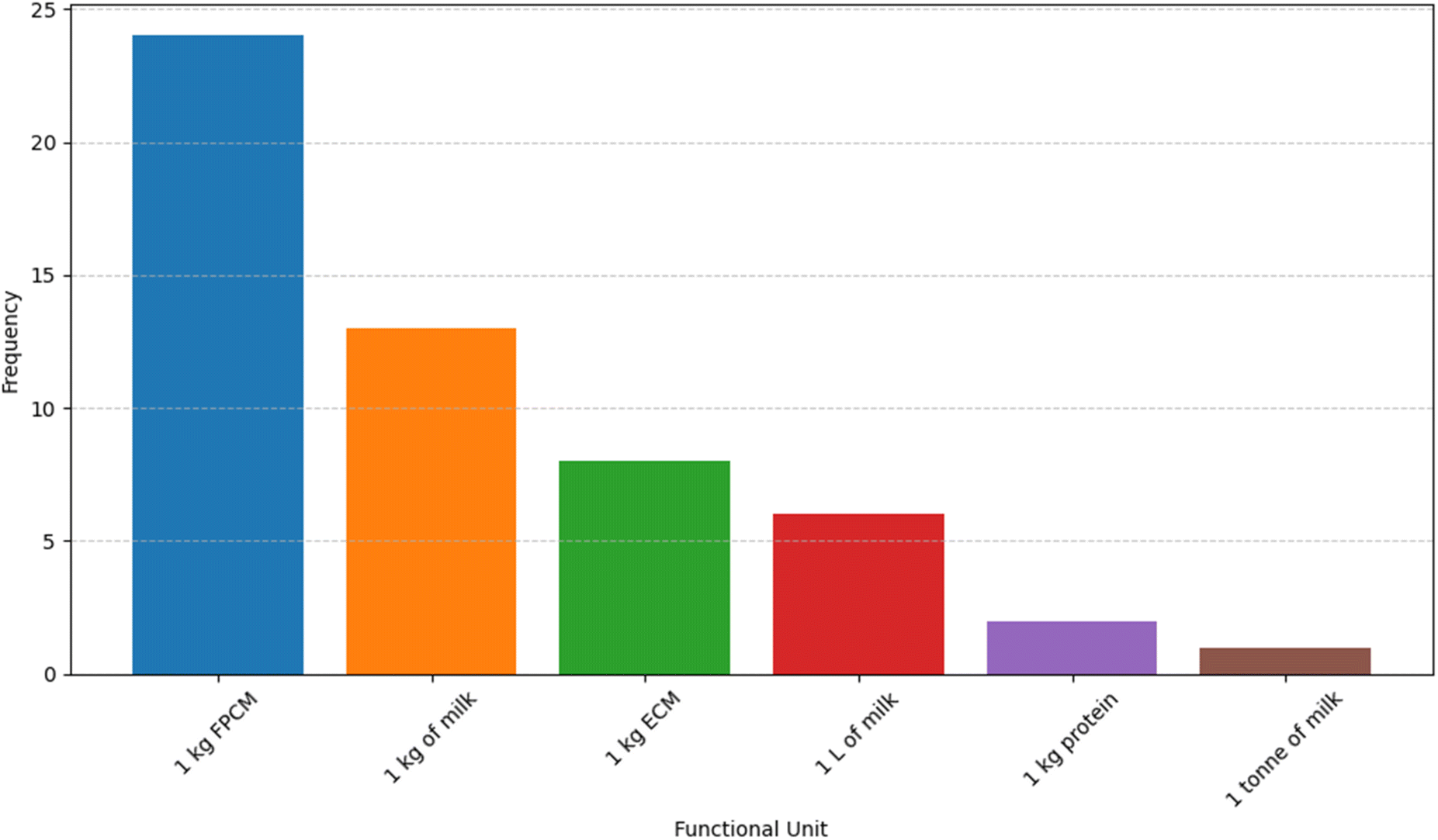 | ||
| Fig. 2 Frequency of functional units found across published literature. | ||
| Source | Country | Scope/boundry | Midpoint indicators studied | Ingredients compared | Functional unit | Impacts |
|---|---|---|---|---|---|---|
| Carvalho et al., (2022)38 | Brazil | Cradle to farm gate | GWP, TA, FE, LU, WC, FRS | Cow milk | 1 kg FPCM | 1.41 kg CO2-eq kg FPCM-1 |
| González-Quintero et al., (2021)63 | Colombia | Cradle to farm gate | GWP, LU, NREU | Cow milk | 1 kg FPCM | 1.1 kg CO2-eq kg per FPCM |
| Penati et al., (2016)47 | Italy | Cradle to farm gate | LU, NREU, CC, AP, EP | Cow milk | 1 kg FPCM | 1.14 kg CO2-eq. per kg FPCM |
| Barros et al., (2022)48 | Brazil | Cradle to farm gate | CC, AP, EP, TOF | Cow milk | 1 kg FPCM | 1.14 kg CO2-eq kg FPCM |
| Dalla Riva et al., (2015)79 | Italy | Cradle to farm gate | CC, TA, FE, LU, WD, CFED | Cow milk | 1 kg of raw milk | 1.80–2.19 kg CO2eq. per kg of raw milk |
| Grant & Hicks (2018)27 | USA | Cradle to retail | GWP, WU, EE, OD | Cow milk, almond milk and soy milk | Volumetric FU: 1 liter of milk nutritional FU: 1 kilogram of protein | Almond 3.85 kg CO2eq. per L, soy 3.27 kg CO2eq. per L |
| Coluccia et al., (2022)13 | Italy | Cradle to packaging | GWP | Cow milk, soy milk | 1 liter of milk | Milk 0.99–1.08 kg CO2eq. per L soy drink 0.51–0.52 kg CO2eq. per L |
Based on Table 2 and the reviewed literature, the carbon footprint of dairy milk measured as GWP in kg CO2eq. per kilogram of FPCM ranges from 0.87 to 1.9 kg CO2eq., with an average value of 1.2 kg CO2eq. per kg FPCM reported across 20 studies.40,48–62,64–66,81 Mazzetto et al.62 noted an even higher value of 2.11 kg CO2eq. per kg FPCM in their study. For raw milk, the average carbon footprint is slightly higher at 1.80 kg CO2eq. per kg, compared to 1.29 kg CO2eq. per kg reported by Khanpit et al.,89 while eight additional studies42,69–75 reported an average of 0.99 kg CO2eq. per kg of energy-corrected milk (ECM). One notable outlier was identified in the study by Zanni et al.,67 which reported a carbon footprint of 40.41 kg CO2eq. per kg FPCM. This significant discrepancy likely arises from the inclusion of broader inputs, such as packaging materials, extending the scope from cradle to grave, though the study stated cradle-to-gate assessments.
In contrast, the production of plant-based milk (PBM) consistently demonstrated a lower environmental impact. Among the plant-based options, coconut milk exhibited the lowest mean GWP at 0.3 kg CO2eq. per kg of milk across three studies,30,78,83 making it the most environmentally friendly option, which was also confirmed by the studies of Khanpit.89 Oat milk followed, with an average GWP of 0.415 kg CO2eq. per kg of milk across four studies.78,79,83,88 Soy milk and almond milk had higher averages, reported at 0.54 kg CO2eq. per kg in eight studies16,30,31,79,83,85,87,88 and 0.94 kg CO2eq. per kg in six studies,30,31,78,79,82,83 respectively. These findings indicate a consistent sequence of environmental impact: coconut < oat < soy < almond, as also confirmed by Khanpit.89 However, among these, coconut milk remains the least studied in terms of LCA. While PBMs appear to have a lower environmental impact when assessed by volume (kg of milk), the picture changes when the functional unit is shifted to protein content.88 Braun et al.88 reported a GWP of 2.4 kg CO2eq. per kg of protein for soy milk, significantly higher than the average of 1.2 kg CO2eq. per kg FPCM for dairy milk. This highlights that while PBM may have a lower carbon footprint per kg of milk, its performance can vary depending on the functional unit used. Similar findings were affirmed by Grant and Hicks,31 emphasizing the importance of functional unit selection in LCA comparisons.
Beyond milk, ingredients such as sugar (for sweetening) and cocoa (for flavoring) contribute significantly to the environmental impact of ice cream production. These ingredients add another layer of impact, particularly in terms of land use, water consumption, and carbon emissions. Sugar, primarily sourced from sugarcane and sugar beets, has considerable environmental consequences. Sugarcane cultivation is highly water-intensive, requiring approximately 1500–3000 liters of water per kilogram of sugar.90 Additionally, sugarcane plantations contribute to deforestation, particularly in tropical regions such as Brazil and Southeast Asia, where vast areas of natural ecosystems are cleared to expand production.91 The runoff from sugar farms also leads to water pollution due to excessive fertilizer and pesticide use, contributing to eutrophication and loss of aquatic biodiversity.92
Cocoa production, on the other hand, is responsible for significant deforestation, particularly in West Africa, where over 70% of the world's cocoa is grown.93 Between 2000 and 2019, cocoa farming was linked to the loss of approximately 2.3 million hectares of forest in Côte d’Ivoire and Ghana alone.94 This large-scale land-use change releases carbon dioxide stored in trees and soil, exacerbating climate change. Furthermore, cocoa processing and transportation add to its environmental footprint, as roasting requires energy-intensive processes.95 Addressing the environmental burden of ice cream production will require more sustainable sourcing practices, such as reducing emissions from dairy farming, improving water management in sugar production, and encouraging sustainable cocoa cultivation to mitigate these impacts. As consumer demand for ice cream continues, these changes will be essential for reducing the sector's environmental footprint.
While GWP has been the most widely reported metric in the reviewed studies, it is only one dimension of environmental impact. Fig. 3 provides a visual representation of other midpoint and end indicators assessed in the LCAs, emphasizing their relevance in developing a more comprehensive understanding of the environmental burdens associated with ice cream production.
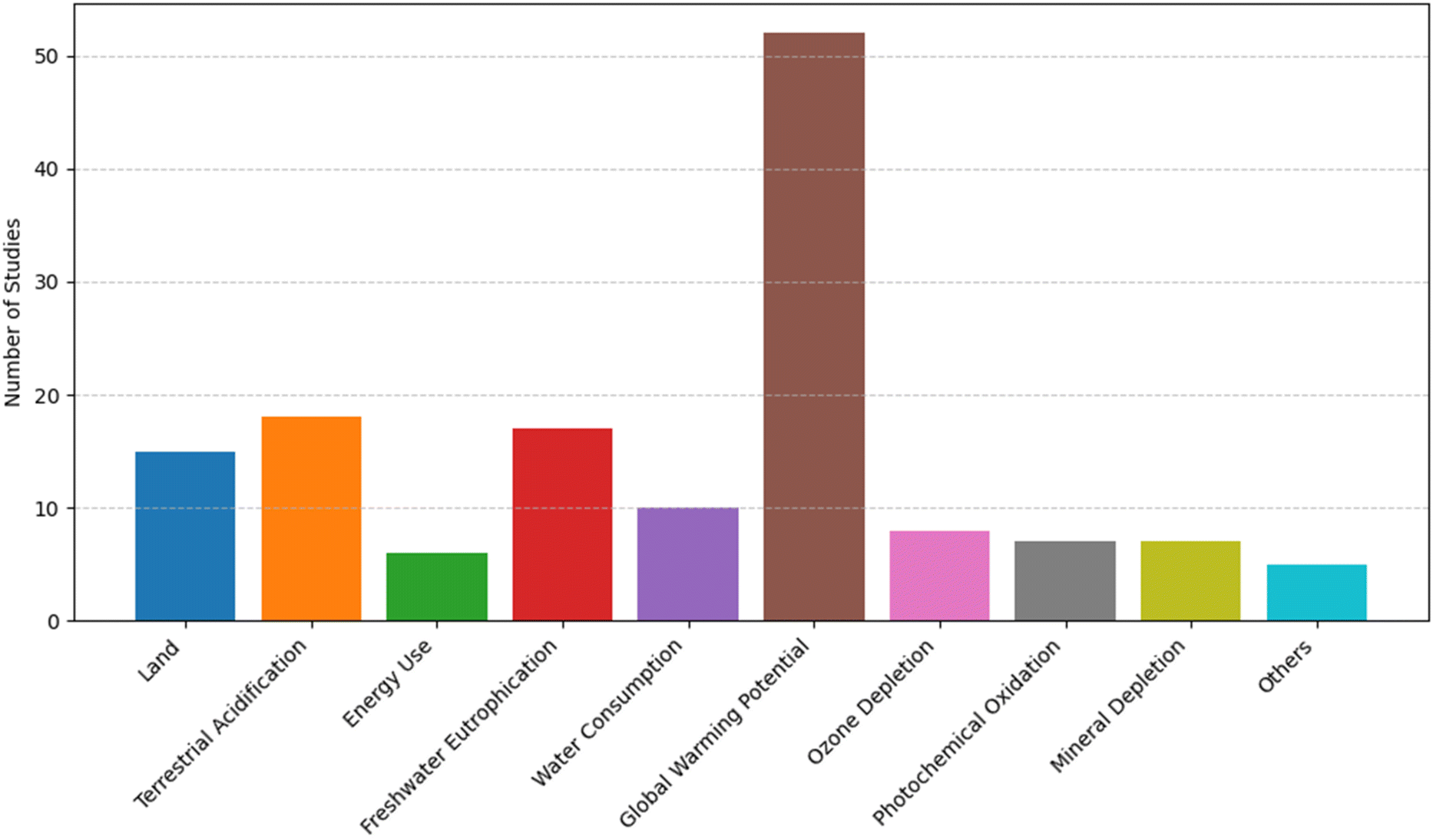 | ||
| Fig. 3 Frequency in literature of impact categories studied. | ||
Fig. 3 summarizes the distribution of midpoint and endpoint indicators studied in the reviewed literature. The data highlights the diverse range of environmental impact categories considered across the studies, providing insights into the areas of focus in LCA. The environmental impact categories assessed across the literature include global warming potential (GWP), water consumption (WC), land use (LU), terrestrial acidification (TA), freshwater eutrophication (FE), marine eutrophication (ME), ozone depletion (OD), photochemical ozone formation (POF), acidification potential (AP), energy use (EU), fossil depletion (FD), non-renewable energy use (NREU), water use (WU), water depletion (WD), embodied energy (EE), volatile organic compounds (VOCs), human toxicity (HT), freshwater ecotoxicity (FET), and terrestrial ecotoxicity (TE). Refer to Table 2 and Appendix Table 3 for additional details.
Global Warming Potential (GWP) emerged as the most frequently analyzed midpoint indicator, with 54 10–12,16,30,31,40–45,48–51,72–88,96 studies emphasizing this category. This dominance reflects the global prioritization of addressing climate change and the importance of quantifying greenhouse gas emissions in LCA, which mostly consist of CO2, CH4 and N2O.
Other frequently studied categories included Terrestrial Acidification 10 studies,10,54,61,65,70,74,79,80,84,87 Freshwater Eutrophication 18 studies,10,30,48,49,54,56,59,61,65,66,68,69,74,77,79,81,82,84 and Land Use 17 studies.10,42,48,54,56,59,61,64,65,68,74,77,79,80,87,88 These indicators are integral to understanding the broader environmental impacts of industrial and agricultural systems, including soil degradation, nutrient runoff, and land-use changes. Water Consumption 8 studies30,31,40,65,68,79,82,88 and Energy Use 6 studies43,48,56,64,77,84 also received attention, indicating a moderate emphasis on resource efficiency and water management. These indicators are particularly relevant in industries with significant energy or water demands, such as agriculture, manufacturing, and energy production. Smaller but still notable focus areas included Ozone Depletion,1,10,61,70,84,87 Photochemical Oxidation,70,84,87 and Mineral Depletion.48,64,68 These categories capture specific environmental impacts that are often product or process-specific, such as the use of rare materials or emissions of volatile organic compounds (VOCS).
Beyond GWP, another key impact indicator discussed in the reviewed paper was the water footprint. It represents the total water consumption (WC) across various stages, including farming for animal feed and raw materials such as soy, almond, oat, and coconut. It also accounts for direct water consumption by animals, processing of PBM, and water usage for the production of fuel, electricity, fertilizers, and other additives. Carvalho et al.40 reported that the WC for dairy milk production was approximately 5.87 × 10⁻³ m3 per FPCM. This water use was distributed across key processes: 38.5% from pasture production, 28.2% from corn silage production, 22.9% from milking and cooling, and 5.9% from concentrated feed production. By comparison, Wang et al.68 reported a much higher water footprint for almond milk at 0.175 m3 per kilogram of milk, highlighting its intensive water requirements. From the review, it is evident that animal milk generally has a smaller water footprint compared to some PBMs when compared on a fat and protein basis. Among plant-based options, almond milk was found to require the most water, primarily due to the high water demands of almond cultivation.31,65,88 These findings emphasize the need to account for water-intensive agricultural practices when assessing the environmental impacts of PBM, particularly as their popularity continues to grow.
While WC illustrates the resource intensity of milk production, it is equally important to consider freshwater eutrophication, another critical environmental concern. Eutrophication results from nutrient overloads in ecosystems and can adversely affect both aquatic and terrestrial environments. Since both DBM and PBM are rooted in agriculture, their contributions to eutrophication have become a central focus in environmental assessments. This impact is typically quantified through the leaching or volatilization of key nutrients such as nitrate (NO3−), phosphate (PO43−), ammonia (NH3), nitrogen oxides (NOx), and phosphorus.66 For dairy milk, the freshwater eutrophication (FE) impact ranged from 2.39 × 10⁻³ to 9.27 × 10⁻³ kg PO4-eq. per kg of FPCM and 0.077 kg NO3-eq. per kg. The main contributors to eutrophication in dairy milk production were identified as milking and cooling processes (70.4%), followed by corn silage production (12.8%) and pasture production (11.1%).80 The milking and cooling process contributes through indirect energy use and wastewater generation, particularly from cleaning utensils, equipment, and milking parlor floors, where phosphorus and phosphate (PO43−) emissions are significant.80
In contrast, for PBM, the eutrophication potential is primarily driven by agricultural practices, including the cultivation and harvesting of soy, oat, and almond crops. These processes involve fertilizer application, which can lead to nutrient runoff and leaching. For PBM, the freshwater eutrophication impact was reported at 0.77 kg PO4-eq. per kg, significantly influenced by crop-specific agricultural practices. For both DBM and PBM, the primary sources of eutrophication are agricultural inputs. However, PBM crop cultivation remains the dominant factor. These findings highlight the need for targeted mitigation strategies to reduce nutrient runoff across both dairy and plant-based milk production systems.
Land use offers another critical perspective on the environmental impact of milk systems. Land use, a relatively underexplored midpoint indicator, represents the area (m2) required to produce 1 kg of milk. In dairy milk systems, the primary land use impact arises from agricultural land needed to grow crops for animal feed, while in (PBM) systems, it is primarily linked to the cultivation of raw materials for milk production.
For dairy milk, the environmental effect in the land use category ranged from 0.64 to 3.23 m2 year per kg of FPCM, with significant contributions from pasture production (71.5%) and corn silage production (26%).80 In contrast, PBM systems have substantially lower land use requirements. For example, Riofrio and Baykara87 reported a land use impact of 0.28–0.47 m2 per kilogram of soy milk. These findings demonstrate that land use in animal milk systems is several orders of magnitude higher than in PBM systems, underscoring the potential for PBM to reduce land-related environmental impacts. However, the specific impacts of land use depend on the type of feed or crop cultivation practices, emphasizing the importance of sustainable agricultural strategies in both systems.
While freshwater consumption, eutrophication and land use were identified as critical midpoint indicators in milk production systems, other midpoint indicators were not extensively represented in the reviewed literature and are therefore not discussed in detail. Indicators such as acidification potential, photochemical ozone creation potential, and ecotoxicity were occasionally mentioned but lacked sufficient data or consistent reporting to draw meaningful conclusions. This limitation highlights the need for more comprehensive studies that incorporate a broader range of environmental indicators to provide a holistic understanding of the impacts associated with both dairy and plant-based milk production systems. In addition, the over focus on GWP risks burden-shifting, where carbon reduction strategies may increase water use or eutrophication. Hence, studies should evaluate options with a multi-indicator approach so choices reflect overall environmental sustainability, not climate alone.
The global cold chain market has experienced rapid expansion, particularly in developing countries, due to globalization, e-commerce growth, and stricter food safety regulations.104 Recent market analyses indicate that the cold chain industry is projected to surpass $500 billion by 2030.20 Additionally, Grand View Research2 estimates the global cold chain market size at USD 316.34 billion in 2024, with a projected CAGR of 19.2% from 2025 to 2030. This rapid growth highlights the increasing reliance on cold chain logistics to meet consumer demands and maintain product integrity.
While the cold chain is essential for preserving food safety and minimizing waste, its rapid growth raises significant environmental concerns related to energy use and greenhouse gas (GHG) emissions.104,105 According to the Green Cooling Initiative report, refrigeration accounts for approximately 5% of global electricity consumption, contributing to 2.5% of global GHG emissions as of 2018.106,107 In fact, GHG emissions from refrigeration systems have continued to rise, with a 15% increase from 2010 to 2020. Industrial refrigeration, particularly in food processing and cold storage, accounts for over 20% of the sector's total emissions.106 In cold storage warehouses, refrigeration consumes more than 60% of total electricity, leading to higher GHG emissions than other storage methods. GHG emissions associated with cold chain operations stem primarily from refrigerant leakage and energy consumption.103 Traditional refrigerants such as chlorofluorocarbons (CFCs), hydrochlorofluorocarbons (HCFCs), and HFCs pose severe environmental threats if leaked.104 Additionally, refrigeration systems are heavily reliant on electricity, which, when sourced from fossil fuels, results in substantial indirect emissions. Transportation further amplifies cold chain emissions. Refrigerated vehicles primarily rely on fuel consumption to power their cooling systems, with energy usage accounting for up to 86% of their total emissions.108,109 Overall, the combined emissions from refrigerant leakage and energy consumption in cold chain activities are estimated to contribute 1–3.5% of global GHG emissions, with 70–80% of these emissions attributed to energy consumption.104,106
Several studies reinforce these trends of increasing emissions from refrigeration systems. Khan et al.20 emphasize that while cold chains are essential for maintaining product safety, they are also significant sources of GHG emissions due to their energy-intensive refrigeration processes. Heard and Miller104 highlight the complex environmental consequences of cold chain growth, driven by interactions between social, economic, and technical factors. Dong and Miller103 found that cold chain energy usage accounts for an average of 61% of GHG emissions in fruit and vegetable supply chains, whereas emissions from food losses and waste are more substantial in meat and aquatic product supply chains. In China, cold chain activities constituted 1–3% of overall emissions in 2018. However, cold chain expansion is not solely an environmental burden. Hu et al.110 found that improved food preservation through cold chain development could significantly reduce carbon emissions by 51.93% for meat, 29.34% for milk, and 79.75% for aquatic products in the U.S. These findings suggest that, when designed efficiently, the climate benefits of cold chains can outweigh their increased energy demands and environmental impact.
Building on these insights, the environmental challenges associated with the cold chain become even more pronounced in the production and distribution of ice cream. Due to its highly perishable nature, ice cream requires strict temperature control at −18 °C throughout its entire supply chain, from manufacturing and storage to retail and final consumption. Maintaining such stringent conditions significantly increases energy demand and associated emissions, making ice cream one of the most resource-intensive products within the cold chain. This is even critical for the U.S., as ice cream often relies on a specialized cold chain infrastructure distinct from that used for other frozen foods. Dedicated systems, including ultra-low-temperature freezers, specialized insulated packaging, and rapid transfer mechanisms, are commonly employed exclusively for ice cream transport and storage.111,112
Yet studies are more focused on improving the ingredients stage and overlooking the manufacturing phase, which has a direct influence on the cold chain phase. For example, modifying ice cream formulations to raise the freezing point could potentially reduce refrigeration from −18 °C to about −12 °C, an intervention linked to about 20–30% energy saving,113 with additional gains when paired with low-GWP refrigerants and leak management. However, this stage of ice cream production is still understudied.
4 Consumer preference
Transitioning from production and distribution to the end user, consumer preferences introduce another layer of complexity in achieving sustainability; thus, sustainable interventions without social acceptance are no intervention at all. Consumers, therefore, sit at the center of ice-cream sustainability with choices influenced by a dynamic interplay of health considerations, environmental impact, sensory experience, cost, and ethical values.114 Gaining a deeper understanding of these factors is essential for assessing market trends and identifying opportunities to enhance the sustainability of both dairy and plant-based ice creams.Health consciousness, in particular, has emerged as a key driver of consumer preferences, particularly in the growing market for non-dairy ice cream. Many consumers perceive plant-based ice cream as a healthier alternative due to its lower lactose content and, in some cases, reduced saturated fat levels. Studies suggest that health benefits, including lower fat content and perceived digestibility, are major factors influencing the purchase of plant-based frozen desserts.115 However, the nutritional composition of non-dairy ice cream varies significantly based on the ingredients used. For instance, almond milk-based ice cream may lack essential proteins, whereas soy-based varieties offer higher protein content.116 At the same time, some plant-based options compensate for textural differences with added sugars, potentially undermining their perceived health benefits. These nuances underscore the importance of balancing nutritional integrity with sensory quality in the development of sustainable ice cream alternatives. As health trends continue to shape purchasing behaviour, aligning consumer expectations with actual product performance will be crucial in supporting more informed, environmentally conscious choices.
While health remains a central factor in consumer decision-making, it is increasingly intertwined with broader environmental concerns. Complementing these health considerations are growing sustainability motivations, which further shape consumer choices. Plant-based ice creams are perceived to exhibit a lower carbon footprint and reduced water usage compared to their dairy-based counterparts.116,117 However, the sustainability advantages of plant-based alternatives are not uniform. While oat and soy-based products tend to have a lower environmental impact, almond milk production has been criticized for its high water consumption,116 and coconut-based products raise concerns related to transportation emissions and sourcing from distant tropical regions, making it difficult to claim a blanket “lower-impact” label for the category.78 Therefore, studies should report multi-indicator results (e.g., GWP, water scarcity, land-use change, transport) to enable fair comparisons with dairy and to avoid burden shifting. Research on consumer behavior highlights that sustainability-conscious individuals are more likely to support brands committed to ethical sourcing and eco-friendly production practices.117 This shift is further supported by studies showing a strong link between environmental awareness and the growing acceptance of plant-based diets.118
Despite the potential health and environmental benefits of PBM, sensory perception remains a crucial determinant of consumer acceptance. Traditional dairy ice cream is often favored for its rich texture and creamy mouthfeel, attributes that are difficult to replicate in plant-based alternatives. Sensory evaluation studies indicate that while plant-based ice creams have improved in quality, some consumers still report off-flavors, grainy textures, or less indulgent mouthfeel compared to dairy-based options.18 As a result, achieving parity in sensory experience remains a key hurdle for plant-based ice creams and a critical area for innovation in the pursuit of broader consumer acceptance.
Finally, economic considerations play a critical role in shaping consumer preferences. Plant-based ice creams are often priced higher than conventional dairy options due to the cost of alternative ingredients and production processes. Studies indicate that price remains one of the most influential factors in purchasing decisions, with affordability concerns acting as a barrier for many consumers. Generally, household ice-cream demand is price-inelastic, meaning volumes are relatively insensitive to price, and revenue often rises with moderate price increases, in addition, hot-weather spikes raise volume rather than retail prices.119,120 Willingness-to-pay for credence claims (e.g., local or lower-carbon) exists but is segment-dependent and tends to materialize only when sensory quality is maintained.121 However, some buyers perceive premium pricing as a reflection of superior quality or sustainability, justifying the additional cost.122 As plant-based ice cream gains market share and competition increases, economies of scale may help reduce costs, making these alternatives more accessible to a broader audience.122 In sum, the preference for dairy versus non-dairy ice cream is driven by a multifaceted combination of health, environmental, sensory, economic, and ethical considerations. However, there is a notable gap in social LCA assessments that limits decision relevance; without life cycle costing and product-level social LCA, claims of superiority rest on environmental indicators alone. Future work should focus on integration to enable like-for-like comparison of dairy and plant-based products across environmental, social and economic dimensions, resolving the current gap between stated preferences and realized sustainability outcomes.
5 Key research gaps
Compared to other dairy products, ice cream LCA remains limited, and there is no product-level social LCA and, moreover, many studies stop at the factory gate, obscuring downstream impacts from the cold chain, packaging, and waste management. For example, the coconut-milk case illustrates the problem: although farm-gate coconut milk has a low GWP, the study's total was higher than typical dairy cradle-to-gate ice-cream figures because on-site waste disposal dominated emissions; consequently, discrepancies like these make it difficult to draw a defensible conclusion about whether plant-based or dairy ice cream is environmentally preferable. To restore comparability and reproducibility, future assessments should state the scope and functional units explicitly; in addition, environmental results should be paired with life-cycle costing and social-risk screens (e.g., labour risks in cocoa/vanilla supply) and present an integrated Life Cycle Sustainability Assessment so recommendations are feasible to scale and ethically robust.Furthermore, most ice-cream LCAs report only GWP, yet ingredient and process switches (e.g., dairy to almond/coconut/oat; lighter packaging; warmer storage) can lower CO2e while worsening other burdens such as water use, land use, eutrophication, acidification, and toxicity; thus, a single-indicator focus hides trade-offs and risks burden-shifting, therefore future studies should report an ISO-aligned multi-indicator set with stage-resolved results.
Likewise, across published ice cream LCAs, the largest spread in results stems from how the system is defined rather than fundamentally different technologies: studies labelled “cradle-to-gate” frequently include different stages (some count on-site waste handling and inbound transport, others report processing-only), while cradle-to-grave models vary in whether they include retail residence time, refrigerant type and leak rate, consumer transport, and end-of-life; hence, future studies should explicitly define system boundaries and functional units, publish paired cradle-to-gate and cradle-to-grave results with stage-resolved contributions, and use regional inventory data instead of global averages in order to reduce these spread in results.
Finally, manufacturing choices are underexplored even though they can unlock sizable downstream savings: in particular, sweeteners (sucrose, glucose syrups, polyols, fibres) control freezing-point depression, which sets draw temperature, hardness, and scoopability, so reformulating to reduce sugars or shift bulking agents can raise the freezing point and potentially allow warmer storage (e.g., −18 to −15/−12 °C), an intervention linked to about 20–30% energy saving by Unilever; therefore, future studies should focus on reformulation to uncover the full potential of high-freezing ice cream.
6 Conclusion
This review shows that ice cream's environmental footprint is driven primarily by ingredients, especially dairy milk, accounting for roughly 42–70% of total impacts in stage-resolved studies, with the cold chain contributing up to about 46% and packaging 6–8%. Reported GWP spans 0.36–0.97 kg CO2e per kg (cradle-to-gate dairy) and 3.36–4.0 kg CO2e per kg (cradle-to-grave dairy), quantifying the scale of hotspots and the effect of boundary choice.Plant-based options do not guarantee lower impacts under current evidence: the only coconut-based LCA reports 1.17 kg CO2e per kg (cradle-to-gate) with waste management as the dominant driver, while dairy cradle-to-gate ranges overlap at 0.36–0.97 kg CO2e per kg. Because scopes and functional units are not aligned across studies, a definitive “lower impact” tag cannot be claimed without matched system boundaries and consistent allocation rules.
Therefore future studies should focus on: (i) upstream milk-supply improvements (fertilizer management in feed crops, manure handling and enteric-methane mitigation), (ii) cold-chain optimization, reformulation of ice cream to raise the freezing point (e.g., −15 or−12 °C), which can save about 20–30% energy, when paired with tight refrigerant management, and (iii) integrating environmental impact with life cycle costing and social-risk impacts resolving the current gap between stated preferences and realized sustainability outcomes.
Finally, this review identified methodological outcomes required for credible comparisons: publish stage-resolved results; align gates and functional units; report a core indicator set beyond GWP (e.g., energy demand, water scarcity, land, eutrophication) to prevent trade-offs and burden shifting.
Ethical approval
Not applicable. This study did not involve human participants or animals.Author contributions
Faustina Sakyiwaah Sekyere and Andrea Hicks jointly contributed to the conception and design of the study.Conflicts of interest
The authors declare that they have no conflicts of interest.Data availability
All data supporting the findings of this study are included within the article.Supplementary information is available. See DOI: https://doi.org/10.1039/d5fb00390c.
Appendix
| Source | Country | Scope/boundry | Midpoint indicators studied | Ingredients compared | Functional unit | Impacts |
|---|---|---|---|---|---|---|
| Balcha et al., (2022)41 | Ethiopia | Cradle to farm gate | GWP, EU | Cow milk | 1 kg of cow milk | 2.8–3.2 CO2-e per kg of milk |
| Garg et al., (2016)51 | India | Cradle to farm gate | GWP | Cow milk | 1 kg FPCM | 1.9–2.3 kg CO2-eq. per kg FPCM |
| Samsonstuen et al., (2024)52 | Norway | Cradle to farm gate | GWP | Cow milk | 1 kg FPCM | 1.14 kg CO2 eq (kg FPCM) |
| Woldegebriel et al., (2017)79 | Ethiopia | Cradle to farm gate | LU, EU, GWP | Cow milk | 1 kg of milk | 1.75 kg CO2-eq to 2.25 kg CO2-eq |
| Vida & Tedesco, 201753 | Italy | Cradle to farm gate | GWP | Cow milk | 1 kg FPCM | 1.11 kg CO2eq. per kg FPCM |
| Dalla Riva et al., (2015)82 | Italy | Cradle to farm gate | GWP, TA, FE, LU, WD, CFED | Cow milk | 1 kg of raw milk | 1.80–2.19 kg CO(2)eq |
| Naranjo et al., (2023)54 | USA-South Dakota | Cradle to farm gate | GWP | Cow milk | 1 kg FPCM | 1.23 kg CO2 eq. per kg FPCM |
| Lovarelli et al., (2019)55 | Italy | Cradle to farm gate | CC, POF, TA, FE, ME, TE, LU, MFRD | Cow milk | 1 kg FPCM | 1.38 ± 0.33 kg CO2 eq. per kg FPCM |
| Bacenetti et al., (2016)56 | Italy | Cradle to farm gate | GWP, LU | Cow milk | 1 kg FPCM | 1.12 kg CO2 eq. per kg |
| Flysjö et al., (2011)73 | New Zealand/Sweden | Cradle to farm gate | GWP | Cow milk | 1 kg ECM | 1.00 kg CO2eq kg−1 ECM in NZ and 1.16 kg CO2eq kg−1 ECM in SE |
| Kiefer et al., (2015)58 | Germany | Cradle to farm gate | GWP | Cow milk | 1 kg FPCM | 1.53 kg CO2eq. per kg FPCM to 1.99 kg CO2eq. per kg |
| Bakken et al., (2017)74 | Norway | Cradle to farm gate | GWP, TA, FD, TE, FE, LU | Cow milk | 1 kg ECM | 1.3–1.6 kg CO2-eq. per kg ECM |
| Fantin et al., (2012)84 | Italy | Cradle to distribution centers | GWP, EU, POF, FE | Cow milk | 1 l of milk | 1.5 kg CO2 eq. per L milk |
| Flysjö et al., (2012)72 | Denmark | Cradle to farm gate | GWP | Cow milk | 1 kg ECM | 1.07–1.13 kg CO2eq. per kg ECM |
| Berton et al., (2021)59 | Italy/Austria | Cradle to farm gate | GWP, AP, EP, CED, LU | Cow milk | 1 kg FPCM | 1.2 kg CO2-eq. per kg |
| Thoma et al., (2013)76 | USA | Cradle to grave | GWP | Cow milk | 1 kg of milk | 1.77–2.4 kg CO2eq. per kg milk |
| de Léis et al., (2015)75 | Brazil | Cradle to farm gate | GWP | Cow milk | 1 kg ECM | 0.535–0.778 kg CO2e kg ECM-1 |
| Castanheira et al., (2010)45 | Portugal | Cradle to farm gate | GWP | Cow milk | 1 tonne of raw milk | 1021.3 kg CO2 eq. per tonne of milk |
| Schader et al., (2014)60 | Switzerland | Cradle to farm gate | GWP | Cow milk | 1 kg FPCM | 0.89–1.08 kg CO2-eq. per kg milk |
| March et al., (2021)55 | United Kingdom | Cradle to farm gate | GWP | Cow milk | 1 kg FPCM | 0.95–1.07 kg CO2e per kg FPCM |
| Djekic et al., (2014)81 | Sebia | Cradle to grave | GWP, AP, EP | Cow milk | 1 kg of milk | 1.24 and 1.67 kg CO2 eq. per kg |
| Bartl et al., (2011)69 | Peru | Cradle to farm gate | GWP, EP | Cow milk | 1 kg ECM | 10.6 kg CO2 per kg ECM |
| Yan et al., (2011)42 | Ireland | Cradle to farm gate | GWP, LU | Cow milk | 1 kg of ECM | 1.23 ± 0.04 kg of CO2 eq. per ECM |
| Roer et al., (2013)70 | Norway | Cradle to farm gate | GWP, FD, FET, FE, HT, MET, ME,OD, LU, POF, TA, TET | Cow milk | 1 kg of ECM | 1.5–1.6 kg CO2-eq/A1:G7 kg (ECM) |
| Romano et al., (2021)61 | Italy | Cradle to farm gate | GWP, TA, FE, ME, LU, WD, MD, FD | Cow milk | 1 kg FPCM | 1.08–1.32 kg CO2eq. per kg FPCM |
| O'Brien et al., (2015)66 | Ireland | Cradle to farm gate | GWP, EP | Cow milk | 1 kg FPCM | 0.87–1.72 kg CO2eq. per kg FPCM |
| Rotz et al., (2010)71 | USA | Cradle to farm gate | GWP | Cow milk | 1 kg ECM | Of 0.37 to 0.69 kg CO2-eq. per kg ECM |
| Mc Geough et al., (2012)43 | Canada | Cradle to farm gate | GWP | Cow milk | 1 kg FPCM | 0.92 kg of CO2 eq. per kg ECM |
| Zanni et al., (2022)67 | Italy | Cradle to farm gate | GWP | Cow milk | 1 kg FPCM | 40.41 kg CO2eq. per kg FPCM |
| Mazzetto et al., (2022)62 | Global | Cradle to farm gate | GWP | Cow milk | 1 kg FPCM | 2.11 kg CO2eq kg−1 FPCM |
| Gollnow et al., (2014)63 | Australia | Cradle to farm gate | GWP | Cow milk | 1 kg FPCM | 1.11 kg CO2eq kg−1 FPCM |
| Wang et al., (2018)68 | China | Cradle to farm gate | GWP, EP, AP, NREU, LU, WU | Cow milk | 1 kg FPCM | 1.34 kg CO2eq/1 kg FPCM |
| Mech et al., (2023)57 | India | Cradle to distribution | GWP | Cow milk | 1 kg FPCM | 1.45 to 1.81 kg CO2-eq kg FPCM-1 |
| Geburt et al., (2022)79 | Germany | Cradle to super market | GWP, LU, TA, WC, FE | Almond, oat, soy, cow milk | 1 kg of milk | Cow milk 1.30–145 kg CO2eq. per kg milk almond 0.61 kg CO2eq. per kg of milk, soy 0.40–0.46 kg CO2eq. per kg of milk, oat 0.46 kg CO2eq. per kg of milk |
| Winans et al., (2020)82 | USA | Cradle to factory gate | GWP, WC | Almond | 1 kg of almond milk | 0.39 kg CO(2)e per kg of milk |
| Riofrio & Baykara, (2022)87 | Ecuado | Cradle to retail | GWP, FD, FET, FE, MET, ME, OD, LU, POF, TA, TET, HT | Soy milk | 1 l oat milk | 0.595 kgCO2eq. per L |
| Buchan et al., (2022)80 | USA | Cradle to retail | GWP | Oat, almond milk, coconut milk | 1 kg of milk | Oat 0.376 kgCO2eq. per kg, almond 0.3 kgCO2eq. per kg, coconut 0.376 kgCO2eq. per kg |
| Braun et al., (2016)88 | USA | Cradle to retail | GWP, LU, WU | Soy milk | 1 kg protein | 2.4 kg CO2eq. per kg protein |
| Wang et al., (2018)68 | China | Cradle to farm gate | GWP, EP, AP, NREU, LU, WU | Cow milk | 1 kg FPCM | 1.34 kg CO2eq/1 kg FPCM |
| Mech et al., (2023)57 | India | Cradle to distribution | GWP | Cow milk | 1 kg FPCM | 1.45 to 1.81 kg CO2-eq kg FPCM-1 |
| Geburt et al., (2022)79 | Germany | Cradle to super market | GWP, LU, TA, WC, FE | Almond, oat, soy, cow milk | 1 kg of milk | Cow milk 1.30–145 kg CO2eq. per kg milk almond 0.61 kg CO2eq. per kg of milk, soy 0.40–0.46 kg CO2eq. per kg of milk, oat 0.46 kg CO2eq. per kg of milk |
| Winans et al., (2020)82 | USA | Cradle to factory gate | GWP, WC | Almond | 1 kg of almond milk | 0.39 kg CO(2)e per kg of milk |
| Riofrio & Baykara, (2022)87 | Ecuado | Cradle to retail | GWP, FD, FET, FE, MET, ME, OD, LU, POF, TA, TET, HT | Soy milk | 1 l oat milk | 0.595 kgCO2eq. per L |
| Buchan et al., (2022)80 | USA | Cradle to retail | GWP | Oat, almond milk, coconut milk | 1 kg of milk | Oat 0.376 kg CO2eq. per kg, almond 0.3 kgCO2eq. per kg, coconut 0.376 kgCO2eq. per kg |
| Braun et al., (2016)88 | USA | Cradle to retail | GWP, LU, WU | Soy milk | 1 kg protein | 2.4 kg CO2eq. per kg protein |
Acknowledgements
The authors report support from the Office of Sustainability Education and Research at the University of Wisconsin–Madison. This work has not been formally reviewed by the Office of Sustainability and is presented solely by the authors. The authors would like to acknowledge the Office of Sustainability Education and Research.References
- B. Sionek, A. Szydłowska and D. Kołożyn-Krajewska, Appl. Sci., 2024, 14, 5557 CrossRef CAS.
- Grand View, Frozen Dessert Market Size & Share, Grand View Research, San Francisco, CA, 2024 Search PubMed.
- E. Yuko, Who Invented Ice Cream?, https://www.rd.com/article/who-invented-ice-cream/, accessed 1 September 2025.
- L. R. Sipple, C. M. Racette, A. N. Schiano and M. A. Drake, J. Dairy Sci., 2022, 105, 154–169 CrossRef CAS.
- National Agricultural Statistics Service, Dairy Products 2024 Summary, USDA, 2025 Search PubMed.
- National Institute of Standards and Technology (NIST), July is National Ice Cream Month, https://www.nist.gov/pml/owm/july-national-ice-cream-month, accessed 11 September 2025.
- I. Atalar, A. Kurt, O. Gul and F. Yazici, Int. J. Gastron. Food Sci., 2021, 24, 100358 CrossRef.
- Statista, Statista Market Forecast (Consumer Market Outlook), 2024 Search PubMed.
- W. J. Craig, A. R. Mangels and C. J. Brothers, Nutrients, 2022, 14, 1247 CrossRef CAS.
- A. Konstantas, L. Stamford and A. Azapagic, J. Clean. Prod., 2019, 209, 259–272 CrossRef.
- Scottish Government, Scottish Dairy Supply Chain Greenhouse Gas Emissions, Scottish Government, Edinburgh, 2011 Search PubMed.
- T. Garcia-Suarez, S. Sim, A. Mauser, P. Marshall, and T. Garcia, in Proceedings of the 6th International Conference on Life Cycle Assessment in the Agri-Food Sector: towards a Sustainable Management of the Food Chain, 2008, p. 341 Search PubMed.
- C. Foster, K. Green, and M. Bleda, Environmental Impacts of Food Production and Consumption, Department for Environment, Food and Rural, London, 2006 Search PubMed.
- M. Wróbel-Jędrzejewska and E. Polak, Sustainability, 2023, 15, 6887 Search PubMed.
- FAO, Greenhouse Gas Emissions from the Dairy Sector—a Life Cycle Assessment, Rome, 2010 Search PubMed.
- B. Coluccia, G. P. Agnusdei, F. De Leo, Y. Vecchio, C. M. La Fata and P. P. Miglietta, Sci. Total Environ., 2022, 806, 151200 CrossRef CAS PubMed.
- P. Pingali, J. Boiteau, A. Choudhry and A. Hall, World Dev., 2023, 170, 106316 Search PubMed.
- M. Gorman, R. Moss and M. B. McSweeney, Food and Humanity, 2023, 1, 1267–1273 Search PubMed.
- P. Suksatit, S. Ukaew, N. Pitakwinai and S. Jindamanee, GMSARN Int. J., 2026, 20, 41–48 Search PubMed.
- S. A. R. Khan, D. Qianli and Y. Zhang, Am. J. Traffic Transp. Eng., 2017, 2(6), 97–103 Search PubMed.
- International Organization for Standardization, 2006 Search PubMed.
- U. P and M. A. Augustin, Aust. J. Dairy Technol., 2003, 156–160 Search PubMed.
- H. D. Goff, R. W. Hartel and S. A. Rankin, Ice Cream, Springer Nature Switzerland, Cham, 2013 Search PubMed.
- V. B. Alvarez, in The Sensory Evaluation of Dairy Products, Cham, 2023, pp. 281–344 Search PubMed.
- A. M. Asres, H. W. Woldemariam and F. G. Gemechu, Int. J. Food Prop., 2022, 25, 278–287 Search PubMed.
- M. Dennien and M. Jones, in Proceedings of the Fourth Australian Life Cycle Assessment Conference, Sydney, Australia, 2005 Search PubMed.
- H. Sakkas, P. Bozidis, C. Touzios, D. Kolios, G. Athanasiou, E. Athanasopoulou, I. Gerou and C. Gartzonika, Medicina, 2020, 56, 88 Search PubMed.
- T. Taspinar, G. N. Yazici and M. Güven, in Foods 2023, MDPI, 2023, p. 21 Search PubMed.
- P. Bórawski, M. B. Bórawski, A. Parzonko, L. Wicki, T. Rokicki, A. Perkowska and J. W. Dunn, Agriculture, 2021, 11, 323 Search PubMed.
- E. Röös, The Role of Dairy and Plant Based Dairy Alternatives in Sustainable Diets, Swedish University of Agricultural Sciences, the research platform Future Food, Uppsala, 2018 Search PubMed.
- C. A. Grant and A. L. Hicks, Environ. Eng. Sci., 2018, 35, 1235–1247 Search PubMed.
- M. Krystyjan, D. Gumul, R. Ziobro and M. Sikora, J. Food Qual., 2015, 38, 305–315 Search PubMed.
- J. B. German and C. J. Dillard, Am. J. Clin. Nutr., 2004, 80, 550–559 CAS.
- A. Leahu, S. Ropciuc and C. Ghinea, Appl. Sci., 2022, 12, 1754 Search PubMed.
- H. Bekiroglu, H. Goktas, D. Karaibrahim, F. Bozkurt and O. Sagdic, Int. J. Gastron. Food Sci., 2022, 28, 100521 Search PubMed.
- A. Genovese, A. Balivo, A. Salvati and R. Sacchi, Food Res. Int., 2022, 161, 111858 CAS.
- V. R. Narala, M. A. Jugbarde, I. Orlovs and M. Masin, Appl. Food Res., 2022, 2, 100136 CAS.
- E. Pontonio, M. Montemurro, C. Dingeo, M. Rotolo, D. Centrone, V. E. Carofiglio and C. G. Rizzello, LWT, 2022, 161, 113327 Search PubMed.
- R. T. Marshall, H. D. Goff and R. W. Hartel, Ice Cream, Kluwer, New York Boston Dordrecht, 6th edn, 2003 Search PubMed.
- L. S. Carvalho, C. D. Willers, B. B. Soares, A. R. Nogueira, J. A. De Almeida Neto and L. B. Rodrigues, Environ. Sci. Pollut. Res., 2022, 29, 21259–21274 Search PubMed.
- E. Balcha, H. T. Menghistu, A. Zenebe and B. Hadush, Carbon Manag., 2022, 13, 55–68 Search PubMed.
- M.-J. Yan, J. Humphreys and N. M. Holden, J. Environ. Manage., 2011, 92, 372–379 CAS.
- K. Beauchemin and E. McGeough, Life cycle assessment: a holistic approach to assessing greenhouse gas emission from beef and dairy production, Revista Argentina de Producción Animal, 2012 Search PubMed.
- N. Arsenault, P. Tyedmers and A. Fredeen, Int. J. Agric. Sustain., 2009, 7, 19–41 Search PubMed.
- É. G. Castanheira, A. C. Dias, L. Arroja and R. Amaro, Agric. Syst., 2010, 103, 498–507 CrossRef.
- International Dairy Federation (IDF), A Common Carbon Footprint Approach for Dairy: the IDF Guide to Standard Life Cycle Assessment Methodology for the Dairy Sector, International Dairy Federation (IDF), Brussels, 2010 Search PubMed.
- L. O. Sjaunja, L. Baevre, L. Junkkarinen, J. Pedersen, and J. Setälä, in Performance Recording of Animals: State of the Art 1990, 1991, pp. 156–157 Search PubMed.
- C. A. Penati, A. Tamburini, L. Bava, M. Zucali and A. Sandrucci, Ital. J. Anim. Sci., 2013, 12(4), e96 Search PubMed.
- M. V. Barros, R. Salvador, A. M. Maciel, M. B. Ferreira, V. R. D. Paula, A. C. De Francisco, C. H. B. Rocha and C. M. Piekarski, J. Clean. Prod., 2022, 367, 133067 CrossRef CAS.
- M. R. Garg, B. T. Phondba, P. L. Sherasia and H. P. S. Makkar, Anim. Prod. Sci., 2016, 56, 423 CrossRef CAS.
- S. Samsonstuen, H. Møller, B. Aamaas, M. T. Knudsen, L. Mogensen and H. F. Olsen, Livest. Sci., 2024, 279, 105393 CrossRef.
- E. Vida and D. E. A. Tedesco, Sci. Total Environ., 2017, 609, 1286–1294 CrossRef CAS PubMed.
- A. M. Naranjo, H. Sieverding, D. Clay and E. Kebreab, PLoS One, 2023, 18, e0269076 CrossRef CAS.
- D. Lovarelli, L. Bava, M. Zucali, G. D'Imporzano, F. Adani, A. Tamburini and A. Sandrucci, Ital. J. Anim. Sci., 2019, 18, 1035–1048 CrossRef CAS.
- M. D. March, P. R. Hargreaves, A. J. Sykes and R. M. Rees, Front. Sustain. Food Syst., 2021, 5, 588158 CrossRef.
- M. Zucali, J. Bacenetti, A. Tamburini, L. Nonini, A. Sandrucci and L. Bava, J. Clean. Prod., 2018, 172, 3734–3746 CrossRef.
- A. Mech, G. L. Devi, M. Sivaram, S. Sirohi, A. Dhali, A. P. Kolte, P. K. Malik, R. K. Veeranna, L. Niketha and R. Bhatta, J. Dairy Sci., 2023, 106, 8847–8860 CrossRef CAS PubMed.
- L. Robert Kiefer, F. Menzel and E. Bahrs, J. Environ. Manage., 2015, 152, 11–18 CrossRef PubMed.
- M. Berton, S. Bovolenta, M. Corazzin, L. Gallo, S. Pinterits, M. Ramanzin, W. Ressi, C. Spigarelli, A. Zuliani and E. Sturaro, J. Clean. Prod., 2021, 303, 127056 CrossRef.
- C. Schader, K. Jud, M. S. Meier, T. Kuhn, B. Oehen and A. Gattinger, J. Clean. Prod., 2014, 73, 227–235 CrossRef.
- E. Romano, R. Roma, F. Tidona, G. Giraffa and A. Bragaglio, Sustainability, 2021, 13, 4354 CrossRef CAS.
- A. M. Mazzetto, S. Falconer and S. Ledgard, J. Dairy Sci., 2022, 105, 9713–9725 CrossRef CAS PubMed.
- S. Gollnow, S. Lundie, A. D. Moore, J. McLaren, N. Van Buuren, P. Stahle, K. Christie, D. Thylmann and T. Rehl, Int. Dairy J., 2014, 37, 31–38 CrossRef.
- R. González-Quintero, T. Kristensen, M. S. Sánchez-Pinzón, D. M. Bolívar-Vergara, N. Chirinda, J. Arango, H. Pantevez, R. Barahona-Rosales and M. T. Knudsen, Livest. Sci., 2021, 244, 104330 Search PubMed.
- A. Laca, N. Gómez, A. Laca and M. Díaz, Environ. Sci. Pollut. Res., 2020, 27, 1650–1666 Search PubMed.
- D. O'Brien, T. Hennessy, B. Moran and L. Shalloo, J. Dairy Sci., 2015, 98, 7394–7407 CrossRef PubMed.
- S. Zanni, M. Roccaro, F. Bocedi, A. Peli and A. Bonoli, Sustainability, 2022, 14, 6028 CrossRef CAS.
- X. Wang, S. Ledgard, J. Luo, Y. Guo, Z. Zhao, L. Guo, S. Liu, N. Zhang, X. Duan and L. Ma, Sci. Total Environ., 2018, 625, 486–495 CrossRef CAS.
- K. Bartl, C. A. Gómez and T. Nemecek, J. Clean. Prod., 2011, 19, 1494–1505 CrossRef.
- A.-G. Roer, A. Johansen, A. K. Bakken, K. Daugstad, G. Fystro and A. H. Strømman, Livest. Sci., 2013, 155, 384–396 CrossRef.
- C. A. Rotz, F. Montes and D. S. Chianese, J. Dairy Sci., 2010, 93, 1266–1282 CrossRef CAS.
- A. Flysjö, C. Cederberg, M. Henriksson and S. Ledgard, J. Clean. Prod., 2012, 28, 134–142 CrossRef.
- A. Flysjö, M. Henriksson, C. Cederberg, S. Ledgard and J.-E. Englund, Agric. Syst., 2011, 104, 459–469 CrossRef.
- A. K. Bakken, K. Daugstad, A. Johansen, A.-G. R. Hjelkrem, G. Fystro, A. H. Strømman and A. Korsaeth, Agric. Syst., 2017, 158, 50–60 CrossRef.
- C. M. De Léis, E. Cherubini, C. F. Ruviaro, V. Prudêncio Da Silva, V. Do Nascimento Lampert, A. Spies and S. R. Soares, Int. J. Life Cycle Assess., 2015, 20, 46–60 CrossRef.
- G. Thoma, J. Popp, D. Nutter, D. Shonnard, R. Ulrich, M. Matlock, D. S. Kim, Z. Neiderman, N. Kemper, C. East and F. Adom, Int. Dairy J., 2013, 31, S3–S14 CrossRef CAS.
- D. Woldegebriel, H. Udo, T. Viets, E. Van Der Harst and J. Potting, Livest. Sci., 2017, 206, 28–36 CrossRef.
- B. L. Buchan, A. Henderson and S. Unnasch, Ripple Milk Life Cycle Assessment, Life Cycle Associates, 2022 Search PubMed.
- K. Geburt, E. H. Albrecht, M. Pointke, E. Pawelzik, M. Gerken and I. Traulsen, Sustainability, 2022, 14, 8424 CrossRef.
- A. Dalla Riva, J. Burek, D. Kim, G. Thoma, M. Cassandro and M. De Marchi, Poljoprivreda, 2015, 21, 105–108 CrossRef.
- I. Djekic, J. Miocinovic, I. Tomasevic, N. Smigic and N. Tomic, J. Clean. Prod., 2014, 68, 64–72 CrossRef CAS.
- K. S. Winans, I. Macadam-Somer, A. Kendall, R. Geyer and E. Marvinney, Int. J. Life Cycle Assess., 2020, 25, 577–587 CrossRef CAS.
- S. Clune, E. Crossin and K. Verghese, J. Clean. Prod., 2017, 140, 766–783 CrossRef CAS.
- V. Fantin, P. Buttol, R. Pergreffi and P. Masoni, J. Clean. Prod., 2012, 28, 150–159 CrossRef CAS.
- J. Poore and T. Nemecek, Science, 2018, 360, 987–992 CrossRef CAS PubMed.
- S. Birgersson, B. S. Karlsson, and L. Söderlund, Soy Milk—An Attributional Life Cycle Assessment Examining the Potential Environmental Impact of Soy Milk, Stockholm University, Stockholm, Sweden, 2009 Search PubMed.
- A. Riofrio and H. Baykara, Int J of Food Sci Tech, 2022, 57, 4879–4886 CrossRef CAS.
- M. Braun, I. Muñoz, J. H. Schmidt and M. Thrane, Faseb. J., 2016, 30, 894–895 Search PubMed.
- V. Khanpit, S. Viswanathan and O. Hinrichsen, J. Clean. Prod., 2024, 449, 141703 CrossRef.
- W. Gerbens-Leenes and A. Y. Hoekstra, Environ. Int., 2012, 40, 202–211 CrossRef CAS PubMed.
- R. D. O. Bordonal, J. L. N. Carvalho, R. Lal, E. B. De Figueiredo, B. G. De Oliveira and N. La Scala, Agron. Sustain. Dev., 2018, 38, 13 CrossRef.
- World Wildlife Fund (WWF), Sugarcane, https://www.worldwildlife.org/industries/sugarcane, accessed 2 March 2025.
- M. Wessel and P. M. F. Quist-Wessel, NJAS – Wageningen J. Life Sci., 2015, 74–75, 1–7 Search PubMed.
- A. Kroeger, H. Bakhtary, F. Haupt, and C. Streck, Eliminating Deforestation from the Cocoa Supply Chain, World Bank Group, Washington, DC, 2017 Search PubMed.
- A. Ntiamoah and G. Afrane, J. Clean. Prod., 2008, 16, 1735–1740 CrossRef.
- M. De Vries and I. J. M. De Boer, Livest. Sci., 2010, 128, 1–11 CrossRef.
- K. L. K. Cook and R. W. Hartel, Compr. Rev. Food Sci. Food Saf., 2010, 9, 213–222 CrossRef.
- Q. Abbas Syed, JNHFE, 2018, 8(6), 422–435 Search PubMed.
- J. R. Buyck, R. J. Baer and J. Choi, J. Dairy Sci., 2011, 94, 2213–2219 CrossRef CAS PubMed.
- T. Markovic, M. Leon, B. Leander and S. Punnekkat, IEEE Access, 2023, 11, 29744–29758 Search PubMed.
- Global Cold Chain Alliance (GCCA), Cold Chain, https://www.gcca.org/about/about-cold-chain, accessed 2 March 2025.
- H. Zhao, S. Liu, C. Tian, G. Yan and D. Wang, Int. J. Refrig., 2018, 88, 483–495 CrossRef CAS.
- Y. Dong, M. Xu and S. A. Miller, Environ. Res. Commun., 2020, 2, 122002 CrossRef.
- B. R. Heard and S. A. Miller, Environ. Sci. Technol., 2016, 50, 12060–12071 CrossRef CAS PubMed.
- Q. Chen, J. Qian, H. Yang and W. Wu, Compr. Rev. Food Sci. Food Saf., 2022, 21, 4189–4209 CrossRef.
- Green Cooling Initiative (GCI), Country data, https://www.green-cooling-initiative.org/country-data, accessed 2 March 2025.
- C. Zilio, HVAC&R Research, 2014, 20, 1–2 Search PubMed.
- S. A. Tassou, G. De-Lille and Y. T. Ge, Appl. Therm. Eng., 2009, 29, 1467–1477 CrossRef CAS.
- X. Wu, S. Hu and S. Mo, J. Clean. Prod., 2013, 54, 115–124 CrossRef CAS.
- G. Hu, X. Mu, M. Xu and S. A. Miller, J. Clean. Prod., 2019, 239, 118053 CrossRef.
- Sensitech Inc., Ice cream and the supply chain: maintaining quality through temperature monitoring, https://www.sensitech.com/en/blog/blog-articles/blog-ice-cream-sc-logistics.htm, accessed 2 March 2025.
- Interstate Cold Storage, The Importance of the Cold Chain for Ice Cream, https://interstatecoldstorage.com/ice-cream-importance-cold-chain/, accessed 2 March 2025.
- Unilever, Warmer ice cream for a cooler planet, 2022, https://www.unilever.com/news/news-search/2022/warmer-ice-cream-for-a-cooler-planet/.
- L. Giacone, M. Siegrist, A. Stadelmann and C. Hartmann, Food and Humanity, 2024, 2, 100288 CrossRef.
- E. F. Aydar, S. Tutuncu and B. Ozcelik, J. Funct.Foods, 2020, 70, 103975 CrossRef CAS.
- R. Ramsing, R. Santo, B. F. Kim, D. Altema-Johnson, A. Wooden, K. B. Chang, R. D. Semba and D. C. Love, Curr. Envir. Health Rpt., 2023, 10, 291–302 CrossRef.
- R. Wen, AEMPS, 2024, 91, 150–155 CrossRef.
- C.-I. Park and Y. Namkung, Foods, 2024, 13, 2561 CrossRef.
- H. Perrone, Int. J. Ind. Organ., 2016, 44, 154–162 CrossRef.
- C. G. Davis, S. T. Yen, D. Dong and D. P. Blayney, J. Dairy Sci., 2011, 94, 3715–3723 CrossRef CAS.
- M. L. Kadigi, D. Philip, G. I. Mlay and N. S. Mdoe, Heliyon, 2024, 10, e40666 CrossRef PubMed.
- S. Jahn, D. Guhl and A. Erhard, Proc. Natl. Acad. Sci. U. S. A., 2024, 121, e2319016121 CrossRef CAS.
| This journal is © The Royal Society of Chemistry 2026 |