


Phycoremediation of textile wastewater using native algal isolates: pollutant removal, nutrient recovery, and ecofriendly resource valorization
 a
and
M.
Arivazhagan
*a
a
and
M.
Arivazhagan
*a
Abstract
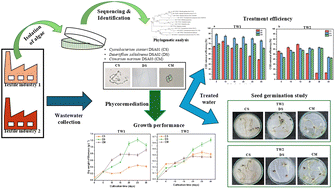
Textile industrial wastewater contains high levels of chemical and nutrient pollutants, posing significant environmental challenges that conventional physicochemical treatments inadequately address, highlighting the need for eco-friendly biological alternatives utilizing native algal isolates. This study investigates the potential of native algal isolates for sustainable wastewater treatment. Algal strains were isolated from textile effluents and identified based on morphological characteristics and molecular sequencing as Cyanobacterium stanieri DSA01 (CS), Desertifilum salkalinema DSA02 (DS), and Ciimarium marinum DSA03 (CM). Three algal isolates were cultivated in 30 day batch experiments using two textile wastewater samples (TW1 and TW2) to evaluate treatment efficacy for chemical oxygen demand (COD) and key nutrients (e.g., nitrate, ammonia and phosphate). The maximum COD removal by DS was 88.49 ± 1.77% on day 5 in TW1 and 63.52 ± 1.27% on day 15 in TW2. DS consistently demonstrated nutrient removal efficiencies exceeding 50% in both TW1 and TW2. Biochemical analysis revealed a significant increase in protein content, indicating efficient nutrient utilization. The treated wastewater enhanced the shoot and root development of Vigna radiata seeds, confirming pollutant reduction and demonstrating potential for industrial reuse, agricultural irrigation, and aquatic ecosystem protection, thereby promoting sustainable wastewater management. This study confirms the applicability of native algal isolates as an effective and sustainable strategy for managing textile wastewater.
 Please wait while we load your content...


