


 PLATFORM UPDATE:


The combined effects of microplastics and tetracycline on reactor performance and the fate of antibiotic resistance genes during the sludge anaerobic digestion
 *a
and
*a
and
Abstract
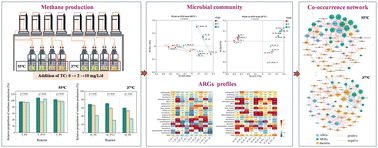
The combined effects of microplastics (MPs) and antibiotics on anaerobic digestion (AD) remain unclear. This study investigated the responses of AD performance, the microbial communities, and antibiotic resistance genes (ARGs) to the co-exposure of individual MP types (PE, PVC, or PS) with tetracycline (TC) in mesophilic and thermophilic sludge reactors. Results indicated that all thermophilic reactors could maintain methane production levels. However, methane production significantly decreased in mesophilic reactors containing MPs, reaching 53.52% to 66.48% of control levels under a TC concentration of 2 mg L−1 d−1 and 30.37% to 41.83% under 10 mg L−1 d−1, potentially due to the suppression of hydrolysis-related bacteria. Metagenomic analysis revealed that thermophilic AD continued to reduce ARGs and mobile genetic elements (MGEs) even when TC and MPs were present together. Conversely, the interaction between MPs and TC appeared to enhance the transfer and potential spread of ARGs within mesophilic AD systems. Notably, six out of nine dominant ARGs significantly increased in the PVC reactor under a TC concentration of 10 mg L−1 d−1, with tetracycline resistance genes being enriched up to 3.76-fold. Network analysis further suggested that horizontal gene transfer (HGT) of ARGs among low-abundance bacteria might be the primary cause of ARG enrichment. These findings highlight that the combined impact of MPs and TC on mesophilic AD warrants greater attention.
 Please wait while we load your content...


