

 Open Access Article
 This Open Access Article is licensed under a
 Creative Commons Attribution 3.0 Unported Licence
Assessment of the long-term user experience of tiger worm toilets using the Sanitation-Related Quality of Life (SanQoL) index
Yogesh J.
Badekar
 *,
Laure
Sioné
and
Michael R.
Templeton
*,
Laure
Sioné
and
Michael R.
Templeton
Department of Civil and Environmental Engineering, Imperial College London, London, UK. E-mail: yogesh-janardhan.badekar21@imperial.ac.uk
First published on 22nd December 2025
Abstract
Tiger worm toilets (TWT) are a relatively new on-site sanitation technology compared to other sanitation types (e.g. pit latrines), with some of the oldest TWTs globally now having been in continual use for only approximately 10 years. TWTs use composting worms to degrade human waste, thereby reducing fill rate and odour, and making latrine emptying safer. However, there is a significant gap in understanding the long-term user experience and maintenance requirements of TWTs. To explore this, 358 users were surveyed, and 380 TWTs were visually inspected in Pune, India. The survey employed the previously established Sanitation-Related Quality of Life (SanQoL) index to quantify TWT users' experiences. The SanQoL index showed a score of 0.94 out of 1 for TWTs, indicating a positive user experience. Additionally, 83% of users reported no need for biodigester emptying for the past decade, confirming the low-maintenance needs of TWTs. In parallel, the World Health Organization (WHO)-designed Sanitation Safety Plan was used to visually inspect and evaluate the construction quality of TWTs, revealing that poor latrine superstructure construction is a key challenge in Pune. Overall, this study, the largest such TWT survey to date, provides a substantial body of evidence needed to boost confidence in the technology and to support its expansion in other suitable settings globally.
Water impactTiger worm toilets (TWT) are an innovative and relatively new on-site sanitation technology. Scaling up TWTs in other settings requires a clear understanding of user perspectives. This study evaluated community surveys and operational challenges of TWTs in India, highlighting positive outcomes and areas for improvement, and providing evidence to guide policymakers and practitioners in expanding sustainable sanitation in low-resource contexts. |
1. Introduction
A tiger worm toilet (TWT) is an on-site sanitation system that utilises composting worms such as Eisenia fetida (the tiger worm) to break down fresh human faeces, converting it into vermicompost. A typical TWT design includes a superstructure with a toilet pan which channels human excreta into a biodigester (Fig. 1), through a pipe or via direct drop, where tiger worms digest the excreta and produce nutrient-rich vermicompost.1 | ||
| Fig. 1 Structural design of TWT, adapted from ref. 1. | ||
Inside the biodigester, tiger worms inhabit a bedding layer of coconut husk or wood chips, which supports worm egg-laying and filters solids. Beneath this, a gravel layer drains the liquid effluent and directs it into a soakaway, preventing waterlogging in the biodigester.
A number of charities and private companies have installed TWTs worldwide in rural and peri-urban areas for the past decade, including in Dire Dawa (Ethiopia), Ghana, Kachin (Myanmar), Monrovia (Liberia), Rwanda, Sierra Leone, and Uganda,2 and in 2020 an international association was established to share good practices in implementing TWTs, the International Worm-Based Sanitation Association (IWBSA).3 In India, the Swachh Bharat Mission (SBM), also known as the Clean India Campaign, has provided subsidies to individuals without toilets to construct their own.4 Under this scheme, Primove Pvt. Ltd., India's official patent holder of TWT technology, collaborated with its sister company, Easol Pvt. Ltd., to oversee the design and construction of TWTs.5 As a result, around 3000 TWTs were installed across rural Pune, Satara, Jalna, and Ahmednagar districts in Maharashtra province, India, from 2014 to 2019.
By rapidly transforming human faeces into vermicompost and carbon dioxide, TWTs dramatically reduce odours, flies, and the latrine fill rate compared to a conventional pit latrine.6 Emptying TWTs is also a much safer process compared to emptying pit latrines, since vermicompost has been shown to have a much lower content of pathogens such as faecal coliforms (98.6% reduction) compared to untreated faecal sludge.6 TWTs are also reported to be cost-effective in the long run since there is a reduced emptying frequency.7 Despite these merits, the long-term user experience and maintenance requirements of TWTs, e.g. after several years of use, remain unexplored and unreported. This study addressed this gap by conducting a user survey of TWTs in Pune, India, between May and July 2024.
A user survey was developed using the same questions used in the Sanitation-Related Quality of Life (SanQoL) index,8 with additional questions to address aspects specific to TWTs. SanQoL describes five core aspects of the enquiry of users: their perceptions of disgust, disease, shame, safety, and privacy. SanQoL is an index that ranges from 0 to 1, where 0 represents “no sanitation capability” (the lowest quality of life), and 1 represents “full sanitation capability” (the highest quality of life). A higher SanQoL index, i.e. closer to 1, should therefore indicate that the five core attributes of SanQoL are adequately addressed, meaning favourable user perceptions and satisfaction with their sanitation facilities.9 The SanQoL index has been used for studying different on-site sanitation systems in five countries to date, namely Ethiopia, Ghana, Malawi, Mozambique, and Zambia.8–12
The SanQoL index was selected because it measures the lived experience and well-being of sanitation users, highlighting both the aspects of sanitation that most directly affect quality of life and areas where improvements are needed. In contrast, indices such as the water and sanitation sustainability index (WASSI)13 and the sanitation sustainability index (SSI)14 focus on system-level dimensions, including financial viability, institutional capacity, and environmental management. SanQoL enables a direct evaluation of user experience by assessing both the acceptability of sanitation facilities and the extent to which the technology is adopted in practice, making it the most suitable framework for examining the long-term user experience of TWTs in this study.
Overall, this study aimed to achieve the following objectives:
1. To determine the long-term (i.e. 5–10 years since TWT installation) user satisfaction and maintenance needs of TWTs.
2. To calculate a SanQoL index value for TWTs.
3. To visually inspect the construction quality and current structural integrity of TWTs.
This study is the largest of its kind to date, offering critical insights into the user experience of TWTs. Through a comprehensive survey, it captures user satisfaction, maintenance practices, and the practical challenges encountered over long-term use. The findings provide valuable evidence to support policymakers and investors in justifying the scaling up of TWT installations in suitable settings worldwide.
2. Methods
2.1 Study setting and survey design
The study country was India. Sanitation practices in India encompass a wide variety of toilet facilities. According to the WHO/UNICEF Joint Monitoring Programme,15 38.79% (554.70 million people) of the population of India use improved or basic pit latrines, 39.21% (560.70 million people) rely on septic tanks, 15.26% (218.22 million people) are connected to centralised sewers, and 6.73% (96.24 million people) still practice open defecation.In this context, TWTs are a relatively recent innovation in sanitation, with installations in India starting in 2014. The user information provided by Primove for approximately 1300 TWTs installed across 40 rural villages in Pune, India, served as the primary data source. This information was validated through cross-checking with local leaders in the Gram Panchayats, the self-governance authorities in each village. The verification process identified 700 TWT households with confirmed addresses, providing reliable information on user locations and enabling household visits for surveys and TWT inspections. Based on this verified list, a route map for village visits was developed, prioritising villages with the highest number of TWTs to maximise survey responses.
Before starting the survey (which ran between May and July 2024), a pilot survey activity was conducted in February 2024 in Bhalgudi village, Pune, India, to assess the clarity of the survey questions to the users and make changes if needed. The questionnaire was given to six users (three males and three females) of varying ages (above 18) with their informed consent and in their native language (Marathi), using local terminology. The responses to the survey, along with subsequent discussions, helped identify which questions were challenging for them to understand.
The survey comprised 32 questions and was organised into three sections (refer to SI A for the survey questions). The first covered demographic details of the TWT users. The second section included the established standard SanQoL questions, used to quantify the SanQoL index of TWTs in this setting, along with questions specific to TWTs. The final section consisted of additional questions to provide contextual understanding during data collection. Qualtrics survey software (Qualtrics International Inc.) was used to collect the survey responses electronically and document the on-site physical inspection of TWTs. The survey was designed to take 8–10 minutes to complete per person.
2.2 Sanitation-Related Quality of Life (SanQoL) framework
The Sanitation-Related Quality of Life (SanQoL) framework8 is used in this study to investigate and quantify user experiences of TWTs. Its five attributes are designed to evaluate sanitation facilities and their impact on users' satisfaction and well-being. The first attribute, ‘disgust’, captures how often users feel repelled or uncomfortable when using the toilet. For instance, directly seeing faeces inside the toilet, an unclean toilet pan or floor, and foul-smelling waste accompanied by flies are triggers of disgust and can cause constant nausea. The ‘disease’ attribute assesses concerns about sanitation facilities' potential to spread illnesses, reflecting both the perceived and actual risk to users' health and peace of mind. The ‘shame’ attribute addresses feelings of embarrassment or loss of dignity associated with using, or being seen using, sanitation facilities. For instance, a user may experience embarrassment if neighbours observe them entering or using a sanitation facility. ‘Safety’ evaluates whether users feel physically safe when using the facility. The safety attribute includes two underlying conditions: accidents or toilet collapses due to poor construction, and any risk posed by physical or sexual violence when using the toilet. Lastly, ‘privacy’ focuses on concerns about being seen or disturbed while using the facility. For example, users may experience concerns about being observed or overheard, compromising their privacy, particularly when the latrine superstructure is inadequately constructed, such as lacking a door or containing gaps or cracks in the walls or door.8,16SanQoL was previously used to assess user satisfaction (Table 1) with container-based sanitation (CBS) during an intervention in Ghana.12 SanQoL has also been applied to assess the user experience of shared pour-flush toilets with septic tanks and pit latrines in Maputo, Mozambique.9 More recently, a SanQoL study11 assigned SanQoL indices to the different classifications of the sanitation ladder (e.g., at least basic, limited, unimproved or open defecation), rather than to specific types of toilets (e.g., pit latrines, CBS, or pour-flush toilets).
| Toilet types | SanQoL index | Citation-study country | Assigned weights |
|---|---|---|---|
| a The WHO/UNICEF Joint Monitoring Programme (JMP) defines the sanitation ladder under Sustainable Development Goal (SDG) 6,15 where “at least basic” refers to improved facilities not shared with other households, such as pour-flush toilets connected to piped sewer systems, septic tanks, or pit latrines with a slab; “limited” refers to improved facilities shared with other households, like pit latrines with a slab but no water seal; “unimproved” includes pit latrines without a slab, hanging latrines, or bucket latrines; “open defecation” is the disposal of human faeces in open spaces like fields, forests, waterways, or with solid waste. | |||
| Container-based sanitation (CBS) | 0.91 | Kumasi, Ghana12 |
Disgust = 0.25
Disease = 0.19 Shame = 0.19 Safety = 0.18 Privacy = 0.19 |
| Shared pour-flush toilets | 0.83 | Maputo, Mozambique9 | |
| Pit latrines | 0.49 | ||
| At least basic sanitationa | 0.70 | Maputo and Dondo, Mozambique11 | |
| Limited sanitationa | 0.60 | ||
| Unimproved sanitationa | 0.45 | ||
| Open defecationa | 0.30 | ||
The present study is the first to use the SanQoL index to assess user experience with TWTs. The attribute weights used in the index were derived from a previous study conducted in Mozambique,11 as it had already demonstrated that these weights are suitable for the Indian context due to their robustness and broad applicability across diverse geographical and social settings.16 The weightings were: disgust (0.25), disease (0.19), shame (0.19), safety (0.18), and privacy (0.19) (see Table 1).
In addition to surveying users, a structured checklist (see SI B for the complete checklist) was developed to visually assess the condition of TWT superstructures, including the door, roof, and other physical components. The checklist was based on the WHO's Sanitation Safety Plan Guidelines.17 Each structural component was categorised as ‘good condition’, ‘needs maintenance’, or ‘needs replacement’, with detailed definitions and illustrative photographs of each category provided in SI C. This data enabled a systematic, categorical assessment of construction quality, allowing identification of common structural deficiencies and their potential impact on user satisfaction. To minimise the risk that structural defects biased users' SanQoL responses, the structural inspection and the user survey were conducted independently, and structural findings were analysed descriptively rather than incorporated into or used to modify SanQoL scoring.
2.3 Data analysis
Data collected via Qualtrics were downloaded as an Excel file and initially checked for completeness and consistency. Responses with missing values for key variables or any duplicate entries were removed from the dataset prior to analysis. Descriptive statistics, including mean, standard deviation (SD), and 95% confidence intervals (CI), were calculated for the demographic characteristics of TWT users, responses to specific questions about TWTs, each SanQoL attribute (disgust, disease, shame, safety, privacy), and the overall SanQoL index. The overall SanQoL index for each respondent was calculated using the formula:9where, Sj is the SanQoL index value; N is the number of attributes (5); xij is the score assigned to each attribute, ranging from 0 to 3; and wi is the weight assigned to each attribute as listed in Table 1. For comparisons between groups (e.g., male vs. female users), the Mann–Whitney U test was applied due to skewed, non-normally distributed SanQoL data, with p-values indicating the statistical significance of any observed differences.

2.4 Ethical approval
The study protocol was approved by the Science, Engineering, and Technology Research Ethics Committee (SETREC) of Imperial College London, United Kingdom, under Protocol No. 7042005 on 26 April 2024. TWT users were given a participant information sheet in the local language (Marathi) explaining the study's purpose. Free and informed consent was obtained from all participants or their legal representatives. Consent was obtained before providing survey questions, with participants informed that participation was voluntary, i.e. offered no direct financial or other benefits, and could be withdrawn at any time. To minimise courtesy bias, participants were explicitly informed that the study was conducted as independent research for Imperial College London and was not directly affiliated with Primove or Easol Pvt. Ltd., the installers of the toilets in Pune, India. Each participant was assigned a unique ID to ensure anonymity, with no identifying information linked to the data. No questions probed into emotional, fearful, or memory-related topics related to TWT usage. Some users struggled to read the questions in their native language, so the questions were read aloud to those participants.3. Results
The survey originally included 598 TWT households; however, full survey responses were obtained from only 358 households, with one respondent per household. This is because some users were absent during the survey period due to work commitments, while others had relocated to other areas or had discontinued using TWTs (further discussion of the reasons for discontinued use is provided below, in section 3.4).Among respondents, 52.5% (n = 188, where n represents the number of respondents) were male, and 47.5% (n = 170) were female. Respondent ages ranged from 21 to 75 years, with a mean age of 44 years (SD = 13). The average number of household members using TWT was 4 (SD = 1.76), with 40% of households reporting more than four TWT users. The duration of TWT use varied between 7 and 10 years, with a mean of 8 years (SD = 0.71).
3.1 TWT SanQoL index value
The mean scores for each TWT SanQoL attribute, with 95% CI, are shown in Fig. 2.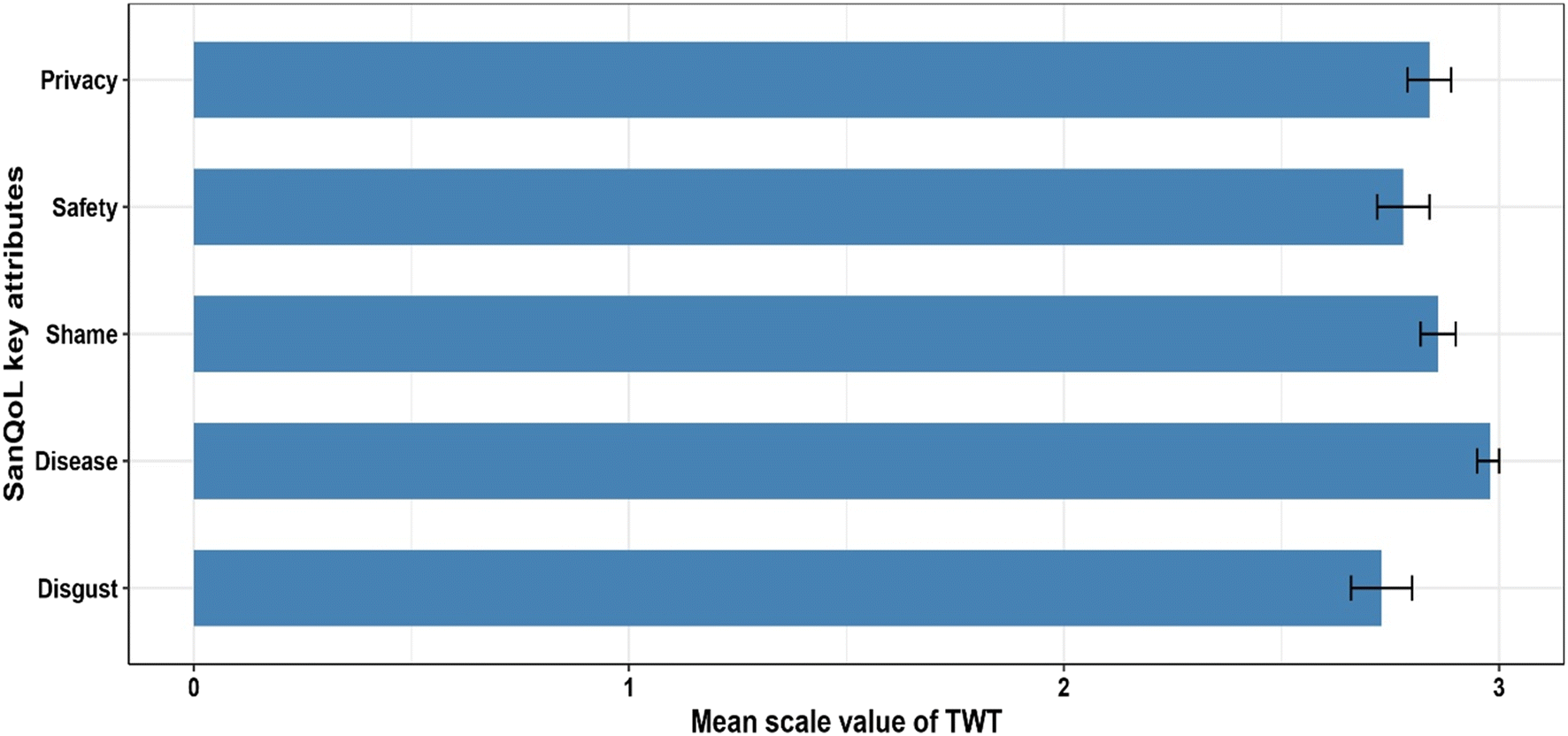 | ||
| Fig. 2 Mean SanQoL attribute scores for TWTs, with 95% confidence intervals. | ||
Mean attribute values on a 0–3 scale, where higher values indicate more positive outcomes, were disgust 2.73 (95% CI 2.66–2.88; SD 0.67), disease 2.97 (95% CI 2.94–3.00; SD 0.27), shame 2.86 (95% CI 2.82–2.90; SD 0.43), safety 2.78 (95% CI 2.72–2.84; SD 0.57), and privacy 2.80 (95% CI 2.74–2.86; SD 0.58). Overall, the SanQoL index for TWTs was 0.94, with a 95% confidence interval of 0.92–0.96.
In itself, the SanQoL index of TWTs (0.94) was higher than the indices for other sanitation ladder categories defined by SDG 6 (Table 1), including open defecation (0.30), unimproved (0.45), limited (0.60), and at least basic sanitation (0.70), highlighting the potential of TWTs to be classified as safely managed sanitation, if safety criteria are also evaluated. A comparison of SanQoL indices can be considered to assess the standing of TWTs relative to other sanitation interventions. Overall, the SanQoL index for TWTs (0.94) compares well with previously published indices for CBS (0.91), shared pour-flush toilets with septic systems (0.83), and pit latrines (0.49). However, these studies were in different contexts, settings, and populations. For instance, TWTs are mostly used in a rural context, whereas other sanitation systems, especially container-based solutions and shared pour-flush toilets, are more commonly used in urban settings, e.g. often due to easier access to water, space constraints, etc.
The study also assessed differences in SanQoL responses between males and females. The mean SanQoL index was 0.95 for males and 0.93 for females (Table 2). The non-parametric Mann–Whitney U test indicated a statistically significant difference (p = 0.04, p < 0.05); however, the numerical difference in the SanQoL index between sexes is only 0.02, which is minimal. For comparison, a CBS study in Ghana12 reported a larger difference of 0.05 but still concluded that both males and females perceived a similar quality of life and user satisfaction.
| Sex | SanQoL attributes | Mean score ± SD | SanQoL index (95% CI) | Assigned weights |
|---|---|---|---|---|
| Female | Disgust | 2.68 ± 0.71 | 0.93 (0.90–0.96) |
Disgust = 0.25
Disease =0.19 Shame = 0.19 Safety = 0.18 Privacy = 0.19 |
| Disease | 2.96 ± 0.32 | |||
| Shame | 2.86 ± 0.43 | |||
| Safety | 2.72 ± 0.62 | |||
| Privacy | 2.73 ± 0.67 | |||
| Male | Disgust | 2.77 ± 0.71 | 0.95 (0.93–0.97) | |
| Disease | 2.98 ± 0.32 | |||
| Shame | 2.86 ± 0.43 | |||
| Safety | 2.83 ± 0.62 | |||
| Privacy | 2.86 ± 0.67 |
3.2 Responses to the questions specific to TWTs
Before having TWTs, 93% of TWT users reported practising open defecation, 3% were using community latrines, and 4% were using their own pit latrines. Since using TWTs, 96% of users reported an improved toilet experience, 3% reported a neutral experience, and 1% reported a worse experience and preferred their previous sanitation practice.Most respondents reported minimal issues regarding odour and flies, both around the toilet and biodigester. Out of 358 users, 154 (43.0%) never noticed a smell, 152 (42.5%) rarely noticed it, 41 (11.5%) noticed it sometimes, and only 11 (3.0%) reported always noticing a smell. Flies were also generally not a major problem: 165 (46.1%) never noticed them, 154 (43.0%) rarely noticed them, 14 (3.9%) noticed them sometimes, and 25 (7.0%) reported always noticing flies. On a scale of 1–10, users expressed a strong willingness to continue use of TWTs, with a mean score of 8.8 (SD = 2.09). Most respondents (86%) rated their willingness in the “definitely yes” category (≥7), while around 10% fell into the “not sure” category (scores 4–6), and only 4% indicated “no use” (scores 1–3).
Regarding long-term maintenance, 83% of users reported not having had to empty the biodigester over periods of up to 10 years, indicating effective decomposition by the tiger worms in the biodigesters. Among the remaining 17% of users who had emptied their biodigesters, only 5% reported challenges associated with the process. The primary difficulties included finding labour to carry out the emptying and managing the disposal of the vermicompost. An additional concern during emptying was the risk of structural failure of the biodigester walls, constructed from fibre-reinforced concrete panels, which it was feared could lead to collapse or breakage. Out of all the users, only one reported collecting and harvesting vermicompost themselves from the biodigester, for gardening purposes.
The final section of the survey was completed by 280 users (78%). Among these, 104 users (37%) reported their neighbours knew about the TWTs, and of these, 8 users (8%) stated that their neighbours had used their TWTs, with the users reporting that nearly all neighbours had positive experiences. This suggests a role of social networks in promoting innovative sanitation technology adoption and acceptance in the community. Approximately 201 users (72%) reported no issues, even with a higher number of users than the TWT was designed for, which supports the robustness and reliability of the facility. Among the remaining 77 users who experienced issues, 51 users (66%) reported that maintaining cleanliness was difficult (e.g., cleaning the toilet pan and removing stains), 14 users (18%) indicated that occasional extra maintenance was required (e.g., water shortages and minor blockages in the toilet pan), 9 users (12%) noted that the need for additional care depended on specific circumstances (e.g., water clogging, especially during rainy days), and 3 users (4%) were unsure. Overall, users rated the ease of daily maintenance as 1.8 (SD = 1.74) on a scale from 1 (very easy) to 10 (very difficult). However, despite this ease of maintenance, 207 users (74%) still expressed concerns about the construction quality of the TWT superstructures.
3.3 Physical inspection of TWTs
The visual inspection of the TWT construction quality and current structural and cleanliness status revealed that while some TWTs required only minor repairs, others needed significant maintenance to various structural components. Strikingly, the respondents did not report issues with the actual TWT technology, but with the components of the toilet that are common across all toilet types, i.e. the superstructure. Based on the criteria and illustrative examples provided in SI C, 33% of the floors were classified as in good condition, 55% required minor maintenance (e.g., crack filling), and 11% required replacement due to significant damage. Similarly, only 18% of toilet pans were in good condition, 55% required minor repairs, and 27% demanded replacement due to major structural issues. The status of the walls and roofs of many TWTs was also not ideal: only 32% of walls were intact, 47% needed maintenance, and 21% required replacement, while roofs showed similar patterns, with 26% in good condition, 48% needing repair, and 26% requiring replacement. Additionally, only 7% of the TWTs had an electric bulb connection for interior lighting. However, ventilation was observed to be adequate in the vast majority of TWTs.Looking to the future, nearly half of the users stated that they would prefer a larger floor space in the superstructure. Meanwhile, 23% suggested a new superstructure building material for greater durability, for example, by constructing TWTs using masonry or brickwork instead of prefabricated panel superstructures. The remaining respondents (17%) expressed a preference for both improvements, larger floor space and more durable construction materials.
3.4 Factors contributing to the discontinuation of use of TWTs
Approximately 35% of users (218 out of 598 TWT included households in total) discontinued using the TWT for various reasons, illustrated in Fig. 3. | ||
| Fig. 3 Percentage of households (out of the 35% of total users who had discontinued using their TWTs) that switched to other forms of sanitation for various reasons. | ||
Of those, some users sought to build a toilet inside their home (whereas all TWTs were outdoor structures), mainly for personal safety reasons, with 24% switching to interior-connected septic tanks. Approximately 18% of TWT discontinued users moved to cities due to personal commitments such as jobs, education, and other reasons, as reported by their neighbours during visits to TWT households. Approximately 15% of discontinued users expressed concerns regarding the failure of the TWT superstructure. Approximately 12% of discontinued users experienced collapses of the superstructure due to strong winds, heavy rainfall, and burrowing animals damaging the structure. Upon local municipal orders, 11% of discontinued users removed their biodigesters and connected their outlet pipes to the municipal sewer system.
Faecal blockage inside the toilet pan affected 6% of discontinued users. The primary cause of clogging observed was suspected to be the improper gradient of the outlet pipe from the pan, since the biodigesters underneath were not full. Water shortages are affecting 3% of discontinued users, leading some individuals to discontinue the use of the TWT and revert to other types of toilet facilities or open defecation.
The ‘other’ category, which accounts for 4% of discontinued users, includes cases where TWTs have been repurposed as bathrooms for showers, storage rooms for agricultural tools, or grain storage facilities. One key factor driving these conversions of TWTs into storage or bathrooms, or the decision not to use them, is the users' reluctance to switch from open defecation to toilet use. These users perceive the TWT space as more useful for living than as a designated toilet. The total installation base cost of a TWT was estimated at Rs 18![[thin space (1/6-em)]](https://www.rsc.org/images/entities/char_2009.gif) 000 (about $202) during the period from 2014 to 2017. Of this, the Government of India was to contribute Rs 12000 (66.7%) under the SBM scheme, the Rotary Foundation (a philanthropic service organisation) Rs 3000 (16.7%), and users the remaining Rs 3000 (16.7%). Among those surveyed, 193 users (54%) paid this partial amount, while 165 users (46%) received the TWT at no cost. Many users may not fully recognise the long-term benefits to their households. Overall, TWTs were discontinued on average 1.58 ± 0.81 years before this survey. This indicates that users had utilised the technology for approximately 6.4 ± 1.1 years before discontinuation, given that the mean age of TWTs was 8 ± 0.71 years.
000 (about $202) during the period from 2014 to 2017. Of this, the Government of India was to contribute Rs 12000 (66.7%) under the SBM scheme, the Rotary Foundation (a philanthropic service organisation) Rs 3000 (16.7%), and users the remaining Rs 3000 (16.7%). Among those surveyed, 193 users (54%) paid this partial amount, while 165 users (46%) received the TWT at no cost. Many users may not fully recognise the long-term benefits to their households. Overall, TWTs were discontinued on average 1.58 ± 0.81 years before this survey. This indicates that users had utilised the technology for approximately 6.4 ± 1.1 years before discontinuation, given that the mean age of TWTs was 8 ± 0.71 years.
4. Discussion
The outcomes of the five SanQoL attributes for TWTs, disgust, disease, shame, safety, and privacy, demonstrate generally a favourable long-term user experience.Firstly, most TWT users used the facility without concern for disease, which may be linked to the perception of fewer flies and the reduced odour inside the toilet compared to alternative toilet types such as pit latrines.
Secondly, 82% of TWT users use the facilities without feeling ‘disgusted’, and 97% use the facilities without feeling shame. It was initially thought that some individuals might find keeping tiger worms as part of their toilet facilities disgusting. However, none of the users reported feeling disgusted or ashamed of having a biodigester with worms. Instead, users who reported feeling disgusted cited three main reasons: the sight and foul odour of faeces inside the toilet during clogging; water leakage through the roof, making the toilet uncomfortable to use during the rainy season; and the failure of superstructures, such as the toilet pan sinking into the flooring because of burrowing animals creating holes around the toilet pan and biodigesters. It should be noted that these aspects could equally apply to other types of on-site sanitation facilities, such as conventional pit latrines, rather than being specific to TWTs.
TWTs scored high on the SanQoL index for safety and privacy, with 94% of users reporting that their privacy is well-protected and that they feel safe using the biodigester and superstructure. However, a small portion of users were affected by issues related to the poor quality of the plastic doors, which were often damaged by heavy winds and rain. Approximately 6% of TWTs lacked doors, and 18% had non-functional locks, forcing some users to rely on alternatives such as cloth curtains or cardboard.
In some cases, discontinuation of TWTs (among 218 households) was imposed by external factors rather than resulting from user choice. In Jejuri, a city in Pune, approximately 11% of users were instructed to remove their TWT biodigesters and connect their outlet pipes to the municipal sewer system. This decision was made due to the city's dense population and the presence of a temple that sees the city fill with people, making it challenging to allocate sufficient space for users to keep their biodigesters. Some TWT users (4%) were affected by land acquisition, where their land was forcibly acquired by government-contracted manufacturing companies. These users received compensation to rebuild their houses and install indoor toilets. Additionally, 2% of users were impacted by road expansion projects, which led to the removal of their TWT systems, as they were situated on government-owned land designated for road construction.
Approximately 273 users (76%) reported that the biodigester component of the TWT was not associated with any problems and had not required additional attention (e.g., emptying), even after 7–10 years of use. This is consistent with research showing significantly lower filling rates of TWT biodigesters compared to estimated fill rates of traditional pit latrines of similar size and usage, as observed in India.18 Among the 85 users (24%) who reported issues, the most commonly mentioned problem was the presence of burrowing animals (e.g., rats). No other major problems were consistently identified. However, it is possible that this is not a problem specific to TWTs, as digging by burrowers was also reported and observed around the superstructures of other types of toilets in the study villages (e.g. septic tanks and pit latrines).
Overall, users expressed satisfaction with the TWT technology, noting that it met their needs. They embraced the biodigester component positively, while primary challenges related to the superstructure's design and construction quality. Similar challenges related to construction materials and quality were observed in TWTs in Sierra Leone,1 highlighting that such issues are common across different contexts. Comparable construction and design flaws, such as an improperly fitted interface between the lid and the biodigester, were also observed during Oxfam trials of TWTs in Ethiopia, Liberia, and Myanmar.2 In general, these construction issues encountered by users are related primarily to the superstructure, which is often common to the construction of other types of toilet facilities, such as conventional or ventilated pit latrines,19 and not the biodigester containing the worms, which is the specific innovative feature of the TWT. These construction challenges are, therefore, not unique to TWTs, but care should nonetheless be taken to address them when designing TWTs. Otherwise, the TWT technology will still be reported to be associated with a negative user experience, even if the worms function as intended in the biodigester.
Moreover, this study was conducted nearly a decade after the installation of TWTs, during which some users are likely to have improved their economic status. As such, some TWT users are now expecting a superior-quality superstructure. For example, as reported earlier, some users expect toilet facilities with larger floor areas, as the current compact design is undesirable. There is also a strong preference for the use of more robust construction materials, with many advocating for more expensive masonry construction over using ready-made panels.
The introduction of TWTs represented a major sanitation upgrade for many households in this study. Most users had previously practised open defecation, and the provision of TWTs therefore moved these households into the “basic sanitation” category under the SDG 6 sanitation ladder. Now, nearly a decade later, as some households become wealthier or prioritise greater privacy and convenience, a proportion are choosing to transition further to indoor septic tank systems. This reflects a natural progression up the sanitation ladder as economic circumstances and aspirations evolve, rather than dissatisfaction with the TWT technology itself.
Those who transitioned to septic tank systems found them affordable and also chose indoor sanitation with superior construction materials. The primary motivation for this shift was to enhance safety and privacy, particularly for women. One user stated, “The TWT is working well, but building an indoor toilet will provide us security, safety, and privacy, especially for my daughter and wife. That's why we are planning to switch to a septic tank”. Nonetheless, TWT user satisfaction for women was nearly equal to that of men. A few women, however, reported issues with the superstructure, such as holes in the door, cracks around the toilet, and deteriorated panel joints between the wall and roof, which may compromise safety and privacy while using the facilities. Such switching to alternative sanitation facilities often occurs when users perceive that their current toilets fail to meet essential needs. When safety, privacy, or dignity are compromised, people may abandon the existing facility to avoid harassment, exposure to crime, or health risks.16 In Ethiopia, inadequate toilet facilities, including limited privacy and unsafe emptying practices, led users to seek other options that better protect their physical security and personal dignity.20
A difference of this study compared to previous SanQoL studies was that this study was designed to evaluate the long-term user experiences over several years, rather than asking users for their experience over the previous 30 days. This was felt to be a necessary amendment to the standard SanQoL methodology in this case, as some of the key benefits of TWTs accrue over the long run rather than the short run, e.g. reduced emptying frequency.1,18
Based on this study, several recommendations are proposed for future studies:
1. Awareness of the role of the tiger worms in the functionality of this technology was limited, indicating the need for further efforts to enhance user understanding of the benefits of TWTs and hence the desirability of the technology.
2. During the survey, it was observed that users prioritise safety and privacy by opting for indoor toilets (e.g. septic tank systems), especially as they have become wealthier over time. Further research could therefore explore the feasibility of installing TWTs indoors, where appropriate.
3. While the survey did not ask about toilet cleaning agents, further research is recommended to assess various cleaning agent options for their suitability for use in TWTs, in terms of ensuring that they are non-hazardous to the worms in the biodigester.
4. A similar user experience survey should be performed in other settings where TWTs have been widely implemented, such as Ethiopia, Ghana, Rwanda, and Sierra Leone, to ascertain if TWT user satisfaction elsewhere is similar to the findings of this study in India.
5. Conclusions
This study is the first rigorous, large-scale evaluation of long-term user satisfaction with TWTs. The SanQoL index of TWT is 0.94, which shows high user satisfaction. The survey findings confirm that TWTs have generally low maintenance requirements (i.e. infrequent latrine emptying) and established that the biodigesters of the TWTs remained in good functional order even up to 10 years post-installation. However, in some cases, poor construction of the latrine superstructure continues to be a challenge. Though this is not a challenge that is specific to TWTs, nonetheless it does ultimately impact TWT usage and user satisfaction. Therefore, there should be greater emphasis placed on adopting better initial latrine construction practices as an essential component of designing and constructing future TWTs. However, the TWT would appear to be a sustainable sanitation option if properly implemented. Overall, this study provides strong evidence to support new installations of TWTs and/or scaling-up of TWT numbers in other appropriate locations globally.Conflicts of interest
There are no conflicts to declare.Data availability
Data collected in this study consist of survey responses from human participants who are tiger worm toilet users in Pune, India. To maintain confidentiality and in accordance with the ethical approval and participant consent obtained from Imperial College London (Ref No. 7042005), the data cannot be made publicly available. However, anonymised data may be shared on reasonable request from the corresponding author, subject to ethical requirements.Supplementary information (SI): the SI file includes Tiger Worm Toilet (TWT) user survey questionnaire (Supplementary A), the physical inspection checklist for TWTs (Supplementary B), and images defining structural components (Supplementary C). See DOI: https://doi.org/10.1039/d5ew00908a.
Acknowledgements
The authors thank all the Tiger Worm Toilet users in Pune, India, who participated in the study. The authors extend their gratitude to Ms Eppie Nguyen-Xuan for her support in visually inspecting TWTs during the survey. We are grateful to Primove Pvt. Ltd. and Easol Pvt. Ltd., Pune, for providing valuable information on their TWT installation locations and designs. This project was supported by the Royal Academy of Engineering under the Research Chairs and Senior Research Fellowships Programme.References
- L. Sioné, A. Bastable, A. Ampilan and M. R. Templeton, Lessons learned from a Tiger Worm Toilet implementation project in Sierra Leone, J. Water, Sanit. Hyg. Dev., 2023, 13(8), 604–609, DOI:10.2166/washdev.2023.134.
- C. Furlong, J. Lamb and A. Bastable, Learning from Oxfam's Tiger Worm Toilets projects. 40th WEDC International Conference: Local Action with International Cooperation to Improve and Sustain Water, Sanitation, and Hygiene Services, Loughborough, UK, 2017, Available from: http://blogs.lshtm.ac.uk/sanitationventures/.
- International Worm-Based Sanitation Association (IWBSA) viewed 25 November, 2025, https://www.iwbsa.org.
- S. L. Singh, N. Kunwar and A. Sharma, Impact of Swachh Bharat Abhiyan in Indian society, Int. J. Home Sci., 2018, 4, 215 Search PubMed , Available from: https://www.homesciencejournal.com/archives/2018/vol4issue1/PartD/4-1-6-743.pdf.
- C. Furlong, W. T. Gibson, M. R. Templeton, M. Taillade, F. Kassam and G. Crabb, et al., The development of an onsite sanitation system based on vermifiltration: The ‘Tiger Toilet’, J. Water, Sanit. Hyg. Dev., 2015, 5(4), 608–613, DOI:10.2166/washdev.2015.167.
- C. Furlong, W. T. Gibson, A. Oak, G. Thakar, M. Kodgire and R. Patankar, Technical and user evaluation of a novel worm-based, on-site sanitation system in rural India, Waterlines, 2016, 35(2), 148–162, DOI:10.3362/1756-3488.2016.013.
- L. Sioné, W. Gibson, P. Beckett, A. Oak, R. Sathre and C. Furlong, et al., Taking Tiger Worm Toilets to scale: opportunities and challenges, Front. Environ. Sci., 2023, 11 DOI:10.3389/fenvs.2023.1278087 , Available from: https://www.frontiersin.org/journals/environmental-science/articles/10.3389/fenvs.2023.1278087/full.
- I. Ross, O. Cumming, R. Dreibelbis, Z. Adriano, R. Nala and G. Greco, How does sanitation influence people's quality of life? Qualitative research in low-income areas of Maputo, Mozambique, Social Science Medicine, 2021, 272 DOI:10.1016/j.socscimed.2021.113709 , Available from: https://www.sciencedirect.com/science/article/pii/S0277953621000411?via%3Dihub.
- I. Ross, G. Greco, C. Opondo, Z. Adriano, R. Nala and J. Brown, et al., Measuring and valuing broader impacts in public health: Development of a sanitation-related quality of life instrument in Maputo, Mozambique, Health Econ., 2022, 31(3), 466–480, DOI:10.1002/hec.4462.
- F. Akter, N. Banze, O. Cumming, R. Dreibelbis, P. Katana and C. Manhiça, et al., The Sanitation-related Quality of Life index (SanQoL-5)-validity and reliability in rural and urban settings in Ethiopia, Malawi, Mozambique, and Zambia, 2024, DOI:10.21203/rs.3.rs-3887658/v1.
- P. V. Katana, N. Banze, C. Manhiça, C. Cubai, L. Viera and E. Fulai, et al., Valuing an Index of Sanitation-Related Quality of Life in Urban Mozambique: A Discrete Choice Experiment, Value Health Reg. Issues, 2025, 47 DOI:10.1016/j.vhri.2025.101087 , Available from: https://www.valuehealthregionalissues.com/action/showPdf?pii=S2212-1099%2825%2900012-3.
- J. B. Tidwell, K. B. Nyarko, I. Ross, B. Dwumfour-Asare and P. Scott, Evaluation of user experiences for the Clean Team Ghana container-based sanitation service in Kumasi, Ghana, J. Water, Sanit. Hyg. Dev., 2022, 12(3), 336–346, DOI:10.2166/washdev.2022.013.
- M. A. Iribarnegaray, M. L. Gatto D'Andrea, M. S. Rodriguez-Alvarez, M. E. Hernández, C. Brannstrom and L. Seghezzo, From indicators to policies: Open sustainability assessment in the water and sanitation sector, Sustainability, 2015, 7(11), 14537–14557, DOI:10.3390/su71114537 , Available from: https://www.mdpi.com/2071-1050/7/11/14537#Materials_and_Methods.
- S. Hashemi, Sanitation sustainability index: A pilot approach to develop a community-based indicator for evaluating sustainability of sanitation systems, Sustainability, 2020, 12(17) DOI:10.3390/SU12176937 , Available from: https://www.mdpi.com/2071-1050/12/17/6937.
- WHO/UNICEF Joint Monitoring Programme (JMP). Progress on household drinking water, sanitation and hygiene 2000–2024: special focus on inequalities, August, 2025, https://washdata.org/reports/jmp-2025-wash-households.
- F. Akter, N. Banze, I. Capitine, K. Chidziwisano, J. Chipungu and C. Cubai, et al., Validity and reliability of the Sanitation-related Quality of Life index (SanQoL-5) in six countries, Nat. Water, 2025, 3(5), 571–579, DOI:10.1038/s44221-025-00434-7.
- World Health Organization, Sanitation safety planning: manual for safe use and disposal of wastewater, greywater and excreta, WHO, Geneva, 2015, https://iris.who.int/bitstream/handle/10665/171753/9789241549240_eng.pdf.
- E. Hylton, L. Noad, M. R. Templeton and M. N. Sule, The rate of vermi-compost accumulation within ‘Tiger Toilets’ in India, Environ. Technol., 2022, 1–10, DOI:10.1080/09593330.2020.1789750.
- P. A. Obeng, E. A. Donkor, E. Awere, P. A. Obeng, S. Oduro-Kwarteng and E. Awuah, Ventilated improved pit latrine: a theoretical evaluation of conventional design guidelines, user adaptations and prospects for improvement, J. Ghana Inst. Eng., 2023, 23(1), 50–61, DOI:10.56049/jghie.v23i1.48.
- D. Adugna, Challenges of sanitation in developing countries: evidenced from a study of fourteen towns, Ethiopia, Heliyon, 2023, 9(1), e12932, DOI:10.1016/j.heliyon.2023.e12932.
| This journal is © The Royal Society of Chemistry 2026 |