

 Open Access Article
 This Open Access Article is licensed under a
 Creative Commons Attribution 3.0 Unported Licence
The pollution load of combined sewer overflows and risks to England's waterbodies: relating event duration monitoring data to discharge consents from wastewater treatment works
Theodoros
Giakoumis
 *a and
Nikolaos
Voulvoulis
*b
*a and
Nikolaos
Voulvoulis
*b
aCentre for Pollution Research & Policy, Civil and Environmental Engineering, Brunel University London, Kingston Lane, Uxbridge UB8 3PH, UK. E-mail: theodoros.giakoumis@brunel.ac.uk
bCentre for Environmental Policy, Imperial College London, London SW7 2AZ, UK. E-mail: n.voulvoulis@imperial.ac.uk
First published on 4th March 2026
Abstract
The increasing frequency of combined sewer overflows (CSOs) has heightened public concern, triggered government action, and driven water authorities worldwide to commit to major infrastructure upgrades. In England, the installation of event duration monitors (EDMs) has revealed how often and for how long spills occur annually, discharging untreated or diluted sewage to the receiving environment. However, overflow frequency and duration are poor proxies for pollution loads or ecological risk. This study provides the first national estimation of pollution loads from individual CSOs and the risks they pose to receiving waterbodies, drawing on permitted effluent limits from connected wastewater treatment works (WWTWs) and receiving waterbody characteristics. A source–pathway–receptor framework is used to classify risk across England's wastewater systems in relation to CSO discharges and their impacts. The findings challenge the Environment Agency's position that CSOs are not a primary driver of waterbody status failure, indicating their ecological impacts may be underestimated. For 2023, estimated aggregated CSO loads frequently surpassed those from the effluents of their WWTWs, with affected waterbodies receiving loads from CSOs four times higher for BOD and double for suspended solids. While nutrient loads exhibit lower relative contributions, the presence of wastewater systems where CSO loads equal or exceed treated effluent loads demonstrates that nutrient management strategies focusing solely on WWTWs risk overlooking a critical source. The study demonstrates how a systems approach integrating all available data, can strengthen evidence-based policy making, and support water companies in prioritising investments that can deliver measurable environmental improvements.
Water impactThis is the first pollution load assessment of CSO discharges in England (2023) and a risk classification of its wastewater systems in relation to these. Annual overflow loads for BOD and suspended solids are nearly double those from WWTWs, with 44.7% of the systems at high/very high risk. |
1. Introduction
Combined sewer systems (CSSs) were introduced in mid-19th century to dry out streets by collecting rainwater runoff and wastewater (i.e., domestic, commercial and industrial) in the same pipe to convey to points of discharge, generally into adjacent waterbodies.1 At the beginning of the 20th century, CSS discharge points were redirected to wastewater treatment works (WWTWs), to clean the wastewater before discharge to rivers and streams.2,3 Out of economic necessity, WWTWs had limited hydraulic and treatment capacity, and were generally designed to accommodate diurnal peak sanitary sewage flows and loads, plus an additional hydraulic load resulting from wet weather sources.4 Normally, this meant that they had capacity to give full treatment to three times the dry weather flow (DWF),5–7 or six times the DWF in the case of small-scale WWTWs to be able to accommodate fluctuations in wastewater and stormwater inflows.8,9 DWF is the average daily flow to a works during a period without rain.10 During extreme wet weather events, when the combined flow in CSSs could exceed the treatment and hydraulic capacity of the works, part of the flow was diverted to receiving waterbodies through direct discharge points, called combined sewer overflows (CSOs).4Most old cities in Western Europe and North America are served by such infrastructure, which in many places still includes pipes from the 1800s that played a key role in improving the environment, but is now ageing and is in serious need of replacement or upgrading. Most of these cities have experienced population growth and wastewater system expansion at rates that have not been matched by water infrastructure growth, and as a result, most WWTWs are now treating a significantly higher volume of flow than they were designed and built to accept.11,12 Consequently, CSOs designed to operate intermittently and only in response to heavy rainfall events, now operate much more frequently and even under normal or no rainfall, discharging diluted or raw untreated sewage into waterbodies.13 On top of this, the urbanisation observed in recent years has resulted in increased impervious surfaces, known as urban creep, increasing the volume of overall runoff during rainfall. Indeed, CSO spills have become a high-profile issue in England, drawing attention due to both their increased frequency and long durations.14,15 While historically the monitoring of CSOs was minimal, following a government request to install event duration monitoring (EDM), water and sewerage companies (WaSCos) concluded a programme to install monitors on the vast majority of CSOs at the end of 2020, with the remaining installed by 2023.16 In fact, as of 1 January 2025, WaSCs in England are legally required to publish near real-time data on the frequency and duration of all storm overflow discharges.17
EDM data from 2021, showed 78% of all CSOs discharging to be connected to about 79% of large WWTWs with hydraulic treatment capacity less than three times the DWF.13 The majority of these CSOs were also located at the inlet and storm tanks of WWTWs where the pollution load is much greater.13 In 2024, total CSO spill duration by English WaSCos reached a record 3.614 million hours, a slight increase from the 3.606 million hours recorded in 2023, when the duration of spills had more than doubled compared to the 1.75 million hours in 2022, an increase of 105%.18
Municipal wastewater contains microbial pathogens, high concentrations of suspended solids, nutrients, microplastics, and toxic chemicals including persistent organic pollutants, heavy metals and other contaminants from industrial and commercial activities as well as from urban runoff.19–25 CSOs can therefore be a significant source of pollution, often discharging a mixture of untreated human waste, industrial waste, and polluted storm runoff directly into rivers and coastal waters when they operate.26 Consequences range from visual or aesthetic impacts,6 to losses from shellfish harvesting,27 pollution of drinking water sources28,29 and health hazards from the recreational use of the receiving waterbodies.30–32 The pollutant load of CSO discharges varies from community to community depending on the relative amounts of domestic, commercial, and industrial wastewater components. Their impact depends also on local conditions including climate, rainfall and the size and overall state of the receiving water body, as well as the frequency and volume of CSO discharges.
CSO spills can lead to the deterioration of the ecological and chemical status of receiving waterbodies,33–35 which historically was the only way potential impacts from their discharges were assessed, as reasons for waterbodies not achieving good status (RNAG) and reasons for deterioration (RFD), based on data collected by the Environment Agency on the source, activity and sector involved in causing an element to be at less than good status during water framework directive (WFD) waterbody classifications. In fact, according to the Environment Agency,36 only 448 waterbodies in England had reasons attributed to the presence of CSOs (amongst other intermittent discharges), corresponding to 9.3% of all waterbodies that failed to meet good status. This was probably down to their occurrences assumed as minimal due to “their intermittent nature” (‘exceptional circumstances’), before data on the frequency and durations of these discharges became available with the introduction of EDM.
Still, looking at the duration and frequency of discharges from individual CSOs alone provides limited insight to their ecological impacts.37 In fact operational and structural interventions to reduce CSO discharges are usually planned based on long-term simulations using rainfall-runoff models, that normally do not explicitly consider the pollution load of the discharges and the sensitivity of the receiving waters, increasingly evident as more data becomes available from the monitoring of CSOs.26
To address these challenges, this study is the first time the pollution loads of individual CSOs are estimated and the risks they pose to receiving waterbodies evaluated. Starting with an extensive investigation of the 2023 EDM data, considering the type and location of CSOs in each system, the waterbodies they discharge into, the sewerage networks they are connected to, and the permitted effluent limits for determinands discharged by their WWTWs, individual CSO pollution loads are estimated for up to 11 determinands. Then, calculating the ratio of the total annual load of all the CSOs per system discharging in each waterbody to the combined load from all CSOs and WWTWs discharging in the same waterbody, the relative contribution of each system to the waterbodies they discharge into is quantified. Considering also the ratio of the annual aggregated load of all CSOs per system to their WWTWs effluent load, the hazard element of each system per water body is characterised. Combined with an element capturing the severity of potential consequences of the discharges, considering key characteristics of each water body, a source–pathway–receptor model allows for classifying the risk of wastewater systems in the country in relation to their CSO discharges in a given year (2023). Operationalised as a risk-based screening tool, this approach provides a transparent basis for WaSCos to prioritise investment for reducing the risks posed by CSO discharges.
2. Methodology
2.1. Conceptual model and system understanding
The source–pathway–receptor (S–P–R) model offers a useful tool for understanding how environmental pollution from CSOs takes place and can impact receiving water bodies. It provides a structured framework for assessing environmental risk by determining pollution sources, the pathways through which contaminants spread, and can impact the receiving water bodies and their users (Fig. 1). It is widely used for risk assessments in areas with limited data and makes clear that for a pollutant to have an impact on an identified receptor a complete S–P–R chain is required.38 Moreover, a major advantage of the S–P–R model is its simplicity, flexibility and ability to identify relations in complex systems.39 It also offers a useful framework for supporting the development of mitigation measures for reducing the risks associated with the operation of CSOs. | ||
| Fig. 1 Conceptual model for a combined sewer system and key variables related to source pathway and receptor linkages for evaluating risks related to combined sewer overflow (CSO) discharges. | ||
2.2. Understanding the frequency, duration and source of CSO discharges
EDM data for 2023 were obtained from the Environment Agency for all nine WaSCos operating in England.18 These data provided annual aggregated spill durations in hours (recorded across several incidents) for all monitored CSOs. Out of the 14![[thin space (1/6-em)]](https://www.rsc.org/images/entities/char_2009.gif) 403 CSOs listed in EDM 2023, 13911 had spill duration data, and were included in our analysis (96.6% of all CSOs) (Table S1). Following the methodology described in Giakoumis and Voulvoulis (2023),13 these CSOs were examined in relation to their location and type (storm tanks at WWTWs, inlets at WWTWs, sewer network, and pumping stations), as well as linked to their CSSs based on the location and permit information of their WWTWs. Out of those CSOs, 13791 (120 less, due to data issues) were connected to 2951 CSSs. The annual spill duration of each CSS (hereafter “spill duration per system”) was calculated based on the maximum spill duration recorded among all CSOs in that system, excluding those located at pumping stations.13 CSS were then classified into six categories according to their total annual spill duration: no spill; =/<1 day; 1 day–1 week; 1 week–1 month; 1–6 months; and >6 months.
403 CSOs listed in EDM 2023, 13911 had spill duration data, and were included in our analysis (96.6% of all CSOs) (Table S1). Following the methodology described in Giakoumis and Voulvoulis (2023),13 these CSOs were examined in relation to their location and type (storm tanks at WWTWs, inlets at WWTWs, sewer network, and pumping stations), as well as linked to their CSSs based on the location and permit information of their WWTWs. Out of those CSOs, 13791 (120 less, due to data issues) were connected to 2951 CSSs. The annual spill duration of each CSS (hereafter “spill duration per system”) was calculated based on the maximum spill duration recorded among all CSOs in that system, excluding those located at pumping stations.13 CSS were then classified into six categories according to their total annual spill duration: no spill; =/<1 day; 1 day–1 week; 1 week–1 month; 1–6 months; and >6 months.
The ratio of DWF to FFT per system sourced from the Consented Discharges to Controlled Waters with Conditions data available in ref. 38 and 42, supplemented by CSO weir settings where necessary, was used as the indicator for the systems hydraulic capacity. Its role as a driver of CSO spills was investigated separately for large and small CSSs in line with Giakoumis and Voulvoulis.13 Large systems (with PE more than 2000) were classified as under-capacity if their FFT was lower than three times their DWF, and small systems (with PE less than 2000), if their FFT was lower than six times their DWF.
2.3. Calculating the pollution load of individual CSOs
The annual pollutant load of each CSO from municipal wastewater sources was calculated for each of 11 determinands typically specified at their WWTW's discharge consents. These included conventional indicators of organic and nutrient pollution – biochemical oxygen demand (BOD), suspended solids, ammoniacal nitrogen, and total phosphorus – as well as metals regulated under environmental quality standards including cadmium, chromium, copper, lead, mercury, nickel, and zinc. BOD values represent the total annual mass of biodegradable organic material discharged and provide an indication of the potential oxygen demand exerted on receiving water bodies. Effluent consent concentrations for these determinands for each WWTWs (Table S2) were obtained from the Environment Agency42 and used to back-calculate their influent concentrations by applying determinand-specific removal efficiencies consistent with the treatment processes at each works (Table 1). The type of treatment at each WWTWs (based on the most advance process employed) was also sourced from the Environment Agency;42 while typical removal rates for each type of treatment were sourced from the United States Environmental Protection Agency.43 For ammoniacal nitrogen, WWTWs providing advanced treatment44 were assumed to achieve an 80% removal rate, in line with updated national estimates. For WWTWs with treatment type listed as “unspecified” or “NA”, it was assumed that no removal was achieved, consistent with categories such as “none”, “screening” and “maceration”, therefore the pollution load from CSOs linked to these WWTWs could be underestimated. These were used to calculate the pollution load of untreated wastewater over a year (influent load) that was then distributed across the individual CSOs in each CSS according to their relative annual spill durations, with the WWTWs also receiving part of the load during CSO operations. The pollution load of untreated wastewater per determinand was estimated by multiplying the back-calculated influent concentration of each determinand by the DWF of the WWTWs, which is the permit-defined, rainfall-independent design flow representative of household and trade sources. This approach likely underestimates CSO loads for storm-responsive determinands (e.g., suspended solids, some metals), but offers a consistent, permit-based baseline for the pollution load of CSOs from municipal wastewater sources on an annual basis for national comparisons.| Treatment type | WWTWs (n) | BOD | Cadmium | Chromium | Copper | Lead | Mercury | Nickel | Ammoniacal nitrogen | Suspended solids | Total phosphorus | Zinc |
|---|---|---|---|---|---|---|---|---|---|---|---|---|
| Activated carbon | 1 | 99% | 25% | 99% | ||||||||
| Activated sludge | 137 | 93% | 59% | 64% | 62% | 65% | 53% | 39% | 25%, 80% | 92% | 2% | 42% |
| Biological filtration | 1360 | 93% | 59% | 64% | 62% | 65% | 53% | 39% | 25%, 80% | 92% | 2% | 42% |
| Chemical | 16 | 99% | 62% | 25%, 80% | 91% | 80% | 42% | |||||
| Chemical & biological | 24 | 99% | 59% | 62% | 25% | 91% | 80% | |||||
| Chemical – phosphate stripping | 505 | 99% | 59% | 64% | 62% | 65% | 39% | 25%, 80% | 91% | 80% | 42% | |
| High-rate biological | 11 | 93% | 64% | 62% | 65% | 39% | 25% | 92% | 42% | |||
| Iron chemical dosing for phosphate removal | 2 | 99% | 25% | 91% | 80% | |||||||
| Lagoon settlement | 10 | 93% | 62% | 25% | 92% | 2% | ||||||
| Land irrigation | 7 | 98% | 25% | 91% | ||||||||
| Membrane filtration | 5 | 99% | 92% | 96% | ||||||||
| Oxidation ditch | 23 | 98% | 62% | 80% | 91% | 94% | ||||||
| Package treatment plant | 79 | 93% | 25% | 92% | 2% | |||||||
| Reedbed | 13 | 99% | 80% | 25%, 85% | 96% | 72% | ||||||
| Sand filtration | 22 | 99% | 25% | 96% | 96% | |||||||
| Tertiary biological | 44 | 97% | 80% | 92% | 96% | 98% | 72% | |||||
| UV disinfection | 125 | 93% | 59% | 62% | 25%, 80% | 92% | 2% | 42% |
The average daily influent pollution load (mg per day) per determinand i at the inlet of the WWTWsj was calculated as:

 is the permitted concentration in the effluent for determinand i at WWTWsj (mg l−1), and
  is the typical percentage reduction of determinand i during treatment, based on the type of treatment at WWTWsj (Table 1). The factor 1000 converts cubic metres to litres.
This allows for estimating the annual pollution load of each CSO per determinand (mg) based on:

 (mg per day) is defined above, EDMCSOk is the annual spill duration of CSOk (hours per year),
  is the aggregated annual spill duration of all CSOs of the CSS, n is the number of CSOs per CSS, and EDMCSS is the annual spill duration of the CSS (h per year), defined as the maximum annual spill duration among all CSOs in the system.
The annual effluent pollution load (mg) per determinand i discharged by WWTWsj was calculated as:

 is the permitted concentration in the effluent for determinand i at WWTWsj (mg l−1), factor 1000 converts cubic metres to litres, factor 24 converts days to hours, EDMCSS is the annual spill duration of the CSS (h per year), and
  is the aggregated annual spill duration of all n CSOs in the CSS.
To evaluate the significance of the pollution load of CSO discharges per system, the ratio of the annual aggregated CSO loads per system to the annual load from their WWTWs effluent was calculated per determinand as follows for i in a given CSSj:

 is the aggregated annual pollutant load for determinand i from all m CSOs in a CSSj, and
  is the annual pollutant load of the system's WWTWsj for the same determinand i.
Annual aggregated loads per determinand were calculated for each waterbody receiving discharges from CSOs by adding the pollution loads from the CSOs and WWTWs discharging in each one. The total load for each waterbody (WBz) per determinand (DETEi) was estimated separately for CSOs and WWTWs discharges, as follows:

where,

 is the aggregated annual input of determinand i from all m CSOs discharging into waterbody WBz, and
  is the aggregated annual input of determinand i from all n WWTWs discharging into WBz.
The relative contribution of each CSO to the total combined pollution load from all CSOs and WWTWs per determinand i in a given waterbody z was calculated as:

2.4. Risk characterisation of CSSs
The S–P–R model developed in section 2.1, was operationalised as a risk-screening tool for CSSs in relation to their CSO discharges to waterbodies. Two key elements were considered: the likelihood (or probability) of their CSOs discharges (Hazard) and the consequence (or severity) of their CSOs discharges to their receiving waterbodies as receptors (Table 2).| Elements | Components | Variables |
|---|---|---|
| Hazard (CSS driven probability per receiving water body) | H1: ratio of CSS's aggregated CSO loads to the combined load from all CSOs and WWTWs discharging per each waterbody they discharge into | BOD, cadmium, chromium, copper, lead, mercury, nickel, ammoniacal nitrogen, suspended solids, total phosphorus, zinc |
| H2: ratio of CSS's aggregated CSO loads to its WWTW's effluent load in a year | BOD, cadmium, chromium, copper, lead, mercury, nickel, ammoniacal nitrogen, suspended solids, total phosphorus, zinc | |
| Consequence (receiving water body/ies driven magnitude of impact) | C1: receiving waterbody/ies sensitivity & value CSS's CSOs discharge into | Nitrate vulnerable zones |
| Eutrophic sensitive areas | ||
| Bathing water directive | ||
| Shellfish water directive | ||
| Drinking water protected area/safeguard zones | ||
| Ramsar site | ||
| Special area of conservation | ||
| Special protection area | ||
| C2: condition of receiving waterbody/ies CSS's CSOs discharge into | Ecological status of receiving waterbody |
where c(CSSj, WBz) is the set of CSOs which are part of CSSj that discharge at WBz and

 calculated as detailed in section 2.3.
Each numeric ratio of CSS per waterbody its CSOs discharged into for each of the 11 determinants was then mapped to a five-level hazard class using fixed bands: very low [0–0.20], Low (0.20–0.40], moderate (0.40–0.60], high (0.60–0.80], very high (0.80–1]. For the second component of the hazard element classification (H2), the ratio of the CSS's aggregated annual CSOs loads to its WWTWs annual effluent load per determinant  was calculated as detailed in section 2.3. For each CSS, these ratios were then mapped to a five-level hazard class using fixed bands: very low [0–0.20], low (0.20–0.40], moderate (0.40–0.60], high (0.60–0.80], very high (0.80–1] for each of the 11 determinands.
The worst-performing classification across the 11 determinands, drove the classification for both H1 and H2, and the worst classification of these two determined the final hazard classification of each CSS in relation to each waterbody their CSOs discharged into.
768 CSOs from 2940 CSSs.
3. Results
3.1. System understanding
In 2023, CSOs located at storm tanks of WWTWs (1935) spilled on average a total of 833 hours and those at the inlet of WWTWs (1107) on average 462 hours. CSOs located at pumping stations (2720) spilled on average 216 hours and CSOs located on the sewer network (8135) spilled on average 107 hours, all demonstrating an increase compared to 2021 (using the same metrics with the study by Giakoumis and Voulvoulis (2023)13) (Table 3). CSOs located at WWTWs (storm tanks and inlets) were disproportionately responsible for long-duration spills (1–6 months) and had significantly higher average spill durations than those located at pumping stations and on other parts of the sewer network where most CSOs exhibited short to moderate duration (i.e., Wilcoxon rank sum test, W = 26261392, p-value < 2.2 × 10⁻¹⁶, r = 0.272). The median spill duration for CSOs located at WWTWs was 400 hours, while the median spill duration of the rest of the CSOs was 18.2 hours. The 14 CSOs classified as “other storm discharge” type were excluded from this analyses.

|
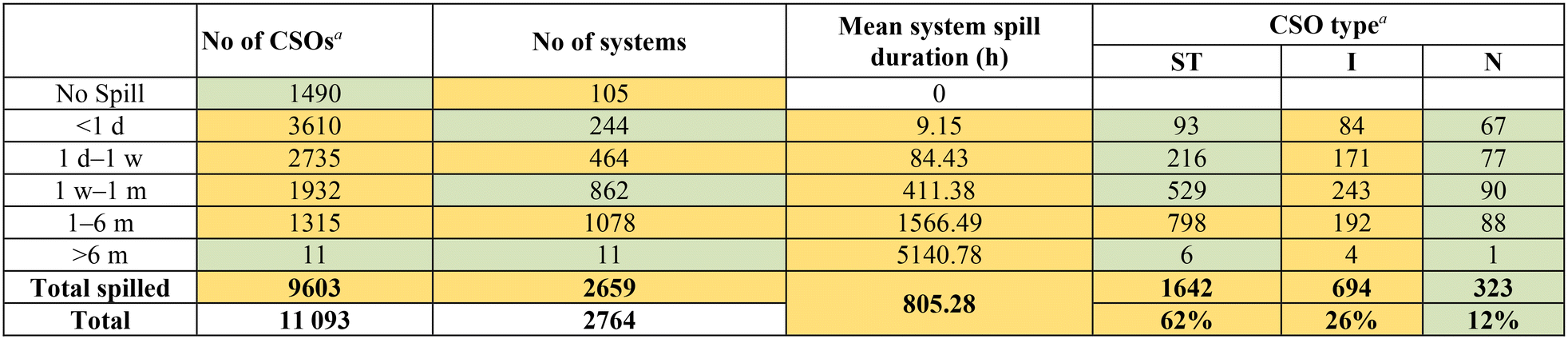
A total of 11093 CSOs (other than pumping stations) were connected to 2764 CSSs with available data, of which 105 systems did not spill in 2023 (Table 4). Out of the 2659 CSSs that spilled, 11 (0.4%) spilled for more than six months each, showing a slight improvement compared to 2021, when that number was 15 (0.6% of the 2405 CSSs that spilled). However, 1078 CSSs (40.5%) spilled between one and six months, a substantial increase from the 758 systems (31.5%) in 2021. Notably, the CSSs that spilled for durations between one week and one month decreased both in number and percentage to 862 systems (32.4%) from 903 (37.5%) in 2021. The number of systems spilling between one day and one week also increased to 464 (17.5%) from 456 in 2021 (19.0%). In contrast, the number of CSSs spilling for less than one day decreased to 244 (9.2%) from 273 in 2021 (11.4%). About 62% of CSOs with the maximum spill duration per system were located at storm tanks, an increase from 61% in 2021, while 26% were located at inlets, up from 21% in 2021 (Table 4).
| a Other than pumping stations. |
|---|
|
CSSs of WWTWs with insufficient treatment hydraulic capacity (i.e., when FFT was less than three times the DWF for large systems and six times the DWF for small systems) were shown to have again significantly higher CSO spill durations compared to those with WWTWs with sufficient hydraulic capacity (Table 5). For large WWTWs, the median spill duration for systems with insufficient capacity was 769 hours (n = 984), compared to 357 hours (n = 282) for systems with sufficient capacity (W = 175731, p-value = 8.303 × 10⁻¹², r = 0.219). Similarly, for small WWTWs, the median spill duration for systems with insufficient capacity was 471 hours (n = 580), compared to 193 hours (n = 121) for systems with sufficient capacity (W = 43634, p-value = 2.483 × 10−0.5, r = 0.177).

|
These findings demonstrate a significant and consistent pattern between 2021 and 2023, where systems with insufficient capacity exhibit longer spill durations. In fact, the mean spill duration per system increased across most categories for both large (≥2000 PE) and small (<2000 PE) systems compared to 2021.
3.2. CSOs pollution load
The annual pollution load of every CSO per determinant was estimated for 2023 (SI S1). The two most prevalent determinands were BOD and suspended solids, with total annual CSO loads of 419951 tonnes and 360100 tonnes from 12847 and 13054 CSOs, distributed across 2583 and 2598 CSSs respectively (Table 6, Fig. 2) In comparison, the total annual loads for BOD and suspended solids from WWTWs were 210203 tonnes and 285146 tonnes respectively (Table 6). Median per-CSO loads for both determinands exceeded 1 t, while mean values were approximately 30-fold higher (32689 kg for BOD; 27585 kg for suspended solids), reflecting highly skewed distributions in which a small proportion of CSOs contribute disproportionately to total loads. BOD loads were widely distributed across England, with particularly high concentrations in the midlands, northern river catchments, reflecting both the density of CSOs and the scale of discharges.
| CSO load (kg) | Aggregated CSO load (kg) per CSS | WWTWs load (kg) | Ratio of annual aggregated CSOs to WWTWs load per CSS (%) | CSS (n) | ||||||||||||
|---|---|---|---|---|---|---|---|---|---|---|---|---|---|---|---|---|
| DETE | Mediana | Meana | Sum | n | Medianb | Meanb | Sum | Medianb | Meanb | Sum | n | Medianb | Meanb | 80–100 | >100 | |
| a Computed for CSOs linked to a CSS whose WWTW holds a permit for the DETE. b Computed only for CSS whose associated WWTW holds a permit for the DETE. | ||||||||||||||||
| BOD | 1097.75 | 32688.67 |
419951399.39 |
12847 |
2620.55 | 162582.81 |
419951399.39 |
4720.14 | 81345.00 |
210114140.79 |
2583 | 59.5% | 154.6% | 136 | 982 | 2583 |
| Cadmium | 0.02 | 0.73 | 389.29 | 535 | 2.03 | 16.93 | 389.29 | 47.06 | 174.64 | 4016.76 | 23 | 7.9% | 16.6% | 0 | 1 | 23 |
| Chromium | 0.24 | 3.01 | 259.08 | 86 | 8.64 | 19.93 | 259.08 | 248.39 | 629.32 | 8181.16 | 13 | 3.7% | 6.4% | 0 | 0 | 13 |
| Copper | 0.83 | 19.49 | 11656.80 |
598 | 16.52 | 194.28 | 11656.80 |
227.98 | 590.72 | 35443.34 |
60 | 8.9% | 18.1% | 1 | 1 | 60 |
| Lead | 0.28 | 2.07 | 182.00 | 88 | 6.24 | 13.00 | 182.00 | 99.29 | 310.62 | 4348.67 | 14 | 5.2% | 8.0% | 0 | 0 | 14 |
| Mercury | 0.02 | 0.09 | 9.01 | 97 | 0.11 | 1.50 | 9.01 | 6.11 | 6.13 | 36.76 | 6 | 7.1% | 22.1% | 1 | 0 | 6 |
| Nickel | 0.14 | 1.56 | 626.98 | 403 | 7.00 | 31.35 | 626.98 | 253.65 | 523.81 | 10476.29 |
20 | 2.7% | 7.3% | 0 | 0 | 20 |
| Ammoniacal nitrogen | 27.71 | 394.73 | 3931539.71 |
9960 | 106.63 | 2030.75 | 3931539.71 |
2099.41 | 16452.95 |
31852911.55 |
1936 | 5.6% | 10.6% | 5 | 14 | 1936 |
| Suspended solids | 1088.71 | 27585.45 |
360100474.65 |
13054 |
2888.00 | 138606.80 |
360100474.65 |
8431.29 | 109843.62 |
285373729.73 |
2598 | 36.4% | 71.3% | 177 | 625 | 2598 |
| Total phosphorus | 4.64 | 87.56 | 169697.85 |
1938 | 31.01 | 328.24 | 169697.85 |
313.09 | 1086.97 | 561963.38 |
517 | 10.2% | 29.1% | 12 | 21 | 517 |
| Zinc | 0.80 | 22.33 | 16186.79 |
725 | 8.12 | 299.76 | 16186.79 |
134.06 | 1494.94 | 80726.84 |
54 | 6.7% | 10.5% | 0 | 0 | 54 |
 | ||
| Fig. 2 Location and distribution of CSOs BOD loads across England. | ||
The total annual CSO load for ammoniacal nitrogen in 2023, was 3931 tonnes from 9960 CSOs, distributed across 1936 CSSs. For total phosphorus, total annual CSO loads were smaller (170 t), originating from 1938 CSOs connected to the 517 CSSs permitted to discharge this determinand. Heavy metals and trace elements (i.e., cadmium, chromium, copper, lead, mercury, nickel, zinc) had much lower annual loads discharged from much fewer CSOs and CSSs, with most total values less than one tonne. Notable exceptions were zinc and copper, with total annual loads of 16.18 tonnes and 11.66 tonnes from 725 CSOs connected to 54 CSSs, and 598 CSOs connected to 60 CSSs permitted to discharge these respectively.
When aggregated, loads from CSOs often matched or exceeded those from their WWTWs for key determinands (Table 6, the complete data can be found in SI S2). The greatest ratios were observed for BOD and suspended solids, with mean ratios of 155% and 71%. In total, 982 CSSs had CSO BOD loads exceeding those of their associated WWTWs, while 625 CSSs showed the same pattern for suspended solids. A further 136 and 177 CSSs had CSO loads contributing 80–100% of their WWTW effluent equivalent for BOD and suspended solids, respectively, highlighting the widespread scale at which CSO discharges match treated effluent for these determinands. Nutrients showed more modest but still significant ratios. Total phosphorus had a median CSO:WWTW ratio of 10% and mean of 29%, with 21 CSSs exceeding WWTW loads and a further 12 contributing 80–100%. Ammoniacal nitrogen exhibited a median of 6% and mean of 11% across 1936 CSSs, with 14 exceeding and five matching their corresponding WWTWs. Heavy metals and trace elements had median CSO:WWTW ratios generally below 10% and mean ratios below 20%, with the sole exception of mercury (median 7%; mean 22% across 6 CSSs). These patterns are driven by differences in influent concentrations, treatment removal efficiencies, catchment size, and spill duration, and indicate that targeting a relatively small subset of disproportionately high-load CSOs could yield substantial reductions in total pollutant discharges.
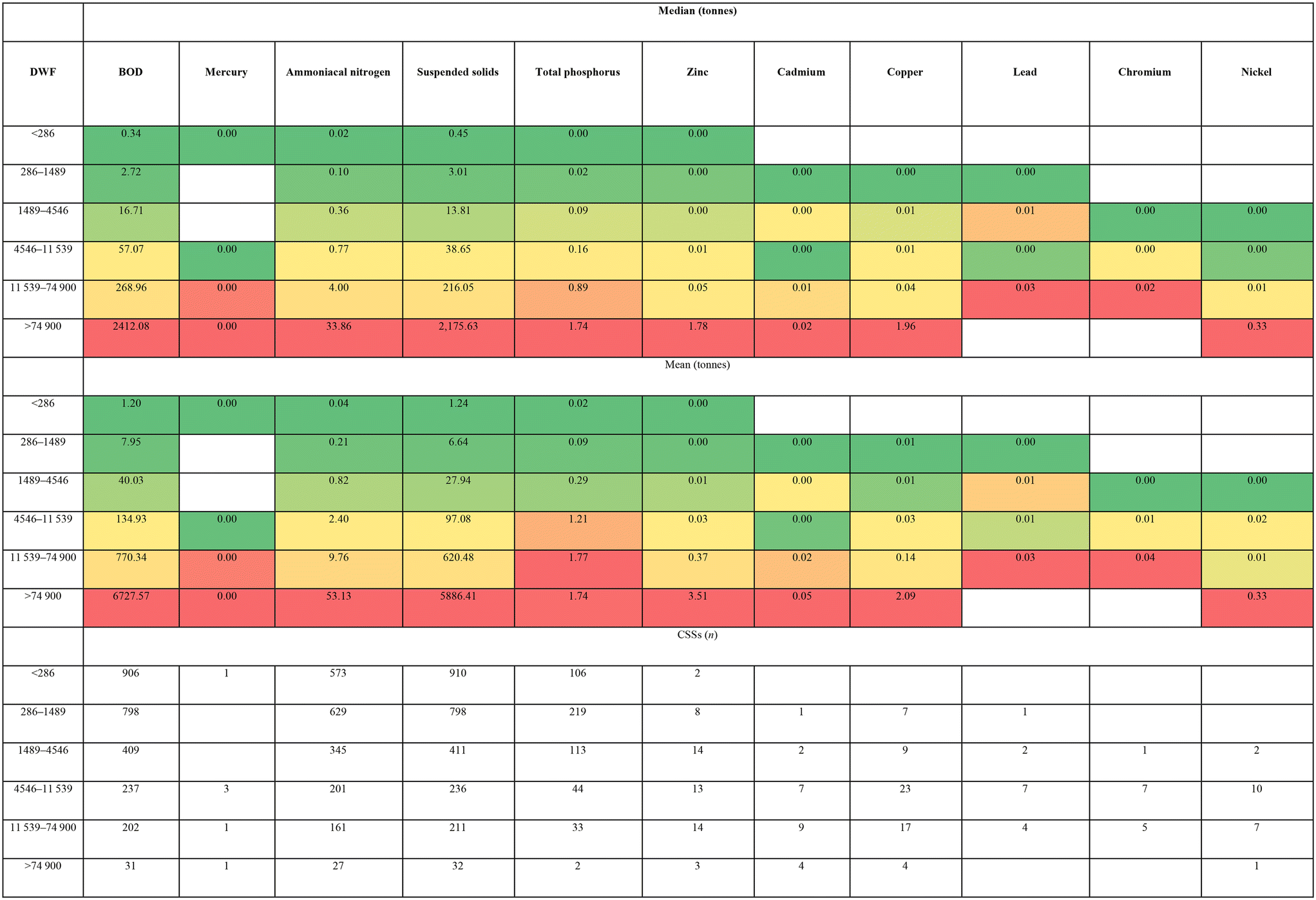
CSOs connected to larger WWTWs, are associated with substantially higher loads across almost all determinants (Table 7). Median and mean CSO loads per CSS increased sharply with WWTWs size (DWF), peaking in systems serving >74900 m3 per day. Mean BOD loads rose from 1.20 tonnes per year in CSSs with DWF <286 m3 per day to around 6728 tonnes per year in CSSs with DWF >74900 m3 per day, with similar trends for suspended solids (1.24 to 5886 tonnes per year) and ammoniacal nitrogen (0.04 to 53.13 tonnes per year). Total phosphorus, zinc and copper also scaled steeply with WWTWs size, while cadmium, chromium, and nickel remained low but followed the same gradient. Higher CSO loads of BOD, ammoniacal nitrogen, and suspended solids were associated with insufficient treatment hydraulic capacity for both small and large systems, while for total phosphorus this was the case only for large (Tables S3 and S4).
|
The relative contribution of the load of individual CSOs to the aggregated CSO and WWTW load per receiving waterbody was generally small, with median shares less than 3% for all determinands and less than 1% for most (Table 8). However, several determinands displayed highly skewed distributions, where a minority of CSOs dominated inputs. For example, mean contributions for chromium (18.2%), lead (18.0%), and mercury (17.1%) are an order of magnitude higher than their medians, reflecting the influence of a few dominant dischargers. Similarly, nutrients and bulk pollutants such as total phosphorus (mean 14.4%), BOD (11.6%), and suspended solids (10.2%) are often driven by a small subset of CSOs. This is confirmed by the number of CSOs that individually account for than 50% of the aggregated loads in their receiving waterbodies – most notably for BOD (1070 CSOs ≈8% of all CSOs), suspended solids (881 CSOs ≈7%), and ammoniacal nitrogen (580 CSOs ≈6%). Metals show the same pattern at smaller scales i.e., copper (70 CSOs ≈12%), zinc (64 CSOs ≈9%), and cadmium (37 CSOs ≈7%) – the number of CSOs that contribute more than 50% of the aggregated load in their receiving waterbody.
| Individual CSO relative contribution per water body | No of CSOs that contribute more than 50% of the aggregated load per water body | ||||||
|---|---|---|---|---|---|---|---|
| DETE | Median | Mean | 50–60% | 60–70% | 70–80% | 80–90% | 90–100% |
| BOD | 0.9% | 11.6% | 207 | 168 | 146 | 125 | 424 |
| Cadmium | 0.7% | 10.2% | 1 | 4 | 2 | 4 | 26 |
| Chromium | 1.9% | 18.2% | 2 | 2 | 0 | 3 | 7 |
| Copper | 0.6% | 13.7% | 6 | 5 | 6 | 14 | 39 |
| Lead | 2.8% | 18.0% | 3 | 1 | 0 | 3 | 7 |
| Mercury | 0.9% | 17.1% | 1 | 0 | 2 | 1 | 9 |
| Nickel | 0.5% | 9.4% | 3 | 3 | 2 | 5 | 16 |
| Ammoniacal nitrogen | 0.4% | 8.1% | 60 | 53 | 58 | 48 | 361 |
| Suspended solids | 0.8% | 10.2% | 187 | 110 | 104 | 77 | 403 |
| Total phosphorus | 1.2% | 14.4% | 17 | 21 | 14 | 11 | 149 |
| Zinc | 0.6% | 11.1% | 8 | 6 | 9 | 6 | 35 |
CSSs contributions (aggregated CSO loads per CSS discharging in the same waterbody) to combined loads in each waterbody are generally modest, with median shares close to zero for most determinands and only BOD (11.4%) and suspended solids (8.8%) exceeding 5% (Table 9). However, distributions are highly skewed, with mean contributions reaching 32.1% for BOD, 28.7%, for suspended solids, and 17.4% for ammoniacal nitrogen. These averages reflect the influence of a relatively small subset of CSSs that dominate loads in specific waterbodies.
| CSSs' loads relative contribution per water body | No of CSSs that contribute more than 50% of the aggregate load per waterbody | |||||||
|---|---|---|---|---|---|---|---|---|
| DETE | Median | Mean | 50–60% | 60–70% | 70–80% | 80–90% | 90–100% | >100% |
| BOD | 11.4% | 32.1% | 177 | 140 | 159 | 122 | 755 | 2 |
| Cadmium | 0.0% | 1.2% | 1 | 0 | 0 | 0 | 52 | 0 |
| Chromium | 0.0% | 0.3% | 0 | 1 | 0 | 0 | 14 | 0 |
| Copper | 0.0% | 1.8% | 0 | 0 | 1 | 0 | 74 | 1 |
| Lead | 0.0% | 0.3% | 1 | 0 | 0 | 0 | 14 | 0 |
| Mercury | 0.0% | 0.4% | 0 | 0 | 0 | 0 | 16 | 0 |
| Nickel | 0.0% | 0.8% | 0 | 0 | 1 | 1 | 35 | 0 |
| Ammoniacal nitrogen | 0.8% | 17.4% | 14 | 21 | 19 | 18 | 615 | 1 |
| Suspended solids | 8.8% | 28.7% | 151 | 104 | 84 | 61 | 716 | 4 |
| Total phosphorus | 0.0% | 6.0% | 10 | 10 | 3 | 3 | 206 | 1 |
| Zinc | 0.0% | 1.8% | 0 | 0 | 1 | 0 | 75 | 1 |
Indeed, 1355 CSSs contribute BOD loads more than 50% of the aggregated CSOs and WWTWs load per receiving water body, while for suspended solids, ammoniacal nitrogen and total phosphorus, these reach 1120, 688 and 233 CSSs respectively. By contrast, trace elements and metals contribute little overall, with medians near zero and only a few cases where they contribute more than 50% of aggregated loads in receiving waterbodies (e.g., 77 for zinc, 76 for Copper, 53 for cadmium, 37 for nickel).
3.3. Risk characterisation of CSSs
The 2940 CSSs that were risk assessed in the study, had a total of 13768 CSOs discharging in 2548 waterbodies, resulting in 4578 hazard rankings based on each of the waterbodies their CSOs discharge into. To classify each CSS in term of component H1 for that hazard element (see Table 2), five-band hazard metrics per determinant were used according to the ratio of each CSS's aggregated CSO loads to the combined load from all CSOs and WWTWs per receiving waterbody (Table 10), with the worst performing determinant used to assign these rankings for each combination of CSS and receiving waterbody as follows: very high 1095 (23.9%), high 302 (6.6%), moderate 346 (7.6%), low 463 (10.1%), and very low 2372 (51.8%). Very high hazard CSS classifications were dominated by BOD (879), suspended solids (781), and ammoniacal nitrogen (634), with smaller but notable contributions from total phosphorus (210) (Table 11). High hazard cases followed a similar pattern, concentrated in BOD (299) and suspended solids (188). In contrast, trace and heavy metals were almost exclusively classified as very low hazard (>4200 combinations each).
| Hazard level | Number of CSS's–waterbody combinations classified across hazard level classes | CSS's–waterbody hazard | ||||||||||
|---|---|---|---|---|---|---|---|---|---|---|---|---|
| BOD | Cadmium | Chromium | Copper | Lead | Mercury | Nickel | Ammoniacal nitrogen | Suspended solids | Total phosphorus | Zinc | ||
| Very high | 879 | 52 | 14 | 75 | 14 | 16 | 36 | 634 | 781 | 210 | 76 | 1095 |
| High | 299 | 0 | 1 | 1 | 0 | 0 | 1 | 40 | 188 | 13 | 1 | 302 |
| Moderate | 367 | 2 | 0 | 0 | 2 | 0 | 0 | 42 | 335 | 25 | 1 | 346 |
| Low | 453 | 1 | 1 | 8 | 0 | 0 | 2 | 131 | 491 | 85 | 3 | 463 |
| Very low | 2580 | 4523 | 4562 | 4494 | 4562 | 4562 | 4539 | 3731 | 2783 | 4245 | 4497 | 2372 |
| Hazard level | Number of CSSs classified across hazard level classes | CSS hazard | ||||||||||
|---|---|---|---|---|---|---|---|---|---|---|---|---|
| BOD | Cadmium | Chromium | Copper | Lead | Mercury | Nickel | Ammoniacal nitrogen | Suspended solids | Total phosphorus | Zinc | ||
| Very high | 1118 | 1 | 0 | 2 | 0 | 1 | 0 | 19 | 802 | 33 | 0 | 1125 |
| High | 166 | 0 | 0 | 1 | 0 | 0 | 0 | 17 | 190 | 19 | 1 | 170 |
| Moderate | 217 | 0 | 0 | 5 | 0 | 0 | 1 | 33 | 251 | 42 | 1 | 219 |
| Low | 270 | 5 | 1 | 9 | 1 | 1 | 0 | 190 | 351 | 77 | 4 | 272 |
| Very low | 812 | 17 | 12 | 43 | 13 | 4 | 19 | 1677 | 1004 | 346 | 48 | 822 |
For the second component of the hazard element classification (H2), the ratio of the aggregated CSO loads per CSS (2608) to effluent loads from their corresponding WWTWs, were distributed into five hazard bands. Overall, 1125 CSSs (43.1%) were classified as very high hazard, 170 (6.5%) as high, and 219 (8.4%) as moderate. A total of 272 (10.4%) were low, and 822 (31.5%) were very low (Table 11). Very high cases were dominated by BOD (1118) and suspended solids (802), with additional contributions from ammoniacal nitrogen (19) and total phosphorus (33). High hazard CSSs followed a similar pattern: BOD (166) and suspended solids (190). In contrast, metals and trace elements were almost entirely classified as very low hazard (>2600 CSSs each).
The worst classification of the two hazard components (H1) and (H2) resulted in CSS–waterbody classifications as follows: 2500 (54.6%) as very high hazard, 230 (5.0%) as high, 259 (5.7%) as moderate, 334 (7.3%) as low, and 1255 (27.4%) as very low hazard classification.
In terms of consequence, out of the 2548 waterbodies, 94 (3.7%) were classified as very high, 562 (22.1%) as high, 1687 (66.3%) as moderate, 205 (8.0%) as low, with no WBs classified as very low, due to the absence of waterbodies classified as “high” ecological status under the WFD (Table 12). The receptor consequence was driven mainly by ecological status: bad/poor = 595 (23.3%), moderate = 1698 (66.7%), good = 255 (10.0%). In contrast, the presence of multiple designations per waterbody was uncommon: only 74 (2.9%) waterbodies have more than 5 designations (very high = 5; high = 69), while most have 1 to 2 designations (1695; 66.5%) or none (457; 17.9%).
| Consequence level | Designations (n) | Ecological status (n) | Waterbody consequence (n) |
|---|---|---|---|
| Very high | 5 | 89 | 94 |
| High | 69 | 506 | 562 |
| Moderate | 322 | 1698 | 1687 |
| Low | 1695 | 255 | 205 |
| Very low | 457 | 0 | 0 |
The final risk classification was assigned per CSS by applying the 5 × 5 risk matrix to each CSS–waterbody combination (hazard × consequence), with the highest risk classification amongst a CSS water bodies combinations driving the final score per CSS. Out of the 2940 CSSs, 516 were classified as very high risk (17.6%), 800 as high (27.2%), 427 as moderate (14.5%), 1122 as low (38.2%), and 75 as very low (2.6%) (Fig. 3) (SI S3).
 | ||
| Fig. 3 Location and distribution of CSSs across England by overall risk. | ||
Overall, about 44.7% of CSSs (1316) were classified as high or very high risk, indicating CSSs where, in at least one receiving waterbody, their CSOs contributed more than ≥60% (high) or ≥80% (very high) of their total load in sensitive receiving water bodies (poor or bad ecological status and/or multiple overlapping designations) (Table 13).

|
Overall, CSSs classified as high and very high risk are larger systems (median DWF 1201–2177 m3 per d compared with 60–180 m3 per d in low/very low classes), have more CSOs per system (medians 3–4 vs. 1), and longer CSS spill durations (≈1083–1087 hours vs. ≈96–115 hours) (Table 14).
| Overall CSS risk | CSSs (n) | CSS duration (h) | CSOs per CSS (n) | DWF (m3 per d) | |||
|---|---|---|---|---|---|---|---|
| Median | Mean | Median | Mean | Median | Mean | ||
| Very high | 516 | 1083.61 | 1278.74 | 4.00 | 10.40 | 2177.00 | 14611.00 |
| High | 800 | 1087.13 | 1228.61 | 3.00 | 6.36 | 1201.00 | 7757.81 |
| Moderate | 427 | 508.82 | 642.19 | 2.00 | 2.70 | 420.00 | 2123.71 |
| Low | 1122 | 114.64 | 342.07 | 1.00 | 1.85 | 180.00 | 1010.02 |
| Very low | 75 | 96.13 | 304.24 | 1.00 | 1.28 | 60.00 | 167.40 |
4. Discussion
The results demonstrate that CSOs in England continue to exhibit widespread and, in several cases, increasing spill durations in 2023 compared to 2021. Despite a small reduction in the proportion of CSSs spilling for more than six months, the substantial increase in systems spilling between one and six months indicates a shift toward prolonged but not necessarily extreme spill durations. This pattern suggests that while the most egregious cases may be declining, chronic operational stress across the sewerage network is becoming more prevalent.The disproportionate contribution of CSOs located at WWTWs (i.e., storm tanks and inlets) to long-duration spills is particularly significant. Median spill durations at WWTWs were more than an order of magnitude higher than those elsewhere on the sewer network, underscoring that spill persistence is not merely a function of increases in wet conditions, but is strongly associated with treatment system design and reduced hydraulic capacity.
A key contribution of this analysis is the clear and consistent relationship between insufficient treatment hydraulic capacity and extended spill durations across both large and small WWTWs. Systems operating with insufficient FFT thresholds exhibit significantly longer median spill durations, with effect sizes indicating a meaningful structural influence rather than marginal operational variability. The increase in mean spill duration across most categories between 2021 and 2023 suggests that capacity constraints are becoming more acute, potentially reflecting a combination of increased rainfall intensity, population growth, network ageing, or delayed infrastructure investment.
The pollutant load analysis highlights the scale at which CSO discharges contribute to, and in many cases exceed, treated effluent loads from WWTWs for key determinands (Table 7). Such findings were also observed by Dirckx et al. (2022), who reported similar trends in the Kortenberg catchment.47 For bulk pollutants such as BOD and suspended solids, aggregated CSO loads frequently surpassed WWTW loads at the CSS level, with mean CSO:WWTW ratios exceeding 100% for BOD and approaching 75% for suspended solids. This finding, challenges conventional assumptions that CSOs represent a minor or episodic contribution relative to continuous discharges from treatment works. Instead, the data indicate that for a substantial proportion of systems, CSOs constitute a dominant pathway for organic and particulate pollution. Although nutrient loads are comparatively lower, the fact that some CSO discharges equal or exceed loads from treated effluents reveals a critical gap. Strategies focused only on wastewater treatment plants risk neglecting this significant source.
Across all determinand categories, pollutant loads exhibit highly skewed distributions, with a relatively small subset of CSOs and CSSs responsible for a disproportionate share of total discharges. This pattern is evident both at the national scale and within individual receiving waterbodies, where median contributions are typically low but mean values are elevated by dominant discharges. For bulk pollutants, several hundred CSOs individually account for more than half of the combined CSO and WWTW load in their receiving waters, while a similar concentration is observed at the CSS level. These results suggest that targeted interventions, focused on high-duration, high-load CSOs associated with large or hydraulically constrained WWTWs, could deliver substantial water quality benefits without requiring uniform upgrades across the entire network. This has important implications for regulatory prioritisation, investment planning, and cost-effectiveness analyses.
The strong scaling of aggregated CSO loads with WWTW size further emphasises the role of system scale in shaping pollution outcomes. CSSs associated with the largest WWTWs contribute orders of magnitude higher loads for BOD, suspended solids, and nutrients than smaller systems, reflecting both larger contributing populations and higher absolute spill volumes. While smaller systems are more numerous and collectively important, the dominance of large WWTWs in national pollutant loads suggests that strategic upgrades at a limited number of high-capacity sites could yield disproportionate benefits. However, this must be balanced against the localised ecological impacts of smaller systems, particularly where receiving waterbodies have limited dilution capacity.
A source–pathway–receptor model formed the basis of a tool for screening risks related to CSO discharges at the CSS level, considering the pollution load of CSOs in the context of the waterbodies they discharge into. To accurately assess risk and inform effective interventions, elements related to both the probability (CSS driven) and the magnitude of the consequence (waterbody driven) were used to classify CSS risk based on evidence from publicly available datasets.
While several elements were used in the risk evaluation of the CSO discharges to waterbodies, it was the worst-performing ones that drove the overall classification, adopting a precautionary approach. Such an approach prioritizes the worst performing elements, ensuring that safety controls are built around the highest risks to prevent catastrophic harm, even when probabilities are low or uncertain. In fact, there were only a few cases with diverge performing elements, as the highest risk CSSs had most elements at the same level.
Assessing risks related to CSO discharges at the CSS level accounts for the entire journey of pollutants, from collection in combined sewers to treatment capacity at the WWTWs, and considers how the sewer network itself influences overflow events and their impacts on receiving waterbodies. This holistic systems approach48 using data on spill frequencies, pollutant loads, and the impact on specific waterbodies, enables more accurate risk assessment and can deliver more targeted mitigation strategies that consider the complex interplay of rainfall, urbanization, and infrastructure.
The risk classification of CSSs highlights a clear stratification of risk across systems. The approach supports a shift from duration-led compliance to load-aware, receptor-aware prioritisation. Quantifying pollutant loads and situating them within ecological status/designations enables targeted schemes with a clearer connection to measurable benefit. It also exposes a weakness of duration-only metrics, which can miss systems with high load contributions but moderate spill hours.
Taken together, these findings indicate the limitations of the current compliance and monitoring system based on the Environmental Permitting (England and Wales) Regulations 2016, where WWTWs are the primary, constant point of regulation, with their environmental permits setting the strict, numeric limits for pollutant concentrations in treated effluent as the baseline for protecting water quality. The permit system's foundation is built on regulating WWTWs discharges, and the focus historically has been on technical compliance. Regulators ensure treatment works are operating correctly and being upgraded (e.g., to remove more nutrients) via the Water Industry National Environment Programme (WINEP). WWTWs are about treating sewage to a high standard all the time, and breaches are taken seriously but are often seen as failures of process or infrastructure. CSOs are about the system's failure to cope with volume, so the persistence of long-duration spills, their strong association with insufficient hydraulic capacity, and their substantial contribution to pollutant loads collectively argue for a more integrated regulatory approach.
Relating hazard classification of CSSs and their overall risk profile to their capacity, showed those classifications aligning well particularly when CSS systems were split into 2 groups based on their size (Table 15).
| Large | Small | |||
|---|---|---|---|---|
| CSOs: WWTWs | Insufficient capacity | Sufficient capacity | Insufficient capacity | Sufficient capacity |
| Very high | 582 | 121 | 190 | 27 |
| High | 70 | 20 | 41 | 5 |
| Moderate | 74 | 29 | 55 | 7 |
| Low | 86 | 35 | 69 | 11 |
| Very low | 172 | 76 | 173 | 52 |
Findings confirm the study's risk classification results, with more than half of the waterbodies impacted by CSOs receiving more BOD load from CSOs rather than the WWTWs discharging in them. In fact, across all water bodies in England CSOs contribute more to BOD and suspended solids loads than WWTWs, with more than half of the waterbodies receiving higher pollution loads from CSOs for these determinands (Table 16).
| DETE | CSOs & WWTWs load (kg) | WB (n) | |||
|---|---|---|---|---|---|
| All | CSOs/WWTWs | CSOs > WWTWs | CSOs < WWTWs | ||
| BOD | 630154588 |
2439 | 200% | 1502 | 881 |
| Cadmium | 4280 | 75 | 10% | 53 | 19 |
| Chromium | 7993 | 28 | 3% | 15 | 12 |
| Copper | 46738 |
137 | 33% | 76 | 55 |
| Lead | 4233 | 29 | 4% | 15 | 13 |
| Mercury | 46 | 23 | 25% | 16 | 5 |
| Nickel | 10649 |
55 | 6% | 37 | 17 |
| Ammoniacal nitrogen | 35762496 |
2092 | 12% | 707 | 1337 |
| Suspended solids | 645246798 |
2454 | 126% | 1237 | 1160 |
| Total phosphorus | 720797 |
642 | 31% | 236 | 392 |
| Zinc | 95741 |
129 | 20% | 77 | 49 |
In the context of increasingly variable rainfall and ageing infrastructure, the results underscore the need for adaptive capacity standards, improved stormwater management upstream, and prioritised intervention at high-impact CSSs. More importantly the approach allows for managing risks considering the severity of consequences at the waterbody level. By calculating the aggregated load of determinands from all CSOs and WWTWs discharges at each waterbody over a year, the relative contribution of each CSO and CSS to the pollution load of a waterbody and its overall status can be established (Table S5).
By linking EDM data to consented determinands and receptor conditions, this study delivered a transparent framework for translating spill durations into estimated pollutant loads and their relative contributions to the pollution of the country's waterbodies. Findings also confirmed that the Environment Agency was potentially underestimating the presence and role of CSOs in waterbodies as reasons for them not achieving good status (RNAG) and reasons for deterioration (RFD), with a total of only 448 waterbodies falling in this category (based on 2015 data). Interestingly, for 371 of these waterbodies that were included in our analysis (mainly due to available data), most had indeed pollution loads from CSOs higher than those from WWTWs effluents. Also, relating CSSs ranked as very high in our risk classification, to their receiving waterbodies, found those to be dominated by CSO annual pollution loads.
With CSOs featuring overwhelmingly at the centre of political, media, and public outrage, the increasing frequency and duration of CSO spills has been viewed not just as a technical issue, but as a “licence to pollute”, raising questions about infrastructure underinvestment and company accountability. However, the increased reliance on CSOs observed over the past few years is a complex, systemic issue that cannot be attributed solely to WaSCos. Ofwat, as the economic regulator, and the Environment Agency, as the environmental regulator, also play central roles within a fragmented regulatory system that lacks clear lines of accountability. WaSCos bear direct responsibility for maintaining infrastructure; Ofwat determines the scale of investment through funding decisions; and the Environment Agency monitors compliance and oversees CSO use. The persistence of frequent CSO discharges reflects not just inadequate investment, but also weak enforcement and limited transparency of data, pointing to the need for systemic reform.
Our analyses of the 2023 EDM data confirmed findings from previous studies, indicating that the problem with CSO discharges is persistent, deep-rooted, and structural, stemming from many years of underinvestment in wastewater infrastructure, which has led to inadequate capacity to handle current rainfall and wastewater flows.
Ofwat and the Environment Agency have only recently intensified their efforts to penalize and prosecute WaSCos for environmental damage in relation to CSOs,49 with the Office for Environmental Protection (OEP) further concluding that there have been failures to comply with environmental law by Defra, the Environment Agency and Ofwat following an investigation into the regulation of network CSOs, issuing decision notices aimed at strengthening regulatory oversight.50–52
Still, reducing the frequency of CSOs should not be seen as an end goal in itself.41 Instead, it is essential to address the underlying causes of CSOs, such as inadequate infrastructure capacity, mismanaged stormwater, or urban planning issues. CSOs do not operate in isolation, their use depends on how the upstream sewer network collects and conveys flows, and how the downstream WWTWs can handle peak inputs. A single CSO may spill more or less depending on network storage, pumping, inflow, and treatment headroom. Evaluating them individually ignores these interactions. Moreover, waterbodies are affected by the combined discharge from all CSOs (plus treated effluent) in the catchment, and a “whole system” approach allows assessment of cumulative pollutant loads, and the ecological stress they can cause in the receiving water.53 Regulators and utilities need to know which systems as a whole contribute the greatest risks, so interventions can be targeted where they deliver the most benefit. Focusing only on individual outfalls risks misprioritising investment (e.g., fixing a small CSO while a bigger driver of pollution remains elsewhere in the system). Spill frequency and volume vary depending on rainfall patterns, season, and catchment hydraulics. Modern risk assessment frameworks (e.g., WFD, “source–pathway–receptor” models) emphasise integrated catchment management. Considering the sewerage system and WWTWs together ensures risk is assessed in terms of real environmental outcomes, not just infrastructure performance.
Modernising wastewater infrastructure to either eliminate or substantially reduce CSO discharges is a technically complex and financially demanding task, with costs ultimately passed on to consumers. Water bills are already forecast to rise at the fastest pace in two decades, while public trust in the sector is at an all-time low. Defra carries ultimate the responsibility for the sector's planning and regulatory framework, yet it has failed both to compel companies to maintain critical infrastructure and to set out a comprehensive strategy to address the country's growing water infrastructure deficit.
In response to mounting criticism over weak environmental protections, inadequate enforcement, and lack of corporate accountability, the government introduced the Storm Overflows Discharge Reduction Plan under the Environment Act 2021. This plan sets legally binding targets for regulators and WaSCos to focus on water quality improvements. By 2035, all CSOs affecting designated bathing waters must be upgraded, and 75% of CSOs at high-priority sites must be improved. By 2050, no overflow will be allowed to operate except during extreme rainfall events, and none may cause ecological harm. Section 81 of the Act further requires WaSCos to implement continuous water quality monitoring (CWQM), both upstream and downstream of storm CSOs, alongside mandatory reporting, but with specific milestones and deadlines for delivery plans and data submissions falling within the 2025–2035 period (i.e., numbers of CWQM installations for AMP8 (2025–2030) providing 25% coverage, with the remaining 75% delivered in AMP9 (2030–2035), as reported by one of the companies).54
Reducing CSO spills on the scale planned, is a huge challenge for the water industry, that requires an estimated £56bn of capital investment over the next 25 years. On top of wider water sector commitments, these represent an unprecedented challenge for the industry and could push average household water bills to over £2000 a year by 2050.55 Ofwat has already approved £104 billion in funding over a period of five years, aimed at reducing sewage pollution by 45% by 2030. Responding to further criticism, the government published in April 2023 its ‘Plan for water’, which it said was intended to “address sources of pollution, boost water supplies through more investment, tighter regulation, and more effective enforcement”. Similar pressures in Europe, also saw the revised EU Urban Wastewater Treatment Directive (Directive (EU) 2024/3019) that came into effect from January 1, 2025, aiming to reduce pollution from CSOs by setting targets for monitoring CSOs and requiring wastewater plans, with the goal of limiting overflows to no more than 2% of annual collected urban wastewater load, calculated in DWF conditions, by 2039 or 2045 depending on the size of each city.56
In practice, however, not much has been changing, with the Environment Agency regulating intermittent discharges from CSOs and WWTWs through environmental permits, taking enforcement action against those sites in breach of their permit or when specific CSOs are classed as unsatisfactory. This means that while the use of CSOs has become increasingly routine, with CSOs triggered even at times of low or no rainfall, as pressures on the sewerage network grow by the day, overflows are continued to be treated as intended to be used infrequently and under exceptional conditions, as reflected in the permit conditions stipulated by the Environment Agency.
In 2023, English WaSCos apologized for the increased sewage spills and committed to investing at least £10 billion by 2030 to modernize infrastructure, and reduce overflow frequency by up to 140000 times per year compared to 2020 levels.57 While some critics argue that their response is not enough to address the fundamental issues, it is not even clear how the promised investment will take place and how evidence will be used to prioritise interventions. According to a number of statements by the Environment Agency, “EDM provides a robust way of monitoring the frequency and duration of spills”…. “It is only through EDM that we can accurately see what is happening and take action to reduce the impact of storm overflows on the environment. EDM data underpins our planning, compliance, and enforcement work”. “It provides the necessary intelligence we need to inform permit compliance”, “The evidence from EDM clearly shows where water companies need to improve and where they should focus their investment to carry out improvements”, when all that the EDM provides is data on the frequency and duration of CSO discharges over a year.58 As the costs of all interventions are high, Environment Agency's plans suggest prioritising improvement schemes at approximately 5500 CSOs that are considered as ‘high priority’ based on EDM and potential impacts on conservation goals.
However, the frequency and duration of CSOs were found to be poor indicators of pollution load and risk in this study (Tables S6 and S7). Factors like the volume of sewage discharged and the concentration of pollutants within these discharges are more important than how often CSOs occur or how long they last. Moreover, in proposed prioritisations, true transparency remains elusive,59 as companies claim unaware of any optimized technologies that could measure volumes of CSO spills. Most importantly though, a prioritisation based on the duration and frequency of individual assets irrespective of the CSSs they belong to is neglecting the fact that the impacts from CSO discharges depend on what is discharged, how much, and into which receptor.
In this study, we addressed this gap through an innovative approach. Integrating EDM data with WWTWs hydraulic parameters and permitted effluent limits for eleven determinands, and knowing (or assuming) how well a WWTWs removes a pollutant, the allowable influent concentration that drives the pollution load of the CSOs was estimated through simple mass balance equations. Discharge consents specify effluent quality and volume limits, which, combined with WWTWs removal efficiencies, were used to estimate influent concentrations and CSO pollution loads per determinant.
These calculations are of course, subject to uncertainty arising from methodological assumptions and data availability, inherent to national-scale analyses that combine reporting data on assets owned by multiple companies and distributed across repositories serving different policy requirements. For example, it was assumed that consent limits are broadly representative of wastewater strength and that treatment performance is stable over time. Similarly, influent quality and CSO composition can vary substantially in response to rainfall intensity, antecedent drought conditions, and sediment mobilisation within sewer networks (particularly for storm-responsive determinands such as suspended solids, nutrients, and some metals), and these processes can play an important role at the scale of individual spill events. In this study, however, determinand loads from both CSOs and WWTWs were estimated on an annual basis, which necessarily smooths short-term variability and supports consistent comparison across systems at the national scale. In the absence of nationally consistent, event-scale data for CSO EDM and sewer-catchment conditions, it is not feasible to capture intra-event variability that may be important for local ecological impacts. With increased data granularity, future studies could integrate dynamic processes within receiving water bodies, including flow variability, dilution, in-stream transformation, and cumulative or time-varying impacts. Uncertainty is also introduced through the use of generic, treatment-type removal efficiencies derived from the literature to infer influent concentrations, as actual treatment performance varies between WWTWs and under different environmental conditions. Incompleteness in data coverage across the parameters required for pollution load estimation further contributes to this uncertainty.
Of the 13791 CSOs (across 2951 CSSs) that could be successfully linked to WWTWs and formed the core analytical dataset, pollution loads for at least one of the 11 determinands were calculated for 13091 CSOs across 2608 CSSs and included in the load-based analysis presented in section 3.2 (Table 6). For the remaining 700 CSOs (across 343 CSSs), load estimates could not be derived due to missing hydraulic data or determinand consents at their associated WWTWs. Of these, 436 CSOs in 117 CSSs were linked to WWTWs without reported DWF data, despite partial determinand reporting at some works, while the remaining 264 CSOs in 226 CSSs were associated with WWTWs that reported DWFs but had no consent limits for any of the 11 determinands.
Despite these limitations, the approach presented here offers valuable insights and provides a framework to (i) characterise the operational performance of CSOs within CSSs, (ii) quantify pollutant loads attributable to CSO discharges, and (iii) evaluate the relative contribution of CSOs to the total pollution load in their receiving waterbodies, considering inputs from all CSOs and WWTWs discharging in them. However, we should recognise that during CSO events, a primary concern for human health is the discharge of untreated sewage, which contains microbial pathogens, viruses, and protozoa associated with waterborne disease and the potential spread of antimicrobial resistance.32,60–62 High BOD levels indicate high levels of organic waste that provides a rich environment for the survival and growth of waterborne pathogens like E. coli. Microbial pathogens often pose a higher risk to human health than chemical pollution in recreational waters. As with ecological impacts, they need to be further assessed at waterbodies, as the framework presented here offers only a method for screening such risks.
The ongoing deployment of CWQM offers a pathway to refine this framework. Integrating event-scale flow and quality indicators (e.g., DO, ammonia, turbidity) with rainfall and operational data would enable validation of mass apportionment and support calibration of the risk matrix against observed ecological responses. In the interim, the use of a load- and receptor-informed, system-scale lens provides a practical means of focusing effort on those CSSs most likely to yield timely and defensible environmental improvements. It also facilitates ‘integrated river basin management’ and informs the ‘catchment-based approach’ adapted by Defra and required by the WFD. In the European context, this methodology can support member states in achieving the 2% storm overflow load cap and the integrated management plan requirements under Directive (EU) 2024/3019. In the United States, embedding load-and-receptor outcomes alongside traditional frequency-based metrics into NPDES CSO long-term control plans under the Clean Water Act would bring US practice into closer alignment with EPA's CSO Control Policy.
CSOs are highly visible to the public (pollution events, beach closures), and offer an opportunity for public debate that can drive designs that prioritise transparency and co-benefits (recreation, biodiversity). While the extent of the challenge might feel overwelming, the discourse around CSO discharges helps shift water infrastructure design from reactive fixes to proactive, integrated systems that combine engineering, digital tools, nature-based solutions and citizen engagement.63 The water industry's rapidly evolving landscape demands innovative solutions and collaborative expertise. While there is no one-size-fits-all roadmap, there is also no reason for delaying response. The study demonstrates how a systems approach using all available data, can support policy making, and enable water companies to prioritise investment that can deliver measurable environmental improvements.
Conclusions
This study undertook the first national estimation of pollution loads of individual CSOs and the risks they pose to the waters they discharge into. Through an extensive investigation of EDM data, considering the type and location of CSOs, the receiving water bodies, and the sewerage networks they are connected to, this work aimed to advance the debate and allow available evidence beyond the frequency and duration of CSO events to support decision making. Calculating the pollution loads of CSSs through the discharges of determinands (their WWTWs were permitted to discharge) reaching water bodies through their CSOs, the impacts of the increased frequency and duration of CSO event observed over the last years can be put into context in terms of real impacts.The findings of this study challenge the Environment Agency's view of CSOs as a reason for failing water body status, suggesting their ecological impacts might be underestimated. Aggregated CSO loads in 2023 frequently surpassed WWTWs loads at the CSS level, with mean CSO:WWTW ratios exceeding 100% for BOD and approaching 75% for suspended solids. While nutrient loads exhibit lower relative contributions, the presence of CSSs where CSO loads equal or exceed treated effluent loads demonstrates that nutrient management strategies focusing solely on WWTWs risk overlooking a critical source.
A source–pathway–receptor model enabled risk classification of wastewater systems in the country in relation to their CSO discharges and their impacts. Overall, 44.7% of 2940 wastewater systems are at high/very high risk.
CSO discharges have become a major topic in public and political debate in the UK and several other parts of the world where lack of investment in public infrustructure, has led to increased calls for monitoring, transparency, and regulatory action. CSO discharges are symptoms of an outdated and overloaded system that needs significant reform, and a refocusing of priorities towards protecting public health and the environment. The long-term neglect of the sewerage systems, the failure of regulators to adequately monitor and enforce rules, and the detrimental impact on rivers and public health, is a wake up call for recognising the value of public infrastructure, and in particular how vital water is to human prosperity.
Conflicts of interest
“There are no conflicts to declare”.Data availability
All data used in this study are available through publicly accessible datasets (as cited). Data generated through the analyses are provided as SI in the supplementary materials.Supplementary information (SI) is available. See DOI: https://doi.org/10.1039/d5ew00860c.
Acknowledgements
The authors thank Haoran Zhang for his contribution to cleaning the consents dataset for heavy metals and Dr Theodoros Giakoumis acknowledges support from the Brunel Research Initiative & Enterprise Fund (BRIEF), award No. 11937130, which provided partial funding for Sawsan Diya's contribution to the digitisation of South West Water CSSs and for connecting their EDM 2023 to WWTWs.References
- J. Tibbetts, Combined Sewer Systems: Down,Dirty, Out of Date, Environ. Health Perspect., 2005, 113, 465–467 CrossRef PubMed.
- G. de Feo, G. Antoniou, H. F. Fardin, F. El-Gohary, X. Y. Zheng, I. Reklaityte, D. Butler, S. Yannopoulos and A. N. Angelakis, The historical development of sewers worldwide, Sustainability, 2014, 6, 3936–3974 CrossRef.
- A. N. Angelakis, A. G. Capodaglio and E. G. Dialynas, Wastewater Management: From Ancient Greece to Modern Times and Future, Water, 2023, 1–26 Search PubMed.
- Office of Water Programs, Impacts of Sanitary Sewer Overflows and Combined Sewer Overflows on Human Health and on the Environment: a Literature Review Sacramento Area Sewer District, 2008 Search PubMed.
- D. Woods, Urban Wastewater Management – An Introductory Guide, Foundation for Water Research, 2010, Available from: http://www.fwr.org/sewage/frg0008.pdf Search PubMed.
- Scottish Environment Protection Agency, Water Use. Regulatory Method (WAT-RM-07). Sewer Overflows. Version: v3.1 Released: Feb 2014, 2014, pp. 1–32 Search PubMed.
- Environment Agency, Guidance Water companies: environmental permits for storm overflows and emergency overflows, https://www.gov.uk/government/publications/water-companies-environmental-permits-for-storm-overflows-and-emergency-overflows/water-companies-environmental-permits-for-storm-overflows-and-emergency-overflows#no-deterioration-objective.
- Foundation for Water Research, Urban Pollution Management Manual, 2018 Search PubMed.
- P. Green, in WaPUG AUTUMN MEETING 1999, 1999, pp. 1–5 Search PubMed.
- Environment Agency, Guidance: Calculating dry weather flow (DWF) at waste water treatment works, 2018 Search PubMed.
- A. R. McFarland, L. Larsen, K. Yeshitela, A. N. Engida and N. G. Love, Guide for using green infrastructure in urban environments for stormwater management, Environ. Sci., 2019, 5, 643–659 Search PubMed.
- D. Sedlak, How Development of America’s Water Infrastructure Has Lurched Through History, The Pew Charitable Trusts, 2019 Search PubMed.
- T. Giakoumis and N. Voulvoulis, Combined sewer overflows: relating event duration monitoring data to wastewater systems' capacity in England, Environ. Sci., 2023, 9, 707–722 Search PubMed.
- House of Commons Environmental Audit Committee, Water quality in rivers Fourth Report of Session 2021-22, 2022 Search PubMed.
- J. Woodward, To clean up England's rivers we need to know how much sewage is dumped – but water firms won't tell us, The Conversation, 2023 Search PubMed.
- Environment Agency, Event duration monitoring – lifting the lid on storm overflows, https://environmentagency.blog.gov.uk/2021/03/31/event-duration-monitoring-lifting-the-lid-on-storm-overflows/.
- DEFRA, Storm Overflows Discharge Reduction Plan, 2023 Search PubMed.
- Environment Agency, Event Duration Monitoring – Storm Overflows – Annual Returns [dataset], https://environment.data.gov.uk/dataset/21e15f12-0df8-4bfc-b763-45226c16a8ac, (accessed 2 September 2025) Search PubMed.
- E. Gooré Bi, F. Monette, J. Gasperi and Y. Perrodin, Assessment of the ecotoxicological risk of combined sewer overflows for an aquatic system using a coupled “substance and bioassay” approach, Environ. Sci. Pollut. Res., 2015, 22, 4460–4474 CrossRef PubMed.
- P. Hnaťuková, Geochemical distribution and mobility of heavy metals in sediments of urban streams affected by combined sewer overflows, J. Hydrol. Hydromech., 2011, 59, 85–94 Search PubMed.
- M. A. Launay, U. Dittmer and H. Steinmetz, Organic micropollutants discharged by combined sewer overflows – Characterisation of pollutant sources and stormwater-related processes, Water Res., 2016, 104, 82–92 CrossRef PubMed.
- J. Passerat, N. K. Ouattara, J. M. Mouchel, V. Rocher and P. Servais, Impact of an intense combined sewer overflow event on the microbiological water quality of the Seine River, Water Res., 2011, 45, 893–903 CrossRef PubMed.
- B. Petrie, A review of combined sewer overflows as a source of wastewater-derived emerging contaminants in the environment and their management, Environ. Sci. Pollut. Res., 2021, 32095–32110 CrossRef.
- G. Schertzinger, S. Zimmermann and B. Sures, Predicted sediment toxicity downstream of combined sewer overflows corresponds with effects measured in two sediment contact bioassays, Environ. Pollut., 2019, 248, 782–791 CrossRef.
- J. Woodward, J. Li, J. Rothwell and R. Hurley, Acute riverine microplastic contamination due to avoidable releases of untreated wastewater, Nat. Sustain., 2021, 4, 793–802 CrossRef.
- A. Bachmann-Machnik, Y. Bruning, A. E. Bakhshipour, M. Krauss and U. Dittmer, Evaluation of combined sewer system operation strategies based on highly resolved online data, Water, 2021, 13(6), 1–20 CrossRef.
- K. S. Evans, K. Athearn, X. Chen, K. P. Bell and T. Johnson, Measuring the impact of pollution closures on commercial shellfish harvest: The case of soft-shell clams in Machias Bay, Maine, Ocean Coast. Manage., 2016, 130, 196–204 CrossRef.
- I. Jalliffier-Verne, R. Leconte, U. Huaringa-Alvarez, A. S. Madoux-Humery, M. Galarneau, P. Servais, M. Prévost and S. Dorner, Impacts of global change on the concentrations and dilution of combined sewer overflows in a drinking water source, Sci. Total Environ., 2015, 508, 462–476 CrossRef PubMed.
- A. S. Madoux-Humery, S. Dorner, S. Sauvé, K. Aboulfadl, M. Galarneau, P. Servais and M. Prévost, The effects of combined sewer overflow events on riverine sources of drinking water, Water Res., 2016, 92, 218–227 CrossRef PubMed.
- L. Locatelli, B. Russo and M. Martinez, Evaluating health hazard of bathing waters affected by combined sewer overflows, Nat. Hazards Earth Syst. Sci., 2019, 25, 1–19 Search PubMed.
- S. McGinnis, S. Spencer, A. Firnstahl, J. Stokdyk, M. Borchardt, D. T. McCarthy and H. M. Murphy, Human Bacteroides and total coliforms as indicators of recent combined sewer overflows and rain events in urban creeks, Sci. Total Environ., 2018, 630, 967–976 CrossRef PubMed.
- A. G. Miller, S. Ebelt and K. Levy, Combined Sewer Overflows and Gastrointestinal Illness in Atlanta, 2002–2013: Evaluating the Impact of Infrastructure Improvements, Environ. Health Perspect., 2022, 130(5), 57009 CrossRef PubMed.
- J. P. Nickel and S. Fuchs, Micropollutant emissions from combined sewer overflows, Water Sci. Technol., 2019, 80, 2179–2190 CrossRef.
- Milieu, Assessment of impact of storm water overflows from combined waste water collecting systems on water bodies (including the marine environment) in the 28 EU Member States, 2016 Search PubMed.
- G. Moreira, J. Cools, K. Jurkiewicz, Y. Kuipers, D. Petrović and T. Zamparutti, Assessment of impact of storm water overflows from combined waste water collecting systems on water bodies (including the marine environment) in the 28 EU Member States, Brussels, 2016 Search PubMed.
- Environment Agency, Challenges data for England [dataset], https://environment.data.gov.uk/catchment-planning/England/rnags, (accessed 2 September 2025) Search PubMed.
- T. N. Muleta and M. Knolmar, Ecological impacts of combined sewer overflows on receiving waters, Discover Water, 2025, 5(1) DOI:10.1007/s43832-025-00212-2.
- D. Sun, H. Wang, J. Huang, J. Zhang and G. Liu, Urban road waterlogging risk assessment based on the source–pathway–receptor concept in Shenzhen, China, J. Flood Risk Manage., 2023, 16(1) DOI:10.1111/jfr3.12873.
- K. Waldschläger, S. Lechthaler, G. Stauch and H. Schüttrumpf, The way of microplastic through the environment – Application of the source-pathway-receptor model (review), Sci. Total Environ., 2020, 713, 136584 CrossRef.
- T. Giakoumis and N. Voulvoulis, Environ. Manage., 2018, 819–831 CrossRef.
- T. Giakoumis and N. Voulvoulis, Water Framework Directive programmes of measures: Lessons from the 1st planning cycle of a catchment in England, Sci. Total Environ., 2019, 668, 903–916 CrossRef.
- Environment Agency, Consented Discharges to Controlled Waters with Conditions [dataset], https://www.data.gov.uk/dataset/55b8eaa8-60df-48a8-929a-060891b7a109/consented-discharges-to-controlled-waters-with-conditions1, (accessed 2 September 2025) Search PubMed.
- EPA, 2023 Revision* to: Life Cycle and Cost Assessments of Nutrient Removal Technologies in Wastewater Treatment Plants, 2021 Search PubMed.
- DEFRA, UWWTR Art15 as at 19 December 2024. Wastewater Treatment in England [dataset], https://ckan.publishing.service.gov.uk/dataset/wastewater-treatment-in-england/resource/ed33ed6d-5b5b-4caa-9f67-ca4a7ac04fdb, (accessed 2 September 2025) Search PubMed.
- Environment Agency, Protected Areas [dataset], https://environment.data.gov.uk/catchment-planning/download/protected-areas?format=csv, (accessed 2 September 2025) Search PubMed.
- Environment Agency, Classifications data for England [dataset], https://environment.data.gov.uk/catchment-planning/England/classifications, (accessed 2 September 2025) Search PubMed.
- G. Dirckx, E. Vinck and S. Kroll, Stochastic Determination of Combined Sewer Overflow Loads for Decision-Making Purposes and Operational Follow-Up, Water, 2022, 14(10) DOI:10.3390/w14101635.
- N. Voulvoulis, T. Giakoumis, C. Hunt, V. Kioupi, N. Petrou, I. Souliotis, C. Vaghela and W. Rosely, Systems thinking as a paradigm shift for sustainability transformation, Global Environ. Change, 2022, 75, 102544 CrossRef.
- House of Lords, Industry and Regulators Committee 1st Report of Session 2022–23 The affluent and the effluent: cleaning up failures in water and sewage regulation, 2023 Search PubMed.
- Office for Environmental Protection, Investigation report addressed to the Secretary of State for Environment, Food and Rural Affairs in relation to their compliance with the Water Industry Act 1991 and the Water Environment (Water Framework Directive) (England and Wales) Regulations 2017 regarding the regulation of network combined sewer overflows, 2025 Search PubMed.
- Office for Environmental Protection, Investigation report addressed to Ofwat in relation to its compliance with the Water Industry Act 1991 regarding the regulation of network combined sewer overflows, 2025 Search PubMed.
- Office for Environmental Protection, Investigation report addressed to the Environment Agency in relation to its compliance with the Urban Waste Water Treatment (England and Wales) Regulations 1994, the Water Environment (Water Framework Directive) (England and Wales) Regulations 2017 and the Environmental Permitting (England and Wales), 2025 Search PubMed.
- N. Voulvoulis, K. D. Arpon and T. Giakoumis, The EU Water Framework Directive: From great expectations to problems with implementation, Sci. Total Environ., 2017, 575, 358–366 CrossRef PubMed.
- United Utilities Water Limited, Continuous Water Quality Monitoring (CWQM) – 2025/S 000-036558 – Find a Tender, 2025 Search PubMed.
- Ofwat, Independent commission on the water sector regulatory system call for evidence-Ofwat response, 2025 Search PubMed.
- European Parliament and Council, Directive (EU) 2024/3019 of 27 November 2024 concerning urban wastewater treatment (recast), Off. J. Eur. Union: L 2024/3019, 2024 Search PubMed.
- Water UK, Water and sewage companies in England apologise for sewage spills and launch massive transformation programme, https://www.water.org.uk/news-views-publications/news/water-and-sewage-companies-england-apologise-sewage-spills-and-launch, (accessed 2 September 2025).
- Environment Agency, Annual publication of Event Duration Monitoring data from storm overflows in England, https://www.selainesaxby.org.uk/sites/www.selainesaxby.org.uk/files/2023-04/Environment%20Agency%20-%20Monitoring%20Storm%20Overflow%20Data.pdf, (accessed 3 September 2025).
- A. T. Ford, A. C. Singer, P. Hammond and J. Woodward, Water industry strategies to manufacture doubt and deflect blame for sewage pollution in England, Nat. Water, 2025, 3, 231–243 CrossRef.
- W. B. Perry, R. Ahmadian, M. Munday, O. Jones, S. J. Ormerod and I. Durance, Addressing the challenges of combined sewer overflows, Environ. Pollut., 2024 DOI:10.1016/j.envpol.2023.123225.
- J. Uhlhorn, K. T. Ng, L. P. Barron, A. T. Ford and T. H. Miller, Chemical profiling of surface water and biota in protected marine harbours impacted by combined sewer overflows, Environ. Int., 2025, 199 DOI:10.1016/j.envint.2025.109417.
- D. Butler, C. Digman, C. Makropoulos and J. W. Davies, Urban Drainage, CRC Press, 4th edn, 2018 Search PubMed.
- I. Pluchinotta, A. Pagano, T. Vilcan, S. Ahilan, L. Kapetas, S. Maskrey, V. Krivtsov, C. Thorne and E. O'Donnell, A participatory system dynamics model to investigate sustainable urban water management in Ebbsfleet Garden City, Sustain. Cities Soc., 2021, 67 DOI:10.1016/j.scs.2021.102709.
| This journal is © The Royal Society of Chemistry 2026 |