Unlocking multi-stage flexibility enables cost-competitive hydrogen-based steelmaking in China
Received
30th January 2026
, Accepted 23rd February 2026
First published on 27th February 2026
Abstract
Addressing climate change requires decarbonizing the iron and steel industry, which accounts for about 7% of global CO2 emissions. Hydrogen-based direct reduced iron with electric arc furnaces (H2-DRI-EAF) emerges as a promising pathway, yet its economic viability hinges on effectively managing the variability of renewable energy. However, heterogeneous flexibility potentials across electricity, hydrogen, iron, and steel production, together with the distinct characteristics of intermediate product storage, make coordinated capacity investment highly complex. This study develops a system-level modeling framework for renewable-centric, multi-stage H2-DRI-EAF that jointly optimizes capacity sizing and flexible operations across production stages under flexibility strategies in representative Chinese steelmaking cities. We find that fully deploying flexibility across all production stages could reduce the levelized cost of steel (LCOS) by 6–10% relative to baseline configurations relying on flexible electrolysis alone. By 2035, flexible H2-DRI-EAF can achieve near cost parity with conventional steelmaking under moderate carbon pricing ($38 t−1 CO2) and 50% low-cost scrap addition. Flexibility systematically alters investment patterns through significantly reducing the required capacities of solar and energy storage while moderately inducing differentiated overcapacity in electrolyzers, DRI furnaces, and EAFs. For a 1 Mt year−1 H2-DRI-EAF plant, renewable deployment exceeds 100 km2; a PV-only configuration halves the land footprint but raises LCOS by $5–64 t−1. This study provides quantitative insights to support the scalable deployment of green steel pathways under high renewable penetration.
Broader context
Steel underpins modern infrastructure and manufacturing but remains one of the most carbon-intensive industrial sectors worldwide due to its continued reliance on coal-based production routes. Hydrogen-based direct reduction combined with electric arc furnaces offers a promising pathway to deeply decarbonize primary steelmaking, particularly when powered by renewable electricity. However, translating this technological promise into cost-competitive, large-scale deployment requires rethinking how steel plants are designed and operated in the presence of variable wind and solar energy. This study shows that coordinated flexibility across hydrogen production, ironmaking, and steelmaking can substantially improve economic performance, while also revealing new constraints related to land use, scrap availability, and grid integration. By quantifying these trade-offs for China, the world's largest steel producer, our results provide actionable insights for policymakers, industry, and planners seeking scalable pathways toward low-carbon steel in energy systems dominated by renewables.
|
1. Introduction
Combating climate change requires focused efforts to decarbonize the hard-to-abate and energy-intensive iron and steel industry, which accounts for 7% of global carbon dioxide (CO2) emissions from the energy system,1 including over 60% of emissions in China.2 Exploring nascent technologies using renewable energy for virgin iron production is fundamental to mitigating substantial emissions from the iron and steel sector.3 The blast furnace–basic oxygen furnace (BF-BOF) process, responsible for over 70% of global steel production in 2022,4 depends heavily on coke and coal to reduce iron ore and subsequently produce pig iron and crude steel, emitting 1.7–2 tonnes of CO2 per tonne (tCO2 per t) of crude steel.5,6 Hydrogen-based direct reduced iron followed by EAF (H2-DRI-EAF) is a promising technology pathway that could deeply decarbonize iron and steelmaking when powered by renewable hydrogen and electricity.7 Although facing significant technological, economic, and resource challenges,8 H2-DRI could become an integral part of the technology mix by 2050, contingent on green hydrogen achieving economies of scale and competitively low costs9,10 (see Section S1 in the SI for detailed steelmaking technologies).
Implementing H2-DRI-EAF technology necessitates a paradigm shift in system design and operational modes when integrated with variable renewable energy supplies, as shown in Fig. 1. Most existing industrial facilities supported by reliable fossil energy supply, including BF-BOF, are designed to operate continuously at full load to maximize capacity utilization and enhance economic performance. The continuous and stable operations of BF-BOF are further reinforced by its technological characteristics, including tightly coupled heat and material flow integration within the plant,11 the large thermal inertia of blast furnaces,12 and vulnerability to equipment stress from thermal cycling.13 In contrast, under intermittent solar and/or wind supply, renewable-powered H2-DRI-EAF could exploit flexibility strategies to shift loads, reduce electricity curtailment and storage size, and thereby improve overall system economics. Technologically, certain process units within the H2-DRI-EAF system possess inherent load-adjustment capabilities. Most notably, electrolyzers exhibit rapid dynamic response,14 while EAFs operate in a batch-wise manner, typically on the order of an hour per batch.15 Building on this unit-level responsiveness, the relatively independent and sequential structure of hydrogen production, ironmaking, and steelmaking allows different process stages to be temporally decoupled and operated asynchronously,16 creating additional degrees of freedom for system-level flexibility.
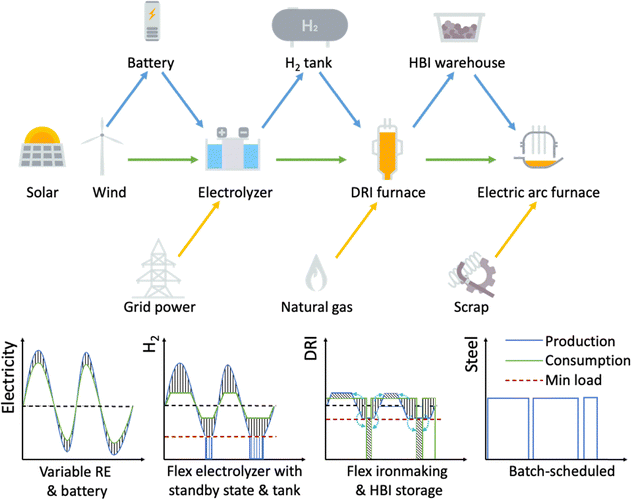 |
| | Fig. 1 Conceptual illustration of the system configuration and operational flexibility across the hydrogen-based steelmaking value chain. The schematic links renewable electricity supply to hydrogen production (via electrolysis), ironmaking (DRI), and steelmaking (EAF), with intermediate buffering (battery, H2 tank, and HBI storage). Backup options provide supplemental supply during periods of electricity, hydrogen, or DRI shortfall. Operational flexibility is illustrated in the four bottom panels, which compare the original production profiles with the adjusted consumption profiles after flexibility is enabled at the electricity, hydrogen, iron, and steel production stages. | |
Renewable-powered H2-DRI-EAF requires fundamentally different process design, capacity sizing, and operational strategies to harness weather-dependent wind and solar electricity. Prior work has examined electrolyzer flexibility in both off-grid wind/solar and hydrogen co-design17–19 and grid-connected, price-responsive operation.20,21 EAF flexibility has been studied mainly through batch scheduling for demand response.22–25 However, these studies largely focus on individual units, and how flexibility measures are coupled and coordinated across the integrated H2-DRI-EAF chain remains unclear. The intermittency and variability of renewable energy cascades through electricity, hydrogen, DRI and steel production, ultimately leading to occasional energy and material shortages and potential cost spikes.26 Although hydrogen production, ironmaking, and steelmaking can be conceptually decoupled, implementing flexibility can raise capital requirements through two main channels: (1) reduced utilization and the associated need to oversize key components to maintain throughput under variability and (2) additional investment in intermediate energy and product storage to bridge temporal asynchrony across stages. Consequently, the impacts of flexibility on capacity sizing and investment decisions for different equipment and storage technologies remain poorly understood. Coordinating flexible facility operations with energy and material storage, subject to process-specific operational constraints and economic parameters, is therefore critical for managing cost variability.
A cost-optimization framework is essential for characterizing H2-DRI-EAF system properties and informing system design and operational strategies. Prior studies have evaluated selected flexibility measures and their economic performance across different time horizons and regions, as summarized in Table 1. However, several important gaps persist. First, most studies consider only a limited subset of flexibility options, and their technological representations are often highly simplified to limit modeling complexity. Critical features, such as electrolyzer start-up and shutdown behavior and explicit batch operation of EAFs, remain insufficiently resolved without introducing integer or nonlinear formulations that significantly increase computational burden. Second, the relative priority of different flexibility strategies and their impacts on the optimal capacity sizing of different components are not well understood. Although fully unlocking flexibility measures can reduce production costs, it also reduces capital utilization and increases operational and control complexity. Therefore, clearly identifying the benefits of different flexibility options is essential for balancing these trade-offs under realistic operating conditions. In addition, renewable-based steelmaking requires large-scale deployment of wind and solar capacity, raising potential land-use constraints. While previous work has quantified land requirements for hydrogen-based steelmaking near iron ore deposits globally,27 it has not examined how land-use intensity varies with the introduction of flexibility measures or across alternative technology pathways, such as PV-only systems or hydrogen storage at different pressure levels.
Table 1 Literature review of flexibility strategies modeled in H2-DRI-EAF systems. TEA: techno-economic analysis (not optimization), LP: linear programming, MILP: mixed-integer linear programming. For EAF flexibility, continuous means treating the load of the EAF as a continuous variable and discrete refers to introducing a binary variable to describe the on/off state for each hour. For natural gas (NG) and scrap blending, fixed and variable denote if the hourly ratio can be changed
| Study |
Case |
Model type |
Electrolyzer flexibility |
DRI load flexibility |
EAF flexibility |
Grid power |
NG blending |
Scrap blending |
| Vogl et al. (2018)28 |
Not specific |
TEA |
— |
— |
— |
— |
— |
✓ (fixed) |
| Toktarova et al. (2022)29 |
Europe (2050) |
LP |
✓ |
✓ |
✓ (continuous) |
✓ |
— |
— |
| Bhaskar et al. (2022)30 |
Norway (2020–2030) |
LP |
✓ |
— |
— |
✓ |
— |
— |
| Haendel et al. (2022)31 |
Germany (2018–2050) |
LP |
✓ |
✓ |
— |
— |
✓ (fixed) |
— |
| Devlin et al. (2023)27 |
Global (2030–2050) |
LP |
✓ |
— |
✓ (continuous) |
— |
— |
✓ (fixed) |
| Boldrini et al. (2024)32 |
Germany and Sweden (2030–2050) |
LP |
✓ |
✓ |
✓ (continuous) |
✓ |
— |
— |
| Weiss and Ikäheimo (2024)33 |
Finland (2025–2030) |
LP |
✓ (on/off) |
✓ |
— |
✓ |
— |
— |
| This study |
China (2035) |
MILP |
✓ (on/off) |
✓ |
✓ (discrete) |
✓ |
✓ (variable) |
✓ (variable) |
China is the world's largest steel producer, CO2 emitter, and renewable energy equipment manufacturer and thus requires particular attention when exploring the design and operations of renewable-centric H2-DRI-EAF technology.34,35 China produced 54% of the global total crude steel output in 2023, with BF-BOF technology accounting for 90.5%.4 H2-DRI-EAF technology could be a promising option in China, benefiting from thriving manufacturing industries for solar panels, wind turbines, lithium-ion batteries, and alkaline electrolyzers.36 At the facility level, spatial heterogeneity in renewable energy availability and profiles could lead to important locational differences in optimal system design and operations for H2-DRI-EAF plants.37,38 Therefore, we select five representative Chinese steelmaking cities as our case study (see Section S2 in the SI).
To address the above research gaps, this study develops a mixed-integer linear programming (MILP) model with high technological granularity to comprehensively represent flexibility measures across the entire renewable-centric H2-DRI-EAF value chain. The model jointly optimizes capacity sizing decisions and hourly operations over a full representative weather year for all major equipment. This integrated framework enables systematic evaluation of how different flexibility measures shape regional investment strategies, optimal system configurations, and associated land requirements for hydrogen-based steelmaking. We further evaluate the conditions, such as scrap addition and carbon pricing, under which H2-DRI-EAF can achieve cost parity with BF-BOF by 2035. The results provide quantitative guidance for accelerating the implementation of H2-DRI-EAF technology and designing cost-effective and scalable pathways toward deep decarbonization of the iron and steel sector.
2. Methodology
2.1. Optimization model
A MILP optimization model is developed for this renewable-centric H2-DRI-EAF technology. Planning and operational variables are co-optimized subject to technological, policy and resource constraints. As illustrated in Fig. S1 of the SI, solar and wind serve as the primary energy sources, supplemented by grid power. Lithium-ion batteries store excess electricity from renewables and discharge as needed. Hydrogen, produced by alkaline electrolyzers, can be consumed immediately or stored in a hydrogen storage tank for future use. The DRI furnace operates with inputs of electricity, hydrogen, natural gas, and DR-grade pellets. Hot DRI from the furnace outlet can either be fed directly into the EAF or compressed and stored as hot briquetted iron (HBI) in a warehouse for future use, incurring an energy penalty. The EAF, powered by an electricity supply system, features flexible hourly blending ratios of DRI and scrap. The crude steel is immediately processed through continuous casting to align with steel demand requirements.
2.1.1. Objective function.
The objective function minimizes the total annualized costs of the renewable-dominated H2-DRI-EAF system, encompassing annuitized capital costs, equipment operation and maintenance (O&M) costs, raw material costs, external energy costs, and labor costs (eqn (1)–(3)). Fixed costs for each component are calculated as the product of planning capacity and the corresponding annuity, which accounts for annuitized capital costs and fixed O&M costs (eqn (4)). For batteries, fixed costs include components related to both power capacity and energy capacity (eqn (5)). Variable costs are determined by the product of time-varying variables (e.g., hourly natural gas consumption) and the corresponding unit costs (eqn (6)).| | | totc = fixctot + varctot | (1) |
| | | fixctot = fixcele + fixcely + fixcbat + fixctank + fixcdrif + fixceaf + fixchbiw | (2) |
| | | varctot = varcio + varcscr + varcgp + varcng + varclab + varcom | (3) |
| | | fixci = capi·ANNCi i ∈ (ele, ely, tank, drif, eaf, hbiw) | (4) |
| | | fixcbat = capbatp·ANNCbatp + capbate·ANNCbate | (5) |
| |  | (6) |
2.1.2. Technological constraints.
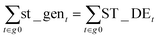
Balance constraints: balance constraints are applied to electricity, hydrogen, DRI, and steel to ensure system equilibrium. For electricity, hydrogen, and DRI, these constraints state that generation plus net discharge must equal the respective demand (eqn (7)–(9)). Steel balance is modeled based on periodic contracts, assuming that total steel production within a period must meet the prorated demand over the period (eqn (10)). The default period is set as 146 hours (∼6 days).| | | ele_gen(t,solar) + ele_gen(t,wind) + bat_outt − bat_int + gridt = ely_pt + dri_pt + drip_pt + eaf_pt | (7) |
| | | h2_gent + h2_outt − h2_int = dri_ht | (8) |
| | | dri_gen(t,h2) + dri_gen(t,gas) + dri_outt − dri_int = eaf_drit | (9) |
| |  | (10) |
Capacity constraints: capacity constraints ensure that the load of each facility remains within feasible operational limits. For renewables, generation per unit capacity must not exceed the maximum output curves determined by weather conditions (eqn (11) and (12)). For batteries, charging and discharging power are restricted by power capacity, while state of charge (SOC) must remain within the energy capacity (eqn (13)–(15)). An upper limit for grid power purchase per hour is set as 10% of the peak electricity demand of the plant (eqn (16)).
| | | ele_gen(t,solar) ≤ capsolar·MAXGEN(t,solar) | (11) |
| | | ele_gen(t,wind) ≤ capwind·MAXGEN(t,wind) | (12) |
To capture the flexible operation of large-scale electrolyzers under variable renewable power, our model explicitly represents the standby state, including shutdown and warm-start behavior. We adopt a formulation wherein electrolyzer arrays are represented as clusters of identical units. Start-up, shutdown, and commitment decisions are thus modeled at the cluster level rather than for each individual unit to reduce the number of binary on/off decisions. Commitment-related and start-up/shutdown constraints are defined in eqn (17)–(20), while the aggregate electrolyzer power is constrained to lie within the feasible operating range of committed capacity (eqn (21) and (22)). For a hydrogen-based steel plant producing 1 Mt of steel per year, total hydrogen demand is approximately 50 kt per year. According to typical Chinese engineering practice, roughly 130 alkaline electrolyzer units are required, each with a nominal capacity of 1000 Nm3 h−1. Hence, to further reduce computational burden, commitment-related binary variables are relaxed and linearized as continuous variables during model solving. Hydrogen storage tanks are subject to both upper SOC constraints and a minimum SOC serving as a cushion (eqn (23) and (24)).
| | | zcommitt+1 − zcommitt = zstartt+1 − zshutt+1 zcommitt, zstartt, zshutt ∈ Z | (17) |
| | | zcommitt ≤ capely/UNITely | (18) |
| | | zstartt ≤ capely/UNITely | (19) |
| | | zshutt ≤ capely/UNITely | (20) |
| | | ely_pt ≤ zcommitt UNITely·MAX_LOADely | (21) |
| | | ely_pt ≤ zcommitt UNITely·MIN_LOADely | (22) |
| | | h2_soct ≤ captank·MIN_SOCh2 | (24) |
For the DRI furnace, we explicitly distinguish the respective contributions of natural gas and hydrogen (eqn (25)). The maximum share of natural gas in the DRI furnace is capped at 30% (eqn (26)). When flexibility is enabled, the DRI furnace load is constrained to remain within specified upper and lower bounds (eqn (27) and (28)). Owing to the complex reduction reactions occurring inside the DRI furnace, we assume that although a certain degree of load adjustment is technically feasible, load variations cannot occur frequently. Accordingly, within each response cycle (146 hours), the DRI gas composition and furnace load are held constant, but they are allowed to vary across cycles (eqn (29) and (30)). HBI is introduced as a stabilized form of DRI to bridge temporal mismatches between ironmaking and steelmaking. Accordingly, directly consumed DRI is assumed to bypass compression or briquetting, whereas HBI storage is utilized only when such temporal mismatches arise. HBI storage volumes should be lower than the size of the HBI storage warehouse (eqn (31)).
| | | DRI_gent,h2 + DRI_gent,gas = DRI_gent,tot | (25) |
| | | DRI_gent,gas ≤ (DRIgent,gas + DRI_gent,h2) × MAX_GAS_COMP | (26) |
| | | DRI_gent,tot ≤ capdrif·MAX_LOADDRI | (27) |
| | | DRI_gent,tot ≤ capdrif·MIN_LOADDRI | (28) |
| | | DRI_gent,gas = DRI_geng1,gas t ∈ g1 | (29) |
| | | DRI_gent,tot = DRI_geng2,gas t ∈ g2 | (30) |
EAF operation is represented as a batch-wise process with discrete on/off behavior. A single-unit formulation is adopted, in which the furnace is either offline or operating at its rated capacity, with output linked to a binary operating state and installed capacity. The corresponding constraints are implemented using a Big-M formulation, which enforces zero output when the EAF is off and full-capacity production when it is on (eqn (32)–(34)). The Big-M parameter reflects the upper bound of the installed EAF capacity.
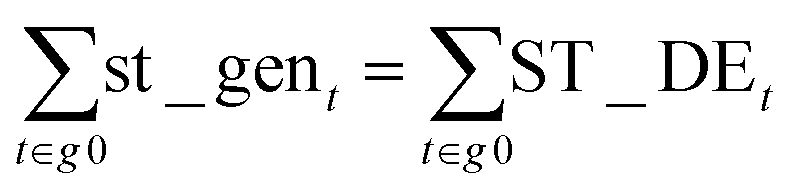
| | | st_gent ≤ capEAF − M·(1 − wt) | (34) |
Storage constraints: Storage constraints define the relationship between the SOC and charge–discharge actions over the time series. The SOC in the current time slice equals the SOC from the previous time slice plus the net charge within the time step. For batteries, efficiency losses during charging and discharging are accounted for, while losses are neglected for hydrogen or DRI storage (eqn (35)–(37)).
| | | BAT_SOCt = BAT_SOCt−1 − BAT_outt/BAT_ηout + BAT_int × BAT_ηin | (35) |
| | | h2_SOCt = h2_SOCt−1 − h2_outt + h2_int | (36) |
| | | HBI_SOCt = HBI_SOCt−1 − DRI_outt + DRI_outt | (37) |
Stoichiometry balance: stoichiometry balance broadly refers to ensuring the consistency of the input–output relationship in the system and maintaining proportionality across mass, energy, or other resources. For electrolyzers, hydrogen output per hour is directly proportional to the electrical input (eqn (38)). In the DRI furnace, inputs such as natural gas, hydrogen, electricity, and iron ore are connected to DRI output, with distinct stoichiometric data for natural gas-based and hydrogen-based DRI production (eqn (39)–(42)). Similarly, in the EAF, electricity consumption is distinguished between scrap-based and DRI-based production (eqn (44) and (45)). The energy penalty for reheating DRI is considered (eqn (43)). If flexibility in the scrap blend ratio is enabled, the scrap-to-steel ratio should follow the annual balance ratio only (eqn (47)). Otherwise, the scrap-to-steel ratio is fixed and remains constant for every hour (eqn (46)).
| | | h2_gent × STOICHele,h2 = ely_pt | (38) |
| | | DRI_gent,h2 × STOICHh2,DRI = DRI_ht | (39) |
| | | DRI_gent,gas × STOICHgas,DRI = DRI_gt | (40) |
| | | DRI_ht × STOICHele,DRI = DRI_pt | (41) |
| | | (DRI_gent,h2 + DRI_gent,gas) × STOICHio,DRI = DRI_iot | (42) |
| | | DRI_outt × STOICHele,DRI_reheat = DRIp_pt | (43) |
| | | EAF_DRIt × STOICHele,EAF_DRI + EAF_scrt × STOICHele,EAF_scr = EAF_pt | (44) |
| | | EAF_DRIt/STOICHEAF_DRI,st + EAF_scrt/STOICHEAF_scr,st = st_gent | (45) |
| | | EAF_SCRt = st_gent × SCR_R | (46) |
| |  | (47) |
Emission constraints: emission constraints indicate that the annual CO2 emissions should be bounded by exogenous emission caps (eqn (49)). CO2 emissions are calculated based on contributions from carbon additions in the EAF,39 natural gas and grid power, determined by multiplying their respective consumption with emission factors (eqn (48)). The emission costs are equal to total CO2 emissions multiplied by the exogenous carbon tax (eqn (50)), set as USD 38 per t CO2 under the medium case in China by 2035.40
| |  | (48) |
2.2. Flexibility strategies and scenario design
The renewable-dominated H2-DRI-EAF system incorporates various flexibility and buffer measures to adapt to dynamic operational conditions. In this work, we assess seven potential strategies to enhance operational flexibility of H2-DRI-EAF facilities and optimize their costs of production under the profile of wind and solar power, as shown in Table 2. Different facilities in the system possess unique technological properties and thus present varying responsiveness to renewable variability. Technological parameters in each facility are shown in Section S3 of the SI.
Table 2 Description of flexibility strategies. The adjustable load range of the DRI furnace and the hydrogen–natural gas blending ratio are informed by surveys of existing DRI projects
| Flexibility measure |
Component |
Description |
| Electrolyzer flexibility |
Electrolyzer |
Continuous adjustment of electrolyzer operating load between 20 and 100% of rated capacity41 |
| Electrolyzer standby mode |
Electrolyzer |
Hot standby operation consuming ∼3% of rated power without hydrogen production, enabling rapid restart42 |
| DRI load flexibility |
DRI furnace |
Adjustable DRI production between 70 and 100% of rated capacity |
| EAF batch operation |
EAF |
Discrete batch operation with an EAF unit, running at full load when online |
| Grid electricity backup |
External power supply |
Limited grid power purchase (up to 10% of peak system demand) as a backup power source during low renewable output |
| Natural gas blending |
External reducing agent |
Partial substitution of hydrogen with natural gas (up to 30%) as a backup reductant during hydrogen shortages |
| Scrap blend flexibility |
External scrap supply |
Adjustable scrap blending ratio per batch in an EAF (0–100%) |
To systematically assess the impacts of different flexibility measures, we construct a set of scenarios that activate flexibility options individually and in combination, as shown in Table 3. The baseline scenario (S0) considers flexible electrolyzer operation only, which is already widely adopted in industrial practice. Scenario S1 further incorporates electrolyzer standby and warm-start operation, enhancing the responsiveness of hydrogen production. Scenario S2 introduces flexible DRI operation in conjunction with HBI storage to buffer temporal mismatches between ironmaking and downstream processes. Scenario S3 represents the batch-wise operation of EAF steelmaking, which requires coordination with upstream HBI storage and a time-flexible steel demand profile rather than fixed hourly demand. Scenario S4 combines flexibility in hydrogen production and steelmaking, while scenario S5 activates flexibility across all production stages. Scenarios S6 and S7, built on S0, separately evaluate the roles of grid electricity and natural gas as external backup options. Finally, scenario S8 extends S5 by allowing all external backup options, where the scrap ratio can be adjusted on a per-batch basis to compensate for temporary DRI shortages.
Table 3 Scenario design with combinations of different flexibility strategies
|
|
S0 |
S1 |
S2 |
S3 |
S4 |
S5 |
S6 |
S7 |
S8 |
| Electrolyzer flexibility |
✓ |
✓ |
✓ |
✓ |
✓ |
✓ |
✓ |
✓ |
✓ |
| Electrolyzer standby mode |
|
✓ |
|
|
✓ |
✓ |
|
|
✓ |
| DRI load flexibility |
|
|
✓ |
|
|
✓ |
|
|
✓ |
| EAF batch operation |
|
|
|
✓ |
✓ |
✓ |
|
|
✓ |
| Grid electricity backup |
|
|
|
|
|
|
|
✓ |
✓ |
| Natural gas blending |
|
|
|
|
|
|
✓ |
|
✓ |
| Scrap blend flexibility |
|
|
|
|
|
|
|
|
✓ |
Input data include hourly renewable profiles (from https://www.renewables.ninja/) using 2016 data, exogenous energy and material costs, and economic data of facilities. Renewable technology costs adopt projections for 2035 (see Section S3 in the SI). Natural gas and grid power prices are exogenous and region-specific, obtained from the CEIC Data Global Database, while RE-based renewable power and hydrogen are endogenous. Steel demand is set as 1 Mt of steel output per year with 50% scrap ratio. The emission cap is assumed to be 0.15 t CO2 per t steel emission cap, which achieves over 90% emission reduction compared to the BF-BOF route.
3. Results
3.1. Flexibility strategies substantially change optimal system configuration and operations of the H2-DRI-EAF
Unlocking production flexibility across the hydrogen-based steelmaking value chain substantially reduces the required capacities of solar PV and batteries, while inducing varying degrees of overcapacity in electrolyzers, DRI furnaces, and EAFs. As shown in Fig. 2, compared with the baseline S0 scenario, introducing internal process flexibility (S5) lowers installed solar capacity by 13–35% and battery capacity by 32–60% across regions. In contrast, the capacities of electrolyzers, DRI furnaces, and EAFs are moderately oversized, with electrolyzer capacity exceeding steady-state requirements by 26–75%, DRI furnace capacity by 3–9%, and EAF capacity by 33–49%. For a renewable-centric H2-DRI-EAF plant producing 1 Mt of steel per year with a 50% scrap ratio, the S5 scenario requires 1.8–2.3 GW of combined solar and wind capacity, compared with 2.0–3.1 GW under S0. Increased flexibility shortens storage duration requirements for H2 tanks in most regions, while necessitating additional HBI inventories. Storage durations also vary across regions and processes: under the S5 scenario, electricity storage duration is around 7 hours across the five representative regions, H2 tanks provide 31–55 hours of buffering, while HBI storage corresponds to approximately 215–371 hours (∼9–15 days).
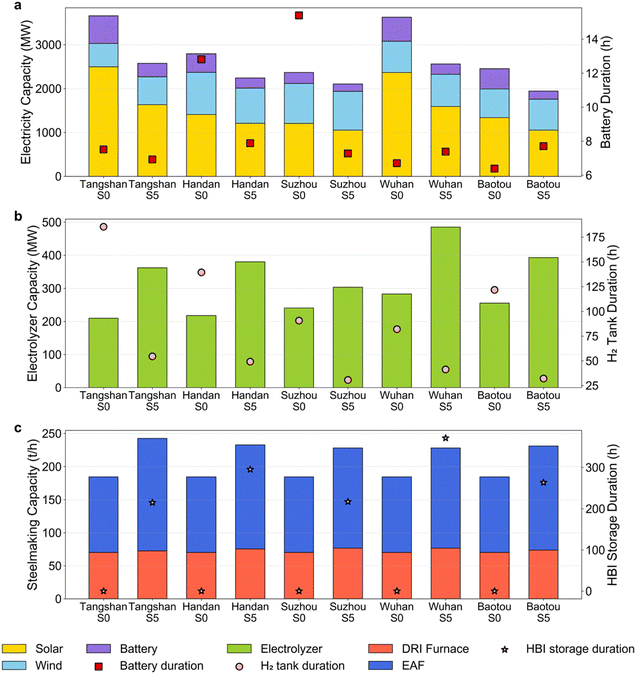 |
| | Fig. 2 Installed capacities and storage of H2-DRI-EAF systems across regions under S0 and S5 scenarios. (a) Electricity-related capacity by technology and battery discharge duration; (b) electrolyzer capacity and hydrogen storage duration; (c) iron and steel production capacities and HBI storage duration. S0: flexible electrolyzer operation (no standby state). S5: electrolyzer standby + flexible DRI operation + batch EAF operation. The top panel shows electricity-related capacity by technology (solar, wind, and battery) together with the corresponding battery discharge duration. The middle panel presents electrolyzer capacity and hydrogen storage duration. The bottom panel illustrates iron and steel production capacities, including DRI furnace and EAF capacities, along with HBI storage duration. | |
Fig. 3 further shows that different flexibility strategies affect capacity sizing across system components in highly heterogeneous ways. While most flexibility options reduce solar and battery capacities, their impacts on wind capacity are not unidirectional and exhibit pronounced regional variation. For example, in Tangshan, wind capacity increases by 19–66% under S1, S3, S4, and S5 (scenarios involving electrolyzer standby and/or EAF flexibility) relative to S0, while solar capacity declines by 17–42%. Unlocking flexibility in a single production stage often triggers upstream–downstream reallocation of storage rather than uniform capacity reductions. Introducing electrolyzer standby (S1) leads to further electrolyzer overcapacity by 28–70% while reducing battery energy capacity by 23–41% in most regions and increasing hydrogen tank capacity. When ironmaking flexibility is enabled (S2, S5), DRI furnaces are oversized by 3–9%, hydrogen storage requirements fall by 14–75%, and additional HBI warehouses of roughly 0.01–0.03 Mt are required to buffer production. Finally, under the S8 scenario, which allows external backup flexibility, battery capacity can be reduced by more than 73% and hydrogen storage by up to 81%; however, this comes at the cost of extremely large HBI inventories of 0.04–0.11 Mt.
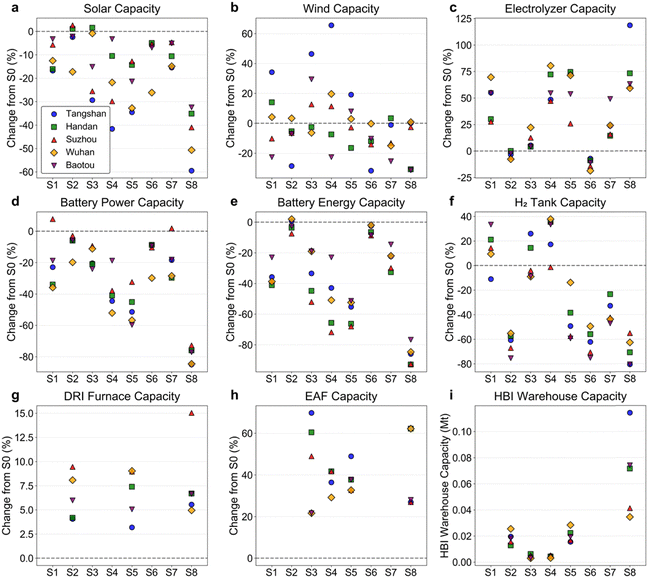 |
| | Fig. 3 Changes in optimal capacity deployment across key system components under scenarios S1–S8 relative to the baseline (S0) for representative regions. Panels report changes in (a) solar capacity, (b) wind capacity, (c) electrolyzer capacity, (d) battery power capacity, (e) battery energy capacity, (f) hydrogen tank capacity, (g) DRI furnace capacity, (h) EAF furnace capacity, and (i) HBI warehouse capacity. S0: flexible electrolyzer operation. S1: S0 + electrolyzer standby. S2: S0 + DRI load flexibility. S3: S0 + batch EAF operation. S4: S0 + electrolyzer standby + batch EAF operation. S5: S4 + DRI load flexibility. S6: S0 + natural gas blending. S7: S0 + grid electricity backup. S8: all flexibility and backup options (including scrap blending). Positive values indicate capacity expansion relative to S0, while negative values indicate contraction. | |
We observe that optimal operations of renewable-centric H2-DRI-EAF facilities exhibit varying operational patterns across components in the system as shown in Fig. 4. For example, for a facility in Tangshan, electrolyzers closely follow renewable variability each hour, which aligns with the solar generation curves for most of the time. In contrast, DRI furnaces operate at full load most of the time but lower their load during prolonged periods of weak renewable generation. EAF load also exhibits hourly operational changes with a distinct diurnal pattern (frequently lowering output overnight), but these changes are less pronounced than those of electrolyzers. As for storage, we observe that batteries typically operate on an intra-day cycle, charging during the daytime and discharging at night. Hydrogen storage follows a charge–discharge cycle ranging from days to weeks, while storage of reduced iron completes only a few cycles per year. These operational patterns are consistent across other cities (see Section S4 in the SI). Under the S5 scenario across the five cities, full charge–discharge cycling occurs 158–227 times per year for batteries, 24–49 times for hydrogen storage, and 5–13 times for HBI storage. Cycles are reported as equivalent full cycles based on cumulative throughput within the feasible operating range.
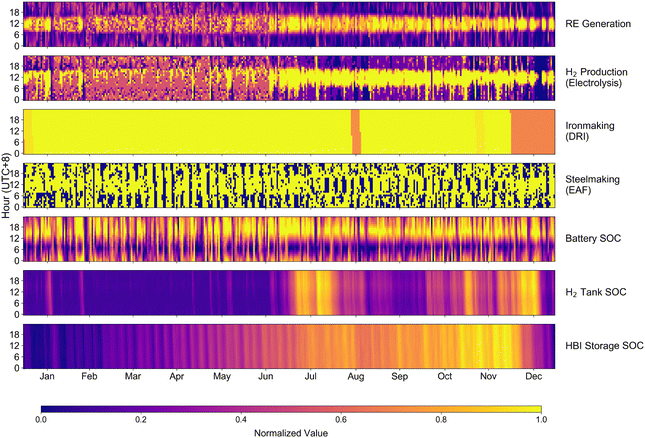 |
| | Fig. 4 Annual normalized operational profiles of H2-DRI-EAF systems in Tangshan under S5. Heat maps with the X-axis show daily variations over a single year, and the Y-axis denotes hourly output over 24 hours per day. Linear normalization is applied to calculate the ratio of the absolute value to its maximum value. SOC for the battery, H2 tank and DRI refers to the SOC in each hour divided by the maximum storage capacity. | |
3.2. Flexibility-driven cost competitiveness of H2-DRI-EAF relative to BF-BOF
Harnessing all internal flexibility options (S5) reduces steel production costs by 6–10% relative to the baseline scenario (S0), as shown in Fig. 5. In contrast, unlocking flexibility in only a single process stage, such as hydrogen production (S1), ironmaking (S2), or steelmaking (S3), is insufficient to achieve the maximum cost reductions observed under S5. Introducing external backup options alone, such as grid electricity (S7) or natural gas for iron reduction (S6), yields limited cost reductions of 4–6% and 3–5% relative to S0, respectively. However, when these external backup options are coupled with internal flexibility measures, LCOS can be reduced by 11–18% compared with the baseline. Tracking upstream cost metrics shows consistent trends across the system: reductions in LCOE, LCOH, and LCOD closely mirror changes in LCOS. A representative mapping across scenarios indicates that an LCOE of approximately 0.03 USD per kWh corresponds to an LCOH of about 2.5 USD per kg H2, an LCOD of roughly 400 USD per t DRI, and an LCOS of around 530 USD per t steel. Taking S5 as an example, internal flexibility lowers LCOE by 28–38%, LCOH by 24–33%, and LCOD by 12–17% relative to S0.
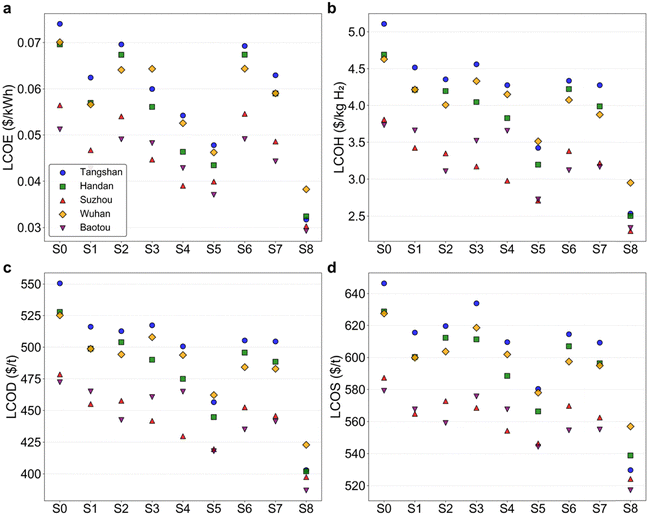 |
| | Fig. 5 Impacts of flexibility strategies on energy and steel production costs across regions. The panels report changes in (a) levelized cost of electricity (LCOE), (b) levelized cost of hydrogen (LCOH), (c) levelized cost of direct reduced iron (LCOD), and (d) levelized cost of steel (LCOS) across scenarios S0–S8 for five representative regions. Each point denotes the optimal system outcome under a given flexibility configuration. S0: flexible electrolyzer operation. S1: S0 + electrolyzer standby. S2: S0 + DRI load flexibility. S3: S0 + batch EAF operation. S4: S0 + electrolyzer standby + batch EAF operation. S5: S4 + DRI load flexibility. S6: S0 + natural gas blending. S7: S0 + grid electricity backup. S8: all flexibility and backup options (including scrap blending). | |
Across the five representative cities, the H2-DRI-EAF systems (1 Mt steel output per year with 50% scrap addition) require billion-USD-scale upfront capital investment, with total CAPEX of approximately 2.4–3.1 B USD under the baseline scenario (S0), as shown in Fig. 6a. With moderate system integration and operational flexibility (S5), the required upfront investment declines to around 2.0–2.4 B USD, corresponding to a 15–23% reduction relative to S0. Under the most integrated and flexible configuration (S8), total CAPEX is further reduced to 1.6–2.0 B USD, representing an overall 29–46% reduction compared with the baseline. This reduction is observed across all locations and is primarily driven by lower installed capacities of batteries and solar generation.
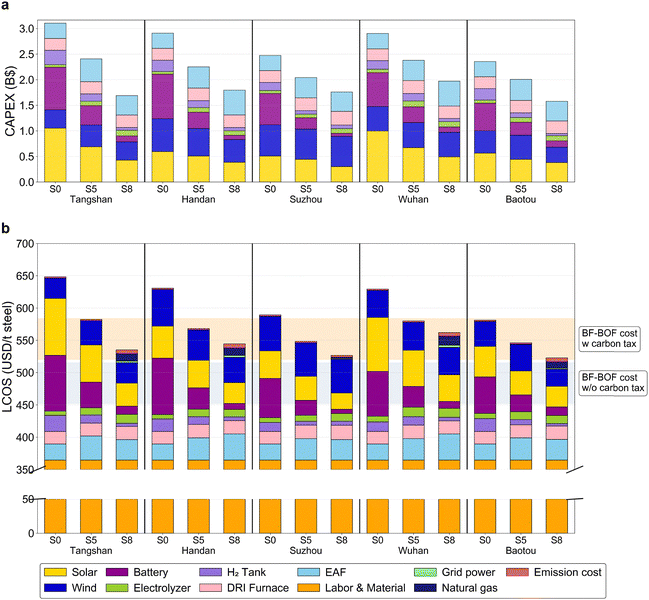 |
| | Fig. 6 Upfront capital investment and cost breakdown of levelized cost of steel (LCOS) across scenarios and regions. (a) Breakdown of total upfront CAPEX and (b) breakdown of LCOS. Labor and material costs reflect variable OPEX, including iron ore, scrap steel (50% blend), other raw materials, and labor costs. Differences in CAPEX across scenarios arise from changes in the installed capacity sizes of system components. S0: flexible electrolyzer operation. S5: electrolyzer standby + flexible DRI operation + batch EAF operation. S8: all flexibility and backup options. Emission accounting scope includes carbon addition in the EAF (0.06 t CO2 per tonne of steel), natural gas as the reducing agent, and grid electricity, subject to an emission cap of 0.15 t CO2 per tonne of steel. For comparison, BF–BOF production costs are calculated across historical years (2010–2023) under varying coke and thermal coal prices (see Section S7 in the SI). BF pellet and DR pellet prices are fixed at USD 135 per t and USD 160 per t, respectively, based on the 2015–2020 average cost-and-freight iron ore price in China. A carbon tax of USD 38 per t CO2 is applied where relevant to calculate associated emission costs. | |
With sufficient system flexibility, H2-DRI-EAF can approach cost parity with BF–BOF production by around 2035 when a 50% share of economically sourced scrap is available, as shown in Fig. 6b. At a scrap cost of 286 USD per t, the LCOS range of renewable-centric H2-DRI-EAF with 50% scrap input overlaps with the cost range of BF–BOF including emission costs, accounting for historical variability in coke and thermal coal prices. Moreover, both carbon pricing (at 38 USD per ton CO240) and the full deployment of flexibility measures are essential for achieving parity. Across the five representative cities, LCOS values for H2-DRI-EAF under S5 and S8 fall within the BF–BOF cost range when carbon costs are included. Under the S8 scenario in particular, LCOS in most regions reaches the lower bound of BF–BOF costs with carbon pricing. Decomposition of the cost structure shows that flexibility-driven cost reductions are primarily enabled by substantial declines in solar PV, battery, and hydrogen storage investments, even though these savings are partially offset by increased capital expenditure for electrolyzer, DRI furnace, and EAF. This reflects an inherent investment trade-off in designing flexible H2-DRI-EAF systems.
To account for inter-annual renewable variability, we extend the single-year 8760-hour model to a stochastic framework using representative years selected by clustering historical wind and solar data from 1980 to 2023. Capacity decisions optimized under this stochastic formulation are then evaluated in out-of-sample operational simulations covering the full set of historical years to assess robustness. The results show that inter-annual meteorological variability induces only limited dispersion in economic performance: under scenario S5, the variation in the levelized cost of steel across historical years remains within approximately USD 10 per t for all regions, while under the more flexible scenario S8 the variation increases modestly but remains within roughly USD 20 per t. These results indicate that capacity decisions derived from the stochastic formulation ensure robust system performance across a wide range of meteorological conditions (see Section S7 in the SI).
3.3. Land-use intensity as a critical constraint in renewable-powered H2-DRI-EAF systems
Fig. 7 compares total land requirements and LCOS across a set of baseline and sensitivity scenarios for a hydrogen-based H2-DRI-EAF steel plant with an annual output at 1 Mt. The scenarios are designed to isolate the effects of operational flexibility, resource availability, and infrastructure configuration on both system cost and land use.
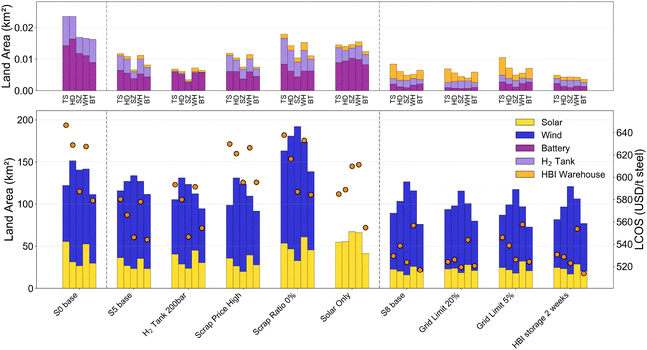 |
| | Fig. 7 Land-use composition and cost implications across sensitivity scenarios. Stacked bars show the total land requirements and their breakdown by infrastructure type (solar, wind, battery, hydrogen storage tanks, and HBI warehouses) across baseline and sensitivity scenarios for a H2-DRI-EAF steel plant producing 1 Mt steel per year (50% scrap addition) in five representative regions. The upper panel shows the land-use contribution of storage-related facilities and the lower panel shows total land requirements together with the corresponding LCOS (dots, right axis). Scrap costs are obtained with two scenarios based on the range of China's historical scrap prices from 2010 to 2023.43 The S5 base assumes hydrogen storage at 20 bar, a low-cost scrap scenario (286 USD per t), and a scrap blending ratio of 50%. Building on S5, an additional scenario considers 200 bar hydrogen storage, which requires the installation of a dedicated hydrogen compressor. Scrap price high adopts a scrap cost of 392 USD per t, while scrap ratio 0% assumes a 100% DRI route. Solar only excludes wind power. For the S8 base, a 10% grid electricity import limit is assumed, with additional sensitivity cases testing 5% and 20% grid power limits. In the last scenario, the maximum HBI storage duration is constrained to two weeks. | |
Across all scenarios and regions, total land requirements are overwhelmingly dominated by wind and solar generation, whereas storage-related facilities occupy orders of magnitude less land. Under the fully flexible S5 scenario, for example, a steel plant with a 50% scrap blending ratio requires approximately 111–134 km2 of land across regions, while the combined footprint of storage infrastructure remains below 0.01 km2. For comparison, the land area of San Francisco (a medium-sized city) is 122 km2. Total land requirements are largely driven by wind capacity, which exhibits a higher land intensity per unit of installed capacity than solar. However, additional flexibility primarily reduces the required scale of solar generation and storage facilities. Consequently, although introducing flexibility measures effectively reduces LCOS, the corresponding change in land use is comparatively modest. Switching to a solar-only electricity supply could reduce land requirements to approximately 41–67 km2, but would require larger battery capacities and increases LCOS by 5–64 USD per t (or 1–12%) relative to the S5 baseline. Moreover, increasing hydrogen storage pressure from 20 bar to 200 bar has only a limited effect on total land use, yet markedly reduces storage infrastructure size. For instance, in Tangshan under the S5 scenario, the required number of 2000 m3 spherical hydrogen tanks falls from about 117 (∼0.005 km2 footprint) per 1 Mt y−1 of steelmaking capacity at 20 bar to roughly 9 at 200 bar. Finally, although the optimized S8 configuration calls for a larger HBI warehouse, constraining HBI storage to a two-week capacity has only a minor impact on LCOS.
Scrap availability and price emerge as critical drivers of system economics. Under high scrap price assumptions (392 USD per t) or in the absence of scrap blending (100% DRI), LCOS remains approximately 40–57 USD per t higher than in low-cost scrap scenarios (286 USD per t). At the same time, higher scrap blending ratios reduce the demand for renewable electricity and hydrogen production, thereby lowering land requirements. This underscores the pivotal role of establishing a robust and efficient scrap recycling network to facilitate cost-effective H2-DRI-EAF production in China. Blending economically sourced scrap is necessary to make the renewable-centric H2-DRI-EAF technology viable in the coming decade.
A 30% cost increase in wind, solar, and electrolyzer technologies raises the LCOS by 4.5–6.1%, as shown in Fig. 8. Under scenario S5, increasing wind or solar costs by 30% individually leads to LCOS increases of 1.6–2.9% across cities, while the electrolyzer cost increase has a more muted effect (0.6–1.0%). When all three costs increase simultaneously, LCOS rises by 5.2–6.1% under S5 and by 4.5–5.4% under S8 with external backup, suggesting that external backup options (e.g., grid electricity and natural gas backup) provide only limited cost relief under elevated renewable cost assumptions in China. We also find that tightening grid purchase limits and increasing grid electricity prices have only a limited impact on LCOS (see Section S10 in the SI for details).
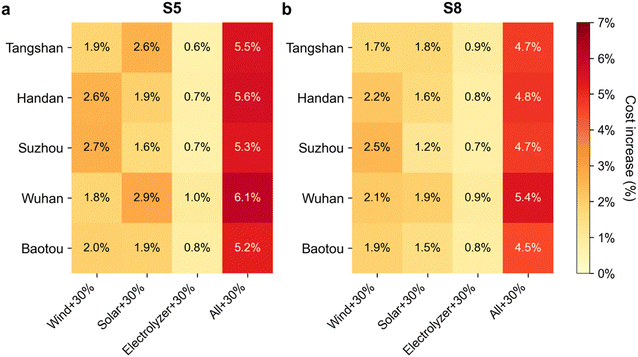 |
| | Fig. 8 Sensitivity of steel production cost to renewable and electrolyzer cost increases under S5 and S8. Panels show the percentage increase in the levelized cost of steel (LCOS) resulting from a 30% increase in wind, solar, and electrolyzer cost, or all three costs simultaneously, across five representative cities under (a) scenario S5 and (b) scenario S8. Values indicate relative LCOS changes compared to the baseline cost assumptions. | |
4. Discussion
This study offers valuable insights to guide the practical application of renewable-powered H2-DRI-EAF steelmaking. We find that H2-DRI-EAF could reach cost parity with conventional BF-BOF in China by 2035, but only if three conditions are met: (1) the incorporation of 50% low-cost scrap, (2) the full deployment of flexibility across all production stages (rather than relying solely on flexible electrolysis), and (3) carbon pricing at around 40 USD per t CO2 (or an equivalent subsidy or premium price for low-carbon steel of 60–80 USD per t of steel). Introducing external backup options such as grid power and natural gas as a reducing agent could further reduce the cost by 4–9% compared with internal flexibility only. Even with these backup options, the emission intensity remains below 0.15 t CO2 per t steel, corresponding to more than 90% abatement relative to the incumbent BF–BOF route.
This work strongly implies that the design and operation of iron and steelmaking facilities must adopt an entirely new paradigm for a renewable-centric future. BF-BOF facilities optimized for continuous operations and maximum capacity utilization would give way to H2-DRI-EAF facilities optimized to manage local variable renewable electricity supply via decoupled processes and oversized components with flexible capabilities. This new design paradigm tailored for high renewable penetration can be applied to other industrial sectors (e.g., bulk chemicals, fuels and other metals). The systematic optimization of capacity sizing and operation across supply-chain stages exhibited in this work can be applied to each of these sectors to identify the most competitive design for various geographic contexts.
This study systematically examines the design and operational characteristics of renewable-powered H2-DRI-EAF systems under a comprehensive set of flexibility measures. Compared with prior studies that rely on simplified production schedules (particularly for DRI operation),44,45 we explicitly represent the technological boundaries and economic parameters of all major production and storage stages. Our framework builds on temporal decoupling across stages while further coordinating flexibility to jointly respond to renewable energy variability. Heterogeneous flexibility potentials and storage technologies lead to differentiated capacity decisions: increased operational flexibility reduces the required capacities of solar, batteries, and hydrogen storage, while inducing moderate overcapacity in electrolyzers, DRI furnaces, and EAFs to facilitate load shifting. These structural adjustments translate into distinct investment strategies. For a representative facility, total upfront investment under the S5 scenario is approximately 2.0–2.4 billion USD, representing a reduction of about 15–23% relative to the baseline S0 configuration.
The modeling results in this study are consistent with prior research but lead to different conclusions regarding the timing and conditions for cost parity. Previous studies generally conclude that green H2-based steel production becomes cost-competitive with BF-BOF only under sufficiently high carbon prices by 2050 in most regions.27 In contrast, our results indicate that near cost parity is achievable in certain regions of China by 2035 under comparable scrap blending ratios and similar price assumptions. This difference arises primarily from a more comprehensive treatment of flexibility. Specifically, earlier studies often do not fully capture the cost-reduction potential of flexibility measures, including flexible DRI operation, electrolyzer start-up and shutdown behavior, and the use of variable grid electricity and natural gas as backup options. In addition, compared to many other regions, China benefits from substantially lower renewable energy and equipment costs, which further enhances the competitiveness of H2-DRI-EAF systems. The sensitivity analysis indicates that a 30% increase in wind, solar, and electrolyzer costs raises steel production costs by about 5%; however, technology costs in some countries still exceed 1.3 times China's levels (see Tables S9 and S10 in the SI). Furthermore, blending natural gas in DRI to supplement hydrogen delivers limited additional cost reductions in the Chinese context (see Section S5 in the SI), enabling some regions to potentially bypass gas-DRI-EAF as an interim transition pathway. Nevertheless, gas-DRI-EAF may remain an attractive transitional option in regions such as Europe, the United States, or the Middle East, where renewable electricity and electrolyzers are more expensive and/or natural gas prices are lower.
Although land-use requirements pose a critical constraint for renewable-powered H2-DRI-EAF systems, spatial decoupling might offer a viable system-level solution. Supplying a 1 Mt year−1 hydrogen-based steel plant with a 50% scrap addition requires on the order of 100 km2 of land, largely driven by wind and solar deployment rather than the steelmaking facility itself. Importantly, renewable generation and hydrogen or steel production can be spatially separated, substantially expanding siting flexibility for both renewables and industrial facilities. In China, policies promoting renewable power direct connection enable electricity from wind or solar farms to be delivered to industrial users via dedicated transmission lines. Given that most electricity consumption in H2-DRI-EAF systems is associated with hydrogen production, relocating electrolysis or even upstream iron production to regions with abundant renewable resources and fewer land-use constraints could further enhance feasibility. Therefore, our analysis explicitly evaluates the required sizes of intermediate storage, including H2 tanks and HBI warehouses, to characterize their land footprint in a steelmaking plant when renewable generation is located elsewhere. Only around 1000 m2 is required to site H2 tanks at 200 bar and HBI warehouses. Beyond temporal flexibility, such spatially reconfigured hydrogen-based steelmaking paradigms merit further exploration, including co-optimization of energy and industrial systems at regional or macro-scales.
Several factors also warrant further investigation. First, fully exploiting flexibility measures may complicate dynamic system characteristics, thereby requiring more detailed engineering modeling and control design for dynamic operations, particularly for start-up, shut-down, and transient behaviors across coupled process units. Achieving these benefits also presumes tight coordination across the electricity–hydrogen–iron–steel supply chain. In practice, imperfect coordination among independent actors could limit the realizable flexibility and associated cost savings. Second, EAF operation still requires carbon-bearing materials (e.g., coke or coal) for slag foaming and process stability for hydrogen-reduced DRI, resulting in residual CO2 emissions. Achieving net-zero steel production may therefore require additional carbon-neutral alternatives, such as substituting fossil carbon with sustainably sourced biomass-derived carbon (e.g., charcoal or biocarbon),46 for which feasibility assessments and rigorous carbon accounting require further attention in the context of H2-DRI-EAF systems.
5. Conclusion
This study examines how system-level flexibility can improve the economic performance of H2-DRI-EAF steelmaking when integrated with variable renewable energy. Key considerations arise from heterogeneous technological characteristics and flexibility potentials across hydrogen production, ironmaking, and steelmaking, as well as from the distinct roles of electricity, hydrogen, and DRI storage in enabling temporal decoupling of processes across the supply chain. We develop an hourly MILP model that jointly optimizes capacity sizing and hourly operations under annual renewable profiles, explicitly capturing asynchronous operation and intermediate buffering of discrete supply chain components. The model is applied to five representative steelmaking provinces in China to quantify the impacts of seven flexibility strategies on system economics and land-use intensity. We find that by 2035, renewable-centric H2-DRI-EAF production with 50% economically sourced scrap can achieve near cost parity with BF-BOF in most studied regions. Flexibility emerges as a key pillar of H2-DRI-EAF cost competitiveness and reshapes investment decisions by reducing the required capacities of solar generation and energy storage, while inducing differentiated overcapacity in electrolyzers, DRI furnaces, and EAFs to facilitate load shifting. Meanwhile, the land-use footprint of renewable-based steelmaking remains substantial, implying trade-offs between cost reduction and land intensity across alternative technology choices.
Author contributions
Conceptualization, Zheng Li, Yuezhang He, Mohamed Atouife, Tianduo Peng, and Jesse D. Jenkins; methodology, Yuezhang He and Mohamed Atouife; software, Yuezhang He; validation, formal analysis and data curation & visualization, Yuezhang He, Zhenqian Wang, Mohamed Atouife and Xingyuan Yang; writing - original draft, Yuezhang He and Zhenqian Wang; writing – review & editing, Jesse D. Jenkins, Xin He, Tianduo Peng, Daniel De Castro Gomez, Omar Hurtado Perez, and Zheng Li; funding acquisition, Zheng Li and Tianduo Peng; supervision, Zheng Li, Jesse D. Jenkins, and Tianduo Peng.
Conflicts of interest
Jesse D. Jenkins serves as a technical advisor to Energy Impact Partners and MUUS Climate Partners, both venture capital investors whose portfolio includes low-carbon steelmaking and other industrial process companies.
Data availability
The data supporting this article have been included as part of the supplementary information (SI). Supplementary information is available. See DOI: https://doi.org/10.1039/d6ee00643d.
Acknowledgements
The authors gratefully acknowledge the support from Saudi Aramco (Contract No. 4600000582 RPO No.16 & No.21), the National Natural Science Foundation of China (No. 42341202), and Tsinghua University-Toyota Research Center (TT-2024-05, TT-2025-04). We also gratefully acknowledge the support from the Carbon Neutrality and Energy System (CNEST) program initiated by Tsinghua University.
References
-
International Energy Agency. Iron and Steel Technology Roadmap. https://www.iea.org/reports/iron-and-steel-technology-roadmap ( 2020) Search PubMed.
-
National Development and Reform Commission, People's Republic of China. Green and low-carbon leading the high-quality development of steel industry. https://www.ndrc.gov.cn/xxgk/jd/wsdwhfz/202010/t20201015_1244312.html ( 2020) Search PubMed.
- L. Ren, S. Zhou, T. Peng and X. Ou, A review of CO2 emissions reduction technologies and low-carbon development in the iron and steel industry focusing on China, Renewable Sustainable Energy Rev., 2021, 143, 110846 CrossRef CAS.
-
World Steel Association. World Steel in Figures 2023. https://worldsteel.org/data/world-steel-in-figures-2023/ ( 2023) Search PubMed.
- Y. Lin, L. Ma, Z. Li and W. Ni, Coordinating energy and material efficiency strategies for decarbonizing China's iron and steel sector, J. Cleaner Prod., 2023, 425, 139038 CrossRef CAS.
-
RMI. Pursuing Zero-Carbon Steel in China. https://rmi.org/insight/pursuing-zero-carbon-steel-in-china/ ( 2021) Search PubMed.
- M. Shahabuddin, G. Brooks and M. A. Rhamdhani, Decarbonisation and hydrogen integration of steel industries: Recent development, challenges and technoeconomic analysis, J. Cleaner Prod., 2023, 395, 136391 CrossRef CAS.
- Z. Fan and S. J. Friedmann, Low-carbon production of iron and steel: Technology options, economic assessment, and policy, Joule, 2021, 5, 829–862 CrossRef CAS.
-
International Energy Agency. Net Zero Roadmap: A Global Pathway to Keep the 1.5 °C Goal in Reach – Analysis. https://www.iea.org/reports/net-zero-roadmap-a-global-pathway-to-keep-the-15-0c-goal-in-reach ( 2023) Search PubMed.
-
BloombergNEF. New Energy Outlook 2024. https://about.bnef.com/new-energy-outlook-series/ ( 2024) Search PubMed.
- H. Kildahl, L. Wang, L. Tong and Y. Ding, Cost effective decarbonisation of blast furnace – basic oxygen furnace steel production through thermochemical sector coupling, J. Cleaner Prod., 2023, 389, 135963 CrossRef CAS.
- J. Díaz and F. J. Fernández, Application of Combined Developments in Processes and Models to the Determination of Hot Metal Temperature in BOF Steelmaking, Processes, 2020, 8, 732 CrossRef.
-
A. Griffo, I. Tsyokhla and J. Wang, Lifetime of Machines Undergoing Thermal Cycling Stress, 2019 IEEE Energy Conversion Congress and Exposition (ECCE), 2019, 3831–3836 DOI:10.1109/ECCE.2019.8913216.
- V. A. Martinez Lopez, H. Ziar, J. W. Haverkort, M. Zeman and O. Isabella, Dynamic operation of water electrolyzers: a review for applications in photovoltaic systems integration, Renewable Sustainable Energy Rev., 2023, 182, 113407 CrossRef CAS.
- F. Rosner,
et al., Green steel: design and cost analysis of hydrogen-based direct iron reduction, Energy Environ. Sci., 2023, 16, 4121–4134 RSC.
- J. Shen,
et al., The role of hydrogen in iron and steel production: Development trends, decarbonization potentials, and economic impacts, Int. J. Hydrogen Energy, 2024, 92, 1409–1422 CrossRef CAS.
- A. Khalilnejad, A. Sundararajan and A. I. Sarwat, Optimal design of hybrid wind/photovoltaic electrolyzer for maximum hydrogen production using imperialist competitive algorithm, J. Mod. Power Syst. Clean Energy, 2018, 6, 40–49 CrossRef.
- Y. Zheng,
et al., Off-grid wind/hydrogen systems with multi-electrolyzers: optimized operational strategies, Energy Convers. Manage., 2023, 295, 117622 CrossRef CAS.
- A. Ibáñez-Rioja,
et al., Off-grid solar PV–wind power–battery–water electrolyzer plant: simultaneous optimization of component capacities and system control, Appl. Energy, 2023, 345, 121277 CrossRef.
- C. Jørgensen and S. Ropenus, Production price of hydrogen from grid connected electrolysis in a power market with high wind penetration, Int. J. Hydrogen Energy, 2008, 33, 5335–5344 CrossRef.
- A. E. Samani,
et al., Grid balancing with a large-scale electrolyser providing primary reserve, IET Renewable Power Gener., 2020, 14, 3070–3078 CrossRef.
- Z. Li, K. Li, X. Li, C. Huang and N. Zhang, Integrating process-level production scheduling into bidding strategy of steelmaking in multiple electricity markets, Appl. Energy, 2025, 402, 126894 CrossRef.
- D. Gajic, H. Hadera, L. Onofri, I. Harjunkoski and S. Di Gennaro, Implementation of an integrated production and
electricity optimization system in melt shop, J. Cleaner Prod., 2017, 155, 39–46 CrossRef.
- X. Zhao,
et al., Two-stage day-ahead and intra-day scheduling considering electric arc furnace control and wind power modal decomposition, Energy, 2024, 302, 131694 CrossRef CAS.
- H. Hadera, I. Harjunkoski, G. Sand, I. E. Grossmann and S. Engell, Optimization of steel production scheduling with complex time-sensitive electricity cost, Comput. Chem. Eng., 2015, 76, 117–136 CrossRef CAS.
- K. Engeland,
et al., Space-time variability of climate variables and intermittent renewable electricity production – A review, Renewable Sustainable Energy Rev., 2017, 79, 600–617 CrossRef.
- A. Devlin, J. Kossen, H. Goldie-Jones and A. Yang, Global green hydrogen-based steel opportunities surrounding high quality renewable energy and iron ore deposits, Nat. Commun., 2023, 14, 2578 CrossRef CAS PubMed.
- V. Vogl, M. Åhman and L. J. Nilsson, Assessment of hydrogen direct reduction for fossil-free steelmaking, J. Cleaner Prod., 2018, 203, 736–745 CrossRef CAS.
- A. Toktarova, V. Walter, L. Göransson and F. Johnsson, Interaction between electrified steel production and the north european electricity system, Appl. Energy, 2022, 310, 118584 CrossRef.
- A. Bhaskar, R. Abhishek, M. Assadi and H. N. Somehesaraei, Decarbonizing primary steel production: techno-economic assessment of a hydrogen based green steel production plant in Norway, J. Cleaner Prod., 2022, 350, 131339 CrossRef CAS.
- M. Haendel, S. Hirzel and M. Süß, Economic optima for buffers in direct reduction steelmaking under increasing shares of renewable hydrogen, Renewable Energy, 2022, 190, 1100–1111 CrossRef CAS.
- A. Boldrini, D. Koolen, W. Crijns-Graus, E. Worrell and M. van den Broek, Flexibility options in a decarbonising iron and steel industry, Renewable Sustainable Energy Rev., 2024, 189, 113988 CrossRef CAS.
- R. Weiss and J. Ikäheimo, Flexible industrial power-to-X production enabling large-scale wind power integration: A case study of future hydrogen direct reduction iron production in Finland, Appl. Energy, 2024, 365, 123230 CrossRef CAS.
- P. Friedlingstein,
et al., Global Carbon Budget 2024, Earth Syst. Sci. Data Dis., 2024, 1–133, DOI:10.5194/essd-2024-519.
- A. Jahanger, I. Ozturk, J. Chukwuma Onwe, T. E. Joseph and M. Razib Hossain, Do technology and renewable energy contribute to energy efficiency and carbon neutrality? Evidence from top ten manufacturing countries, Sustainable Energy Technol. Assess., 2023, 56, 103084 CrossRef.
-
A. García-Herrero, H. Grabbe and A. Kaellenius, De-risking and Decarbonising: A Green Tech Partnership to Reduce Reliance on China, SSRN Scholarly Paper at https://papers.ssrn.com/abstract=4689831 ( 2023).
- L. Song,
et al., Mapping provincial steel stocks and flows in China: 1978–2050, J. Cleaner Prod., 2020, 262, 121393 CrossRef.
- Y. Wang, Q. Chao, L. Zhao and R. Chang, Assessment of wind and photovoltaic power potential in China, Carbon Neutrality, 2022, 1, 15 CrossRef.
- T. Echterhof, Review on the use of alternative carbon sources in EAF steelmaking, Metals, 2021, 11(2), 222 CrossRef CAS.
- J. Cao,
et al., The general equilibrium impacts of carbon tax policy in China: A multi-model comparison, Energy Economics, 2021, 99, 105284 CrossRef.
- C. Zhang, J. Wang, Z. Ren, Z. Yu and P. Wang, Wind-powered 250 kW electrolyzer for dynamic hydrogen production: a pilot study, Int. J. Hydrogen Energy, 2021, 46, 34550–34564 CrossRef CAS.
-
M. T. Baumhof, E. Raheli, A. G. Johnsen and J. KazempourOptimization of hybrid power plants: when is a detailed electrolyzer model necessary?in 2023 IEEE Belgrade PowerTech 1–10 ( 2023) DOI:10.1109/PowerTech55446.2023.10202860.
-
MacroMicro. China - Scrap Steel Spot Price. MacroMicro
https://en.macromicro.me/series/875/scrap-steel-spot
Search PubMed.
- P. Su, Y. Zhou, H. Li, H. D. Perez and J. Wu, Cost-effective
scheduling of a hydrogen-based iron and steel plant powered by a grid-assisted renewable energy system, Appl. Energy, 2025, 384, 125412 CrossRef CAS.
- B. Zou,
et al., Low-carbon economic schedule of the H2DRI-EAF steel plant integrated with a power-to-hydrogen system driven by blue hydrogen and green hydrogen, IET Renew. Power Gen., 2024, 18, 3839–3854 CrossRef.
- A. Salimbeni, G. Lombardi, A. M. Rizzo and D. Chiaramonti, Techno-economic feasibility of integrating biomass slow pyrolysis in an EAF steelmaking site: a case study, Appl. Energy, 2023, 339, 120991 CrossRef CAS.
|
| This journal is © The Royal Society of Chemistry 2026 |
Click here to see how this site uses Cookies. View our privacy policy here.