


 PLATFORM UPDATE:


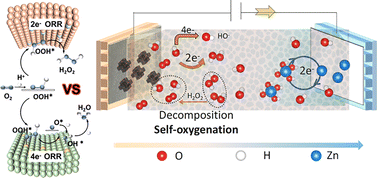
The 2e−vs. 4e− pathways for ORR in rechargeable zinc–air batteries

Abstract
Zinc–air batteries (ZABs) represent one of the most promising technologies for sustainable energy storage, boasting a high theoretical energy density of 1086 Wh kg−1 that far exceeds that of conventional lithium-ion systems. However, their widespread commercialization has been critically impeded by the inherent inefficiencies of the traditional four-electron (4e−) oxygen reduction reaction (ORR), which suffers from sluggish kinetics and detrimental parasitic side reactions. This comprehensive review urgently addresses these challenges by delineating a paradigm shift toward the emerging two-electron (2e−) ORR pathway—a transformative strategy that not only circumvents long-standing limitations but also unlocks new opportunities for high-performance metal–air batteries. By elucidating fundamental mechanistic distinctions between 2e− and 4e− ORR processes and providing actionable design principles for advanced electrolytes, catalysts, and electrode architectures, this work lays a foundational roadmap for next-generation ZABs. Furthermore, we highlight compelling research directions—including atomic-scale catalyst engineering, tailored electrode nanoarchitectures, and scalable manufacturing routes—that are essential to accelerating the development of efficient and durable zinc–air battery (ZAB) systems. Given the rapid advancements in materials science and increasing global demand for economical energy storage, this review arrives at a pivotal moment, offering critical insights that may catalyze explosive growth in this emerging field.
- This article is part of the themed collection: Energy & Environmental Science 2026 Review Articles
 Please wait while we load your content...


