Traffic-induced air pollution at traffic intersections in Dhaka: seasonal patterns and associated health implications
Received
10th March 2026
, Accepted 25th May 2026
First published on 26th May 2026
Abstract
Air pollution poses serious environmental and health challenges in Bangladesh. It is necessary to understand the concentration and seasonal variation of particulate matter (PM) and gaseous pollutants at traffic intersections to assess their impact on public health. This study was conducted to measure the levels of PM (PM1.0, PM2.5 and PM10) and trace gases (CO2, NO2) at five traffic intersections in Dhaka, Bangladesh, with the aim of evaluating seasonal variations and associated health risks. Sampling was conducted during the winter (December 2023–January 2024) and pre-monsoon (April–May 2024). Results revealed higher PM concentrations during winter: PM1.0, PM2.5 and PM10 averaged 108.3 ± 14.0, 336.1 ± 68.3 and 449.2 ± 98.7 µg m−3 respectively, compared to lower values in the pre-monsoon (41.7 ± 8.6, 93.1 ± 20.1 and 151.9 ± 33.3 µg m−3). NO2 concentrations were higher during winter (0.13 ± 0.01 ppm) with oscillating diurnal variation and declined in pre-monsoon (0.10 ± 0.02 ppm), which exhibits a clear rising trend. CO2 levels remained steady around 790 ± 30 ppm throughout both seasons. Health risk assessment showed hazard quotient (HQ) values above 1 for NO2 (between 1.06 and 1.58), PM2.5 (between 0.89 and 4.78) and PM10 (between 0.82 and 5.31) posing severe risks to infants. The hazard ratio (HR) for CO2 ranged between 0.7 and 0.85, indicating no direct health effects. This study emphasizes the immediate need for specific mitigation strategies at traffic intersections to protect public health.
Environmental significance
Traffic intersections in rapidly growing megacities represent critical pollution hotspots with intense human exposure. This study quantifies seasonal variations of particulate matter (PM1.0, PM2.5, PM10) and gaseous pollutants (NO2, CO2) at major intersections in Dhaka, Bangladesh. Winter concentrations of PM were several times higher than pre-monsoon levels, and health risk assessment revealed hazard quotient (HQ) values >1 for PM2.5, PM10, and NO2, particularly for infants. Strong correlations between pollutants and vehicle density highlight traffic emissions as a dominant source. These findings emphasize the urgent need for targeted traffic management and emission-control strategies to reduce human exposure at urban intersection hotspots.
|
1. Introduction
Air pollution is now regarded as a major global threat due to its negative effects on the environment, the economy and human health1–4 and is also responsible worldwide for 9 to 12 million deaths annually.5,6 It is commonly acknowledged that transportation is one of the major and growing global sources of air pollution2,7–9 and traffic intersections are the centers of air pollution and create complicated traffic activities involving numerous pedestrians.10–13 The emission of traffic-related air pollutants at traffic intersections can be two to three times greater than the ambient background resulting from vehicles' continuous acceleration, slowdown and idling.14,15 The emissions of PM and gases (NOx, SOx, CO2, VOCs, etc.) from engine exhaust, as well as secondary air pollutants, are some of the ways that road traffic contributes to air pollution.14,16,17 Non-exhaust emissions include resuspended dust and wear on the tires, brakes and road surface.18,19
Low-Middle Income Countries (LMICs) like Bangladesh are seeing a sharp rise in air pollution from brick kilns, mining, automobiles, industry and agriculture.20–25 Air pollutants, including PM and gaseous pollutants have accumulated as a result of these activities.26 Dhaka is the commercial and industrial hub of Bangladesh with a population of more than 21 million and is expanding quickly despite all the issues that come with being a megacity.16,27–29 Among the many issues brought on by the city's explosive growth is traffic congestion, which has grown to be a significant burden for commuters and locals alike. The rapid growth in motorized vehicles has resulted from Dhaka's fast urbanization and population development, greatly increasing urban air pollution.25,26,30 The country's inadequate transportation system contributes to the high levels of PM pollution on the majority of its roadways, which has a detrimental health effect on the city people.31–33 Recent studies have demonstrated increased illness and mortality among drivers, passengers and those residing close to major roadways as a result of traffic congestion.16,34 Respiratory ailments are more common in Dhaka's urban dwellers due to traffic-related air pollution, and hospitalization for respiratory disorders is closely linked to air pollutant exposure.21,35,36 The high level of air pollution has particularly impacted children and the elderly.37 Road users experience high to extreme levels of stress due to traffic congestion.38,39
Monitoring air quality at traffic intersections is essential to determine its impact on human health and how seasonal variations influence daily activity, yet empirical data remain limited. Mullick40 along with Hashem41 has studied a cross-sectional survey regarding the knowledge, practices and respiratory health effects of air pollution among the traffic police exposed to vehicular emissions in Dhaka city, Bangladesh, and Rahman42 has studied the self-reported health effects of air pollution on urban residents in Dhaka city, Bangladesh. Hoque43 analyzed the spatiotemporal distribution and seasonal variations of air pollutants in fifteen different locations of Dhaka city, Bangladesh; no study has yet directly focused on air pollution at traffic intersections. Furthermore, the correlation between air pollutants and vehicles at the traffic intersections also needs to be monitored to assess the contribution of air pollution due to traffic.
This study shows the temporal and seasonal variations of air quality at traffic intersections with their health effects. The relationship between average traffic number and air pollutants, which directly affects all types of intersection users, as well as a deeper understanding of the origin of PM, CO2 and NO2 is studied. The study's findings focus on the insight into current implementation and policy gaps and offer suggestions for possible ways to lower emissions from pollution sources generated by humans.
2. Methodology
2.1. Meteorology of Bangladesh
Bangladesh's weather pattern is characterized by its tropical monsoon, which is marked by high temperatures, humidity and clear seasonal fluctuations.32,44 From a climatic perspective, there are four distinct seasons: (1) the hot summer pre-monsoon season, which lasts from March to May; (2) the dry winter season, which lasts from December to February; (3) the wet monsoon season, which lasts from June to September and (4) the post monsoon fall season, which lasts from October to November.27,31,44 The usual pre-monsoon temperature ranges from 27 to 29 °C, whereas the average winter temperature ranges from 18 to 21 °C.45,46 The relative humidity ranges from 65 to 79% during pre-monsoon and has a mean of 74% during winter.47
2.2. Sampling sites
Five traffic intersections (Fig. 1) in Bangladesh's capital, Dhaka (latitude 23°76′N, longitude 90°38′E, 8 m above sea level),48 were sampled to guarantee representativeness and diversity under traffic conditions. Mirpur-10 (23°48′24.9″N 90°22′06.6″E) crossroads, an important intersection in Mirpur, is often used by both public and private transportation. It is notoriously congested during the rush hour because of its advantageous location that links several roads. Traffic intersection Mirpur-1 (23°46′54.4″N 90°21′06.4″E) is an entrance to large urban districts; this crossroads is another important one in Mirpur, with high traffic density, especially from local transportation services and business vehicles. Bijoy Sarani (23°45′52.1″N 90°23′19.4″E) crossroads, ideally situated close to important business and administrative areas, experiences a mixture of vehicles including motorcycles, buses and cars that make up the intense commuting traffic. Gulistan (23°43′40.2″N 90°24′37.8″E) crossroads is a busy and central Dhaka traffic center, characterized by a high volume of traffic including private vehicles, rickshaws and buses. The intersection of Banani (23°47′49.1″N 90°24′06.0″E) situated in an affluent residential and business district, has heavy traffic because it's close to schools, shopping malls and business offices.
 |
| | Fig. 1 Five sampling locations (Mirpur-10, Mirpur-1, Bijoy Sarani, Gulistan and Banani) chosen for particulate and gaseous pollutants sampling in Dhaka city, Bangladesh. | |
2.3. Sampling procedure
The study employed a comprehensive temporal sampling strategy to monitor air quality parameters across multiple sites during two distinct seasonal periods: the winter season, which was from December 2023 to January 2024 and the pre-monsoon period from April 2024 to May 2024. The sampling protocol for PM, NO2 and CO2 was systematically designed to capture diurnal variations by conducting measurements at three specific time intervals throughout the day: morning time (9:00 AM to 10:00 AM), afternoon time (1:00 PM to 2:00 PM) and evening (5:00 PM to 6:00 PM).43,49,50 The number of vehicles was counted manually throughout the sample time in the traffic intersections. To ensure temporal consistency between traffic volume and pollutant concentration data, trained field personnel recorded all vehicles passing while also sampling air pollutants. To generate a representative estimate of traffic intensity, vehicle counts were averaged during the whole sample period at each site. This approach was used to establish a correlation between traffic volume and pollutant concentrations (PM, CO2 and NO2), as vehicles are the primary source of these pollutants in the research area.
Sampling of PM, NO2 and CO2 was done for three successive days in each location. The study spanned a total of 30 sampling days with 15 days in each season. Gaseous pollutants NO2 and CO2 were monitored by the AEROQUAL 500 SERIES (Aeroqual Ltd, Auckland, New Zealand) successively in one hour and with intervals of 15 minutes. PM concentrations were recorded using an AEROCET 531S (Met One Instrument, Washington, USA) every 3 minutes, which allowed achieving high temporal resolution of particle size distribution.31,37,43,49,51,52
2.4. Health risk assessment due to PM and NO2 exposure
NO2 and PM (PM2.5 and PM10) are categorized as Group 1 carcinogens to humans as per the IARC.53,54 NO2 is classified as a component of air pollution and is associated with combustion processes, such as from power plants or vehicles. There is sufficient evidence of the human carcinogenic risk of exposure to NO2 demonstrated by this categorization.54,55 Only non-carcinogenic risk was identified for PM and NO2 using the USEPA-recommended technique (USEPA, 2009). The lifetime average daily dosage (LADD) is determined using the following equation:21,37,56| |
 | (1) |
where CA = contaminant concentration (µg m−3), IR = inhalation rate (m3 h−1), ED = exposure duration (years), EF = exposure frequency (days per year), BW = body weight (kg) and AT = average time for a lifetime (days) (Table 1).
Table 1 Health risk assessment data for different ages21,57,58
| Factors |
Infant (0–1 year) |
Children (6–12 years) |
Adult (21–70 years) |
| Inhalation rate (m3 h−1) |
6.8 |
13.8 |
16 |
| Body weight (kg) |
11.3 |
45.3 |
80 |
| Exposure frequency (days per year) |
350 |
350 |
350 |
| Exposure duration (years) |
1 |
12 |
30 |
| Average time for a lifetime (days) |
365 |
4380 |
10![[thin space (1/6-em)]](https://www.rsc.org/images/entities/char_2009.gif) 950 950 |
The HQ is determined by the ratio of LADD to REL:57
| |
 | (2) |
where REL = reference exposure level. For PM
2.5 and PM
10 the values for REL are 50 and 75 µg m
−3 respectively
21,58,59 and according to USEPA (2008), REL value of NO
2 is 100 µg m
−3. REL is the threshold at which exposed groups may experience negative health impacts in comparison to unexposed groups.
60
2.5. Health risk assessment of CO2
Global average atmospheric CO2 concentration has been increasing and it has exceeded 420 ppm now (USEPA). Although CO2 is a normal constituent of the earth's atmosphere, high concentration can have several impacts on human health and thus should be evaluated. Using formula (3), the hazard ratio (HR) was computed by dividing the average CO2 concentration by the reference concentration:61| |
 | (3) |
where C = average observed CO2 concentration, RfC = reference concentration (1000 ppm).
When the HR is less than 1, non-carcinogenic health consequences are not taken into account. On the other hand, if HR is more than 1, the exposure may be associated with non-cancer risks.
2.6. Quality control and quality assurance
AEROQUAL 500 SERIES (Aeroqual Ltd, Auckland, New Zealand) implements a nondispersive infrared (NDIR) approach with a precision of <±10 ppm + 5% for the measurement of CO2 concentration. NO2 concentrations are detected with a precision of <±0.02 ppm + 10% using gas-sensitive electrochemical (GSE) sensors. PM concentrations were recorded using an AEROCET 531S (Met One Instrument, Washington, USA) in µg m−3 with a ±10% accuracy.31,37,43,49,51,52 Additionally, a standard filter-based device termed SIBATA (Model-090860-504, Saitama, Japan) was used to compare the devices31 and the results were in good agreement within 10%. The AEROCET 531S works on the principle of scattered light, which is studied as aerosols pass through a laser beam. Volume and distribution of the scattered light are therefore followed in order to understand the size and concentration of particles within the sample. This makes it possible to monitor aerosol particles in real-time while the size range is from the nanometer scale to the micrometer scale.62
2.7. Statistical analysis
The correlation coefficient (R2), Pearson's correlation and Analysis of Variance (ANOVA) test were determined using Origin 2025 and Microsoft Excel, respectively, to identify the pollutants' primary sources, study the correlation among the pollutants and evaluate the significance of contributing variables.
2.7.1 Principal component analysis (PCA). PCA is a multivariate statistical technique that simplifies the complexity of large datasets by representing most of the information with a smaller set of variables.63,64 This method is based on the hypothesis that limited numbers of the primary components, obtained as linear combinations of the original variables, can adequately capture the fundamental patterns of the data.65 The primary components are uncorrelated, therefore lowering redundancy in the obtained information.66 In PCA, the following dimensionless standard equation is established based on the chemical dataset in order to normalize the variables:| |
 | (4) |
In this analysis, i denotes the individual samples, ranging from 1 to n; while j indicates the components under consideration, varying from 1 to m. (Cij) is the presentation of component j's concentration in sample i. The arithmetic mean concentration of component j (Cj) and its standard deviation (σj) are used to standardize the data.
3. Results and discussion
3.1. Temporal and seasonal distribution of PM in Dhaka city
The average levels of PM in Mirpur-10, Gulistan, Bijoy Sarani, Mirpur-1 and Banani across three size categories: PM1.0, PM2.5 and PM10 are shown in Fig. 2. PM concentrations during winter: PM1.0, PM2.5 and PM10 averaged 108.3 ± 14.0, 336.1 ± 68.3 and 449.2 ± 98.7 µg m−3, respectively, compared to lower values in the pre-monsoon season, roughly about one-third to half of winter levels (41.7 ± 8.6, 93.1 ± 20.1 and 151.9 ± 33.3 µg m−3), indicating improved air quality than during the winter season. Traffic and construction influenced areas Mirpur-1 and Banani showed higher PM levels than relatively less impacted traffic intersections. PM10 was significantly influenced by vehicles, road dust and construction activities. The intermediate source of PM2.5, which was mostly produced by combustion processes in factories and automobiles, had a value between 270 and 300 µg m−3 during winter and 70 to 110 µg m−3 during pre-monsoon across five traffic intersections. Observations in 2017 showed that PM2.5 was 29.6 µg m−3 and PM10 was 56.6 µg m−3.29 Between 2016 and 2022, PM2.5 values ranged from 4.94 to 351.2 µg m−3, with an observed range of 346.3 µg m−3 (ref. 67) and the winter months (December–February) had significantly higher PM2.5 concentrations, which exceeded 250 µg m−3.68,69 Throughout the dry season, the average mass concentration of PM2.5 and PM10 were 27 ± 8 and 109 ± 38 µg m−3, respectively, at an industrial site in Nigeria.70 The lowest concentrations were seen in PM1.0, the minimal particle size, which was between 90 and 120 µg m−3 during winter and 30 and 50 µg m−3 during the pre-monsoon season. PM1.0 might penetrate deeper lung tissues and blood arteries, making it extremely harmful to human health.71,72 During winter, PM concentrations peaked in the morning at all five traffic intersections due to rush-hour vehicular emissions and a shallow planetary boundary layer. A distinct diurnal trend with high PM levels in the morning hours has been observed for Dhaka, principally impacted by traffic emissions and time-of-day climatic influences.73,74 During the afternoon, concentrations gradually decreased as solar heating extended the boundary layer, increasing vertical mixing and atmospheric dilution.75,76 Pre-monsoon PM concentrations were significantly lower, with a weaker diurnal structure due to stronger winds, higher temperatures that promote air mixing and increased wet deposition. Strong winds during the pre-monsoon disperse PM concentrations, and meteorological conditions explain up to 76% of daily PM variability.77
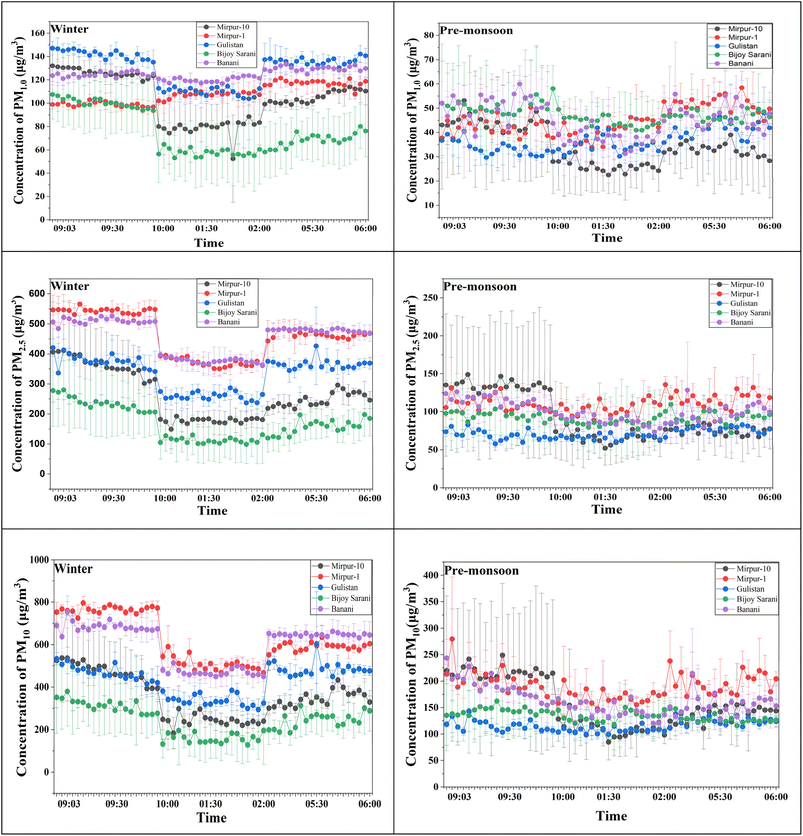 |
| | Fig. 2 Seasonal distribution of PM concentration during winter and pre-monsoon seasons at Mirpur-10, Mirpur-1, Bijoy Sarani, Gulistan and Banani in Dhaka city, Bangladesh. | |
3.2. Temporal and seasonal distribution of NO2 in Dhaka city
NO2 levels were consistently higher during the winter than pre-monsoon at all locations (Fig. 3). Depending on the region under study, average winter NO2 concentrations ranged from 0.12 to 0.16 ppm. Concentrations dropped to between 0.08 and 0.12 ppm during the pre-monsoon. The winter season is characterized by low ultra-violet radiation intensity, high relative humidity and a significant decrease in the height of the atmospheric boundary layer. As a result, the concentration of NO2 released by vehicles is concentrated in a shallow surface layer, increasing the concentration at the ground level. Gulistan and Bijoy-Sarani had the greatest NO2 concentrations in winter and pre-monsoon seasons, respectively, possibly as a result of industrialization and vehicle density. The comparatively lower results from two stations, Banani and Mirpur-10, suggested a smaller contribution from local emissions. Excessive coal burning in the brickfields close to Dhaka city during the winter may be linked to high NO2 concentrations in the atmosphere.78 A similar pattern of NO2 concentrations was observed in Dhaka city in 2003 to 2019,22,29,79 suggesting a consistent trend over the decade. The average NO2 concentration was 5.8 ppm, with a range of 5.6 to 6.1 ppm during December 2021 and January 2022 in Dhaka.43 Similar trends were noted in India and China as well, suggesting a more widespread regional uniformity in the levels of NO2 pollution in metropolitan areas.80,81 These results also imply that vehicle emissions continue to be the primary cause of NO2 concentrations in densely populated urban areas.80–84 Low temperatures and slow airflow brought on by cold-season weather patterns might be the origin of this seasonal trend, which confines pollutants to the atmosphere. In the pre-monsoon, high spatial and temporal variability was observed, whereas it is considerably larger around midday and afternoon during the winter, showing higher variability. Later in the day, converging concentrations are visible at all five traffic intersections during the winter season. NO2 concentrations remain consistently higher and more fluctuating during the winter, whereas pre-monsoon seasons exhibit a clear rising trend, indicating stronger diurnal variation across all traffic intersections. NO2 concentrations increase with progression of the day, indicating vehicular emissions as a significant source.43,78 Greater air mixing and increased solar energy radiation, which cause pollutant fluctuation, are the causes of the pre-monsoon's more significant diurnal variation. Pollutants remain trapped close to the surface during the winter months due to temperature inversions and slow winds, which keep concentrations mostly constant throughout the day.76,85,86
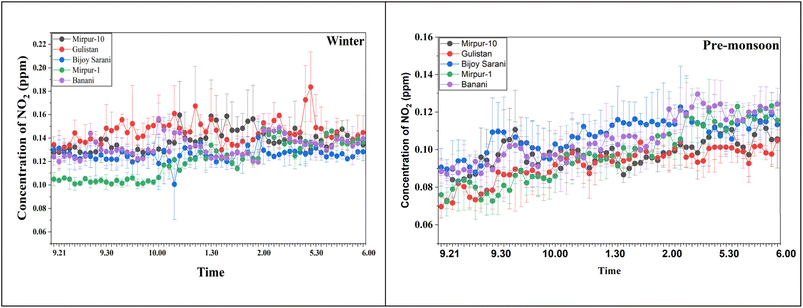 |
| | Fig. 3 Seasonal distribution of NO2 concentration during winter and pre-monsoon at Mirpur-10, Mirpur-1, Bijoy Sarani, Gulistan and Banani in Dhaka city, Bangladesh. | |
3.3. Temporal and seasonal distribution of CO2 in Dhaka city
CO2 levels (Fig. 4) are generally greater in winter than in the pre-monsoon season. A similar seasonal variation in CO2 concentration was also observed in Ahmedabad, India, during the period from 2014 to 2015, although the overall levels were lower. Specifically, concentration averaged 424.8 ± 17 ppm in winter and 398.8 ± 2.8 ppm in the pre-monsoon season.87 CO2 concentrations varied from 537 to 568 ppm (average: 554 ppm) during December 2021 and January 2022 in Dhaka.43 Nearly identical levels of CO2 concentration were suggested by each of the five traffic intersections. All of the location's CO2 levels stayed between 700 and 900 ppm, indicating that CO2 levels were often high in metropolitan areas. Concentrations typically peak in the early morning during both seasons, fall during the middle of the day and then slightly increase again in the evening which is also evident in China and Korea.88–90 Heavy traffic emissions during the morning rush hour and an insignificant boundary layer that restricts the dispersion of pollutants near the surface are the main causes of the elevated CO2 concentrations seen in the early morning. A similar diurnal pattern was seen during the pre-monsoon season, however there was less variability and a lower peak concentration than during the winter. Bijoy Sarani typically has the lowest CO2 levels, whereas Mirpur-10 and Banani have the highest amounts as a result of increased traffic or local emissions. These patterns show how urban activity and weather patterns affect the distribution of CO2 throughout the day. It was evident that diverse sources of emissions were responsible for the equal amounts of CO2 concentrations.
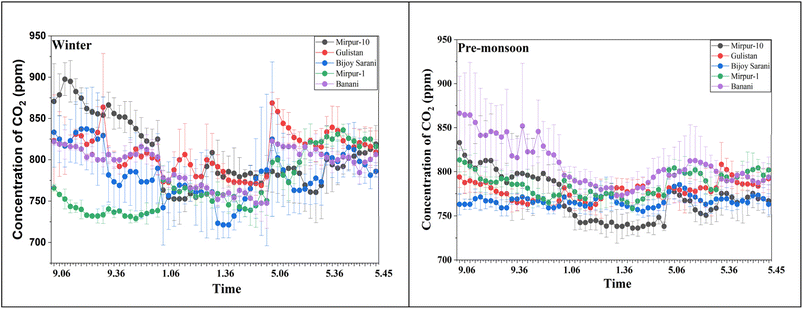 |
| | Fig. 4 Seasonal distribution of CO2 concentration during pre-monsoon and winter at Mirpur-10, Mirpur-1, Bijoy Sarani, Gulistan and Banani in Dhaka city, Bangladesh. | |
3.4. Correlation among the pollutants
Pearson's correlation (r) and ANOVA test were carried out to analyze the relationship among the various pollutants (CO2, NO2, PM1.0, PM2.5 and PM10). The correlation coefficient (R2) was determined to relate to the air pollutants with the average vehicle number at different traffic intersections in Dhaka city. Pearson's correlation analysis results are presented in Table S2. The correlation analysis showed positive correlations among NO2, CO2, PM1.0, PM2.5 and PM10 concentrations. The Pearson correlation coefficients of pollutants during winter were 0.96 (NO2 and CO2), 0.53 (PM1.0 and PM2.5) and 0.78 (PM2.5 and PM10) and during pre-monsoon were 0.58 (PM1.0 and PM2.5), 0.95 (PM2.5 and PM10) and 0.64 (CO2 and PM10) (p < 0.05). Positive correlations indicate a strong linear correlation among the pollutants. According to the results of the ANOVA test, the connection between PM and gaseous pollutants is statistically significant (p < 0.05) (Table S2). Strongly positive correlation was also observed in Dhaka,43 Chattogram,91 Bangladesh, and Southern China and California.78,92 In contrast, during the COVID-19 lockdown, a weakly positive correlation was observed between the pollutants in Wuhan, China.93 Vehicular emissions are a primary source of NO2 and CO2 both of which contribute to the formation of PM.82 The present study analysis showed a statistically significant (p < 0.001) moderately positive correlation (R2 = 0.40) between PM1.0 concentration and the average vehicle number during the pre-monsoon season. This correlation indicates that fossil fuel combustion from vehicles is a dominant contributor to PM1.0 pollution in traffic intersections. PM2.5 and PM10 show strong positive correlations, while positive associations were also found among NO2, CO2, PM1.0, PM2.5 and PM10.94–96 These findings suggested that pollutants were emitted from similar sources, primarily linked to vehicular activity, emphasizing the need for stringent vehicular emission controls and enhanced traffic management to alleviate air pollution in traffic intersections.
3.4.1 Principal component analysis (PCA). Principal Component Analysis (PCA) was employed to identify the major sources contributing to particulate matter and gaseous pollutants at the traffic intersections during winter and the pre-monsoon season in Dhaka city, Bangladesh. The analysis employed a Varimax rotation to improve the interpretability of factor loadings by maximizing the coefficient of variation. This allows for a clearer identification of groups influencing particulate matter and gaseous pollutants (Fig. 5).
 |
| | Fig. 5 The PCA biplot highlighting the relationships between particulate matter and gaseous pollutants during winter and pre-monsoon seasons at Mirpur-10, Mirpur-1, Bijoy Sarani, Gulistan and Banani in Dhaka city, Bangladesh. | |
During the winter season, the first two principal components (PC1 and PC2) exhibited eigenvalues of 2.61 and 2.26 respectively, accounting for 97.38% of the total variance, showing that they sufficiently reflect the dataset (Table S4). PC1 accounted for 52.27% of the total variance and exhibited a significant correlation with particulate matter fractions, specifically PM1.0 (0.583), PM2.5 (0.562) and PM10 (0.540) (Table S5). The substantial positive loadings of these variables indicate that PC1 is a particulate matter-dominated source, most likely due to resuspended road dust, construction activities and traffic-related emissions.97 PC2 indicated a very distinct loading pattern, with strong positive loadings for CO2 (0.629) and NO2 (0.625) (Table S5). This bipolar arrangement is consistent with a gaseous combustion emission factor, which is mostly caused by industrial burning, vehicle exhaust and energy generation activities that release CO2 and NO2 at the same time. The first two principal components (PC1 and PC2) exhibited eigenvalues of 3.193 and 0.865, respectively, cumulatively explaining 81.16% during the pre-monsoon season (Table S6). PC1 is a general air pollution factor that reflects the overall intensity of anthropogenic emission activity, such as fuel combustion, and recorded high and approximately uniform positive loadings across all five pollutants: NO2 (0.356), CO2 (0.356), PM10 (0.485), PM2.5 (0.521) and PM1.0 (0.490) (Table S7). PC2 showed a unique loading pattern, with a substantial positive loading for NO2 (0.784), indicating NO2 from industrial and vehicle combustion. PC3 was dominated by an unusually high loading for CO2 (0.908). This component captures industrial emissions that are uncorrelated with the major emission complex. These results are consistent with prior PCA based source apportionment studies conducted in urban environments, which consistently identify different gaseous and particle emission sources as the main causes of air pollution variance.43,98–100
3.5. Health risk assessment
Air pollution had a major chronic impact on all age groups, with infants and children suffering the most.101–105 HQ was used to evaluate the non-cancer hazards related to air pollution.106,107 While there was no risk of adverse health consequences (HQ < 1) for the pollutants in the case of adults, the HQ values posed a considerable health threat (HQ > 1) for infants and children. Low breathing heights with other air pollution sources may be the primary cause of this problem in youngsters, who are especially vulnerable to ground-level pollution.108 Infants are exposed to concentrations of fine particles that are up to 44% greater than those of adults, according to research done at a school by Sharma and Kumar.109
3.5.1 Health risk assessment of PM. At every site, the HQ values of PM2.5 and PM10 (Fig. 6(a) and (b)) for every age group were greater throughout the winter than they were during the pre-monsoon season. This could happen as a result of wintertime weather conditions which prevent reduction of PM.110,111 Although HQ levels continue to decline during the pre-monsoon season, newborns are particularly at risk and in certain clusters, the HQ stays over the allowed limits. Because the young population is more susceptible to particulate matter exposure due to the physiological immaturity of the respiratory tract and higher inhalation rates of particulate matter per unit body weight, newborns had much higher HQ values than children and adults.112–114 Mirpur-1 and Banani showed the highest HQ values for all age groups, with infants exceeding a hazard quotient of 4. According to Bijoy Sarani's appendix, it had lower HQ values than any other place for both adults and children, indicating less exposure to PM or cleaner air. Similar to the winter, the HQ values in Banani and Mirpur-1 were higher during pre-monsoon. In locations like Bijoy Sarani and Banani, pre-monsoon PM levels remained hazardous despite being lower, particularly for young children. PM2.5 can enter the lungs,115 whereas PM1.0 can penetrate blood vessels through alveoli, capturing the entire body.116,117 In addition, PM1.0 has a greater surface to mass ratio and can contain a high concentration of potentially toxic anthropogenic components.118 Short-term exposure to PM1.0 has been regarded as the cause of death due to stroke, while long-term inhalation can raise the risk of neurological diseases.119–121 It was also noted that babies who grow up in places with PM concentrations higher than the upper limit are more likely to experience harmful health consequences, including respiratory ailments and heart problems.122–124 The population most vulnerable to environmental pollution, particularly children because of their developing organs and immune systems, was at risk for serious health impacts from PM.125–127
 |
| | Fig. 6 (a) HQ variation of PM2.5 during winter and pre-monsoon seasons for different ages at Mirpur-10, Mirpur-1, Bijoy Sarani, Gulistan and Banani in Dhaka city, Bangladesh. (b) HQ variation of PM10 during winter and pre-monsoon for different ages at Mirpur-10, Mirpur-1, Bijoy Sarani, Gulistan and Banani in Dhaka city, Bangladesh. | |
PM causes numerous adverse health consequences, including a higher incidence of myocardial infarction, diabetes, respiratory diseases, cardiovascular and cerebrovascular diseases and lung cancer,5,122,128,129 in addition to negative health effects, including bronchial asthma, pneumonia and pulmonary disease.130–133
3.5.2 Health risk assessment of NO2. The overall HQ values (Fig. 7) for all age groups and all locations were greater throughout the winter than they were during pre-monsoon. This might be due to wintertime weather conditions, which limit the concentration of pollutants to areas near the surface (e.g., low mixing heights).134,135 Infants exhibited the greatest HQ values, followed by children and adults. Infants were exposed to more air pollution than adults, making them far more vulnerable due to their developing organ systems. Mirpur-10, Gulistan and Bijoy Sarani have higher HQ levels than the Banani and Mirpur-1 areas. These discrepancies might have resulted from variations in the industrial activity and vehicle emissions that caused urban traffic congestion in various regions. Wintertime HQ values for infants at Mirpur-10, Gulistan and Bijoy Sarani were seen to increase to levels near or over the crucial level of 1. Therefore, NO2 exposure was found to provide a non-carcinogenic health risk for newborns exposed to several places during the winter, as indicated by HQ values >1 (USEPA). Airway inflammation and obstruction of airflow are caused by NO2 exposure.136–140 Annually, ambient NO2 is responsible for 3.52 million new cases of asthma in children and adolescents.141
 |
| | Fig. 7 HQ variation of NO2 during winter and pre-monsoon for different ages at Mirpur-10, Mirpur-1, Bijoy Sarani, Gulistan and Banani in Dhaka city, Bangladesh. | |
3.5.3 Health risk assessment of CO2. The HR of CO2 for the pre-monsoon and winter seasons for the five traffic intersections is shown in Table 2. The HR values range from 0.7 to 0.85. With minor seasonal fluctuations noted at various places, the HR values were generally steady across both seasons. As CO2 concentrations raised, the mean raw scores for seven of the nine decision-making performance scales consistently fell142,143 and cognitive impacts144 were observed in comparison to 600 to 1000 ppm (0.6 < HR < 1.0).
Table 2 Hazard ratio (HR) data for health risk assessment of CO2
| Sampling sites |
Hazard ratio (HR) |
| Pre-monsoon |
Winter |
| Mirpur-10 |
0.7705 |
0.8069 |
| Gulistan |
0.7781 |
0.8086 |
| Mirpur-1 |
0.7856 |
0.7694 |
| Banani |
0.8074 |
0.7928 |
| Bijoy Sarani |
0.7666 |
0.7832 |
Short sampling duration, fewer traffic intersections and non-simultaneous pollution measurements are the limitations of this study. Future research should include simultaneous measurements, more traffic intersections and prolonged sampling period throughout several seasons (winter, pre-monsoon, monsoon and post-monsoon) to better capture the spatial and temporal variability in traffic-related air pollution.
4. Conclusion
This study investigated the seasonal and temporal variations of particulate matter (PM1.0, PM2.5, PM10) and gaseous pollutants (NO2, CO2) at five major traffic intersections in Dhaka during winter (December 2023–January 2024) and pre-monsoon (April–May 2024). Results showed substantially higher pollutant levels in winter (PM1.0 = 108.3 ± 14.0 µg m−3, PM2.5 = 336.1 ± 68.3 µg m−3 and PM10 = 449.2 ± 98.7 µg m−3, NO2 = 0.13 ± 0.01 ppm) with Gulistan, Mirpur-10, Banani and Mirpur-1 emerging as hotspots for different pollutants. Health risk assessment revealed HQ values greater than one for NO2, PM2.5 and PM10, indicating serious risks, particularly for infants, while CO2 levels (790 ± 30 ppm) mainly highlighted climatic rather than direct health impacts. The Pearson correlation analyses demonstrated strong associations among pollutants and a moderate link between PM1.0 and vehicle numbers (p < 0.001, R2 = 0.40) during the pre-monsoon season, underscoring the central role of traffic emissions. The PCA analysis indicated that traffic emissions are one of the major sources of PM, NO2 and CO2. The findings of this study indicate the urgent need for sustained assessment and effective intervention strategies to mitigate traffic-related air pollution in Dhaka. Future research should focus on expanding spatial and temporal coverage, including more intersections and continuous year-round monitoring, to capture long-term trends and the influence of meteorology.
Author contributions
Md. Khorshed Alam Howlader: conceptualization, sampling, methodology, data analysis, writing original draft, review & editing. Shahid Uz Zaman: review & editing, supervision. Md. Al-Amin Hossen: review & editing. Md. Adnan Kiber: review & editing. Abdus Salam: conceptualization, review & editing, supervision.
Conflicts of interest
The authors declare that they have no known competing financial interests or personal relationships that could have appeared to influence the work reported in this paper.
Data availability
The data supporting this article have been included as part of the supplementary information (SI). Supplementary information is available. See DOI: https://doi.org/10.1039/d6ea00036c.
Acknowledgements
The authors express their gratitude to the Department of Chemistry, University of Dhaka.
References
- T. Feng, Y. Sun, Y. Shi, J. Ma, C. Feng and Z. Chen, Air pollution control policies and impacts: A review, Renewable Sustainable Energy Rev., 2024, 191, 114071 CrossRef CAS.
- A. A. Faisal, M. M. Rahman and S. Haque, Retrieving spatial variation of aerosol level over urban mixed land surfaces using Landsat imageries: Degree of air pollution in Dhaka Metropolitan Area, Phys. Chem. Earth, 2022, 126, 103074 CrossRef.
- M. Arfan Ali, M. Bilal and Y. Wang, et al., Spatiotemporal changes in aerosols over Bangladesh using 18 years of MODIS and Reanalysis data, J. Environ. Manage., 2022, 315, 115097 CrossRef PubMed.
- W. Qiu, Y. Zhou, H. He, B. Wang, G. Mu and M. Zhou, et al., Short-term effects of air pollution on liver function among urban adults in China, Atmos. Environ., 2021, 245, 118011 Search PubMed.
- R. J. Henning, Particulate Matter Air Pollution is a Significant Risk Factor for Cardiovascular Disease, Curr. Probl. Cardiol., 2024, 49(1), 102094 CrossRef PubMed.
- J. Lelieveld, J. S. Evans, M. Fnais, D. Giannadaki and A. Pozzer, The contribution of outdoor air pollution sources to premature mortality on a global scale, Nature, 2015, 525(7569), 367–371 CrossRef CAS PubMed.
- F. A. S. Islam, A Comprehensive Analysis of Air Pollution in Dhaka City, Bangladesh, and the Application of Artificial Intelligence and Machine Learning for Enhanced Management and Forecasting, Int. J. Appl. Nat. Sci., 2025, 131–167 Search PubMed , Available from: https://creativecommons.org/licenses/by/4.0/.
- A. P. Patton, H. Boogaard and D. Vienneau, Assessment of long-term exposure to traffic-related air pollution: An exposure framework, J. Exposure Sci. Environ. Epidemiol., 2025, 35(3), 493–501 CrossRef PubMed.
- A. Ilenič, A. M. Pranjić, N. Zupančič, R. Milačič and J. Ščančar, Fine particulate matter (PM2.5) exposure assessment among active daily commuters to induce behaviour change to reduce air pollution, Sci. Total Environ., 2024, 912, 169117 Search PubMed.
- T. Zheng, S. Xiang, S. Zhang and Y. Wu, Variability of traffic-related air pollutants at two- and four-phase intersections, Atmos. Pollut. Res., 2023, 14(12), 101936 Search PubMed.
- J. T. Collado, J. G. Abalos and I. de los Reyes, Spatiotemporal Assessment of PM2.5 Exposure of a High-risk Occupational Group in a Southeast Asian Megacity, Aerosol Air Qual. Res., 2023, 23(1), 220134 Search PubMed.
- S. Xiang, S. Zhang and Y. T. Yu, Evaluating Ultrafine Particles and PM2.5 in Microenvironments with Health Perspectives: Variability in Concentrations and Pollutant Interrelationships, Aerosol Air Qual. Res., 2023, 23(9), 230046 Search PubMed.
- M. K. Alobaidi, R. M. Badri and M. M. Salman, Evaluating the Negative Impact of Traffic Congestion on Air Pollution at Signalized Intersection, in IOP Conference Series: Materials Science and Engineering, Institute of Physics Publishing, 2020 Search PubMed.
- Y. Shen, Q. Zhang and D. Wang, Evaluation of a cost-effective roadside sensor platform for identifying high emitters, Sci. Total Environ., 2022, 816, 151609 CrossRef CAS PubMed.
- C. Jia, W. Li, T. Wu and M. He, Road traffic and air pollution: Evidence from a nationwide traffic control during coronavirus disease 2019 outbreak, Sci. Total Environ., 2021, 781, 146618 CrossRef CAS PubMed.
- A. R. M. T. Islam, M. A. Awadh and J. Mallick, Estimating ground-level PM2.5 using subset regression model and machine learning algorithms in Asian megacity, Dhaka, Bangladesh, Air Qual., Atmos. Health, 2023, 16(6), 1117–1139 Search PubMed.
- M. Y. Jin, J. Gallagher, X. B. Li, K. F. Lu, Z. R. Peng and H. D. He, Characterizing the distribution pattern of traffic-related air pollutants in near-road neighborhoods, Environ. Monit. Assess., 2024, 196(8), 767 CrossRef CAS PubMed.
- R. M. Harrison, T. V. Vu, H. Jafar and Z. Shi, More mileage in reducing urban air pollution from road traffic, Environ. Int., 2021, 149, 106329 CrossRef CAS PubMed.
- P. Wei, P. Brimblecombe and F. Yang, Determination of local traffic emission and non-local background source contribution to on-road air pollution using fixed-route mobile air sensor network, Environ. Pollut., 2021, 290, 118055 CrossRef CAS PubMed.
- S. U. Zaman, M. Riad Sarkar Pavel and R. I. Rani, Aerosol climatology characterization over Bangladesh using ground-based and remotely sensed satellite measurements, Elementa, 2022, 10(1), 000063 Search PubMed.
- A. Salam, F. Jeba, M. Riad, S. Pavel and S. U. Zaman, Health Risk Assessment of High-Level Particulate Matter Exposure in Different Environments in Mega City Dhaka, Bangladesh, Bangladesh J. Sci. Res., 2021, 78–87 Search PubMed , Available from: https://www.baasbd.org.
- M. R. S. Pavel, S. U. Zaman, F. Jeba, M. S. Islam and A. Salam, Long-Term (2003–2019) Air Quality, Climate Variables, and Human Health Consequences in Dhaka, Bangladesh, Front. Sustain. Cities, 2021, 3, 681759 CrossRef.
- M. M. Islam, M. Sharmin and F. Ahmed, Predicting air quality of Dhaka and Sylhet divisions in Bangladesh: a time series modeling approach, Air Qual., Atmos. Health, 2020, 13(5), 607–615 Search PubMed.
- M. M. Rana, N. Sulaiman, B. Sivertsen, M. F. Khan and S. Nasreen, Trends in atmospheric particulate matter in Dhaka, Bangladesh, and the vicinity, Environ. Sci. Pollut. Res., 2016, 23(17), 17393–17403 CrossRef CAS PubMed.
- B. A. Begum, P. K. Hopke and A. Markwitz, Air pollution by fine particulate matter in Bangladesh, Atmos. Pollut. Res., 2013, 4(1), 75–86 CrossRef CAS.
- R. M. Safiur, M. D. H. Khan, Y. N. Jolly, J. Kabir, S. Akter and A. Salam, Assessing risk to human health for heavy metal contamination through street dust in the Southeast Asian Megacity: Dhaka, Bangladesh, Sci. Total Environ., 2019, 660, 1610–1622 CrossRef PubMed.
- A. Salam, H. A. Mamoon, M. B. Ullah and S. M. Ullah, Measurement of the atmospheric aerosol particle size distribution in a highly polluted mega-city in Southeast Asia (Dhaka-Bangladesh), Atmos. Environ., 2012, 59, 338–343 CrossRef CAS.
- I. Hossain, S. Rahman, S. Sattar and M. Haque, Environmental Overview of Air Quality Index (AQI) in Bangladesh: Characteristics and Challenges in Present Era, International Journal of Research in Engineering, Science and Management, 2021, 110–115 Search PubMed , Available from: https://www.ijresm.com.
- T. A. Mukta, M. M. M. Hoque, M. E. Sarker, M. N. Hossain and G. K. Biswas, Seasonal variations of gaseous air pollutants (SO2, NO2, O3, CO) and particulates (PM2.5, PM10) in Gazipur: An industrial city in Bangladesh, Adv. Environ. Technol., 2020, 6(4), 195–209 Search PubMed.
- A. Salam, H. Bauer, K. Kassin, S. M. Ullah and H. Puxbaum, Aerosol chemical characteristics of a mega-city in Southeast Asia (Dhaka-Bangladesh), Atmos. Environ., 2003, 37(18), 2517–2528 CrossRef CAS.
- S. U. Zaman, M. Yesmin, M. R. S. Pavel, F. Jeba and A. Salam, Indoor air quality indicators and toxicity potential at the hospitals’ environment in Dhaka, Bangladesh, Environ. Sci. Pollut. Res., 2021, 28(28), 37727–37740 CrossRef CAS PubMed.
- A. Salam, M. B. Ullah, M. S. Islam, M. A. Salam and S. M. Ullah, Carbonaceous species in total suspended particulate matters at different urban and suburban locations in the Greater Dhaka region, Bangladesh, Air Qual., Atmos. Health, 2013, 6(1), 239–245 Search PubMed.
- B. A. Begum, S. K. Biswas and P. K. Hopke, Key issues in controlling air pollutants in Dhaka, Bangladesh, in Atmospheric Environment, Elsevier Ltd, 2011, pp. 7705–7713 Search PubMed.
- T. Zheng, S. Xiang, S. Zhang and Y. Wu, Variability of traffic-related air pollutants at two- and four-phase intersections, Atmos. Pollut. Res., 2023, 14(12), 101936 CrossRef CAS.
- A. J. Cohen, M. Brauer and R. Burnett, Estimates and 25-year trends of the global burden of disease attributable to ambient air pollution: an analysis of data from the Global Burden of Diseases Study 2015, Lancet, 2017, 389(10082), 1907–1918 CrossRef PubMed.
- M. Rahman, F. Rashid, D. Kumar, M. A. Habib and A. Ullah, Dataset of air pollutants (PM2.5, PM10, CO) concentrations in the export processing area of Dhaka, Bangladesh, Data Brief, 2024, 55, 110594 CrossRef CAS PubMed.
- S. Roy, S. U. Zaman, K. S. Joy, F. Jeba, P. Kumar and A. Salam, Impact of fine particulate matter and toxic gases on the health of school children in Dhaka, Bangladesh, Environ. Res. Commun., 2023, 5(2), 025004 CrossRef.
- M. A. Fattah, S. R. Morshed and A. A. Kafy, Insights into the socio-economic impacts of traffic congestion in the port and industrial areas of Chittagong city, Bangladesh, Transportation Engineering, 2022, 9, 100122 CrossRef.
- S. A. Rizwan, B. Nongkynrih and S. K. Gupta, Air pollution in Delhi: Its Magnitude and Effects on Health, Indian J. Community Med., 2013, 38(1), 4–8 CrossRef PubMed.
- D. A. R. Mullick, Traffic Air Pollution and Respiratory Health: A Cross-Sectional Study among Traffic Police in Dhaka City (Bangladesh), J. Med. Sci. Clin. Res., 2021, 9(5), 93–97 Search PubMed , Available from: https://jmscr.igmpublication.org/v9-i5/17%20jmscr.pdf.
- R. B. Hashem, A. B. Siddique, S. M. Rasel and M. S. Hossain, Assessment of knowledge, attitudes, and practices regarding air pollution among traffic polices in Dhaka city, Bangladesh: a cross-sectional study, BMC Public Health, 2024, 24(1), 3593 CrossRef PubMed.
- M. M. Rahman, A. B. M. Hasanuzzaman, M. A. Chisty, E. Alam, M. K. Islam and A. R. M. T. Islam, Perceived-air pollution and self-reported health status: a study on air pollution-prone urban area of Bangladesh, Front. Public Health, 2025, 13, 1382471 CrossRef PubMed.
- M. M. M. Hoque, M. M. R. Mizan and M. N. Hossain, Spatial distribution and diurnal variation of particulate matters and gaseous air pollutants of Dhaka city, Bangladesh, Discover Agric., 2025, 3(1), 10 CrossRef CAS.
- A. Salam, T. Hossain, M. N. A. Siddique and A. M. Shafiqul Alam, Characteristics of atmospheric trace gases, particulate matter, and heavy metal pollution in Dhaka, Bangladesh, Air Qual., Atmos. Health, 2008, 1(2), 101–109 CrossRef CAS.
- M. Mainuddin, J. L. Peña-Arancibia, F. Karim, M. M. Hasan, M. A. Mojid and J. M. Kirby, Long-term spatio-temporal variability and trends in rainfall and temperature extremes and their potential risk to rice production in Bangladesh, PLOS Climate, 2022, 1(3), e0000009 CrossRef.
- S. N. Sakib, A. R. M. T. Islam and M. A. K. Azad, Seasonality of meteorological factors influencing the COVID-19 era in coastal and inland regions of Bangladesh, Geocarto Int., 2023, 38(1), 2203115 CrossRef.
- M. R. Mortuza, S. Selmi, M. M. Khudri, A. K. Ankur and M. M. Rahman, Evaluation of temporal and spatial trends in relative humidity and dew point temperature in Bangladesh, Arabian J. Geosci., 2014, 7(12), 5037–5050 CrossRef.
- M. A. Fattah, S. R. Morshed, A. A. Kafy, Z. A. Rahaman and M. T. Rahman, Wavelet coherence analysis of PM2.5 variability in response to meteorological changes in South Asian cities, Atmos. Pollut. Res., 2023, 14(5), 101737 CrossRef CAS.
- N. Bani Khalifi, K. Platymesi, S. Vlachos, T. Bartzanas and D. Despoina Avgoustaki, Quantifying the Scaling Effects of Urban Green Infrastructure on Air Quality and Greenhouse Gas Dynamics: Insights from a Multi-Site Evaluation in Athens, Greece, Sustainability, 2025, 17(22), 10310 CrossRef.
- C. Blaszczak-Boxe, N. N. Karle and O. Ideki, Temporal variations in NOx, O3, and CO2 and meteorological influences in New York and New Jersey urban atmospheres, Discover Environ., 2025, 3(1), 98 Search PubMed.
- C. Lin, J. Gillespie, M. D. Schuder, W. Duberstein, I. J. Beverland and M. R. Heal, Evaluation and calibration of Aeroqual series 500 portable gas sensors for accurate measurement of ambient ozone and nitrogen dioxide, Atmos. Environ., 2015, 100, 111–116 CrossRef CAS.
- J. M. Delgado-Saborit, Use of real-time sensors to characterise human exposures to combustion related pollutants, J. Environ. Monit., 2012, 14(7), 1824–1837 Search PubMed.
- D. Loomis, W. Huang and G. Chen, The International Agency for Research on Cancer (IARC) evaluation of the carcinogenicity of outdoor air pollution: Focus on China, Chin. J. Cancer, 2014, 33(4), 189–196 CrossRef CAS PubMed.
- G. Yu, Y. Cui, R. Kang, J. Wu, W. Ge and J. Han, Air Pollution and the Risk of Liver Cancer Incidence and Mortality: A Systematic Review and Meta-Analysis, Liver Int., 2025, 45(11), e70409 CrossRef CAS PubMed.
- F. Lyon, IARC monographs on the evaluation of carcinogenic risks to humans, Some industrial chemicals, 1994, vol. 60, pp. 389–433 Search PubMed.
- M. Yunesian, R. Rostami, A. Zarei, M. Fazlzadeh and H. Janjani, Exposure to high levels of PM2.5 and PM10 in the metropolis of Tehran and the associated health risks during 2016–2017, Microchem. J., 2019, 150, 104174 CrossRef CAS.
- H. Kim, K. Kang and T. Kim, Measurement of particulate matter (PM2.5) and health risk assessment of cooking-generated particles in the kitchen and living rooms of apartment houses, Sustainability, 2018, 10(3), 843 CrossRef.
- M. Matooane and R. Diab, Health risk assessment for sulfur dioxide pollution in South Durban, South Africa, Arch. Environ. Health, 2003, 58(12), 763–770 CrossRef CAS PubMed.
- M. Othman, M. T. Latif and C. Z. Yee, PM2.5 and ozone in office environments and their potential impact on human health, Ecotoxicol. Environ. Saf., 2020, 194, 110432 CrossRef CAS PubMed.
- O. Mayowa Morakinyo, A. Stephen Adebowale, M. Ingrid Mokgobu and M. Stanley Mukhola, Health risk of inhalation exposure to sub-10 µm particulate matter and gaseous pollutants in an urban-industrial area in South Africa: an ecological study, BMJ Open, 2017, 7, 13941, DOI:10.1136/bmjopen-2016-013941.
- P. Kumar, S. Hama and R. A. Abbass, CO2 exposure, ventilation, thermal comfort and health risks in low-income home kitchens of twelve global cities, J. Build. Eng., 2022, 61, 105254 CrossRef.
- T. Akther, M. Ahmed, M. Shohel, F. K. Ferdousi and A. Salam, Particulate matters and gaseous pollutants in indoor environment and Association of ultra-fine particulate matters (PM1) with lung function, Environ. Sci. Pollut. Res., 2019, 26(6), 5475–5484 CrossRef CAS PubMed.
- Q. Liu, P. Yang, Z. Hu, Q. Shu and Y. Chen, Identification of the sources and influencing factors of the spatial variation of heavy metals in surface sediments along the northern Jiangsu coast, Ecol. Indic., 2022, 137, 108716 CrossRef CAS.
- S. Aziz, S. U. Zaman and S. Roy, Comprehensive analysis of heavy metals in indoor PM2.5: Source identification and health risk assessment in Dhaka, Bangladesh, Atmos. Environ.: X, 2025, 27, 100346 CAS.
- E. N. Aidoo, S. K. Appiah, G. E. Awashie, A. Boateng and G. Darko, Geographically weighted principal component analysis for characterising the spatial heterogeneity and connectivity of soil heavy metals in Kumasi, Ghana, Heliyon, 2021, 7(9), e08039 CrossRef CAS PubMed.
- W. Feng, Y. Zhang and L. Huang, Source apportionment of environmentally persistent free radicals (EPFRs) and heavy metals in size fractions of urban arterial road dust, Process Saf. Environ. Prot., 2022, 157, 352–361 CrossRef CAS.
- K. Hasan, M. Rahman, M. Akhter, M. Mohinuzzaman, I. Kayes and S. Rahman, A new dynamic approach using data-driven and machine learning models for forecasting particulate matter in Dhaka megacity, Environ. Pollut. Manage., 2024, 1, 235–247 CrossRef CAS.
- S. M. M. Billah, H. M. Haq, A. Rahman, H. Biswas and M. I. Islam, Meteorological drivers of fine particulate matter variability in Dhaka City with a seasonal analysis of temperature, humidity, rainfall, and wind speed, Discover Environ., 2026, 4(1), 56 CrossRef.
- S. U. Zaman, S. Roy and B. d. Foy, Comparison of PM2.5 trends and source factors in urban and rural locations in Bangladesh, Atmos. Pollut. Res., 2026, 17(2), 102744 CrossRef CAS.
- T. O. Kolawole, K. W. Fomba and G. C. Ezeh, Chemical composition, sources, and health risks assessment of PM10 and PM2.5-bound metals at an industrial site in Nigeria, Environ. Sci.: Atmos., 2026, 104–118 CAS.
- S. Johari, I. Goel and A. Mandal, Health effects of ultrafine particles (PM1. 0): A review, Mater. Sci., 2017, 3, 1–10 Search PubMed.
- T. Chen, F. Chen and K. Wang, Acute respiratory response to individual particle exposure (PM1.0, PM2.5 and PM10) in the elderly with and without chronic respiratory diseases, Environ. Pollut., 2021, 271, 116329 CrossRef CAS PubMed.
- M. Rahman and L. Meng, Examining the Spatial and Temporal Variation of PM2.5 and Its Linkage with Meteorological Conditions in Dhaka, Bangladesh, Atmosphere, 2024, 15(12), 1426 CrossRef CAS.
- S. U. Zaman, K. Budhavant and A. Salam, The influence of meteorological factors on wintertime black carbon and PM2.5 pollution in Dhaka, Bangladesh, Int. J. Environ. Sci. Technol., 2025, 22(9), 8225–8234 Search PubMed.
- Y. Miao, J. Li and S. Miao, Interaction Between Planetary Boundary Layer and PM2.5 Pollution in Megacities in China: A Review, Curr. Pollut. Rep., 2019, 5(4), 261–271 Search PubMed.
- B. d. Foy, R. Edwards, K. S. Joy, S. U. Zaman, A. Salam and J. J. Schauer, Interpretable machine learning tools to analyze PM2.5 sensor network data so as to quantify local source impacts and long-range transport, Atmos. Res., 2024, 311, 107656 Search PubMed.
- N. Islam, T. R. Toha, M. M. Islam and T. Ahmed, The association between particulate matter concentration and meteorological parameters in Dhaka, Bangladesh, Meteorol. Atmos. Phys., 2022, 134(4), 64 CrossRef.
- M. Hu, Y. Wang, S. Wang, M. Jiao, G. Huang and B. Xia, Spatial-temporal heterogeneity of air pollution and its relationship with meteorological factors in the Pearl River Delta, China, Atmos. Environ., 2021, 254, 118415 CrossRef CAS.
- M. M. Hoque, Z. Ashraf, H. Kabir, E. Sarker and S. Nasrin, Meteorological influences on seasonal variations of air pollutants (SO2, NO2, O3, CO, PM2. 5 and PM10) in the Dhaka megacity, American Journal of Pure and Applied Biosciences, 2020, 2(2), 15–23 Search PubMed.
- K. Xiao, Y. Wang, G. Wu, B. Fu and Y. Zhu, Spatiotemporal characteristics of air pollutants (PM10, PM2.5, SO2, NO2, O3, and CO) in the Inland Basin City of Chengdu, Southwest China, Atmosphere, 2018, 9(2), 74 CrossRef.
- A. Gaur, S. N. Tripathi, V. P. Kanawade, V. Tare and S. P. Shukla, Four-year measurements of trace gases (SO2, NOx, CO, and O3) at an urban location, Kanpur, in Northern India, J. Atmos. Chem., 2014, 71(4), 283–301 CrossRef CAS.
- K. Zuraski, C. Harkins and J. Peischl, On-Road Measurements of Nitrogen Oxides, CO, CO2, and VOC Emissions in Two Southwestern U.S. Cities, ACS ES&T Air, 2025, 2(4), 589–598 Search PubMed.
- S. Munir, M. Mayfield and D. Coca, Understanding spatial variability of NO2 in urban areas using spatial modelling and data fusion approaches, Atmosphere, 2021, 12(2), 1–20 CrossRef.
- M. Voiculescu, D. E. Constantin, S. Condurache-Bota, V. Călmuc, A. Roşu and C. M. D. Bălănică, Role of meteorological parameters in the diurnal and seasonal variation of NO2 in a Romanian urban environment, Int. J. Environ. Res. Public Health, 2020, 17(17), 1–15 Search PubMed.
- C. M. Kendrick, P. Koonce and L. A. George, Diurnal and seasonal variations of NO, NO2 and PM2.5 mass as a function of traffic volumes alongside an urban arterial, Atmos. Environ., 2015, 122, 133–141 CrossRef CAS.
- P. Pancholi, A. Kumar, D. S. Bikundia and S. Chourasiya, An observation of seasonal and diurnal behavior of O3–NOx relationships and local/regional oxidant (OX = O3 + NO2) levels at a semi-arid urban site of western India, Sustainable Environ. Res., 2018, 28(2), 79–89 CrossRef CAS.
- N. Chandra, S. Lal, S. Venkataramani, P. K. Patra and V. Sheel, Temporal variations of atmospheric CO2 and CO at Ahmedabad in western India, Atmos. Chem. Phys., 2016, 16(10), 6153–6173 CrossRef CAS.
- X. Huang, T. Wang and R. Talbot, Temporal characteristics of atmospheric CO2 in urban Nanjing, China, Atmos. Res., 2015, 153, 437–450 Search PubMed.
- J. W. Hong, S. D. Lee, K. Lee and J. Hong, Seasonal variations in the surface energy and CO2 flux over a high-rise, high-population, residential urban area in the East Asian monsoon region, Int. J. Climatol., 2020, 40(10), 4384–4407 Search PubMed.
- C. Wei, M. Wang, Q. Fu, C. Dai, R. Huang and Q. Bao, Temporal characteristics of greenhouse gases (CO2 and CH4) in the megacity Shanghai, China: Association with air pollutants and meteorological conditions, Atmos. Res., 2020, 235, 104759 CrossRef CAS.
- M. M. H. Masum, M. B. Islam, M. A. Hossen, H. Nath and A. Hoque, Navigating pollution: The impact of transportation modes on air and noise quality in Chattogram City, Bangladesh, J. Transp. Health, 2025, 44, 102112 CrossRef.
- Y. Sun, X. Li and T. Benmarhnia, Exposure to air pollutant mixture and gestational diabetes mellitus in Southern California: Results from electronic health record data of a large pregnancy cohort, Environ. Int., 2022, 158, 106888 CrossRef CAS PubMed.
- I. D. Sulaymon, Y. Zhang, P. K. Hopke, Y. Zhang, J. Hua and X. Mei, COVID-19 pandemic in Wuhan: Ambient air quality and the relationships between criteria air pollutants and meteorological variables before, during, and after lockdown, Atmos. Res., 2021, 250, 105362 CrossRef CAS PubMed.
- M. Saha, A. A. Kafy and A. Bakshi, The urban air quality nexus: Assessing the interplay of land cover change and air pollution in emerging South Asian cities, Environ. Pollut., 2024, 361, 124877 CrossRef CAS PubMed.
- G. Suthar, S. Singh, N. Kaul and S. Khandelwal, Diurnal variation of air pollutants and their relationship with land surface temperature in Bengaluru and Hyderabad cities of India, Remote Sens. Appl., 2024, 35, 101204 Search PubMed.
- C. M. Calama-González, D. Redondas, K. Sabariego-Moreno and M. d. M. Barbero-Barrera, Statistical correlation analysis on indoor air high-priority pollutants in Spanish public primary schools, J. Build. Eng., 2025, 101, 111810 CrossRef.
- J. P. Putaud, R. V. Dingenen and A. Alastuey, A European aerosol phenomenology – 3: Physical and chemical characteristics of particulate matter from 60 rural, urban, and kerbside sites across Europe, Atmos. Environ., 2010, 44(10), 1308–1320 CrossRef CAS.
- H. J. Yoo, J. Kim, S. M. Yi and K. D. Zoh, Analysis of black carbon, particulate matter, and gaseous pollutants in an industrial area in Korea, in Atmospheric Environment, Elsevier Ltd, 2011, pp. 7698–7704 Search PubMed.
- A. S. Shihab, Identification of Air Pollution Sources and Temporal Assessment of Air Quality at a Sector in Mosul City Using Principal Component Analysis, Pol. J. Environ. Stud., 2022, 31(3), 2223–2235 CrossRef CAS PubMed.
- P. Ielpo, V. Paolillo, G. d. Gennaro and P. R. Dambruoso, PM10 and gaseous pollutants trends from air quality monitoring networks in Bari province: Principal component analysis and absolute principal component scores on a two years and half data set, Chem. Cent. J., 2014, 8(1), 14 CrossRef PubMed.
- N. D. Lina Thabethe, J. C. Engelbrecht, C. Y. Wright and M. A. Oosthuizen, Human health risks posed by exposure to PM10 for four life stages in a low socio-economic community in South Africa, Pan Afr. Med. J., 2014, 18, 206 Search PubMed.
- J. Fu, Q. Lin and B. Ai, Associations between maternal exposure to air pollution during pregnancy and trajectories of infant growth: A birth cohort study, Ecotoxicol. Environ. Saf., 2024, 269, 115792 CrossRef CAS PubMed.
- A. Comotti, I. Alberti and G. C. I. Spolidoro, Air pollution and hospitalization risk in infants with bronchiolitis: A systematic review and meta-analysis, Pediatr. Allergy Immunol., 2025, 36(5), e70102 CrossRef CAS PubMed.
- A. G. Berberian, F. Perera and S. Arunachalam, Children's health impacts from a proposed decarbonization policy in the transportation sector in the Eastern United States, Environ. Res. Lett., 2024, 19(4), 044001 CrossRef.
- B. Cheng, Y. Ma and P. Qin, Characterization of air pollution and associated health risks in Gansu Province, China from 2015 to 2022, Sci. Rep., 2024, 14(1), 14751 CrossRef CAS PubMed.
- F. Ahmadian, S. Rajabi, S. Maleky and M. A. Baghapour, Spatiotemporal analysis of airborne pollutants and health risks in Mashhad metropolis: enhanced insights through sensitivity analysis and machine learning, Environ. Geochem. Health, 2025, 47(2), 34 CrossRef CAS PubMed.
- A. Mondal, S. Mondal, P. Ghosh and P. Das, Analyzing the interconnected dynamics of domestic biofuel burning in India: unravelling VOC emissions, surface-ozone formation, diagnostic ratios, and source identification, RSC Sustainability, 2024, 2(8), 2150–2168 RSC.
- S. A. Meo, M. A. Salih, J. M. Alkhalifah, A. H. Alsomali and A. A. Almushawah, Environmental pollutants particulate matter (PM2.5, PM10), carbon monoxide (CO), nitrogen dioxide (NO2), sulfur dioxide (SO2), and ozone (O3) impact on lung functions, J. King Saud Univ., Sci., 2024, 36(7), 103280 CrossRef.
- A. Sharma and P. Kumar, Quantification of air pollution exposure to in-pram babies and mitigation strategies, Environ. Int., 2020, 139, 105671 CrossRef CAS PubMed.
- T. Liu, Q. Zhu and J. Wei, The Interactive and Joint Associations of Ambient PM2.5 and Temperature on the Onset of Acute Coronary Syndrome: Findings from The Chinese Cardiovascular Association (CCA) Database-Chest Pain Center Registry, Environ. Sci. Technol., 2024, 58(50), 21978–21988 CrossRef CAS PubMed.
- C. Ye, Z. Tan, X. Li, X. Ma, K. Lu and Y. Zhang, Persistent Nitrogen Oxide Reductions Unmask Worsening Wintertime Photochemical Pollution in Urban Environments, Environ. Sci. Technol., 2025, 59(33), 17383–17386 CrossRef CAS PubMed.
- A. Carabin, I. Delpla, M. Rodriguez, S. Guilherme and C. Dorea, Subchronic Exposure to Regulated Trihalomethanes and Haloacetic Acids: Do We Need to Refine Our Exposure Assessment? A Full-Scale Case Study in a Canadian Municipality, Environ. Sci. Technol., 2025, 59(2), 1100–1111 CrossRef CAS PubMed.
- R. Wang, H. Lu and N. Kang, Estimating under-five mortality attributable to fine particulate matter brought by wind-blown dust in 100 low- and middle-income countries in 2000–2017, Natl. Sci. Rev., 2025, 12(10), nwaf279 CrossRef PubMed.
- Z. H. Lu, C. Liu and Y. J. Chen, Gestational Exposure to PM2.5 and Specific Constituents, Meconium Metabolites, and Neonatal Neurobehavioral Development: A Cohort Study, Environ. Sci. Technol., 2024, 58(23), 9980–9990 CrossRef CAS PubMed.
- G. Ciarelli, A. Colette and S. Schucht, Long-term health impact assessment of total PM2.5 in Europe during the 1990–2015 period, Atmos. Environ.: X, 2019, 3, 100032 CAS.
- T. Akther, M. Ahmed, M. Shohel, F. K. Ferdousi and A. Salam, Particulate matters and gaseous pollutants in indoor environment and Association of ultra-fine particulate matters (PM1) with lung function, Environ. Sci. Pollut. Res., 2019, 26(6), 5475–5484 CrossRef CAS PubMed.
- Z. B. Alam and K. A. B. M. Mohiuddin, Micro-characterization of Dust and Materials of Dust Origin at a Cement Industry Located in Bangladesh, Aerosol Air Qual. Res., 2023, 23(1), 220109 Search PubMed.
- S. Trippetta, S. Sabia and R. Caggiano, Fine aerosol particles (PM1): natural and anthropogenic contributions and health risk assessment, Air Qual., Atmos. Health, 2016, 9(6), 621–629 Search PubMed.
- A. Mainka, Children health risk assessment of metals in total suspended particulate matter (TSP) and PM1 in kindergartens during winter and spring seasons, Atmosphere, 2021, 12(9), 1096 CrossRef CAS.
- J. A. Saju, Q. H. Bari, K. A. B. M. Mohiuddin and V. Strezov, Measurement of ambient particulate matter (PM1.0, PM2.5 and PM10) in Khulna City of Bangladesh and their implications for human health, Environ. Syst. Res., 2023, 12(1), 42 CrossRef.
- T. Liu, Y. Jiang and J. Hu, Association of ambient PM1 with hospital admission and recurrence of stroke in China, Sci. Total Environ., 2022, 828, 154131 CrossRef CAS PubMed.
- F. Lin, G. Li and Y. Wang, Impacts of air pollutions on cardiovascular and cerebrovascular diseases through inflammation: a comprehensive analysis of one million Chinese and half million UK individuals, J. Transl. Med., 2025, 23(1), 469 Search PubMed.
- M. R. Miller, Air pollution and myocardial infarction in Poland, The Lancet Regional Health - Europe, 2024, 41, 100933 CrossRef PubMed.
- J. S. Ji, F. Dominici, N. Gouveia, F. J. Kelly and M. Neira, Air pollution interventions for health, Nat. Med., 2025, 31(9), 2888–2900 CrossRef CAS PubMed.
- T. Amnuaylojaroen and N. Parasin, Pathogenesis of PM2.5-Related Disorders in Different Age Groups: Children, Adults, and the Elderly, Epigenomes, 2024, 8(2), 13 CrossRef CAS PubMed.
- H. J. Chong-Neto and N. A. R. Filho, How does air quality affect the health of children and adolescents?, Jornal de Pediatria, 2025, 101, S77–S83 CrossRef PubMed.
- J. Ma, Y. F. Chiu and C. C. Kao, Fine particulate matter manipulates immune response to exacerbate microbial pathogenesis in the respiratory tract, Eur. Respir. Rev., 2024, 33(173), 230259 CrossRef PubMed.
- M. G. Hasnain, C. Garcia-Esperon and Y. K. Tomari, Effect of short-term exposure to air pollution on daily cardio- and cerebrovascular hospitalisations in areas with a low level of air pollution, Environ. Sci. Pollut. Res., 2023, 30(46), 102438–102445 CrossRef CAS PubMed.
- J. Lepeule, F. Laden, D. Dockery and J. Schwartz, Chronic exposure to fine particles and mortality: An extended follow-up of the Harvard six cities study from 1974 to 2009, Environ. Health Perspect., 2012, 120(7), 965–970 CrossRef PubMed.
- M. Ścibor and M. Malinowska-Cieślik, The association of exposure to PM10 with the quality of life in adult asthma patients, Int. J. Occup. Med. Environ. Health, 2020, 33(3), 311–324 CrossRef PubMed.
- M. T. Young, D. P. Sandler, L. A. DeRoo, S. Vedal, J. D. Kaufman and S. J. London, Ambient air pollution exposure and incident adult asthma in a nationwide cohort of U.S. women, Am. J. Respir. Crit. Care Med., 2014, 190(8), 914–921 CrossRef PubMed.
- Y. F. Xing, Y. H. Xu, M. H. Shi and Y. X. Lian, The impact of PM2.5 on the human respiratory system, J. Thorac. Dis., 2016, 8(1), E69–E74 Search PubMed.
- K. R. Daellenbach, G. Uzu and J. Jiang, Sources of particulate-matter air pollution and its oxidative potential in Europe, Nature, 2020, 587(7834), 414–419 CrossRef CAS PubMed.
- J. Xin, H. Chen, B. Sun, Y. Ji, L. Yan and G. Feng, Response of air quality changes and spatio-temporal distribution characteristics on the energy development changes in China, Environ. Dev. Sustain., 2025 DOI:10.1007/s10668-025-06817-w.
- C. Guan, M. Liu, J. Shi and Y. Li, Temporal and spatial heterogeneity of tropospheric O3 and NO2 and health impact analysis in Shaanxi, Gansu, and Ningxia regions of China, Environ. Monit. Assess., 2025, 197(4), 414 CrossRef PubMed.
- J. M. Fukuto, S. J. Carrington and D. J. Tantillo, Small molecule signaling agents: The integrated chemistry and biochemistry of nitrogen oxides, oxides of carbon, dioxygen, hydrogen sulfide, and their derived species, Chem. Res. Toxicol., 2012, 25(4), 769–793 Search PubMed.
- Y. M. Kim, Y. S. Kim, S. G. Jeon and Y. K. Kim, Immunopathogenesis of allergic asthma: More than the Th2 hypothesis, Allergy, Asthma Immunol. Res., 2013, 5(4), 189–196 Search PubMed.
- E. L. Stevens, F. Rosser, E. Forno, D. Peden and J. C. Celedón, Can the effects of outdoor air pollution on asthma be mitigated?, J. Allergy Clin. Immunol., 2019, 143(6), 2016–2018 CrossRef PubMed.
- S. Yang, M. Li and C. Guo, Associations of long-term exposure to nitrogen oxides with all-cause and cause-specific mortality, Nat. Commun., 2025, 16(1), 1730 CrossRef CAS PubMed.
- K. Zhou, L. Tang and C. Zhu, Recent Advances in Structure Design and Application of Metal Halide Perovskite-Based Gas Sensor, ACS Sens., 2024, 9(9), 4425–4449 Search PubMed.
- S. Chowdhury, A. Haines and K. Klingmüller, Global and national assessment of the incidence of asthma in children and adolescents from major sources of ambient NO2, Environ. Res. Lett., 2021, 16(3), 035020 CrossRef CAS.
- M. Dritsaki and C. Dritsaki, The Relationship Between Health Expenditure, CO2 Emissions, and Economic Growth in G7: Evidence from Heterogeneous Panel Data, J. Knowl. Econ., 2024, 15(1), 4886–4911 CrossRef PubMed.
- U. Satish, M. J. Mendell and K. Shekhar, Is CO2 an indoor pollutant? direct effects of low-to-moderate CO2 concentrations on human decision-making performance, Environ. Health Perspect., 2012, 120(12), 1671–1677 Search PubMed.
- T. A. Jacobson, J. S. Kler, M. T. Hernke, R. K. Braun, K. C. Meyer and W. E. Funk, Direct human health risks of increased atmospheric carbon dioxide, Nat. Sustain., 2019, 2(8), 691–701 CrossRef.
|
| This journal is © The Royal Society of Chemistry 2026 |
Click here to see how this site uses Cookies. View our privacy policy here. 

 Open Access Article
 This Open Access Article is licensed under a Creative Commons Attribution-Non Commercial 3.0 Unported Licence
 *b,
Md. Al-Amin Hossena,
Md. Adnan Kiberc and
Abdus Salam
*b,
Md. Al-Amin Hossena,
Md. Adnan Kiberc and
Abdus Salam


