


 PLATFORM UPDATE:


Effect of the hydrogen distribution of Ni–Fe hydroxide on the oxygen evolution reaction
 *b
*b
Abstract
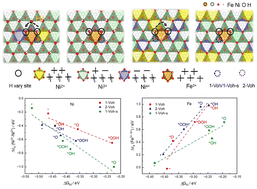
Nickel–iron (Ni–Fe) hydroxides are considered efficient electrocatalysts for the oxygen evolution reaction (OER) under alkaline conditions. However, studies have focused extensively on the catalytic sites, with fewer investigations into the oxidation state of the metal ion and its impact on the OER, which is related to the hydrogen sites. Herein, the distribution of hydrogen over the metal ions is thoroughly explored to reveal the intrinsic relationship between the electronic structure and reactivity by virtue of first-principles calculations. The results demonstrate that the hydrogen arrangement induces valence states for Ni, and the change in the defined hydrogen arrangement energy correlates with the Gibbs free energy change in the intermediate. Simultaneously, an inverse linear scaling relationship between the hydrogen arrangement energy and the d-band center of the metal atoms in intermediates for nickel and iron was discovered. This shows the different modulating effects of hydrogen on the d-band centers of nickel and iron atoms. These findings explain the different reactive properties of nickel and iron and are also relevant for optimizing the catalyst by regulating the d-band center for the OER.
 Please wait while we load your content...


