


 PLATFORM UPDATE:


Investigation of the photophysical, photochemical, and multifunctional biological properties of fluorinated zinc(ii) phthalocyanine functionalized with carboxylic acid

Abstract
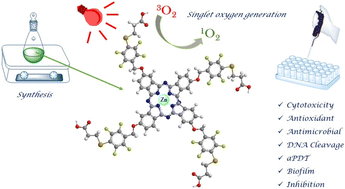
In this study, a peripherally tetra-substituted zinc phthalocyanine with 2′,3′,5′,6′-tetrafluoro-4′-carboxyethylthio-benzyloxy groups (2) was synthesized. FT-IR, NMR, MALDI-TOF MS, and UV-Vis spectroscopy techniques were used to characterize all the synthesized compounds. The photochemical and photophysical properties of compound 2 were also examined. The singlet oxygen quantum yield was calculated as 0.49 for compound 2 using only light irradiation in the photochemical method. Additionally, compound 2 showed moderate photostability under intense light irradiation. The biological properties of compound 2, including antioxidant, antidiabetic, antimicrobial, DNA cleavage, and anti-biofilm activities, were evaluated. The antioxidant activity was measured using the DPPH radical scavenging assay, where compound 2 demonstrated 18.12% activity. The antidiabetic potential was assessed through amylase inhibition tests, indicating that compound 2 has potential antidiabetic activity. The antimicrobial activity of compound 2 was tested with the microdilution method. It showed significant activity, especially against Gram-positive and Gram-negative bacteria. Furthermore, the antimicrobial effects of compound 2via photodynamic therapy showed enhanced activity. E. coli was used to evaluate the inhibitory effect of compound 2 on cell viability, demonstrating 100% inhibition. The compound's ability to inhibit biofilm formation of S. aureus and P. aeruginosa was also assessed, with compound 2 showing high biofilm inhibition. The anti-biofilm effect was generally more pronounced against S. aureus than P. aeruginosa. Importantly, the biocompatibility of compound 2 was confirmed in L929 fibroblast cells. While it exhibited concentration-dependent cytotoxicity in the dark, under light irradiation, cell viability remained close to or above the thresholds defined by ISO 10993-5 for non-cytotoxicity. As a result, compound 2 is a multifunctional phthalocyanine derivative that combines diverse biological activities with a safety profile, supporting its potential as a promising candidate for biomedical applications.
 Please wait while we load your content...


