


Nanosized Al-rich MFI zeolite synthesized by zeolite hydrothermal conversion in the presence of zeolite nanosheet seeds
 *ab
*ab
Abstract
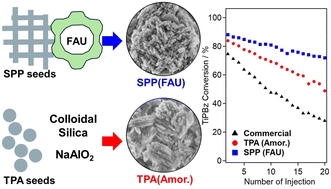
The development of nanosized zeolites with enhanced catalytic performance presents a significant challenge due to the need for cost-effective and sustainable synthesis methods suitable for large-scale production and practical applications. This study investigates the synthesis of nanosized Al-rich MFI zeolite without using an inorganic structure-directing agent. We performed the hydrothermal conversion of FAU to MFI zeolite in the presence of zeolite self-pillared pentasil (SPP) seeds, designated as SPP(FAU). For comparison, nanosized MFI zeolites were conventionally synthesized using an amorphous silica-alumina precursor along with zeolite seeds prepared with TPAOH, denoted as TPA(Amor.). Structural characterization confirmed the successful formation of highly crystalline MFI zeolites in both synthesis routes, wherein elongated plate-like or rod-like crystals with thicknesses ranging from approximately 10 to 35 nm were organized into secondary aggregated particles. Catalytic performance assessment using the bulky molecule 1,3,5-triisopropylbenzene demonstrated superior stability and activity for SPP(FAU) in comparison to TPA(Amor.) and commercial MFI materials, which can be attributed to the presence of large mesopores and a high external surface area. The crystallization behaviors of the SPP(FAU) and TPA(Amor.) during hydrothermal synthesis at various heating durations were also investigated. The SPP(FAU) system exhibited a rapid enhancement in crystallinity after 40 hours and maintained a relatively high solid yield throughout the hydrothermal treatment. Consequently, the specific intermediate state provided by SPP(FAU) plays a crucial role in achieving an effective mesopore distribution for the cracking of bulky molecules. The insights obtained in this study are beneficial for designing zeolites for industrial catalytic applications.
 Please wait while we load your content...


