


Revealing the size effect of P-coated carbon-supported palladium nanoparticles in complete hydrodeoxygenation of bio-based aromatic alcohols
 ab
ab
Abstract
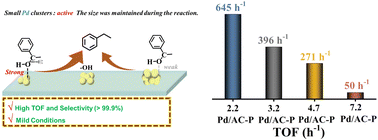
The rational design of highly efficient catalysts for the selective hydrodeoxygenation (HDO) of aromatic alcohols is imperative for advancing the sustainable synthesis of biofuels and high-value fine chemicals. Palladium nanoparticles (NPs) have emerged as a promising catalytic system for facilitating C–OH bond cleavage. Herein, a series of Pd NPs with uniform sizes (2.2–7.2 nm) were prepared on phosphorus-coated carbon to probe the size effect in the HDO of bio-based aromatic alcohols. A strong linear correlation was observed between the enhancement in catalytic activity and the decrease in Pd particle size, while alkane selectivity remained consistently high at 99.9%. The catalyst achieves a remarkable >99.9% yield of ethylbenzene from phenylethanol through a one-pot hydrogenation–deoxygenation pathway under mild conditions (25 °C and 10 bar H2) with a high turnover frequency (TOF) of 645 h−1. Furthermore, the catalyst demonstrates excellent generality for converting various benzyl alcohols into corresponding alkanes under identical conditions. A key finding is that a decrease in Pd particle size strengthens the metal–support interaction (MSI) with the P-containing support, resulting in electron-enriched Pd NPs. This electronic modification promotes the adsorption and activation of the C–OH bond, thereby enhancing the catalytic efficiency. This knowledge can guide the synthesis of highly active catalysts, enabling the efficient HDO of bio-based aromatic alcohols with reduced precious metal loadings.
 Please wait while we load your content...


