


 PLATFORM UPDATE:

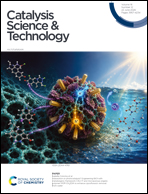
In situ surface-enhanced Raman spectroscopy and electrochemical investigation of hydrogen oxidation reaction on Au@Pt1Co1 catalysts in alkaline media
 a
Zhefei
Zhao
c
and
a
Zhefei
Zhao
c
and
Abstract
The sluggish kinetics of the hydrogen oxidation reaction (HOR) in alkaline environments represents a major bottleneck for high-performance anion-exchange membrane fuel cells. A central challenge is the difficulty in capturing and identifying key reaction intermediates at the catalyst–electrolyte interface on an atomic scale. To address this, we synthetized a core–shell Au@Pt1Co1 nanocatalyst. By harnessing the plasmon resonance of the Au core, we achieved significant in situ Raman signal amplification from the Pt1Co1 catalytic shell. Coupled with density functional theory (DFT) calculations, we present direct evidence for the formation of adsorbed hydroxyls (OHad) on the Au@Pt1Co1 surface during the HOR. Our findings reveal that the superior performance of the Au@Pt1Co1 alloy stems from a synergistic mechanism. Firstly, the oxophilic Co sites act as promoters, enriching and stabilizing OHad species to enable a bifunctional pathway. Secondly, charge transfer from Co to Pt induces a ligand effect, which modulates the electronic properties of Pt to optimize the binding energy of hydrogen intermediates. This dual-effect coupling substantially lowers the energy barrier for the Volmer step, thus boosting the catalyst's intrinsic activity. This work not only offers direct spectroscopic insight into the synergistic catalytic mechanism of PtCo bimetallic catalysts but also provides a clear strategy for the rational design of next-generation high-efficiency HOR electrocatalysts.

 Please wait while we load your content...


