


 PLATFORM UPDATE:

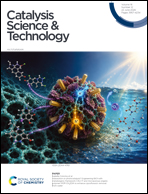
A palladium nanoparticle-decorated phenanthroline-based covalent organic polymer for Suzuki–Miyaura cross-coupling reactions

Abstract
The challenges associated with Suzuki–Miyaura reactions when using costly, less-sustainable homogeneous catalysts have increased the surge of attempts to develop highly efficient, cost-effective, and sustainable heterogeneous catalysts. This work explains the strategy and synthesis approach to obtain a phenanthroline-based covalent organic polymer (PhenanCOP), which serves as a support matrix, followed by its reduction with palladium salt to form PdNPs@PhenanCOP to prevent the leaching of the metal. The formation of PhenanCOP and Pd nanoparticle (NP)-decorated PdNPs@PhenanCOP was well characterised using TGA, FT-IR, FE-SEM, HRTEM, EDS, XPS, PXRD, and N2 adsorption–desorption techniques. ICP-OES analysis reveals Pd loading of 3.4 wt%, and HRTEM reveals an average nanoparticle size of 1 nm for PdNPs@PhenanCOP. The developed green catalyst exhibits efficient catalytic activity for Suzuki–Miyaura carbon–carbon (C–C) bond formation under mild, environmentally benign conditions. The catalytic approach demonstrates the potential of PdNPs@PhenanCOP to show a broad substrate scope, achieving higher product yields. The findings underscore the stability and reproducibility of PdNPs@PhenanCOP, which exhibits an exceptional turnover number (TON) of 1256 while maintaining excellent recyclability over 7 consecutive cycles, with minimal loss of TON. The results further highlight the applicability of PdNPs@PhenanCOP as a sustainable alternative for crucial synthetic bond formations via a heterocatalytic approach. Thus, this approach contributes to the development of greener methodologies for C–C bond formation with broad applicability, exceptional functional-group tolerance, and scalability by using a support matrix that requires minimal usage of metal, thereby increasing its practicality for forming C–C bonds at room temperature.

 Please wait while we load your content...


