


 PLATFORM UPDATE:


Oxidative degradation of endocrine disruptor bisphenol-A on MnO2 nanosheets under ambient conditions
 ce
and
Anjali
Pal
*a
ce
and
Anjali
Pal
*a
Abstract
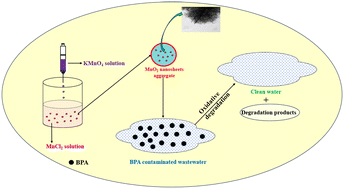
Removal of bisphenol A (BPA) from water was studied using manganese dioxide nanoparticles prepared through co-precipitation using MnCl2 and KMnO4. The nanoparticles were observed to consist of nanosheets and are poorly crystalline as seen from the SEM and TEM images, XRD analysis, and SAED pattern. The pHzpc of MnO2 nanoparticles was observed to be 3.9. TGA studies of MnO2 showed 13.5% weight loss. Specific capacitance was found to be 188 F g−1 at a current of 1 A g−1. The BPA–MnO2 reaction was carried out under constant stirring under ambient conditions in an open-mouth glass tube. It was observed that about 80% of BPA was removed in 60 min for a MnO2 dose of 1 g L−1 and an initial BPA concentration of 50 mg L−1. With an increase in the dosage of MnO2, the removal efficiency increased, whereas it showed a decrease in the removal efficiency with an increase in the initial concentration of BPA. The rate of reaction was shown to be increasing with an increase in temperature and a decrease in pH. Kinetic studies indicated that it was a second-order reaction. Total organic carbon (TOC) removal was studied, and about 75% of TOC was removed in 60 minutes for the same dose and initial concentration. Metal ions such as Ca2+ and Fe3+ decreased the final removal efficiency. A slight leaching of Mn2+ ions was observed during the course of the reaction, which confirmed the oxidative degradation of BPA. The reaction was carried out in a nitrogen environment. It was observed that oxygen had a minor role in the BPA degradation. Transformation products were identified by mass spectrometric studies.
 Please wait while we load your content...


