


 PLATFORM UPDATE:

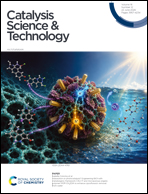
Cobalt-based silica nanospheres for enhanced peracetic acid activation: the efficiency and mechanism to degrade tetracycline hydrochloride
 b
b
Abstract
Peracetic acid (PAA)-based advanced oxidation processes (AOPs) have emerged as a prominent research focus in the field of water treatment due to their high efficiency and environmental friendliness in degrading organic pollutants. Herein, cobalt-based silica nanosphere catalysts (Co@SiO2) were synthesized by loading the transition metal cobalt onto the surface of hollow silica nanospheres using a wetness impregnation method to activate PAA for tetracycline hydrochloride (TCH) degradation. The Co@SiO2/PAA system exhibited significantly superior TCH degradation performance within 10 minutes, with a reaction rate (rate constant: 0.1751 min−1) 4.5 times higher than that of Co@SiO2. The optimal operating parameters for the degradation of 10 mg L−1 TCH were identified as 0.5 mM PAA, 200 mg L−1 Co@SiO2 and a neutral pH. The effects of Cl−, NO3− and SO42− on this catalytic system were negligible, whereas humic acid exhibited a significant inhibitory effect. Characterization results revealed that hollow silica nanospheres suppressed cobalt ion agglomeration, with Co leaching concentration reaching 0.137 mg L−1 after four cycles. Mechanistic studies indicated that the contributions of CH3C(O)OO·, ·OH, and 1O2 to TCH degradation were 40.55%, 21.83% and 37.62%, respectively. Furthermore, the degradation products of TCH were identified by liquid chromatography-mass spectrometry, which further elucidated the potential degradation pathways. Catalyst recycling experiments and various aquatic environment tests demonstrated that Co@SiO2 exhibited excellent reusability and catalytic stability. This study demonstrates that the Co@SiO2/PAA process may be a viable approach, advancing the development of AOPs for wastewater treatment.

 Please wait while we load your content...


