


A review on the exploration, reactivity, and catalytic activity of catalysts towards the copolymerization of sulphur dioxide with epoxides

Abstract
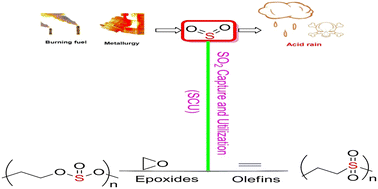
The main focus of this review is multicomponent reactions that use metal complexes, salts, ionic liquids or ligands systems to catalyze the copolymerization of sulphur dioxide (SO2) with epoxides, which is rarely explored by the scientific community. This discussion summarizes the tuning of catalysts and counter substrates to selectively catalyze their various reaction sites. In order to develop sulfur-containing polymers while addressing their environmental concerns, it is crucial to use sulphur dioxide (SO2) to produce high-value materials. One effective method for achieving this goal is the copolymerization of SO2 with epoxides. However, a variety of obstacles, including those involving mixed polymer segments (polysulphide versus polyether), cyclic by-products, unpredictable molecular weights, and unclear stereochemistry, have significantly limited the development of this reaction. A binary system was created using polyethylene glycol (PEG, a proton donor) and a PEG-functionalized base with appropriate basicity to accomplish SO2 gas desulfurization (GDS), another environmentally friendly method to mitigate the adverse effects of SO2. The direct conversion of absorbed SO2 into value-added chemicals under mild conditions is another challenging task because enabling absorbent recycling involves an energy penalty associated with SO2 desorption. Therefore, as a value-added process, the SO2 capture and utilization (SCU) method offers an alternative approach to enable the conversion of SO2 from flue gas into useful chemicals. This is the first review article to briefly describe the catalytic copolymerization and utilization of hazardous, gaseous SO2 molecules with epoxides using different types of catalysts.
 Please wait while we load your content...


