


From molecular hydrogen to reactive hydrogen: activation pathways and species variation in thermal catalytic heterogeneous hydrogenation

Abstract
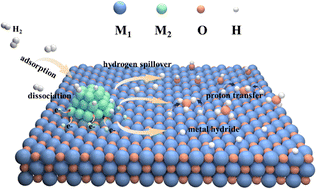
The activation of molecular hydrogen (H2) has long represented the central “black-box” challenge in heterogeneous hydrogenation catalysis. The microscopic processes underlying this step remain elusive, largely because of the inherent limitations of characterization techniques, so we have historically fragmented our understanding of the full reaction network. This review systematically explores the mechanistic pathways and dynamic evolution of hydrogen species in thermocatalytic hydrogenation, tracing the transformation from molecular H2 to atomic-scale reactive intermediates. Particular emphasis is placed on the homolytic and heterolytic dissociation routes, spillover, and reaction of different active hydrogen species at catalyst surfaces, and their decisive roles in governing catalytic activity and selectivity. By integrating advances in operando spectroscopies with theoretical modelling, we highlight how hydrogen species are dynamically redistributed under realistic conditions, and we clarify proton and hydride transfer pathways. These insights underscore the pivotal contributions of electronic structure regulation, support characteristics, and interfacial engineering in optimizing H2 activation. A deeper mechanistic understanding of the molecular to atomic hydrogen transformation provides a robust theoretical foundation and practical design principles for constructing highly active and selective hydrogenation catalysts.
 Please wait while we load your content...


