


High-performance catalytic systems for superior photo- and electrochemical hydrogen production
 *a
*a
Abstract
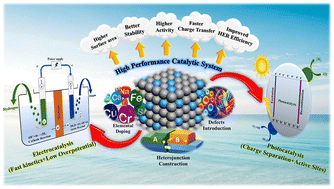
The increasing need for green energy production has spurred investigations into photochemical (PC) and electrochemical (EC) water splitting, a promising approach that consumes solar energy to produce hydrogen fuel directly. Despite these achievements that have been made over the recent years, the real-world implications of these technologies are still constrained by low solar-to-hydrogen efficiency, rapid charge recombination, slow reaction rates and low long-term stability of catalytic systems. Moreover, there is still a gap in knowledge related to catalyst design and their performance in PC and EC systems. This review highlights the design and optimization of high-performance catalytic systems for enhanced PC and EC hydrogen generation. Various strategies have been discussed for improving the catalytic efficiency, including band gap engineering, surface area enhancement, heterojunction formation, and defect engineering, all of which broaden light absorption and boost reaction kinetics. Particular attention has been paid to the role of electrocatalysts and photocatalysts in facilitating charge separation and enhancing the hydrogen evolution reaction (HER). Additionally, the impacts of size, pH and surface area of the catalysts on the PC and EC performance have been examined. By critically correlating structural and operative factors with catalytic activity, this review would help to fill the current knowledge gap and provide a more comprehensive framework for the development of catalysts.
- This article is part of the themed collection: 2026 PCCP Reviews
 Please wait while we load your content...


