


 PLATFORM UPDATE:


Self-assembly behavior of a phenanthroimidazole- and naphthalene-pendant photoluminescent ionic liquid and its application for cascade detection of Hg2+ and I− ions

Abstract
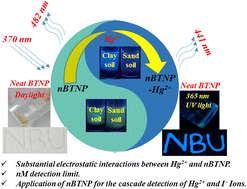
Functional ionic liquids (ILs) have been effectively used as probe materials to detect numerous targets, including heavy metal ions. Yet, their application for real-time, visual detection of trace levels of Hg2+, a key heavy metal contaminant, remains rare. In this study, we have prepared a fluorescent room-temperature ionic liquid, trihexyltetradecylphosphonium 2-(naphthalen-1-yl)-1H-phenanthro[9,10-d]imidazolate (BTNP), and its low-dimensional material (nBTNP) via a reprecipitation approach and characterized them using various spectroscopic and microscopic techniques. Neat BTNP showed potential as a solvent-free fluorescent ink, performing well as a secure writing medium. The nBTNP system served as a highly selective fluorescent chemosensor for detecting mercury ions (Hg2+), achieving detection and quantification limits in the nanomolar range, which compare favorably with those of previously reported sensors and reflect the probe's high sensitivity towards Hg2+. Utilizing its strong fluorescence response, the system enabled highly sensitive and selective quantification of Hg2+ ions in environmental soil samples. Moreover, the nBTNP–Hg2+ ensemble serves as a promising probe for I− ion detection through fluorescence-based assays. We have additionally demonstrated low-cost test strips for Hg2+ detection. Overall, the present report outlines a practical, robust strategy for designing IL-mediated fluorescent probes tailored for environmental monitoring.
 Please wait while we load your content...


