


Synergistic functionalization and descriptor-driven screening of MBene electrocatalysts for high-performance Li–S batteries

Abstract
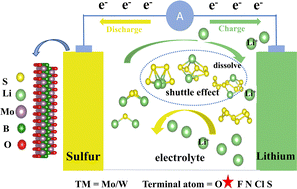
Identifying effective catalysts is vital for inhibiting the shuttling of polysulfides and enhancing reaction kinetics, thereby improving the cycling stability of lithium–sulfur batteries (Li–S batteries). Therefore, we systematically investigated the influence of surface functionalization (T = O, F, N, Cl, and S) on electrocatalytic and anchoring behavior on MBenes in Li–S batteries via density functional theory calculations. The study shows that O-functionalized MBenes possess optimal binding strength toward polysulfides, leading to effective suppression of the shuttle effect. Meanwhile, Mo2B2O2 and W2B2O2 exhibit excellent electrocatalytic activity alongside low Li2S decomposition (0.44 and 0.74 eV) and Li+ diffusion barriers (0.09 and 0.11 eV). Further mechanism analysis indicates that the formation of T–Li bonds enables effective anchoring of lithium polysulfides (LiPSs), while the weakening of Li–S bonds promotes the decomposition of Li2S. Notably, as shown in the Pearson correlation heatmap, the adsorption energy of LiS and the bond length of T–Li can be used as the key parameters for rapidly screening high-performance catalytic materials for sulfur cathodes. We propose that functionalized MBenes represent a promising class of anchoring and catalytic materials for lithium–sulfur batteries, and our work offers valuable guidance for the rapid and rational design of high-efficient cathodes for Li–S batteries.
 Please wait while we load your content...


