


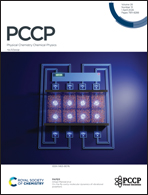
Enhancement of the electrochemical properties of BiVO4: the role of oxygen vacancies induced by Ag ion implantations

Abstract
This experimental investigation provides useful insight into the role of Ag ion implantation-induced oxygen vacancies, significantly improving the electrochemical properties of BiVO4 (BVO) thin films, contributing to a promising method in the design of high-performance energy materials. The BVO films were synthesized by the spray pyrolysis method, and Ag ions were implanted with 80 keV energy at different fluences using a low-energy negative ion implanter. Synchrotron-based GI-XRD analysis and micro-Raman spectroscopy confirmed the monoclinic scheelite crystal structure. The surface morphology alters from irregularly shaped cluster structures to agglomerated microspheres with diverse surface structures. After Ag ion implantation at a fluence of 1 × 10¹⁵ ions per cm2, photoluminescence spectroscopy indicated almost double the intensity compared to the pristine film due to the reduced radiative recombination of electron–hole pairs. Moreover, these BVO thin films at a fluence of 1 × 10¹⁵ ions per cm2 show better optical transmittance switching capability. These results confirm that Ag ion implantation enhances the electrochemical properties of BVO thin films with a coloration efficiency of up to 24.69% as confirmed by UV-Vis analysis. Synchrotron-based soft X-ray absorption spectroscopy provides an in-depth insight into the electronic structure, principally the hybridization of V-3d and O-2p states. Ex situ Raman measurement after 1000 cycles indicates higher stability and long-term cycling performance of BVO. Ion implantation thus seems to be a promising strategy in designing the development of innovative materials.

 Please wait while we load your content...


