


 PLATFORM UPDATE:


Photoswitches for ion channel regulation: expanding the scope of phototherapy through computational chemistry
 *b
*b
Abstract
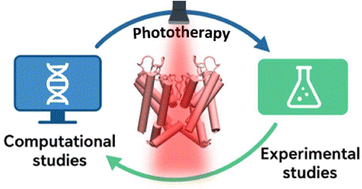
The development of ion channel phototherapy using azobenzene-based photoswitchable molecules represents a promising strategy for the precise modulation of ion channels in therapeutic applications, aiming to treat diseases such as epilepsy, long QT syndrome, Brugada syndrome, and cystic fibrosis. This article features a structure–activity analysis of such modulators, emphasizing the need to integrate chemical modifications, biological context, and computational modelling to enhance drug design. Despite advancements in photophysical tuning and scaffold optimization, critical challenges, including limited isomer selectivity and poor operating wavelengths, continue to hinder clinical translation. The functional performance of these compounds is closely linked to their electronic structure and dynamic interactions with protein environments. Advanced computational methods, including quantum mechanical (QM), molecular dynamics (MD), and QM/MM simulations, offer atomistic insights into photoisomerization mechanisms and protein–ligand dynamics. When combined with experimental validation and machine learning driven screening, these approaches may potentially accelerate the identification of next-generation light-controlled therapeutics and pave the way for personalized, reversible, and non-invasive interventions targeting ion channel dysfunction.
- This article is part of the themed collection: 2026 PCCP Reviews
 Please wait while we load your content...


