DOI:
10.1039/D5CE01168J
(Paper)
CrystEngComm, 2026,
28, 1187-1196
Effect of ultrasonic field on controlled organic stripping layer formation and its application in electrodeposition of ultra-thin copper foil
Received
11th December 2025
, Accepted 31st December 2025
First published on 29th January 2026
Abstract
Electroplating is a widely used method for producing metal films, enabling the fabrication of metal foil materials with thicknesses below 20 μm. However, stripping ultra-thin metal films (<5 μm) from the cathode electrode plate remains challenging. Herein, this study reports an efficient electrodeposition process for producing easily peelable ultra-thin copper foil. The method first forms a nickel layer (<1 μm) via electrodeposition on the carrier copper foil. Subsequently, an adenine-based organic stripper is adsorbed onto the nickel layer via “Ni–N” interaction, with ultrasonic introduced during adsorption to enhance bonding effectiveness. DC electroplating of the copper foil on this modified substrate surface enables the production of ultra-thin copper foil as low as 3.5 μm. Research findings indicate that, compared to conventional copper foil preparation methods, this process effectively promotes “Ni–N” formation through ultrasonic treatment. The introduction of ultrasonic assistance during organic stripping layer adsorption results in lower peel strength for the ultra-thin copper foil electroplated on its surface. This facilitates easier, intact stripping of the ultra-thin copper foil while minimizing damage during stripping and storage. Ultra-thin copper foil produced via this method finds primary applications in integrated circuit (IC) packaging, chip packaging substrates, high-density interconnect (HDI) boards, and various high-end electronic products.
1. Introduction
Copper foil, with its superior electrical and thermal conductivity, serves as a fundamental material in electronics and energy applications.1–4 It is widely used in integrated circuits, electronic components, and lithium battery current collectors. As electronic components evolve toward miniaturization, lightweight designs, and multifunctionality, copper foil is trending toward thinner thicknesses, placing increasingly stringent demands on its manufacturing processes.5–8 Traditional copper foil production primarily relies on electroplating and rolling methods, which typically yield thicker foils (>10 μm). Thinner foils face challenges in peeling from substrates, a longstanding issue in this field.9
Researchers have developed multiple copper foil manufacturing techniques to reduce thickness. For instance, Xiong et al. employed atomic layer deposition (ALD) to fabricate ultra-thin and ultra-smooth copper films on indium tin oxide (ITO) substrates at 110 °C, suitable for flexible optoelectronic devices;10 Gao et al. fabricated copper films on polyimide (PI) substrates via ALD;11 Jeong et al. deposited ultra-thin copper foil using a very high frequency direct current (VHF-DC) superimposed magnetron sputtering technique.12 However, the films cannot be detached from the substrates, and these methods involve complex processes with high manufacturing costs, making them unsuitable for large-scale copper foil production. On the other hand, the preparation process for carrier-based ultra-thin copper foil has proven to be a low-cost method for producing such foils. This process involves introducing an intermediate layer onto a carrier foil of a certain thickness to enable the peeling of the ultra-thin copper foil. The ultra-thin copper foil is then deposited via direct current electroplating onto this intermediate layer. After preparation, the ultra-thin copper foil can be completely peeled off the intermediate layer. Wei et al. used glass substrates as carriers and introduced chitosan with weak glycosidic bonds and high deacetylation as the intermediate layer to prepare peelable copper foils with thicknesses ranging from 746 nm to 8.33 μm;13 Yang et al. employed copper foil as the carrier substrate, electroplating discrete Cr nanocores onto its surface before electroplating a 1.34 μm thick peelable copper foil layer.14 However, the low-thickness copper foil preparation method studied by Wei is not conducive to roll-to-roll storage, while Yang's method involves a complex intermediate layer preparation and is prone to discrete Cr nanocores adhering to the thin copper foil surface.
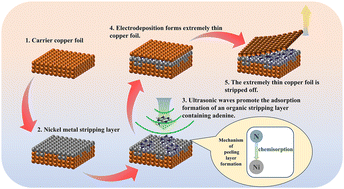
Here, this study developed a method for preparing easily peelable ultra-thin copper foil by electroplating a metal layer and ultrasonically assisted adsorption of an organic layer as a composite intermediate layer. First, a thin nickel metal layer is DC-electroplated onto the surface of a piece of 35 μm carrier copper foil. Subsequently, an adenine organic layer is adsorbed under ultrasonic treatment, as shown in Fig. 1. This ultrasonic process enhances the density of the organic layer adsorption. DC-electroplating on this surface enables the production of ultra-thin copper foil exceeding 3 μm thickness. The ultra-thin copper foil produced by this method exhibits low peel strength, enabling effortless separation. This breakthrough significantly advances the development of next-generation electronic and energy storage devices. Notably, this fabrication process can also be applied to produce other ultra-thin metal films (<5 μm), such as nickel and cobalt films.15
 |
| | Fig. 1 Schematic diagram of carrier with ultra-thin copper foil. | |
2. Experimental details
2.1 Pre-treatment of carrier copper foil
First, clean the surface of the 35 μm carrier copper foil with deionized water to remove dust. Subsequently, rinse the carrier copper foil surface sequentially with dilute sulfuric acid solution and alcohol. Finally, thoroughly rinse the surface with deionized water to eliminate oxides and oil residues from the carrier copper foil surface.
2.2 Preparation of nickel metal intermediate layer
A nickel metal intermediate layer was deposited by direct current electroplating onto the surface of a cleaned copper foil substrate. A 10 × 10 cm copper foil substrate served as the cathode, while a ruthenium–iridium–titanium electrode acted as the anode. The current density was set at 1.6 A dm−2, with a temperature of 45 °C. The plating solution of nickel contained NiSO4·6H2O (220 g L−1), Na2SO4 (25 g L−1), NaCl (20 g L−1), and boric acid (35 g L−1). The DC electroplating thickness was 1 μm.
2.3 Ultrasonic treatment for adsorption of adenine organic layer
Adenine organic layer adsorption was performed on the nickel metal intermediate layer. The adenine adsorption solution contained adenine (2 g L−1) and H2SO4 (80 g L−1) at a solution temperature of 35 °C. The nickel metal intermediate layer was placed in the adenine organic solution for adsorption via immersion. Additionally, the adenine organic layer solution was placed in an ultrasonic generator operating at a frequency of 40 kHz. Adsorption of the adenine organic layer was conducted under ultrasonic power conditions of 0 W, 30 W, 60 W, 90 W, and 120 W, with an adsorption time of 2 minutes.
The preparation process is shown in Fig. 2.
 |
| | Fig. 2 Flowchart for ultra-thin copper foil preparation: (a) electrodeposition of metal layer; (b) adsorption of organic layer; (c) electrodeposition of ultra-thin copper foil. | |
2.4 Calculation methodology
The surface electrostatic potential of the adenine molecule was calculated using the DMol3 module in Materials Studio. The “Task” was set to “Geometry Optimization”, employing the Generalized Gradient Approximation (GGA) with the Perdew–Burke–Ernzerhof (PBE) exchange–correlation functional. The formation process of the organic layer during ultrasonic treatment was investigated using an electrochemical workstation.
2.5 Characterization methods
This study employed organic layers adsorbing adenine under different ultrasonic treatment powers to prepare ultra-thin copper foil. UV-vis spectroscopy and Fourier transform infrared spectroscopy were employed to characterize the metal layer surface after organic adsorption, with the following sample conditions: 2 g L−1 adenine, solution environment at 35 °C. X-ray photoelectron spectroscopy was used to analyze the chemical state of elements under the following sample conditions: 2 g L−1 adenine, 150 g L−1 H2SO4, solution temperature 35 °C, with an applied ultrasonic frequency of 40 kHz. These samples were prepared under ultrasonic power conditions of 0 W, 30 W, 60 W, 90 W, and 120 W. To analyze changes in the chemical state of adenine on the surface of the nickel metal interlayer, we employed XPS fine spectroscopy for analysis. Electrochemical measurements were performed with an electrochemical workstation (CHI 660E) three-electrode system. A platinum sheet served as the counter electrode, with a nickel metal intermediate layer as the working electrode. In an acidic environment, the conventional reference electrode was a saturated calomel electrode (SCE). Since the SCE consists of mercury and mercurous chloride within a potassium chloride aqueous solution, the internal solution environment is prone to fluctuations during ultrasonic processing. Liquid flow induced by vibrations can affect local current density at the electrode, significantly impacting test accuracy. Therefore, a platinum wire electrode is used as a quasi-reference electrode for testing to mitigate environmental errors. Experiments were conducted at 35 °C. The open-circuit potential was measured to determine the scan rate, set at 1 mV s−1. The scan voltage was adjusted between −0.6 and +0.6 V. Prior to electrochemical testing, the open-circuit potential (OCP) was allowed to stabilize for 1200 s. Using potential scanning technology, the test solution comprised 3.5 wt% NaCl, 150 g L−1 H2SO4, and 2 g L−1 adenine. Ultrasonic frequency was set at 40 kHz. Polarization curves and electrochemical impedance spectroscopy (EIS) curves of the nickel metal interlayer were tested under ultrasonic power conditions of 0 W, 30 W, 60 W, 90 W, and 120 W. The peel strength of the ultra-thin copper foil was evaluated using a 90° peel strength tester.
3. Results and discussion
3.1 Calculation of surface electrostatic potential for adenine
To predict potential reaction sites for adenine molecules on the organic layer surface of the nickel metal interlayer, this study employed the DMol3 module within Materials Studio to perform theoretical calculations and analysis of the surface electrostatic potential for adenine molecules.16–18 The results are shown in Fig. 3, where red regions indicate areas of higher electrostatic potential (positive charge), typically corresponding to electron-deficient or nucleophilic attack sites, while blue regions denote areas of lower electrostatic potential (negative charge), predominantly electron-rich or electrophilic reaction sites.19–22
 |
| | Fig. 3 Surface electrostatic potential distribution map of the adenine molecule. | |
In the calculated electrostatic potential distribution, a distinct low-potential (bluish) feature is observed around the N atom in adenine, indicating a higher density of lone pair electron clouds and strong electron-donating ability. The lone pair electrons of these N atoms readily coordinate with nickel's d-vacant orbitals, forming stable chemisorption bonds that promote the formation of an adsorbed layer of adenine molecules on the nickel metal surface. This computational work elucidates the interaction mechanism between the adenine organic molecule and the nickel metal surface at the electronic structure level, providing crucial insights for subsequent XPS analysis and detailed spectral data interpretation of the elements.
3.2 UV-vis and FTIR spectroscopic characterization reveal the composition of interfacial materials
UV-vis spectral data reveal that following treatment with an adenine-based organic solution, as shown in Fig. 4, an organic layer adsorbed onto the nickel metal stripping layer surface, exhibiting an increasing adsorption trend with enhanced ultrasonic power. This feature is particularly pronounced at wavelengths between 200–600 nm.23–26Fig. 5(a) shows the Fourier transform infrared (FTIR) spectrum of the nickel metal intermediate layer, while Fig. 5(b–f) present the FTIR spectra of the composite stripping layer surface under different ultrasonic powers. These spectra confirm the adsorption of a certain amount of adenine organic matter onto the nickel metal intermediate layer surface and demonstrate the adsorption amount of adenine under varying ultrasonic power conditions. Based on the data, using the absorption peak around 1602 cm−1 as a reference, the peak intensities at 40 kHz ultrasonic frequency were 97.6%, 97.1%, 96.7%, 96.2%, and 93.4% for powers of 0 W, 30 W, 60 W, 90 W, and 120 W, respectively. The absorption peak intensity systematically decreased with increasing power. Observation of other functional group absorption peaks similarly revealed a trend where organic adsorption increased with higher ultrasonic power, indicating that the adsorption of adenine-containing organic compounds on nickel metal surfaces significantly increased with increasing ultrasonic power.
 |
| | Fig. 4 UV-vis spectra of organic peel layer surfaces treated with different ultrasonic power levels. | |
 |
| | Fig. 5 (a) Fourier transform infrared spectrum of the nickel metal intermediate layer; (b–f) Fourier transform infrared spectra of the organic stripping layer surface treated with different ultrasonic power levels. | |
3.3 XPS experimental verification of interfacial chemical bonding
We have also extensively explored adsorption mechanisms in our previous research.27 Analysis of the theoretical calculation data in section 3.2 indicates that nitrogen atoms are identified as key reaction sites, where adenine molecules interact with the intermediate layer surface of nickel metal. Therefore, this study conducted X-ray photoelectron spectroscopy (XPS) analysis on samples prepared by adsorbing organic stripping layers under different ultrasonic power conditions, focusing on deciphering the chemical state changes in the N 1s fine spectrum.
Peak-by-peak fitting analysis of the fine spectrum data in Fig. 6 revealed that the relative contribution of the N–Ni coordination bond energy component within the N element bonding types exhibited a gradual upward trend with increasing ultrasonic power. Specifically, at ultrasonic powers of 0 W, 30 W, 60 W, 90 W, and 120 W, the bonding proportions of N–Ni bonds were 11%, 44%, 48%, 53%, and 59%, respectively, indicating that ultrasonic treatment significantly promoted the chemical adsorption of nitrogen atoms onto the nickel metal surface.28–30 This trend aligns with changes in characteristic functional group absorption intensities observed in FTIR, collectively confirming that ultrasonic treatment effectively enhances the directional adsorption and interfacial coupling of adenine organic molecules on nickel metal surfaces. This promotes N–Ni bond formation and facilitates the creation of organic stripping layers on nickel metal intermediate surfaces.
 |
| | Fig. 6 (a–e) XPS spectra of organic peel layer surfaces treated with different ultrasonic power levels; (f) proportion of various N-bonding types in the organic peel layer surface treated with different ultrasonic power levels. | |
3.4 Electrochemical characterization reveals the charge transfer mechanism
Fig. 7(a–c) show the electrochemical impedance spectra, polarization curve data, and Bode plots of the organic stripping layer formation process under blank control conditions and at different ultrasonic power levels, respectively. Fig. 7(d) presents the equivalent circuit fitting diagram of the impedance curve. In Fig. 7(a), the radius of the impedance curve increases after adding adenine components, and continues to increase with increasing ultrasonic power. In Fig. 7(b), polarization curve results are summarized in Table 2. The data indicate that after adding adenine components, the polarization potential increases while the polarization current decreases in the polarization curve tests, exhibiting the same trend with increasing ultrasonic power. In Fig. 7(c), the impedance modulus in the Bode plot increases with the addition of adenine components and the increase in ultrasonic power. The impedance curve data were fitted to an equivalent circuit model using ZView2 software, with the fitted data shown in Table 1. In these models, Rs represents the solution resistance, while Rct and Rf denote the charge transfer resistance and film resistance, respectively. Compared to an ideal capacitor, the capacitance is represented by constant phase elements due to deviations in capacitance values in actual circuits.31–33 Thus, CPE1 represents the constant phase angle element at the film/solution interface, while CPE2 represents the constant phase angle element at the film/metal interface. Inhibition efficiency (η) is commonly used to evaluate the effectiveness of corrosion inhibitors in suppressing metal corrosion processes under specific conditions.34 Here, it can characterize the adsorption behavior of organic compounds on the nickel metal interlayer surface and is calculated using eqn (1) and (2):| |  | (1) |
where Rm denotes the polarization resistance after adding adenine components, and Rn represents the polarization resistance of the blank control group. Rm equals the sum of Rct and Rf. As shown in Table 1, with increasing ultrasonic power, the η values are 1.8%, 13.7%, 28.6%, 43.4%, and 92.6%, respectively, exhibiting a gradual upward trend. Additionally, the charge transfer resistance (Rct) and film resistance (Rf) also show a progressive increase in the table. This indicates that as ultrasonic power increases, the resistance near the nickel metal intermediate layer surface increases. This suggests that the adenine adsorption film layer on the nickel metal intermediate layer surface becomes increasingly dense, thereby affecting the charge transfer process.
 |
| | Fig. 7 (a) Electrochemical impedance plots of the organic stripping layer formation process under different ultrasonic power treatments; (b) polarization curve test plots of the organic stripping layer formation process under different ultrasonic power treatments; (c) electrochemical Bode plots of the organic stripping layer formation process under different ultrasonic power treatments; (d) equivalent circuit fitting plots of the electrochemical impedance curves. | |
Table 1 Equivalent circuit fitting data results
| Sample |
R
s (Ω cm2) |
R
f (Ω cm2) |
R
ct (Ω cm2) |
CPE1-T (μF cm−2) |
CPE1-P (μF cm−2) |
CPE2-T (μF cm−2) |
CPE2-P (μF cm−2) |
η % |
| Blank control |
0.995 |
383.1 |
58.2 |
8.09 × 10⁻⁵ |
0.93 |
1.08 × 10⁻⁴ |
0.97 |
|
| 0 W |
0.993 |
389.8 |
59.5 |
8.10 × 10⁻⁵ |
0.93 |
1.19 × 10⁻⁴ |
1.20 |
1.8 |
| 30 W |
0.780 |
427.4 |
74.5 |
6.75 × 10⁻⁵ |
0.95 |
3.62 × 10⁻⁴ |
1.17 |
13.7 |
| 60 W |
0.821 |
490.7 |
76.9 |
7.13 × 10⁻⁵ |
0.94 |
3.63 × 10⁻⁴ |
1.15 |
28.6 |
| 90 W |
1.085 |
526.3 |
106.3 |
5.62 × 10⁻⁵ |
0.94 |
2.31 × 10⁻⁴ |
0.87 |
43.4 |
| 120 W |
0.887 |
530.5 |
319.5 |
7.83 × 10⁻⁵ |
0.92 |
8.09 × 10⁻⁵ |
1.11 |
92.6 |
Table 2 Polarization current and polarization voltage data of the polarization curve
|
|
Blank control |
0 W |
30 W |
60 W |
90 W |
120 W |
log I |
−4.105 |
−4.205 |
−4.217 |
−4.337 |
−4.349 |
−4.408 |
|
V
|
−1.46 |
−1.27 |
−1.17 |
−1.11 |
−1.09 |
−1.05 |
3.5 Surface characteristics of ultra-thin copper foil peeling interfaces
Fig. 8(a–e) show images of the delamination interface of ultra-thin copper foil after electroplating following adsorption of an adenine organic layer under different ultrasonic power treatments. Two distinct morphological features are observed on the delaminated surface of the ultra-thin copper foil, as indicated by regions “a” and “b” in Fig. 8(e). Region “a” exhibits a relatively flat surface, while region “b” displays a rougher, grooved texture. This occurs because during the electroplating of the ultra-thin copper foil, the molecular dimensions of copper ions and atoms are significantly smaller than those of adenine molecules. During plating, copper ions can penetrate the gaps and deposit onto the surface of the nickel metal intermediate layer; at the same time, during the initial stage of electrolytic deposition of thin copper foil, factors such as agitation of the copper plating solution contribute to the loss of the organic release layer. Consequently, the electroplated ultra-thin copper foil connects directly to the nickel metal intermediate layer, thereby increasing the roughness at the peel interface and enhancing peel strength. As shown in the figures, the low-roughness area “a” in Fig. 8(a–e) increases in area, while the high-roughness trench area “b” decreases significantly. It is speculated that as the ultrasonic treatment power increases, the adenine adsorption layer on the surface of the nickel metal peel layer becomes denser, gradually reducing the peel surface roughness of the ultra-thin copper foil electroplated onto it.
 |
| | Fig. 8 (a–e) SEM images of the delamination interface of ultra-thin copper foil prepared from organic peel layers under different ultrasonic power treatments; (f and g) local area magnified views. | |
3.6 Peel strength testing
As shown in Fig. 9, the peel strength of ultra-thin copper foil prepared with an adenine-adsorbed organic peel layer was measured from the carrier copper foil using a 90° peel strength test method under different ultrasonic power treatments. Results indicate that peel strength progressively decreased with increasing ultrasonic power applied to the adenine organic peel layer. This demonstrates that ultrasonic treatment effectively weakened the adhesion at the interface between the organic peel layer and the ultra-thin copper foil. Consequently, it improved the integrity and ease of peeling the ultra-thin copper foil from the carrier copper foil. This phenomenon indicates that the ultrasonic treatment of the adsorbed organic release layer facilitates the complete separation of the ultra-thin copper foil from the carrier copper foil.
 |
| | Fig. 9 Peel strength of ultra-thin copper foil prepared from the organic release layer at different ultrasonic power levels. | |
3.7 Other metal film depositions and mechanism of ultrasound-assisted organic stripping layer formation
The electrodeposition process developed in this study for producing ultra-thin copper foil exhibits excellent versatility and scalability, making it applicable to the electrochemical fabrication of other metal films. By adjusting parameters such as electrolyte composition, deposition potential, current density, and additives, this process was successfully applied to the production of nickel and cobalt foils, further validating its applicability and flexibility in preparing multi-metal films.
As shown in Fig. 10, this study successfully produced nickel foil and cobalt foil samples with uniform thickness and smooth surfaces, both maintained at approximately 5 μm. For nickel foil preparation, the electrolyte formulation is comprised of NiSO4·6H2O (200 g L−1), Na2SO4 (35 g L−1), NaCl (25 g L−1), and H3BO3 (30 g L−1). Operating at a constant current density of 5 A dm−2, temperature of 50 °C, and moderate stirring, this system yielded nickel foil with a dense structure and smooth surface; for the electrodeposition of cobalt foil, the electrolyte is primarily comprised of CoSO4·7H2O (150 g L−1), CoCl2·6H2O (50 g L−1), and H3BO3 (35 g L−1). Electrodeposition was conducted at 50 °C and a current density of 5 A dm−2, ultimately yielding cobalt foil with excellent ductility and uniformity.
 |
| | Fig. 10 (a) Cross-sectional view of carrier-attached ultra-thin cobalt foil; (b and c) energy-dispersive X-ray spectroscopy (EDS) patterns of carrier-attached ultra-thin cobalt foil cross-section; (d) cross-sectional view of carrier-attached ultra-thin nickel foil; (e and f) energy-dispersive X-ray spectroscopy (EDS) patterns of carrier-attached ultra-thin nickel foil cross-section; (h and i) actual images of carrier-attached ultra-thin cobalt and nickel foils. | |
The enhancement of the microstructure and mechanical properties of the aforementioned ultra-thin copper foil is closely related to the adsorption behavior of adenine molecules on the nickel substrate. Fig. 11 illustrates the deposition of copper ions on the organic film surface, where adenine molecules form stable chemical adsorption bonds with nickel via nitrogen (N), resulting in a dense monolayer organic film. Under applied electric fields, electrons can penetrate the film–liquid interface via quantum tunneling or through defect sites within the film layer, driving the electrolytic deposition of copper ions. In an ultrasonic environment, this process facilitates the formation of nickel–nitrogen coordination bonds, establishing the microstructural foundation for ultimately obtaining copper foil with outstanding peelability.
 |
| | Fig. 11 Schematic diagram of the ultrasonic mechanism of action: (a) electrodeposition of metal layer; (b) adsorption of organic layer; (c) electrodeposition of ultra-thin copper foil. | |
4. Conclusions
In summary, we developed a process that incorporates ultrasonic treatment during the preparation of ultra-thin copper foil substrates to promote the formation of an adenine organic layer, thereby reducing the peel strength of the ultra-thin copper foil. This study demonstrates that the preparation method significantly influences organic layer adsorption. Compared to conventional immersion methods, ultrasonic-assisted immersion is proven to be highly effective in enhancing adenine organic layer adsorption onto nickel metal surfaces. This promotes N–Ni formation, facilitates denser organic layer formation, improves organic film quality, and reduces peel strength during ultra-thin copper foil production. This design strategy, prepared through a simple, easily scalable process, offers a novel approach for manufacturing high-performance standalone ultra-thin copper foil. It is applicable to fields such as high-performance PCB copper foil, including ultra-thin copper foil for IC packaging.
Author contributions
Guangmao Yin: writing – original draft, validation, software, investigation, formal analysis, and data curation. Junqing Han: writing – review & editing, formal analysis, and validation. Yuxi Zhu: writing – review & editing, and validation. Xinxin Song: writing – review & editing, and validation. Jianyuan Wang: writing – review & editing, and validation. Xiangfa Liu: writing – review & editing, and validation. Yuying Wu: writing – review & editing, visualization, supervision, resources, project administration, methodology, investigation, funding acquisition, formal analysis, and conceptualization.
Conflicts of interest
The authors declare that they have no known competing financial interests or personal relationships that could have appeared to influence the work reported in this paper.
Data availability
The authors state that the processed data required to reproduce these findings are available in this manuscript.
Acknowledgements
This research was supported by the National Natural Science Foundation of China (U24A20206), the National Key R&D Program of China (2021YFB3400800), the Shandong Province Key Research and Development Plan (2023CXGC010403), and the Taishan Scholar Foundation of Shandong Province.
References
- S. Qi, Z. Tao, R. Zou, H. Yang, R. Jin and T. Lei, Mater. Sci. Eng., A, 2025, 149052 CrossRef CAS.
- Y. Liu, N. Song, X. Fan, B. Lu, D. Li, L. Wang, Z. Sun and Y. Tang, Trans. Indian Inst. Met., 2024, 77, 2583–2591 CrossRef CAS.
- J. Li, W. Chen, J. Zhou, Y. Tian, H. Liu and S. He, J. Phys. Chem. C, 2024, 128, 12141–12150 CrossRef CAS.
- M. Gan, M. Zhu, J. Tu, X. Wang and C. Gu, Metals, 2024, 14, 247 CrossRef CAS.
- N. Song, W.-F. Liu, L.-J. Wang, J. Liao, J. Huang, M. Zhao, M. Zhao, Y.-Z. Tang, Y.-H. Tan and X.-W. Fan, Mater. Charact., 2024, 215, 114187 CrossRef CAS.
- X. Cao, Q.-q. Zhu, Y.-h. Liu, K.-x. Song, S.-g. Jia, H.-t. Liu, W.-w. Lu, M. He and Q. Feng, J. Mater. Res. Technol, 2024, 29, 2350–2362 CrossRef CAS.
- J. Han, Y. Wu and X. Liu, Mater. Des., 2024, 243, 113041 CrossRef CAS.
- Y. Wang, S. Wang, B. Feng, Y. Zhang, X. Hu, M. Yi, J. Chen and G. Yi, Mater. Sci. Eng., A, 2025, 932, 148246 CrossRef CAS.
- J. Zhang, D. Zuo, X. Pei, C. Mu, K. Chen, Q. Chen, G. Hou and Y. Tang, Metals, 2022, 12, 2110 CrossRef CAS.
- P. Xiong, Y. Liu, T. Ding, P. Chen, H. Wang and Y. Duan, Org. Electron., 2018, 58, 18–24 CrossRef CAS.
- Z. Gao, C. Zhang, Q. Wang, G. Xu, J. Gao, H. Cao and H. Zhang, ACS Appl. Mater. Interfaces, 2023, 16, 1876–1882 CrossRef PubMed.
- B. H. Jeong, D. W. Kim, D. H. Park, S. Kim, Y. S. Jang, Y. Taura, Y. Kokaze, S. H. Lee and G. Y. Yeom, Microelectron. Eng., 2025, 297, 112307 CrossRef CAS.
- C. Wei, N. Ye, L. Hong, J. Yao, W. Xia, J. Mao, Y. Wang, Y. Zhao and J. Tang, ACS Appl. Mater. Interfaces, 2021, 13, 21714–21723 CrossRef CAS PubMed.
- G. Yang, Y. Hui, J. Chen, B. Li, J.-h. Chen, K. Liu, G.-d. Liang and D.-r. Deng, Trans. Nonferrous Met. Soc. China, 2023, 33, 2698–2711 CrossRef CAS.
- G. F. Deng, G. R. He, J. Q. Huang and P. Xu, Adv. Mater. Res., 2013, 652, 1755–1758 Search PubMed.
- F. M. Altalbawy, U. A.-R. Hussein, S. V. Menon, A. Kumar, B. Kumari, R. Verma, G. S. Prasad, M. A. Alboreadi, Z. A. Hamodi and H. G. Shakie, Comput. Theor. Chem., 2025, 1243, 114983 CrossRef CAS.
- Y. Luo, X. Qin, F. Wang, J. Huang, Z. Wang, S. Wen, S. Zhen, C. Yang, X. Wang and X. Fan, Mater. Res. Bull., 2025, 113723 Search PubMed.
- Q. Zhao, W. Li, N. Li, B. Wu, P. Guo, Q. Cheng, Q. Ding, X. Han, Y. Xu and D. Li, J. Mol. Liq., 2024, 397, 124079 Search PubMed.
- B. Tan, S. Zhang, Y. Qiang, L. Guo, L. Feng, C. Liao, Y. Xu and S. Chen, J. Colloid Interface Sci., 2018, 526, 268–280 CrossRef CAS PubMed.
- N. a. Kovačević and A. Kokalj, J. Phys. Chem. C, 2011, 115, 24189–24197 CrossRef.
- Y. Boughoues, M. Benamira, L. Messaadia and N. Ribouh, Colloids Surf., A, 2020, 593, 124610 CrossRef CAS.
- B. El Ibrahimi, Colloid Interface Sci. Commun., 2020, 37, 100279 CrossRef CAS.
- Q. Zang, X. Gao, J. Qiu, M. Yu, Z. Mao, K. Gongsun, C. Chen, C. Bu and H. Ma, Surf. Coat. Technol., 2024, 494, 131415 CrossRef CAS.
- D. Hu, S. Liu, L. Qi, J. Liang and G. Zhang, J. Environ. Chem. Eng., 2024, 12, 114307 CrossRef CAS.
- M. Breitbach, D. Bathen and H. Schmidt-Traub, Ind. Eng. Chem. Res., 2003, 42, 5635–5646 CrossRef CAS.
- M. Ondarts, L. Reinert, S. Guittonneau, S. Baup, S. Delpeux, J.-M. Lévêque and L. Duclaux, Chem. Eng. J., 2018, 343, 163–172 Search PubMed.
- G. Yin, J. Han, Y. Zhu, X. Song, K. Song and Y. Wu, J. Mater. Res. Technol, 2025, 39, 2105–2117 CrossRef CAS.
- H. Huang, Z. Wang, Y. Gong, F. Gao, Z. Luo, S. Zhang and H. Li, Corros. Sci., 2017, 123, 339–350 CrossRef CAS.
- Y. Qiang, H. Li and X. Lan, J. Mater. Sci. Technol., 2020, 52, 63–71 CrossRef CAS.
- Y. Wang, Z. Liu, D. Li, Y. Dong, W. Li and N. Li, Corros. Sci., 2015, 98, 382–390 CrossRef CAS.
- F. Bentiss, M. Traisnel, N. Chaibi, B. Mernari, H. Vezin and M. Lagrenée, Corros. Sci., 2002, 44, 2271–2289 CrossRef CAS.
- H. Ashassi-Sorkhabi, B. Shaabani and D. Seifzadeh, Appl. Surf. Sci., 2005, 239, 154–164 CrossRef CAS.
- Y. Shi, Y. Fu, S. Xu, H. Huang, S. Zhang, Z. Wang, W. Li, H. Li and F. Gao, J. Mol. Liq., 2021, 338, 116675 Search PubMed.
- M. Kissi, M. Bouklah, B. Hammouti and M. Benkaddour, Appl. Surf. Sci., 2006, 252, 4190–4197 CrossRef CAS.
|
| This journal is © The Royal Society of Chemistry 2026 |
Click here to see how this site uses Cookies. View our privacy policy here.