DOI:
10.1039/D5CE01120E
(Paper)
CrystEngComm, 2026,
28, 1339-1350
Solid-state conformations of pharmaceutical polymorphs in solution: validation and invalidation by NMR.
Received
25th November 2025
, Accepted 9th January 2026
First published on 16th January 2026
Abstract
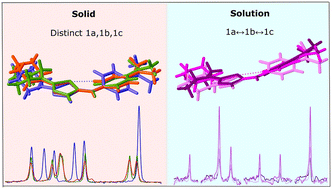
Polymorphism is an important research area in the pharmaceutical industry because it provides understanding of how different crystalline forms of a drug can affect its physical and chemical properties, thereby impacting therapeutic efficacy. While polymorphism is conventionally associated with the solid state, recent studies have suggested that crystalline polymorphs can retain their conformational memory even when they are dissolved in a solvent. Kumar et al. reported that the polymorphic states of the anticancer drug, (Z)-5-(4-(dimethylamino)benzylidene)-2-(piper-idin-1-yl)thiazol-4(5H)-one (1), retained their distinct molecular conformations of the crystal structure even in the solution phase (Crystal Growth and Design, 2023, 23(1), 580–591). The NMR chemical shift perturbations of polymorphs in solution were utilized to establish the presence of distinct conformations by Kumar et al. However, small molecules in the solution state undergo rapid conformational interconversions due to low potential energy barriers, and this makes the characterization of different conformational polymorphs particularly challenging in solvents. Solid-state and solution-state NMR spectroscopies were employed to elucidate the similarities and differences between the spectra of polymorphs of 1 in the solid and solution phases. Our analysis focusses on the spectral patterns and chemical shift differences (Δδ) between signals of different polymorphs, both in solution and the solid phase. Clear structural and chemical shift differences were observed for the crystalline polymorphs by solid-state NMR. In solution, the differences in chemical shifts among the polymorphs are negligible or near the limit of detection, highlighting the importance of caution when interpreting small NMR chemical shift variations as evidence for different polymorphs. The magnitude and origin of the observed 1H chemical shift differences for the polymorphs of 1 are analyzed, and the validated NMR methodology presented herein is expected to be applicable to other conformational polymorphic systems.
1. Introduction
The phenomenon of polymorphism1,2 was first discovered by the German scientist Eilhard Mitscherlich2 in 1822 in compounds such as sulfur and calcium carbonate showing that these compounds could exist in different crystalline forms, and these different forms could exhibit distinct physical properties. Even though the concept of polymorphism was known way back in 1822, its importance in the field of pharmaceuticals3,4 was widely recognized only in the late 20th century. The incident that marked the importance of polymorphism in the pharmaceutical industry is the well-known case of ritonavir,5 an antiretroviral drug used for the treatment of HIV. A more stable form II of the drug, which had reduced solubility and bioavailability when compared to the first form, suddenly appeared after the original form I was already marketed. This second form of ritonavir exhibited drastically reduced drug efficacy due to its significantly lower solubility and bioavailability. This incident was an alarm bell to understand the phenomenon of polymorphism and ability to control it during the process of drug development, since different polymorphic forms dramatically affect the therapeutic activity of the drug.6–8 Subsequent to the ritonavir setback, crucial advancements and improvements were made in the field of pharmaceutical industries that include: (1) better form screening with the aid of advanced analytical techniques like X-ray crystallography9–11 and solid-state NMR;12–14 (2) a deeper insight of the crystallization parameters during drug development by seeding15,16 with specific polymorphs to prevent undesired polymorphic transitions; (3) a rigorous attention to the thermodynamic and kinetic stability to anticipate possible polymorphic transitions under various manufacturing and environmental conditions; (4) integration of nanotechnology and milling techniques17–19 in the process of drug development, which influence the stability of polymorphs.
Recently, the focus on polymorphism has grown to such an extent that instances of polymorphism have been suggested even in the cases of solid polymorphs dissolved in solution.20 A recent study by Kumar et al.20 on the binding affinities of polymorphs of the anticancer drug, (Z)-5-(4-(dimethylamino)benzylidene)-2-(piper-idin-1-yl)thiazol-4(5H)-one (1) (Fig. 1) against human γ-enolase, an enzyme of the glycolytic pathway expressed predominantly in neurons and cells of the neuroendocrine system, suggested that the crystalline polymorphs of the anticancer drug retain their distinct polymorphic conformations even in the solution state. Structurally, the observed chemical shifts in the solution 1D NMR spectra of the different polymorphs, recorded in DMSO, were the primary basis of this argument. Even though the reported 1H NMR spectra showed different peak positions for different polymorphs, we noted that the magnitude of the differences in the chemical shifts were very small. Thermal fluctuations combined with conformational dynamics and low barriers for rotamer population generally prevent the existence of distinct solid-form conformations in the solution state.21
 |
| | Fig. 1 Chemical structure of the anticancer drug, (Z)-5-(4-(dimethylamino)benzylidene)-2-(piperidin-1-yl)thiazol-4(5H)-one (1). Hydrogen atoms are labelled in black font and carbon atoms in red; the same labels are used to represent the peaks corresponding to the atoms in the NMR spectra. | |
Solid-state polymorphs lose their distinct crystalline structures upon dissolution, but their polymorphic characteristics can indirectly persist in the solution state due to differences in dissolution kinetics and supersaturation behavior, that underline observed differences in the bioavailability and physicochemical and pharmacokinetic properties. However, to the best of our knowledge, no solid-state polymorph has been shown to retain its unique structural form once completely dissolved. In solution, small molecules rapidly interconvert among accessible conformational states, and spectroscopic techniques such as NMR, which operate on milliseconds or longer timescales, observe only an ensemble-averaged signal of these dynamic species. Proteins and surfactants are known to adopt multiple conformational states in solution depending on environmental conditions such as pH, temperature, and solvent polarity and show differences in chemical shifts in the slow exchange regime.22–25 However, these conformational states differ from classical polymorphism, which applies to distinct solid-state crystal forms of small molecules. Drug molecules with multiple conformers in polymorphs and/or cocrystals/salts are reported,26 which exhibit differences in the physicochemical and pharmacokinetic properties, such as solubility and bioavailability.
In this study, we re-examined, using NMR spectroscopy, the previously reported ability of solid-state polymorphs of the small organic molecule 1 to preserve its structural memory in the solution state (ref. 20). The crux of our study is the statement on page 583 of the paper by Kumar et al.,20 “interestingly, a comparative analysis of the spectra (Fig. S4 of ref. 20) revealed a shift in peak positions for the aromatic and amine protons. While for forms 1a and 1b, the shift is marginal, comparatively, a more significant shift is noticed for form 1c. As discussed above, comparing their crystal structures shows a similar trend of conformational differences. Such a change in peak positions suggests that the conformations of the polymorphic forms are maintained in the solution to some extent, and possibly the interchange between the different conformations in the solution is restricted. A comparison of 1H NMR spectra recorded in CDCl3 displayed a similar trend. Furthermore, the phenotypic screening of the trimorphs against the breast cancer cells MCF7, the % binding study to the γ-enolase enzyme, and the MD simulation based binding free energies with the target manifested that form 1a is the most potent form followed by the forms 1b and 1c”. We show in this paper that careful NMR spectral measurements and analysis along with computations lead to the opposite conclusion: (1) that the distinct molecular conformations 1a, 1b and 1c in the solid state do not retain their structural identity in solution and (2) the energy barrier between these conformations is too small for restricted interconversion. Certain statements and the derived conclusions from erroneous NMR interpretation in the paper by Kumar et al.20 are non-trivial and have far-reaching consequences, as was deduced by the authors that such distinct conformational polymorphs give rise to different binding activity (analyzed computationally), and in this case, form 1a has a stronger binding affinity to the target receptor than forms 1b and 1c.
2. Materials and methods
To synthesize the arylidene thiazolidinone molecule (Z)-5-(4-(dimethylamino)benzylidene)-2-(piperidin-1-yl)thiazol-4(5H)-one (1), we employed a one-pot amine substitution and Knoevenagel condensation reaction using rhodamine as the starting material (Scheme 1).
 |
| | Scheme 1 Synthesis of (Z)-5-(4-(dimethylamino)benzylidene)-2-(piperidin-1-yl)thiazol-4(5H)-one (1). | |
Thus, 200 mg of rhodamine (1.5 mmol) was weighed and combined with 1 equivalent of 4-(dimethylamino)benzaldehyde (224 mg) followed by the addition of 2 equivalents of piperidine (255 mg, 0.3 mL). To initiate the reaction, 1 mL of a deep eutectic solvent (DES) composed of glycerol (1 equiv.) and choline chloride (2 equiv.) was added. The reaction mixture exhibited a color change to blue upon the addition of DES, followed by a change to yellow color upon the subsequent addition of ethanol. The reaction was carried out in a sealed tube under continuous stirring at 65 °C for 4 h. After completion, the sealed tube was left undisturbed, leading to the spontaneous formation of crystals within 3 h.
The obtained crystals were initially characterized using powder X-ray diffraction (PXRD) and single-crystal X-ray diffraction (SC-XRD), confirming their identity as polymorphic form 1b of the compound. Form 1a was subsequently obtained by dissolving form 1b in nitromethane followed by recrystallization, with structural confirmation via PXRD and SC-XRD. Furthermore, form 1c was generated from form 1b by differential scanning calorimetry (DSC) through a heat–cool cycle (heating up to 250 °C). These preparative procedures are different from those used by Kumar et al.20 but worked smoothly in our hands. The polymorphs are numbered using the original publication20 and were matched by their identical PXRD and SC-XRD values.
2.1. Solution-state NMR
The solid polymorphs of 1 (4.0 mg) labelled as 1a, 1b, and 1c (same naming as in the original paper20) were dissolved in 500 μL of dimethyl sulfoxide (DMSO). 1% Sodium trimethylsilylpropanesulfonate (DSS) was added to the solution for spectral referencing. NMR spectra were recorded on a 300 MHz Bruker with a double resonance probe (1H, X) and 600 MHz Joel spectrometer with a triple resonance (1H, 13C, 15N) probe at 25 °C and referenced with respect to the methyl protons of DSS and DMSO, independently. The spectra of all three polymorphs were recorded with an identical number of scans (32) and processed with the identical window function (EM) and digital resolution (217 points). The full width at half-height line widths for all the spectra were about 1 Hz.
2.2. Solid-state NMR (ss-NMR)
Solid samples of the polymorphs, 1a, 1b and 1c were filled in a 3.2 mm Jeol rotor and the 13C cross-polarization with magic-angle spinning (CPMAS) and the total suppression of sideband (TOSS) spectra for solid polymorphs were recorded on a 600 MHz Joel spectrometer at 25 °C with a 3.2 mm double resonance (1H, 13C) probe at a magic-angle spinning frequency of 10 kHz. A recycle delay of 20 s was employed between two successive scans and a CP contact time of 2 ms was used. The spectra of the samples 1a, 1b and 1c were acquired with 77, 253 and 330 scans, respectively, sufficient for good resolution and a flat baseline.
2.3. Single-crystal X-ray diffraction
Single-crystal X-ray diffraction data were collected on a Bruker SMART APEX II single-crystal X-ray CCD diffractometer with graphite-monochromatized (Mo-Kα, λ = 0.71073 Å) radiation at room temperature (293–296 K). The X-ray generator operated at 50 kV and 30 mA. We performed data reduction using APEX-II software, corrected intensities for absorption using SADABS, and solved and refined the structure using SHELX-2018. All non-hydrogen atoms were refined anisotropically, and hydrogen atoms were fixed geometrically at calculated positions and refined using the riding model. Crystallographic files are deposited with the CCDC (no. 2431131–2431133). A molecular overlay diagram was prepared using Olex2 win-64 software.
2.4. Powder X-ray diffraction
Powder X-ray Diffraction (PXRD) patterns were acquired utilizing a Bruker-AXS D8 Advance diffractometer operating at 40 kV and 30 mA employing Cu-Kα radiation having a wavelength of 1.5406 Å.
2.5. Thermal analysis
Thermal analyses were performed using a DSC822e instrument (Mettler-Toledo). For Differential Scanning Calorimetry (DSC), approximately 3–5 mg of the sample was placed in a sealed aluminum pan with a pin prick and heated from 30 to 300 °C at a rate of 10 °C min−1 under a nitrogen flow of 50 mL min−1.
2.6. Computations
All quantum chemical calculations were performed using Gaussian 16 at two levels of theory, second-order Møller–Plesset perturbation theory (MP2) for post-Hartree–Fock correlation effects, MP2/Def2SVP, and a hybrid meta-GGA Density Functional Theory (DFT) method combining the modified Perdew–Wang exchange with the Perdew–Wang 1991 correlation, used with the split-valence polarized def2-SVP basis set, MPW1PW91/Def2SVP. In cases where dispersion effects might be significant, especially for noncovalent interactions, their absence in MPW1PW91 is overcome at MP2, which inherently includes dispersion via correlated electron interactions. The Def2SVP basis set was chosen to balance the computational cost and accuracy, especially suitable for medium-sized organic and inorganic systems. The initial molecular structures were taken from the crystallographic CIF files of the molecular crystals. Key structural parameters (bond lengths, angles, and dihedrals) were extracted and compared across the rotational isomers and stereoisomers. A significant difference in the molecular conformations is in the dihedral angle, ∠C10–C4–C9–C3 in the middle portion of the molecule. A single-point energy was carried out at both MP2/Def2SVP and MPW1PW91/Def2SVP levels without imposing any symmetry constraints. The relative stability of different conformers A, B, and C and their enantiomers A′, B′, and C′ were evaluated based on their calculated electronic energies. The energy difference between the conformer molecules were calculated at both levels of theory to assess the method dependence and ensure consistency.
3. Results and discussion
3.1. X-ray and NMR analysis
Single-crystal X-ray diffraction of the three polymorphs gave crystallographic data (Table S1, SI) identical to that reported by Kumar et al.20 The main difference between the 3 polymorphs is the differences in their molecular conformations in the crystal structures (Table 1, Fig. 2). The ORTEP plots for the three polymorphs shown in Fig. S1 confirm the presence of distinct molecular conformations in the solid state. X-ray reflections were collected at 90–100 K in the previous study20 and at 293–296 K in our work. Since, NMR spectra are recorded at room temperature to know the conformational state in solution, the 295 K X-ray data are more relevant in showing the thermal librations and atomic displacement of the flexible molecule 1.
Table 1 Summary of the conformational differences between the polymorphs of 1
| Inter-planar angle |
1a
|
1b
|
1c
|
Narration |
| Benzene ring and 5-member ring |
28.27 |
26.04 |
15.75 |
The significantly smaller angle in 1c (15.75°) suggests closer inter-ring planarity between the benzene ring and thiazole rings |
| Interplanar angle between the piperidine ring and 5-member ring |
27.48 |
28.02 |
22.06 |
The decrease in the torsion angle suggests that the rings are more coplanar in 1c |
| Torsion angle C8–C9–C10–C15 |
−22.01 |
20.00 |
−13.26 |
Molecule 1c is more coplanar. |
| Larger angles indicate greater conformational flexibility in 1a and 1b and more twisted molecules |
| Torsion angle S1–C8–C9–C10 |
−2.11 |
4.86 |
0.40 |
Value is close to 0 (planarity) in 1c, particularly the S1-related torsion, suggesting less steric hindrance in this conformation |
 |
| | Fig. 2 Molecular conformation overlay of 1a (blue), 1b (green), and 1c (red) extracted from the crystal structure (this paper data). | |
Even though polymorphs of the same compound have the same chemical structure, their NMR spectra could differ in the solid state because of intermolecular interactions, crystal packing, and conformational variations.27 These differences in the chemical environment are manifested as changes in chemical shifts. ss-NMR can be used as a reliable tool to distinguish between different polymorphs.28 NMR spectral analysis of the polymorphs of compound 1, namely 1a, 1b and 1c, was conducted both in the solid and solution states by individually dissolving the polymorphs in DMSO to confirm the presence of different conformations in solution.
The 13C 1D ss-NMR spectra (Fig. 3) of the polymorphs, 1a, 1b and 1c showed significant differences in the peak position and spectral pattern of the aromatic and aliphatic regions. A difference of 0.1 ppm can be ignored as these differences arise due to rounding off the chemical shift values to one decimal place and possibly due to external referencing. The carbon ‘C8’ in polymorph 1a shows a downfield shift of around 0.8 and 0.6 ppm when compared to the C8 signal of polymorphs 1b and 1c, while the carbon ‘C4’ of 1a is downfield by approximately 2 ppm when compared to the ‘C4’ peak in 1b and 1c. The signals from carbons ‘C2,2’ in the aromatic region and carbon ‘C5,5’ and ‘C6,6’ in the aliphatic regions show significant differences in the peak shapes for 1a, 1b and 1c. The signal from carbon ‘C9’ in 1a is relatively upfield with respect to the signal of carbon ‘C3,3’, but is downfield shifted with respect to the ‘C3,3’ in polymorphs 1b and 1c. The variations in peak positions and spectral patterns of the aromatic and aliphatic regions in the ss-NMR spectra (Fig. 3) of compounds, 1a, 1b and 1c clearly indicate that these compounds possess distinct polymorphic structures in the solid state. To investigate the presence or absence of distinct conformations 1a, 1b and 1c of molecule 1 in solution, a systematic analysis of the spectral patterns and chemical shifts of their signals in solution was performed by dissolving the polymorphs of 1 in DMSO, as described by Kumar et al.20 In analogy with single-crystal X-ray diffraction, solid-state 13C NMR established that the three polymorphs retain their distinct conformational identity in the powdered crystalline form.
 |
| | Fig. 3 Solid-state 13C 1D NMR spectra of polymorphs 1a (blue), 1b (green) and 1c (red). The assignment of C9 and C3,3 in 1a is provisional based on the available data. | |
The study by Kumar et al.20 proposed that the three polymorphs may retain the aspects of their solid-state characteristics in solution, as inferred from 1H solution-state NMR. While their work presents the range of chemical shift values for the polymorphs, exact peak positions in a tabulated format were not explicitly included. To facilitate a more detailed comparison, we carefully examined the 1H NMR spectra provided in their SI (Fig. S4 in ref. 20) and extracted the chemical shift values corresponding to the peak maxima (SI, Table S2). These data were then compared with our own experimental values (Table 2). For reference, the complete 1H NMR spectra of polymorphs, 1a, 1b and 1c recorded in DMSO, along with their corresponding chemical shift assignments, are included in the SI (Fig. S2, Table S3). In Kumar's paper,20 the chemical shift differences between the polymorphs 1b–1c (Δδb,c) and 1c–1a (Δδc,a) for the proton pairs H1,1, H2,2 and H3,3 are 1.2, 1.2, 1.2 and 1.2, 1.6, 2.0 Hz, respectively (Table 2, bold). In contrast, the chemical shift differences for 1a–1b (Δδa,b) are minimal, with values of 0, 0.4, and 0.8 Hz. These observed differences in the 1H chemical shifts served as the basis for distinguishing the polymorphs in the solution state. In our experiments, however, the chemical shift differences for protons H1,1, H2,2, and H3,3 are significantly smaller, at 0.6 Hz or less (Table 2, 300 MHz). The 1H solution-state NMR spectra in the work by Kumar et al.20 were referenced with respect to d6-DMSO, which is typically a broad multiplet with a line width of approximately 5–7 Hz (Fig. 4). Referencing the spectra with respect to the broad DMSO peak could introduce uncertainties in the peak position and deviations in the observed chemical shifts.29 We compared the H4 and H3,3 for the polymorphs 1a, 1b and 1c by using dual referencing to DSS (Fig. 4a) and then DMSO (Fig. 4b). DSS has a line width of ∼1 Hz similar to that of the polymorphs. The uncertainty in the peak positions of DSS in samples 1a, 1b, and 1c, when referenced to DMSO, closely matches the uncertainty observed for the DMSO peak when referenced to DSS. But the chemical shift differences in the peaks of polymorphs 1a, 1b and 1c for the protons H4 and H3,3 shown in Fig. 4 indicate that referencing the spectra with respect to d6-DMSO causes large shift differences of ∼2.4 Hz for H4 and H3,3, whereas the maximum shift differences observed for H4 and H3,3 on referencing with respect to DSS are ∼0.6 Hz or less. The higher values of Δδ observed as chemical shift changes and interpreted as the presence of distinct polymorphic forms could potentially arise from referencing the NMR peaks with respect to the DMSO solvent. To address this issue, we referenced the spectra using DSS, which has a single, sharp peak, thereby minimizing the errors associated with broader line widths. Extreme care was taken to shim the magnet down to 1 Hz. Consequently, the chemical shift values in our study, referenced using DSS are precise and the observed shift differences (Δδ) do not exceed 1 Hz in any cell (Table 2, 300 MHz). The large Δδ values observed in the spectra in the work by Kumar et al.20 are most likely an artefact of using DMSO-d6 as the reference standard.
Table 2 Comparison of the chemical shift differences (Δδ) of polymorphs 1a, 1b, and 1c at 300 MHz (this paper, preliminary data) with those reported in Kumar's paper at 400 MHz
| Δδ |
300 MHz (this work) |
400 MHz (Kumar et al.20) |
| H1,1 |
H2,2 |
H3,3 |
H4 |
H1,1 |
H2,2 |
H3,3 |
H4 |
| Δδ(a, b) |
2.0 ppb, 0.6 Hz |
2.0 ppb, 0.6 Hz |
1.0 ppb, 0.3 Hz |
0.0 ppb, 0.0 Hz |
0 ppb, 0 Hz |
1.0 ppb, 0.4 Hz |
2.0 ppb, 0.8 Hz |
0.0 ppb, 0 Hz |
| Δδ(b, c) |
0.0 ppb, 0.0 Hz |
2.0 ppb, 0.6 Hz |
1.0 ppb, 0.3 Hz |
2.0 ppb, 0.6 Hz |
3.0 ppb, 1.2 Hz |
3.0 ppb, 1.2 Hz |
3.0 ppb, 1.2 Hz |
1.0 ppb, 0.4 Hz |
| Δδ(c, a) |
2.0 ppb, 0.6 Hz |
0.0 ppb, 0.0 Hz |
2.0 ppb, 0.6 Hz |
2.0 ppb, 0.6 Hz |
3.0 ppb, 1.2 Hz |
4.0 ppb, 1.6 Hz |
5.0 ppb, 2.0 Hz |
1.0 ppb, 0.4 Hz |
 |
| | Fig. 4 Overlay of peaks for polymorphs of 1, 1a, (blue), 1b (green), and 1c (red). (a) Shifts in the position of DMSO and the protons H3,3 and H4 in the polymorphs when the spectra are referenced with respect to DSS (FWHM: 1 Hz). (b) Shifts in the position of DSS and the protons H3,3 and H4 in the polymorphs when the spectra are referenced with respect to DMSO (FWHM: 5.6 Hz). | |
Under our experimental conditions, the minimum line width (full width at half-height) achievable on the NMR spectrometer for solution-state analysis was approximately 1 Hz. Therefore, a chemical shift difference of >1 Hz between the proton NMR signals of two conformers is typically required to unambiguously confirm the presence of distinct conformational states in solution. However, the chemical shift differences observed for the polymorphs were below 1 Hz on a 300 MHz spectrometer (Fig. 5, Table 3). This value falls within the range of the instrument's least count or random error due to spectral resolution, suggesting that the distinct conformations of polymorphs 1a, 1b, and 1c cannot be definitively confirmed in the solution state.
 |
| | Fig. 5 Comparison of the solution NMR spectra of polymorph samples 1a (blue), 1b (green), and 1c (red) on 300 and 600 MHz spectrometers. The panels 1, 2 and 3 on the left and the panels 4, 5 and 6 on the right represent the data at 300 and 600 MHz, respectively. The singlet ‘H1,1’ in panels 3 and 6 correspond to the protons of methyl groups present on nitrogen atoms. The doublets ‘H2’ in panels 2 and 5 and the ‘H3’ in panels 1 and 4 are of aromatic protons on the benzene ring of molecule 1. The singlet ‘H4’ in panels 1 and 4 corresponds to the proton attached to a non-aromatic sp2 hybridized carbon in the molecule. | |
Table 3 Chemical shift difference (Δδ in Hz) of polymorphs 1a, 1b and 1c on 300 and 600 MHz spectrometers in Hz (this work)a
| (Δδ) in Hz |
300 MHz |
600 MHz |
| Proton H1,1 |
Proton H2,2 |
Proton H3,3 |
Proton H4 |
Proton H1,1 |
Proton H2,2 |
Proton H3,3 |
Proton H4 |
|
Significant chemical shift differences of Δδ >0.5 Hz are shown in italic font and those >1.0 Hz at 600 MHz (doubled) are in bold font.
|
| Δδ (a. b) |
0.6
|
0.6
|
0.3 |
0.0 |
0.6 |
1.2
|
0.6 |
0.0 |
| Δδ (b, c) |
0.0 |
0.6
|
0.3 |
0.6
|
0.0 |
0.6 |
0.6 |
0 |
| Δδ (c, a) |
0.6
|
0.0 |
0.6
|
0.6
|
0.6 |
1.8 |
1.2
|
0.0 |
The small chemical shift differences below 0.5 Hz are unequivocally attributed to the spectral resolution limitation of the instrument, but the differences exceeding 0.5 Hz could be significant and indicative of distinct polymorphic states of the compound. To further validate the preliminary observation regarding the chemical shift differences above 0.5 Hz, a comparative analysis of the solution state NMR spectra of 1a, 1b and 1c was conducted on a 600 MHz spectrometer. If these chemical shift differences arise from distinct polymorphic states, we would expect the differences (in Hz) to double on the higher-resolution 600 MHz spectrometer.30 Conversely, if no systematic increase in Δδ is observed at 600 MHz, the differences in chemical shifts would suggest that the observed variations are not due to distinct polymorphic forms, but rather to the limited resolution of the spectrometer. A comparative chemical shift analysis on both 300 and 600 MHz spectrometers is presented in Fig. 5 and Table 3. Out of the seven significant Δδ (>0.5 Hz) observed (Table 3, 300 MHz, italic font), only two showed an increase by a factor of two (Table 3, bold font) on the 600 MHz spectrometer, which is statistically minimal compared to the total of seven peaks. These observations suggest that the observed small chemical shift differences of <1 Hz are unlikely to be associated with the different polymorphic states.
To further validate this result, we analyzed the 13C solution-state 1D NMR spectra of the polymorphs, 1a, 1b, and 1c in DMSO (SI, Fig. S3, Table S4) and observed the expected chemical shifts corresponding to different chemical moieties (molecular conformations). However, unlike the 13C solid-state spectra (Fig. 3, highlighted with boxes to show the regions), the 13C solution-state NMR spectra of 1a, 1b and 1c (SI, Fig. S3) are identical. The overlayed zoomed-in solution-state 13C spectra (Fig. 6) of compounds 1a, 1b and 1c convincingly demonstrate that their NMR signals occur at identical chemical shifts (in contrast to the solid-state spectra of Fig. 3) challenging the assertion that the anticancer drug 1 (Fig. 1) exhibits distinct conformations when dissolved in the solvent. Given the different conformations of the polymorphs in their crystal structures shown in Fig. S3 of Kumar's paper,20 one will expect that at least a few of the carbon atoms too will display different 13C chemical shifts (similar to the 13C solid-state spectra) if the polymorphs have a distinct conformational identity in solution.31 That this is not the case again reaffirms that the polymorphs of 1 adopt a similar/same conformation in solution.
 |
| | Fig. 6 Overlayed zoomed-in 13C solution-state spectra of compounds 1a (blue), 1b (green) and 1c (red) in d6-DMSO. | |
3.2. Computations on molecular conformations
We note that molecule 1 has at least three single bonds around which rotation is possible, and of these C4–C9 is in the central portion of the molecule (Fig. 1). However, due to π-conjugation with the phenyl and thiazolone rings, an increase in the energy barrier for rotation is possible resulting in locked conformations. Calculated energies using the Gaussian 16 package suite32 are reported in Table 4 in Hartree and relative energies in kCal mol−1. The potential reaction path was traced by scanning the dihedral angle ∠C10–C4–C9–C3 between molecules A′ and C (Fig. 7). The dihedral angle in A′ is 22.01°, and that in molecule C is −13.26°. The intermediate structures on the reaction path coordinate were generated by rotating the dihedral angle at intervals of 2°. From Fig. 8, the activation energy required to convert molecule A to C (or to B) is 0.55 kCal mol−1. This small energy barrier number shows that conversion between molecular conformers will be facile at room temperature.
Table 4 The energy (in Hartree) of molecules A, B, and C and their stereoisomers A′ and B′, the second row corresponds to the relative energy (in kCal mol−1) with respect to molecule A, the last column corresponds to the relative energy (in kCal mol−1) with respect to molecule C at the MP2/Def2SVP and MP2/De2SVP level of theory, respectively
| Molecule |
A |
A′ |
B |
B′ |
C |
| At MPW1PW91/Def2SVP |
| Energy (Hartree) |
−1296.83251 |
−1296.83251 |
−1296.82495 |
−1296.82495 |
−1296.82746 |
| Relative energy w.r.t. A (kCal mol−1) |
0.00 |
0.00 |
+4.74 |
+4.74 |
+3.17 |
| Relative energy w.r.t. C (kCal mol−1) |
−3.17 |
−3.17 |
+1.57 |
+1.57 |
0.0 |
| ∠C10–C4–C9–C3 |
−22.01° |
22.01° |
20.01° |
−20.01° |
−13.26° |
| At MP2/Def2SVP |
| Energy (Hartree) |
−1293.64225 |
−1293.64225 |
−1293.63429 |
−1293.63429 |
−1293.63525 |
| Relative energy w.r.t. A (kCal mol−1) |
0.00 |
0.00 |
+4.99 |
+4.99 |
+4.39 |
| Relative energy w.r.t. C (kCal mol−1) |
−4.39 |
−4.39 |
+0.6 |
+0.6 |
0.0 |
| ∠C10–C4–C9–C3 |
−22.01° |
22.01° |
20.01° |
−20.01° |
−13.26° |
 |
| | Fig. 7 View of molecules A, B, and C, and their enantiomers A′, B′, and C′. | |
 |
| | Fig. 8 The intrinsic reaction coordinate scan of the transformation of molecule A′ to its rotational enantiomer C. The relative energy (in kCal mol−1) is mentioned with respect to the starting reactant molecule, A′ at the MP2/Def2SVP level of theory. | |
3.3. Published cases of conformational polymorphs
We present recent examples of conformational polymorphs analyzed in the solid- and the solution state to direct readers toward systems wherein our streamlined NMR method could be applicable. A complete NMR analysis of the conformational states of two polymorphic drug molecules, tolfenamic acid33 and furosemide,34 were reported in the solid and solution states. In the furosemide study,34 the solution dynamic 3D structure was estimated from an ensemble of 54 X-ray crystal structures of furosemide reported in the Cambridge Structural Database. The solid-state conformations of furosemide were determined by magic-angle spinning (MAS) ss-NMR, while 13C chemical shifts were measured in the solution state and analyzed by linear regression with the calculated chemical shifts. Thus, while the study of conformations of polymorphic systems in solution is indeed possible, the approach employed by Kumar et al.20 appears to have relied on oversimplified assumptions, which led to inaccurate conclusions.
Conformational polymorphs are important in crystal engineering.35–37 With a validated NMR method to conclusively interpret the presence of different molecular conformations in solution, it should be possible to revisit and better understand the relationship and evolution between solution and solid-state conformations of polymorphs. A few representative examples are cited.38–48
4. Conclusions
We conclusively demonstrate the absence of distinct molecular conformations for the anticancer drug 1 in the solution state, even though the drug has conformational polymorphs in the solid state. Distinct conformers do exist in crystal structures, and the calculated conformational energy differences between polymorphs 1a, 1b and 1c are between 2 and 6 kCal mol−1 (typical of molecular solids), while the energy barrier calculated for rotation is 0.5–0.6 kCal mol−1 (kT at 300 K = 0.59 kCal mol−1). Thus, the molecular conformers of 1 can undergo facile interconversion in solution and the presence of distinct, measurable conformations in solution at room temperature is unlikely, and the same is confirmed by our NMR analysis. In the solid state, molecular motions are constrained by the crystal lattice and conformational polymorphs do exist, whereas increased molecular mobility in the solution state results in a higher kinetic energy compared to the crystalline solid. A high kinetic energy combined with thermal energy facilitates rapid interconversion between different conformers in the solution state. Through NMR experiments, we convincingly show that polymorphs 1a, 1b, and 1c of the anticancer drug do not exist as distinct conformational states in solution, and no conformational memory is carried over from the crystal to the solution. Therefore, caution must be exercised when attributing crystal conformations to structure–activity relationship studies of drug polymorphs in the solution state.
Author contributions
All authors contributed equally toward the design, experiments, and writing of this manuscript.
Conflicts of interest
The authors declare no competing financial interest.
Data availability
All spectral, diffraction and computation raw data and files are available from the authors at E-mail: vipin@tifrh.res.in; (NMR), ashwini.nangia@gmail.com; (X-ray), jovanjose@uohyd.ac.in (computations).
Supplementary information (SI): ORTEP plots of polymorphs 1a, 1b, and 1c; 1H and 13C NMR spectra and their chemical shift values; and crystallographic data on polymorphs are available with this manuscript. See DOI: https://doi.org/10.1039/d5ce01120e.
CCDC 2431131–2431133 contain the supplementary crystallographic data for this paper.49a–c
Acknowledgements
A. K. N. thanks DST-SERB-ANRF for the JC Bose Fellowship (SR/S2/JCB-06/2009) and the Institute of Eminence (IoE) status for the UoH (Ministry of Education). S. S. thanks the UoH and IoE for a PhD fellowship. Financial support from the Department of Atomic Energy, Government of India (Project No. RTI.4007), is gratefully acknowledged. VA gratefully acknowledges the National Facility for High-Field NMR at TIFR, Hyderabad, for instrumentation and Dr. D. Krishna Rao for maintaining the facility. We thank the critical reviewers for their constructive comments and suggestions toward improving this paper.
References
- J.-P. Brog, C.-L. Chanez, A. Crochet and K. M. Fromm, Polymorphism: What It Is and How to Identify It, RSC Adv., 2013, 3, 16905–16931 RSC.
- E. Mitscherlich, Sue La Relation Qui Existe Entre La Forme Cristalline et Les Proprietes Chimiques, Ann. Chim. Phys., 1822, 19, 350–419 Search PubMed.
- P. Singh, S. Sharma, P. K. Sharma and A. Alam, Drug Polymorphism: An Important Pre-Formulation Tool in the Formulation Development of a Dosage Form, Curr. Phys. Chem., 2024, 14, 2–19 Search PubMed.
- C. Tim, Impact of Polymorphism on Drug Formulation and Bioavailability, J. Chem. Pharm. Res., 2024, 16, 9–10 Search PubMed.
- R. M. B. Dezena, Ritonavir Polymorphism: Analytical Chemistry Approach to Problem Solving in the Pharmaceutical Industry, BrJAC--Braz. J. Anal. Chem., 2020, 7, 12–17 CAS.
- J. Haleblain and W. McCrone, Pharmaceutical Applications of Polymorphism, J. Pharm. Sci., 1969, 58, 911–929 CrossRef PubMed.
- Q. Shi, H. Chen, Y. Wang, J. Xu, Z. Liu and C. Zhang, Recent Advances in Drug Polymorphs: Aspects of Pharmaceutical Properties and Selective Crystallization, Int. J. Pharm., 2022, 611, 121320 CrossRef CAS PubMed.
- J. Patel, M. Jagia, A. K. Bansal and S. Patel, Characterisation and Thermodynamic Relationship of Three Polymorphs of a Xanthine Oxidase Inhibitor, Febusxostat, J. Pharm. Sci., 2015, 104, 3722–3730 Search PubMed.
- H. Zheng, J. Hou, M. D. Zimmerman, A. Wlodawer and W. Minor, The Future of Crystallography in Drug Discovery, Expert Opin. Drug Discovery, 2014, 9(2), 125–137 Search PubMed.
- D. T. Ungur, A. Lanza, D. Stam, C. Guguta, C. Iordache, V. Fruth, G. Santiso-Quinones and M. M. Pop, Crystal Structure of Febuxostat Marketed Polymorph Determinedly Electron Diffraction and Reinforced by X-Ray Crystallography, CrystEngComm, 2024, 26, 4295–4304 Search PubMed.
- S. H. Thorat, C. P. George, P. S. Shaligram, P. R. Suresha and R. G. Gonnade, Polymorphs and Hydrates of the Anticancer Drug Erlotinib: X-Ray Crystallography, Phase Transition and Biopharmaceutical Studies, CrystEngComm, 2021, 23, 3961–3974 Search PubMed.
- B. Reif, S. E. Ashbrook, L. Emsley and M. Hong, Solid-State NMR Spectroscopy, Nat. Rev. Methods Primers, 2021, 1, 2 CrossRef CAS PubMed.
- E. Pindelska, L. Szeleszczuk, D. M. Pisklak, A. Mazurek and W. Kołodziejski, Solid-State NMR as Ań Effective Method of Ploymorphic Analysis: Solid Dosage Forms of Clopidogrel Hydrogensulphate, J. Pharm. Sci., 2015, 104, 106–113 CrossRef CAS PubMed.
- J. E. Pacilio, J. T. Tokarski, R. Quiñones and R. J. Iuliucci, High-Resolution Solid-State NMR Spectroscopy: Characterisation of Polymorphism in Cimetidine, a Pharmaceutical Compound, J. Chem. Educ., 2014, 91, 1236–1239 CrossRef CAS.
- F. Zhang, B. Shan, Y. Wang, Z. Zhu, Z.-Q. Yu and C. Y. Ma, Progress and Opportunities for Utilising Techniques in Crystallisation Processes, Org. Process Res. Dev., 2021, 25, 1496–1511 Search PubMed.
- L. Nicoud, F. Licordari and A. S. Myerson, Polymorph Control in Batch Seeded Crystallisers: A Case Study with Paracetamol, CrystEngComm, 2019, 21, 2105–2118 RSC.
- M. Malamatari, K. M. G. Taylor, S. Malamataris, D. Douroumis and K. Kachrimanis, Pharmaceutical Nanocrystal: Production by Wet Milling and Applications, Drug Discovery Today, 2018, 23, 534–547 Search PubMed.
- A. Harter, L. Schenck, I. Lee and A. Cote, High-Shear Rotar-Stator Wet Milling for Drug Substances: Expanding Capability with Improved Scalability, Org. Process Res. Dev., 2013, 17, 1335–1344 CrossRef CAS.
-
K. D. Seibert, P. C. Collins, C. V. Luciani and E. S. Fisher, Milling
Operations in the Pharmaceutical Industry, Chemical Engineering in the Pharmaceutical Industry: Drug Product Design, Development, and Modeling, ed. D. J. am Ende and M. T. am Ende, AIChE and Wiley, New York, 2nd edn, 2019, pp. 861–879 Search PubMed.
- A. Kumar, B. Mohanti and P. Munshi, Probing Diversity in Binding Affinities of Polymorphs of an Anticancer Agent against Human γ-Enolase - A Quantum Crystallographic Perspective, Cryst. Growth Des., 2023, 23, 580–591 CrossRef CAS.
- G. Li, W. Bin and D. E. Resasco, Solvent effects on catalytic reactions and related phenomena at liquid-solid interfaces, Surf. Sci. Rep., 2021, 76, 100541 CrossRef CAS.
- D. Molodenskiy, E. Shirshin, T. Tikhonova, A. Gruzinov, G. Peters and F. Spinozzi, Thermally Induced Conformational Changes and Protein-Protein Interactions of Bovine Serum Albumin in Aqueous Solution under Different pH and Ionic Strengths as Revealed by SAXS Measurements, Phys. Chem. Chem. Phys., 2016, 18, 13200–13210 Search PubMed.
- N. V. DiRusso, D. A. Estrin, M. A. Martí and A. E. Roitberg, pH-Dependent Conformational Changes in Proteins and Their Effect on Experimental pK(a)s: The Case of Nitrophorin 4, PLoS Comput. Biol., 2012, 8, 1002761 CrossRef PubMed.
- P. Masson and S. Lushchekina, Conformational Stability and Denaturation Processes of Proteins Investigated by Electrophoresis under Extreme Conditions, Molecules, 2022, 27, 6861 CrossRef CAS PubMed.
- D. Wang, P. Long, R. Dong, J. Hao, R. Sharma, M. Bansal and S. Gupta, Self-Assembly in Mixtures of Surfactant and Dye Molecule controlled via Temperature and β -Cyclodextrin Recognition, Langmuir, 2012, 28, 14155–14163 CrossRef CAS PubMed.
- A. M. Menon, N. N. Sidhartha, I. Shruti, A. Suresh, R. Meena, A. G. Dikundwar and D. Chopra, Synthon Approach in Crystal Engineering to Modulate Physicochemical Properties in Organic Salts of Chlorpropamide, Mol. Pharmaceutics, 2024, 21, 2894–2907 CrossRef CAS PubMed.
- R. K. Harris, NMR studies of organic polymorphs & solvates, Analyst, 2006, 131, 351–373 RSC.
- F. G. Vogt, Evolution of Solid-State NMR in Pharmaceutical Analysis, Future Med. Chem., 2010, 2, 915–921 Search PubMed.
- H. E. Gottlieb, V. Kotlyar and A. Nudelman, NMR Chemical Shifts of Common Laboratory Solvents as Trace Impurities, J. Org. Chem., 1997, 62, 7512–7515 CrossRef CAS PubMed.
- R. K. Harris, E. D. Becker, S. M. C.-D. Menezes, R. Goodfellow and P. Granger, NMR Nomenclature: Nuclear Spin Properties and Conventions for Chemical Shifts (IUPAC Recommendations 2001), Concepts Magn. Reson., 2002, 14, 326–346 CrossRef CAS.
- A. M. Belostotskii, Calculated Chemical Shifts as a Fine Tool of Conformational Analysis: An Unambiguous Solution for Haouamine Alkaloids, J. Org. Chem., 2008, 73, 5723–5731 CrossRef CAS PubMed.
-
M. J. Frisch, G. W. Trucks, H. B. Schlegel, G. E. Scuseria, M. A. Robb, J. R. Cheeseman, G. Scalmani, V. Barone, G. A. Petersson, H. Nakatsuji, X. Li, M. Caricato, A. V. Marenich, J. Bloino, B. G. Janesko, R. Gomperts, B. Mennucci, H. P. Hratchian, J. V. Ortiz, A. F. Izmaylov, J. L. Sonnenberg, D. Williams-Young, F. Ding, F. Lipparini, F. Egidi, J. Goings, B. Peng, A. Petrone, T. Henderson, D. Ranasinghe, V. G. Zakrzewski, J. Gao, N. Rega, G. Zheng, W. Liang, M. Hada, M. Ehara, K. Toyota, R. Fukuda, J. Hasegawa, M. Ishida, T. Nakajima, Y. Honda, O. Kitao, H. Nakai, T. Vreven, K. Throssell, J. A. Montgomery, Jr., J. E. Peralta, F. Ogliaro, M. J. Bearpark, J. J. Heyd, E. N. Brothers, K. N. Kudin, V. N. Staroverov, T. A. Keith, R. Kobayashi, J. Normand, K. Raghavachari, A. P. Rendell, J. C. Burant, S. S. Iyengar, J. Tomasi, M. Cossi, J. M. Millam, M. Klene, C. Adamo, R. Cammi, J. W. Ochterski, R. L. Martin, K. Morokuma, O. Farkas, J. B. Foresman and D. J. Fox, Gaussian 16, Revision C.01, Gaussian, Inc., Wallingford CT, 2016 Search PubMed.
- H. Blade, C. D. Blundell, S. P. Brown, J. Carson, H. R. W. Dannatt, L. P. Hughes and A. K. Menakath, Conformations in Solution and in Solid-State Polymorphs: Correlating Experimental and Calculated Nuclear Magnetic Resonance Chemical Shifts for Tolfenamic Acid, J. Phys. Chem. A, 2020, 124, 8959–8977 Search PubMed.
- M. Rahman, H. R. W. Dannatt, C. D. Blundell, L. P. Hughes, H. Blade, J. Carson, B. P. Tatman, S. T. Johnston and S. P. Brown, Polymorph Identification for Flexible Molecules: Linear Regression Analysis of Experimental and Calculated Solution- and Solid- State NMR Data, J. Phys. Chem. A, 2024, 128, 1793–1816 Search PubMed.
- A. Nangia, Conformational Polymorphism in Organic Crystals, Acc. Chem. Res., 2008, 41, 595–604 Search PubMed.
- A. J. Cruz-Cabeza and J. Bernstein, Conformational Polymorphism, Chem. Rev., 2014, 114, 2170–2191 CrossRef CAS PubMed.
- J. Zhou, Y. Zhou and W. Tang, Molecular Mechanism of Organic Crystal Nucleation: A Perspective of Solution Chemistry and Polymorphism, Crystals, 2022, 12, 980 Search PubMed.
- S. S. Kumar and A. Nangia, A new conformational polymorph of N-acetyl-L-cysteine. The role of S–H⋯O and C–H⋯O interactions, CrystEngComm, 2016, 18, 2144–2154 RSC.
- R. R. Ramos, C. C. da Silva, F. F. Guimarães and F. T. Martins, Polymorphism and conformerism in chalcones, CrystEngComm, 2016, 18, 2144–2154 RSC.
- V. S. Minkov, N. A. Tumanov, R. Q. Cabrera and E. V. Boldyreva, Low temperature/high pressure polymorphism in DL-cysteine, CrystEngComm, 2010, 12, 2551–2560 Search PubMed.
- N. Ghouari, R. Benali-Cherif, R. Takouachet, W. Falek, D. Missaoui, A. Rahmouni, E.-E. Bendeif and N. Benali-Cherif, Crystal engineering of a new pharmaceutical polymorph of gallic acid monohydrate: a structural comparative study and chemical computational quantum investigations, CrystEngComm, 2023, 25, 6279–6290 Search PubMed.
- K. Dyk, V. Kinzhybalo, G. Czernel, W. Grudziński, Y. Horak, S. Butenko and D. M. Kamiński, Solvent induced conformational polymorphism, CrystEngComm, 2023, 25, 971–980 Search PubMed.
- P. Lucaioli, E. Nauha, I. Gimondi, L. S. Price, R. Guo, L. Iuzzolino, I. Singh, M. Salvalaglio, S. L. Price and N. Blagden, Serendipitous isolation of a disappearing conformational polymorph of succinic acid challenges computational polymorph prediction, CrystEngComm, 2018, 20, 3971–3977 RSC.
- Y. Li, Y. Zhang, Q. An, J. Shi and L. Liu, Salt Cocrystal and Salt of Marbofloxacin with Butenedioic Acid: Impact of cis−trans Isomerism of Coformer on the Conformation and Properties of Marbofloxacin, Cryst. Growth Des., 2024, 24, 1339–1349 CrossRef CAS.
- E. Gunn, I. A. Guzei, T. Cai and L. Yu, Polymorphism of Nifedipine: Crystal Structure and Reversible Transition of the Metastable β Polymorph, Cryst. Growth Des., 2012, 12, 2037–2043 CrossRef CAS.
- W. Du, Y. Gong, Y. Xu, X. Zhang, L. Zhang, S. Wang, J. Xiang and N. Tang, Can the Crystal of Conformational Polymorph Nucleate Directly from Its Conformer? The Case of Flufenamic Acid, Cryst. Growth Des., 2021, 21, 3592–3601 Search PubMed.
- K. R. Back, R. J. Davey, T. Grecu, C. A. Hunter and L. S. Taylor, Molecular Conformation and Crystallization: The Case of Ethenzamide, Cryst. Growth Des., 2012, 12, 6110–6117 CrossRef CAS.
- M. R. Ward, C. R. Taylor, M. T. Mulvee, G. I. Lampronti, A. M. Belenguer, J. W. Steed, G. M. Day and I. D. H. Oswald, Pushing Technique Boundaries to Probe Conformational Polymorphism, Cryst. Growth Des., 2023, 23, 7217–7230 CrossRef CAS PubMed.
-
(a)
CCDC 2431131: Experimental Crystal Structure Determination, 2025, DOI:10.5517/ccdc.csd.cc2mlslm;
(b)
CCDC 2431132: Experimental Crystal Structure Determination, 2025, DOI:10.5517/ccdc.csd.cc2mlsmn;
(c)
CCDC 2431133: Experimental Crystal Structure Determination, 2025, DOI:10.5517/ccdc.csd.cc2mlsnp.
|
| This journal is © The Royal Society of Chemistry 2026 |
Click here to see how this site uses Cookies. View our privacy policy here.