

 Open Access Article
 This Open Access Article is licensed under a
 Creative Commons Attribution 3.0 Unported Licence
Stable deep-blue photoluminescence from photoirradiated cyanobiphenyl liquid crystals
Mayu Otomo,
Yuta Amari,
Haruka Kido,
Yoshua Albert Darmawan and
Kenji Katayama *
*
Department of Applied Chemistry, Chuo University, Tokyo 112-8551, Japan. E-mail: kkata.33g@g.chuo-u.ac.jp
First published on 28th May 2026
Abstract
Deep-blue photoluminescence with high quantum yield (Φ = 0.516) is demonstrated for photo-products formed from cyanobiphenyl liquid crystals under deep-UV irradiation (310 nm). The emission arises intrinsically from the liquid crystalline phase via excimer excitation, exhibits distinct polarized emission, and shows remarkable long-term stability – offering a simple platform for polarized soft photonic materials.
Cyanobiphenyl-based liquid crystals (LCs) represent one of the most fundamental and extensively studied molecular series in LC science.1–5 Since their introduction, n-cyanobiphenyls such as 4-cyano-4′-pentylbiphenyl (5CB) have served as standard model compounds for investigating the basic physics and chemistry of LC phases.6 From classical Schlieren texture observations to detailed investigations of nematic–isotropic phase transitions, this series has played a central role in establishing the fundamental understanding of molecular alignment, elastic properties, and phase behavior of thermotropic LCs.
Despite extensive work on their structural, thermodynamic, and electro-optical properties, comparatively fewer studies have focused on the intrinsic optical emission properties of cyanobiphenyl LCs.7 In the LC state, rod-like molecules exhibit strong intermolecular interactions due to π–π stacking and dipolar interactions from the cyano group, which can lead to excimer excited states under UV irradiation.8–11 While molecular interactions in cyanobiphenyl LCs have been intensively investigated, photophysical aspects associated with excimer formation remain insufficiently explored.12
In our previous studies, we discovered that when the excimer state of cyanobiphenyl LC droplets dispersed in aqueous surfactant solutions is efficiently excited, solute molecules are actively taken up into the LC phase, driven by the energy stored in the excimer excited state.13,14 During this investigation, we observed an additional intriguing phenomenon: LC droplets gradually developed a distinct blue coloration under UV irradiation – an effect also observed for pure cyanobiphenyl LCs, suggesting the emission is intrinsic to the material, and these phenomena are reported here.
Cyanobiphenyl LCs with different alkyl chain lengths were used: 4-cyano-4′-pentylbiphenyl (5CB), 4-cyano-4′-heptylbiphenyl (7CB), and 4-cyano-4′-octylbiphenyl (8CB) (Fig. S1, SI). 6CB was not included in the present study because of supplier availability at the time of the experiments, which will be addressed in a forthcoming full study. LC samples (30 µL) were introduced into sandwich cells consisting of two glass cover slips with a silicone rubber spacer (∼500 µm thickness, Fig. S2, SI). UV illumination was performed on an inverted optical microscope (Olympus IX-70) equipped with UV-LED sources: 310 nm for excimer excitation (6.1 mW cm−2) and 365 nm for emission observation (14.5 mW cm−2). Throughout this work the two UV-LED beams were used sequentially and never simultaneously: 310 nm light, on resonance with the cyanobiphenyl excimer absorption, served as the illumination for reactions that drives formation of the blue-emission state, while 365 nm light, which lies below the excimer absorption threshold of pristine 5CB and is therefore non-reactive on the timescale of our measurements, was used only as the probe for monitoring the persistent blue emission. Emission spectra were recorded with a fiber-coupled spectrometer (Ocean Optics USB4000). The absolute photoluminescence quantum yield (PLQY) was measured with a calibrated integrating sphere system (Hamamatsu C9920-02) under 365 nm excitation. Photoluminescence excitation (PLE) spectra were recorded with a spectrofluorometer (Horiba FluoroMax-4).
Blue emission was first observed in a 5CB LC droplet (∼100 µm diameter) dispersed in 0.1 wt% SDS solution. The measurement followed a two-step protocol: the sample was first illuminated at 310 nm with the 365 nm probe blocked, and the emission was then recorded under 365 nm illumination with the 310 nm beam switched off. Before any 310 nm exposure, the pristine 5CB droplet was essentially non-emissive under 365 nm probing, whereas after sequential 310 nm illumination it developed a clearly detectable emission band centred near 430 nm whose intensity grew continuously and monotonically with 310 nm irradiation time (Fig. 1a). Hereafter we refer to this photoirradiated, blue-emissive state as the ‘BE-state’, and to a physical specimen in this state as a ‘BE-state sample’. Operationally, a BE-state sample is an n-cyanobiphenyl liquid crystal that has been continuously illuminated at 310 nm (6.1 mW cm−2) until its 365 nm-excited emission band centred at 400–450 nm reaches saturation (typically ≥60 min for a 500 µm cell, see Fig. S7, SI). The same behaviour was observed for pure 5CB without surrounding solution, yielding identical growth of the 430 nm band with 310 nm irradiation time (Fig. 1b), confirming that the emission is intrinsic to 5CB and not a consequence of the aqueous environment. The blue emission intensity increases gradually with 310 nm irradiation time and approaches saturation after about 1–2 h for a 500 µm cell; the photograph in Fig. 1c shows the sample after 60 min of irradiation, when the emission is clearly visible to the naked eye under 365 nm probing, in clear contrast to the dark appearance of non-irradiated 5CB.
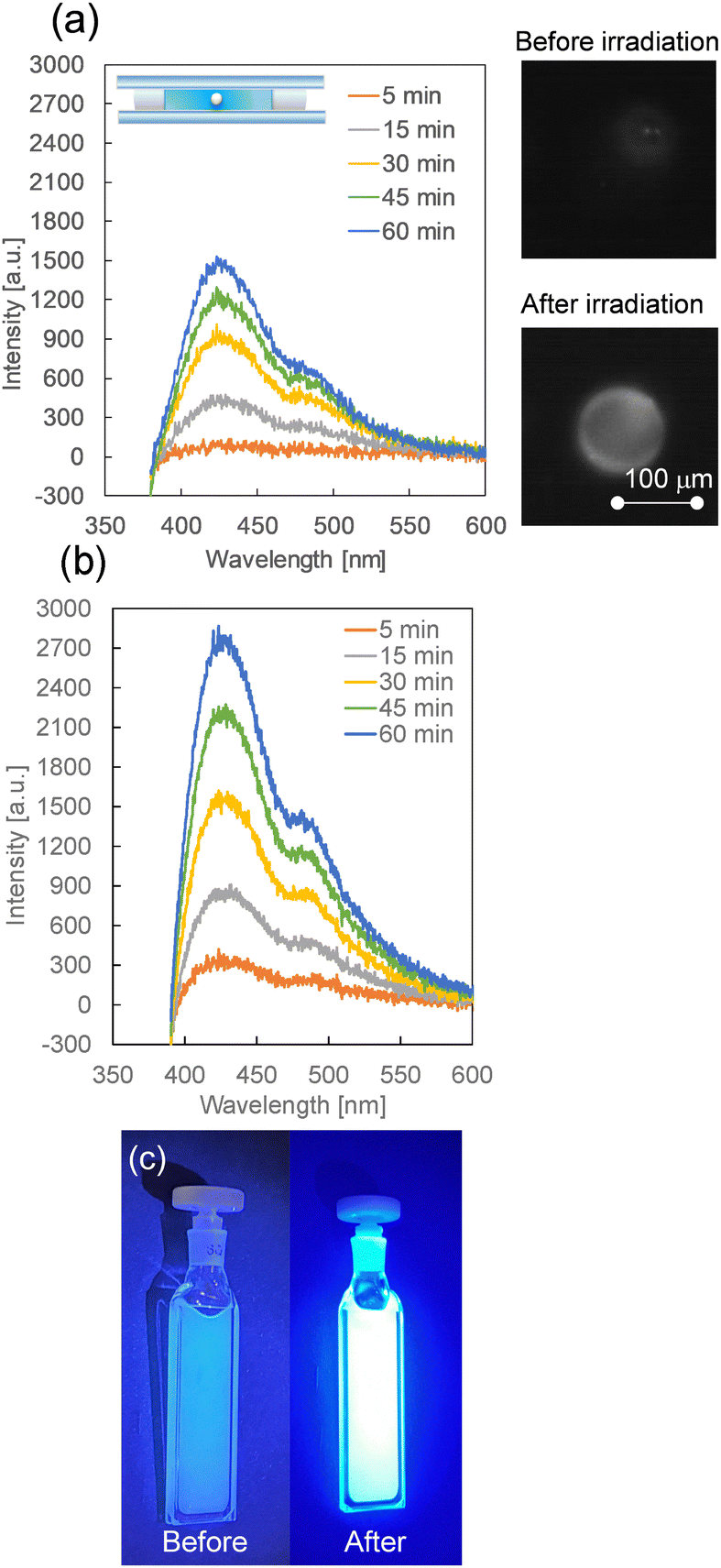 | ||
| Fig. 1 Blue emission induced in 5CB liquid crystal by deep-UV irradiation. (a) Time-dependent emission spectra of a 5CB droplet in an SDS solution and fluorescence microscopy images before (top) and after (bottom) 60 min of 310 nm irradiation. (b) Same for bulk 5CB without surrounding solution. (c) Photograph of a sealed cell containing 5CB after 60 min irradiation (310 nm) (right) versus non-irradiated control (left), under 365 nm UV illumination. | ||
To confirm that the BE-state sample retains its LC nature, the thermal behavior was investigated upon heating (Movie S1, SI). Both pristine 5CB and the BE-state sample showed the characteristic nematic-to-isotropic transition upon heating to ∼50 °C, with the BE-state sample displaying a slightly elevated transition temperature. Polarized optical microscopy confirms that both pristine 5CB and the BE-state sample retain a Schlieren texture characteristic of the nematic phase (Fig. S3, SI); the elevated nematic–isotropic transition temperature of the BE-state sample indicates a subtle modification of the intermolecular ordering, while the long-range nematic character is preserved. Under continuous 365 nm illumination during heating (Movie S2, SI), the BE-state sample showed persistent blue emission that survived the nematic-to-isotropic transition, indicating that the emissive species is not strictly dependent on long-range nematic ordering.
The absolute PLQY of the BE-state sample was determined to be 0.516 (Fig. S4, SI) – a remarkably high value for this wavelength region. The PLQY remained essentially unchanged after three months in a sealed optical cell and was 0.483 after one week under ambient air, demonstrating excellent stability.
The photophysical nature of the BE-state was examined by PLE and emission spectroscopy. Both BE-state sample and 5CB were dissolved in dichloromethane (10 vol%) to eliminate scattering and reabsorption effects. The PLE spectrum of the BE-state sample showed an excitation band at 330–390 nm, clearly shifted from the 325–345 nm band of pristine 5CB (Fig. 2a). Correspondingly, the emission spectra excited at the respective PLE peak wavelengths (335 nm for 5CB, 365 nm for BE-state sample) differed in both peak position and spectral shape, confirming that the blue emission originates from a new excited-state species rather than a simple enhancement of native 5CB emission (Fig. 2b). Raman spectroscopy revealed no obvious changes in vibrational spectra, suggesting the BE-state involves a modification of intermolecular arrangement rather than a major chemical transformation.
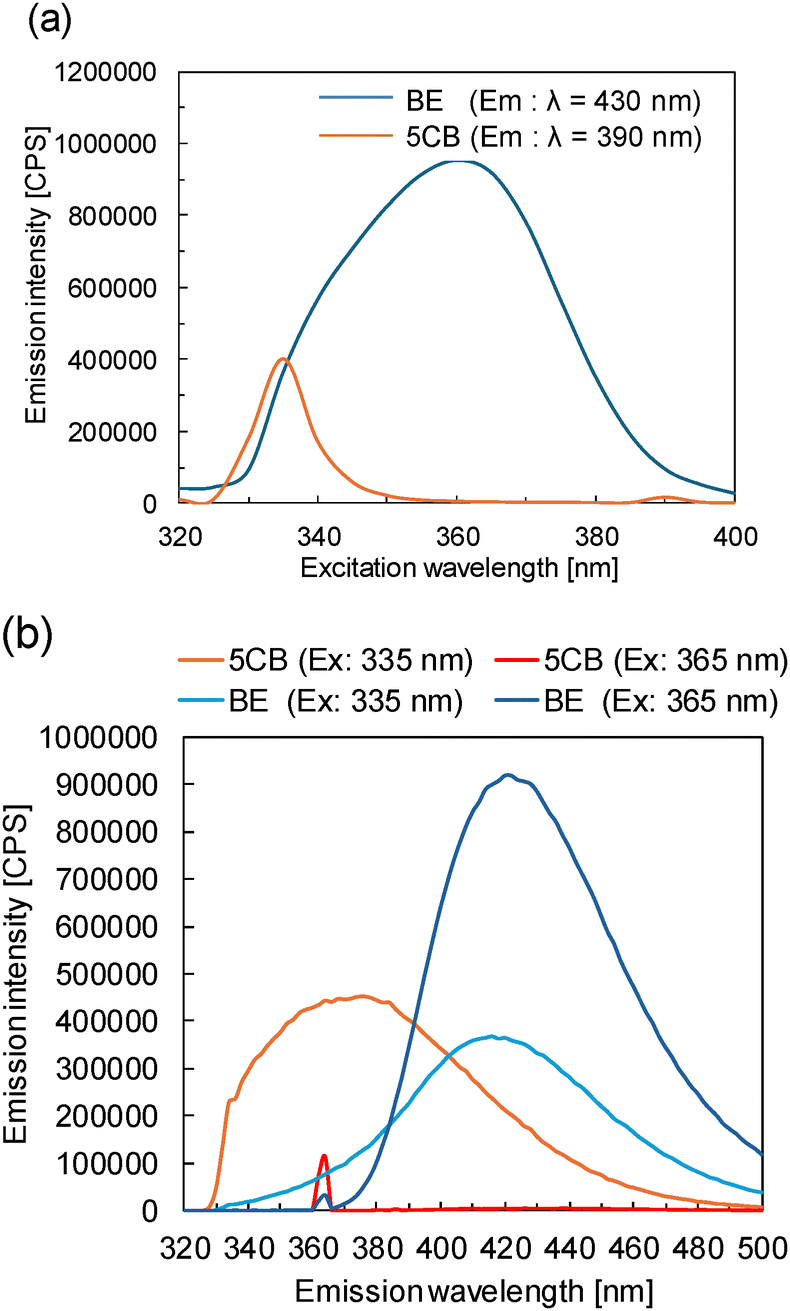 | ||
| Fig. 2 Spectroscopic comparison of pristine 5CB and the blue-emission (BE)-state sample dissolved in dichloromethane (10 vol%). (a) Photoluminescence excitation (PLE) spectra recorded by monitoring emission at the respective emission peak wavelengths of BE-state sample (∼430 nm) and 5CB (∼390 nm). (b) Emission spectra obtained by exciting each sample at its respective PLE peak wavelengths (335 and 365 nm). | ||
The BE-state sample retained its luminescence when dissolved in various solvents, indicating that the emissive species does not require the bulk LC environment to persist. In polar solvents, the emission spectrum closely matched that of pure BE-state liquid crystal in peak position and shape. In non-polar solvents, a blue shift and a shoulder near 390 nm – characteristic of the pristine 5CB excimer – appeared, suggesting partial reversion toward the original excimer configuration (Fig. S5, SI).
To evaluate polarization-dependent emission, the BE-state sample was introduced into a rubbed alignment cell. Polarization-resolved photoluminescence measurements showed a clear anisotropy with a polarization degree P = (I‖ − I⊥)/(I‖ + I⊥) ∼ 0.7 (Fig. 3), demonstrating that the blue emission is anisotropic and directly correlated with the molecular alignment of the LC host. This anisotropy was achieved simply by introducing the BE-state sample into the rubbed cell, without additional polarizing components.
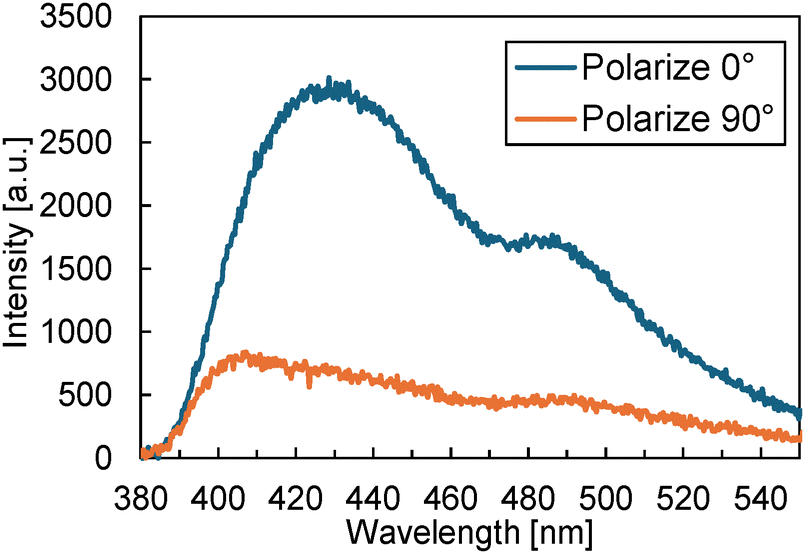 | ||
| Fig. 3 Polarization-resolved photoluminescence of the BE-state sample in a rubbed alignment cell. Emission intensity is plotted as a function of analyzer angle relative to the rubbing direction (0°). | ||
Similar blue emission behavior was observed for 7CB and 8CB under identical conditions (Fig. S6, SI), confirming that the phenomenon is general to the cyanobiphenyl series. A small but systematic blue shift of the emission maximum from 430 nm (5CB) to 419 nm (8CB) is observed. This direction is somewhat unexpected, since longer alkyl chains would naïvely be expected to weaken inter-core interactions and produce a red shift; the present trend therefore suggests that the photophysics of the BE-state is not captured by a simple chain-length-dependent coupling picture, and a definitive interpretation will require structural identification of the BE-state, which is the subject of ongoing work. The integrated emission intensity at saturation also varied with alkyl chain length under our standard preparation conditions, decreasing in the order 5CB > 8CB > 7CB (Fig. S6, SI). We note, however, that the apparent saturation intensity is depenent on various experimental factors—cell thickness, alignment quality, optical penetration depth at 310 nm, and not definitive yet. (Fig. S7, SI). A quantitative chain-length analysis will therefore be presented in a forthcoming full paper. The emission intensity gradually increased with UV irradiation and reached saturation after approximately 6 hours for a 0.5 mm cell (Fig. S7, SI), consistent with limited UV penetration depth.
The choice of 310 nm illumination is not arbitrary: it is on resonance with the long-wavelength tail of the cyanobiphenyl excimer absorption, which is visible as a shoulder on the PLE spectrum of pristine 5CB in Fig. 2a. Direct excitation of the excimer state is therefore a necessary primary step for BE formation; control experiments at wavelengths outside this band (365 nm only, or ≥405 nm) under otherwise identical conditions did not produce the BE-state, even after extended illumination. The energy absorbed at 310 nm is consequently first deposited into the cyanobiphenyl excimer rather than into a single-molecule excited state.
To exclude a thermal origin of the BE-state, two control observations were made. First, in situ thermographic monitoring of the sample window during the standard 310 nm irradiation protocol showed that the maximum sample-temperature rise was less than 1 °C. Second, pristine 5CB held in the dark at temperatures up to 45 °C for over one hour did not develop any detectable blue emission under 365 nm probing, and its PLE spectrum remained that of pristine 5CB. Sample heating during the 310 nm step is therefore negligible, and the formation of the BE-state cannot be reproduced thermally.
A fraction of this excimer-state energy is dissipated by the standard radiative and non-radiative excimer decay channels, but a small persistent fraction is provided in a long-lived structural rearrangement of the local intermolecular packing, generating the BE-state. This picture is consistent with three observations of the present work: (i) the unchanged Raman signature, which rules out a major covalent photoreaction; (ii) the preservation of nematic ordering with only a small elevation of the nematic–isotropic transition temperature, indicating that the rearrangement is local; and (iii) the negligible (<1 °C) sample heating measured during the 310 nm step, which excludes a purely thermal pathway. We have previously shown that excimer excitation of cyanobiphenyl LC droplets in surfactant solutions can drive the active uptake of solute molecules into the LC phase against a concentration gradient;13,14 the present results suggest that, in the pure cyanobiphenyl LC, the same excimer excitation is partly redirected into a persistent rearrangement of the molecules.
Previous studies have reported emission peaks near 430 nm in cyanobiphenyl LCs associated with temperature-induced changes in molecular organization.15–17 The emission wavelength of the BE-state is consistent with these reports, suggesting that a similar inter-core association is involved, although in our case it is induced photochemically through excimer excitation rather than thermally. A complete elucidation of the rearranged packing geometry is the subject of ongoing work and will be reported in near future.
In summary, we have demonstrated stable deep-blue emission (PLQY = 0.516) from a photo-product formed from cyanobiphenyl liquid crystals induced by deep-UV irradiation. The emissive state exhibits unique excitation and emission characteristics distinct from the conventional 5CB excimer, excellent long-term stability, strong polarization (P ∼ 0.7) along the LC alignment direction, and solubility in polar solvents. Since the system remains in the liquid state, it behaves as a liquid-type pigment enabling direct coating or filling of optical cells without complex fabrication. The deep-blue spectral region, combined with inherent LC alignment, enables spontaneous polarized emission using commercially available LC materials, opening new opportunities for display technologies, photonic devices, and related applications.
M. O., H. K. and Y. A. performed experiments and analyses, and Y. A. D. supported them. K. K. guided the overall research. M. O., H. K. and K. K. wrote the manuscript, all authors reviewed it.
Conflicts of interest
There are no conflicts to declare.Data availability
All source data underlying the figures and supplementary figures in this manuscript are available upon reasonable request to the corresponding author. No proprietary software was used in the analysis; all data processing was performed with standard spectroscopic and optical analysis tools.Supplementary information (SI): Movie S1 Thermal behavior of pristine 5CB and BE sample upon heating (turbidity change, nematic-to-isotropic transition), Movie S2 Same heating experiment under continuous 365 nm illumination, showing blue emission from BE sample, Fig. S1 Molecular structures of 5CB, 7CB, and 8CB, Fig. S2 Schematic diagram of the sandwich-type sample cell and optical setup for observatoin, Fig. S3 Polarized optical microscopy (POM) images of pristine 5CB and BE-state sample showing Schlieren texture, Fig. S4 PLQY of the BE-state sample measured by integrating sphere (365 nm excitation); PLQY = 0.516, Fig. S5 Solvent-dependent emission spectra of BE sample in solvents of varying polarity, Fig. S6 Time-dependent emission spectra of 7CB and 8CB under 310 nm irradiation (365 nm excitation) Fig. S7 Long-term time-dependent emission spectra of 5CB, 7CB, and 8CB under 310 nm irradiation (365 nm excitation). See DOI: https://doi.org/10.1039/d6cc02090a.
Acknowledgements
This research was financially supported by the Institute of Science and Engineering, Chuo University, and the LAMP Program of the National Research Foundation of Korea (NRF) grant funded by the Ministry of Education (No. RS-2024-00445180).References
- J. P. F. Lagerwall, Liq. Cryst., 2024, 51, 1296 Search PubMed.
- M. Schadt and W. Helfrich, Appl. Phys. Lett., 1971, 18, 127 Search PubMed.
- D. A. Dunmur, Liq. Cryst., 2015, 42, 678 Search PubMed.
- J. W. Goodby, Liq. Cryst., 2024, 51, 1272 CrossRef CAS.
- G. W. Gray, K. J. Harrison and J. A. Nash, Electron. Lett., 1973, 9, 130 CrossRef CAS.
- H. J. Coles, Mol. Cryst. Liq. Cryst., 1978, 49, 67 CrossRef CAS.
- J. Kukielski, J. Mol. Struct., 1999, 478, 1 Search PubMed.
- T. Ikeda, S. Kurihara and S. Tazuke, J. Phys. Chem., 1990, 94, 6550 Search PubMed.
- S. Kurihara, T. Ikeda and S. Tazuke, Macromolecules, 1991, 24, 627 Search PubMed.
- S. Kato, F.-Q. Chen, T. Shimada, T. Yatsuhashi, H. Inoue and C. Pac, J. Phys. Chem. B, 2000, 104, 2642 Search PubMed.
- S. Kato, B. Lee and C. Pac, Liq. Cryst., 1997, 22, 595 Search PubMed.
- A. M. Klock, W. Rettig, J. Hofkens, M. van Damme and F. C. De Schryver, J. Photochem. Photobiol., A, 1995, 85, 11 Search PubMed.
- Y. Sakai, H. Kusaki and K. Katayama, ACS Omega, 2021, 6, 35050 CrossRef CAS PubMed.
- H. Kido, H. Kusaki, Y. Sakai, T. Ikeda and K. Katayama, Langmuir, 2024, 40, 21824 Search PubMed.
- S. A. Oladepo, J. Mol. Liq., 2021, 323, 114590 Search PubMed.
- T. Bezrodna, V. Melnyk, V. Vorobjev and G. Puchkovska, J. Lumin., 2010, 130, 1134 Search PubMed.
- T. Bezrodna, G. Klishevich, V. Melnyk, V. Nesprava, O. Roshchin and M. Drozd, Mol. Cryst. Liq. Cryst., 2018, 672, 159 CrossRef CAS.
| This journal is © The Royal Society of Chemistry 2026 |