


 PLATFORM UPDATE:


Metal–organic frameworks for natural medicines delivery: stimuli-responsive strategies and synergistic cancer therapy applications
 b
Linlu
Zhao
*b
b
Linlu
Zhao
*b
Abstract
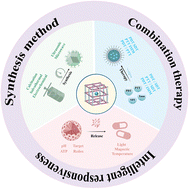
Metal–organic frameworks (MOFs), as unique nanomaterials, have attracted considerable attention in the biomedical field—particularly in drug delivery systems—owing to their porous architectures and modifiable surface properties. Composed of metal ions and organic ligands, MOFs offer exceptional versatility. With the increasing depth of research into natural medicines, significant advances in their pharmacological properties have been achieved. However, various factors continue to limit the development of natural medicines, including insufficient bioavailability and inadequate biosafety. Meanwhile, research on drug loading onto nanomaterials has matured, and MOF-based drug delivery systems have demonstrated notable advantages, facilitating the implementation of diverse combination therapies. This review explains how MOFs are used to deliver natural drugs, focusing on how different internal and external factors affect drug release from MOF carriers. It covers ways MOFs can be used in combination therapies and describes their roles in treating infections, osteoporosis (OP), and diabetic wounds, as well as in protecting the environment and supporting modern agriculture. The review also discusses safety concerns and future directions for using MOFs in these areas.
 Please wait while we load your content...


