


 PLATFORM UPDATE:


Function of the material–tissue interface in peripheral nerve regeneration: physical and chemical properties, functionalization and intellectualization
 *abcdf
Abstract
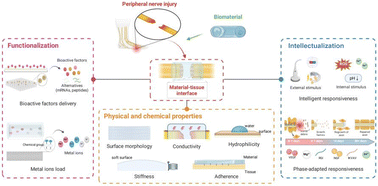
Peripheral nerve injury represents a major clinical challenge in orthopedics, severely compromising patients’ quality of life, and still lacks ideal curative approaches. The emergence of tissue-engineered nerve grafts has provided novel strategies for peripheral nerve repair. During nerve regeneration, the material–tissue interface serves as a pivotal communication bridge between exogenous materials and biological tissues. By transmitting physical, chemical, and biological signals, it modulates the microenvironment for nerve regeneration, thereby significantly influencing repair outcomes. The present article reviews the critical role of the material–tissue interface in peripheral nerve repair, exploring the mechanisms and application prospects of the physical and chemical properties (including surface topology, conductivity, hydrophilicity, stiffness, and adhesion), surface functionalization strategies (such as bioactive factor delivery and metal ion load), and intelligent design (including intelligent responses and phase-adapted responses) for nerve regeneration. This paper aims to provide theoretical support and design insights for constructing ideal neural repair material interfaces, thus advancing the development and clinical translation of favorable peripheral nerve repair materials.
 Please wait while we load your content...


