


Betulinic acid exacerbates biomolecular condensation of α-synuclein: possible role in Parkinson's disease
 *a
*a
Abstract
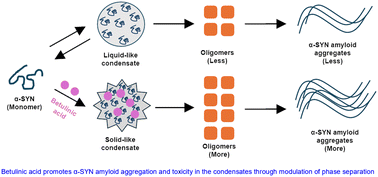
Aggregation of α-synuclein (α-SYN) into amyloid structures is closely linked to progression of Parkinson's disease (PD). Type 2 diabetes mellitus increases PD risk, sharing common pathological features like amyloid aggregation, insulin dysregulation, inflammation, oxidative stress, and mitochondrial dysfunction. Insulin resistance affects over 60% of PD cases, leading to trials of anti-diabetic drugs for potential PD benefits. The monomeric form of α-SYN tends to aggregate in a process that relies on nucleation, ultimately leading to the formation of insoluble fibrils. Recent research indicates that the smaller, low-molecular-weight aggregates known as “soluble oligomers” may actually be the main culprits behind neurotoxicity, rather than the larger fibrils themselves. Betulinic acid (BA), a natural lupane triterpenoid, has shown anti-diabetic properties in several model systems, making it a promising candidate for investigation in PD. In this work, the role of BA in modulation of aggregation of different pathological variants of α-synuclein, such as wild type, A30P mutant, phosphomimetic S129D variant and C-terminal truncated variant, has been investigated. The results indicate that BA enhances the phase partitioning of all disease-relevant variants of α-SYN. The droplet size of the condensate was the smallest for the A30P variant and the highest for the C-terminal truncated protein and it increased uniformly for all variants in the presence of BA. Increased restriction in rotation of the biomolecular condensate was seen in the presence of this triterpenoid, which matched with enhanced sol-to-gel transition and higher storage and loss moduli of the hydrogel formed. This led to increased protein aggregation and toxicity as evidenced by the decreased survival rates of yeast and mammalian cells expressing α-SYN variant aggregates when treated with BA. Toxicity was likely due to the formation of soluble oligomeric species. Long-term use of BA under any therapy regimen, particularly at high doses, may result in considerable side effects, potentially heightening the risk of developing PD over time. Hence, in further developmental studies of BA in different disease conditions, the long-term side effects of this triterpenoid need to be monitored.
 Please wait while we load your content...


